Evaluating Perennials for Chicagoland Gardens
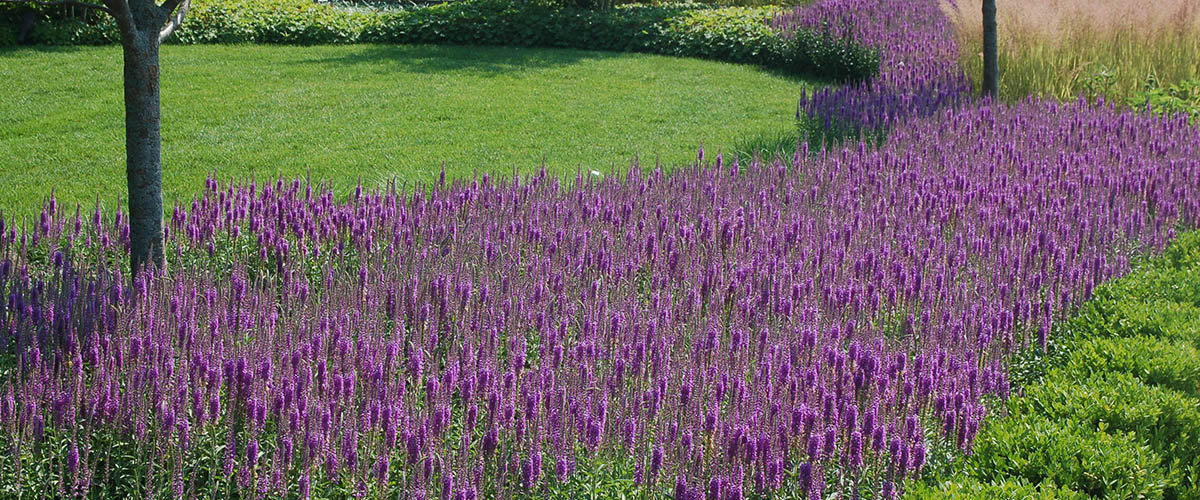
Perennials in Focus is a plant evaluation program that examines new and underused plants for Chicagoland, the third largest metropolitan area in the country. A group of horticultural experts trials and evaluates plants at numerous locations across the region. Results help consumers, public gardens, growers, landscape designers, breeders, and other industry professionals make informed plant choices.
Tracking How Deep Baptisia Australis Roots Push Into Compacted Urban Ground
Compact urban planting beds rarely offer the loose, biologically active soils that perennials evolved to colonise. Foot traffic, construction backfill, and decades of soil compression can leave a dense layer only centimetres below the surface, leaving many a striking garden specimen unable to anchor properly. For Baptisia australis, a deep-rooted legume prized for its indigo spires and sculptural seed pods, this physical barrier has long been assumed to limit performance in city plantings. Yet new field observations are starting to challenge that assumption.
These questions sit at the heart of why horticultural trials in Chicago, through the Perennials in Focus network, have begun dissecting the root systems of Baptisia rather than just measuring what blooms above ground. Tracking how a taprooted perennial behaves beneath pavement-edge beds, alongside new curbside plantings, and in reclaimed urban parkland helps gardeners decide whether this plant is a realistic long-term choice for tough sites.
For growers weighing the same question in Australia, the findings offer a useful parallel. Streetscapes in Sydney, Melbourne and Brisbane often share the same compressed clay profiles that dominate North American cities, shaped by decades of development and reactive subsoils.
What Root Depth Reveals About Plant Resilience
A perennial's root architecture dictates how it survives drought, heat, root competition, and disturbance. A shallow, fibrous system responds quickly to surface moisture but collapses when the top few centimetres dry out. A taproot-driven perennial, by contrast, mines water from deeper horizons, tolerates longer dry spells, and recovers after mechanical damage. For Baptisia australis, whose mature taproot can extend well beyond a metre in undisturbed loam, the trait is the plant's signature advantage.
When that taproot meets physical resistance, something interesting happens. Roots may deflect horizontally, produce a shallower crown, or simply arrest growth, producing a stressed, short-lived plant. Compacted urban beds frequently enforce exactly this kind of restriction, which is why so many growers report Baptisia struggling despite adequate sun and watering. Observing actual root behaviour in such conditions clarifies whether the plant is failing from drought, from oxygen starvation, or from a combination of both.
How the Trials Measure Root Penetration
Field staff in the program selected multiple trial sites spread across the metropolitan area, including park restorations, streetside medians, community garden beds, and a few residential test gardens. Each planting was matched for sun exposure, cultivar age, and initial root health, leaving soil compaction as the primary variable. After three growing seasons, a subset of plants was excavated using a combination of air-spade and careful hand-trenching, allowing full recovery of the primary root and any lateral branches.
Excavation protocols included photographing the root in situ, measuring depth at the deepest growing point, recording lateral spread, and noting where roots deflected, branched abnormally, or stopped. Researchers who log data across field tablets and shared lab computers often apply the same family device security habits that any household juggling multiple work accounts might adopt to keep sensitive records safe. Soil samples were also taken at 20 cm intervals to a depth of one metre, so that bulk density, moisture content, and organic matter could be correlated with root behaviour above.
What the Excavation Actually Showed
In loose, organically amended beds, Baptisia australis produced taproots consistent with published expectations, often reaching 80 to 120 cm within four seasons. In beds sitting over a hardpan beginning at 30 cm, however, the same plants anchored differently. Roots punched through fractures in the compacted layer, exploited old root channels from previous plantings, and in some cases formed a flattened plate of secondary roots just above the barrier, rather than penetrating it directly.
A handful of plants proved unexpectedly vigorous. Where soil had been deep-cultivated once during installation, or where a structural soil cell had been incorporated beneath the planting pit, taproots reached 90 cm or more even on otherwise compromised sites. The consistent pattern across the data was that Baptisia tolerates compaction far better when the planting hole is loosened to at least twice the rootball diameter and backfilled with a generous volume of compost-rich topsoil. That same preparation supports extending perennial bloom across the seasonal shift, since vigorous roots sustain flower production even as conditions tighten.
Baptisia Compared to Other Deep-Rooted Perennials
Other taprooted members of the evaluation program tell a similar story. Echinacea species form finer, more fibrous systems and suffer more visibly when confined, while Asclepias tuberosa mirrors Baptisia's pattern of horizontal deflection in compacted ground. Perennials with rhizomatous habits, such as many ornamental grasses, navigate compacted layers with greater ease but offer none of the deep mining capacity that makes Baptisia valuable for stabilisation and drought resilience.
For gardeners planning layered plantings, the picture is encouraging. A Baptisia underplanted with shade-loving ferns can occupy the deeper profile while the ferns exploit the cool, moist upper horizon above any compacted layer. Designing with complementary root depths makes compressed urban soils far more productive than treating every plant as though it shares the same underground space.
What This Means for Australian Gardeners
Australian urban soils carry their own character. Reactive clays around Sydney and Melbourne swell and shrink with moisture, often creating a natural hardpan that behaves much like the compacted fill in the Chicago trials. Brisbane's alluvial pockets can be deep but frequently suffer from construction rubble buried during suburban development, while Adelaide gardens regularly contend with alkaline, structureless profiles over clay. Each of these conditions echoes one of the trial environments in the Perennials in Focus dataset.
Water restrictions enforced under various state-level urban water authorities have also shaped planting choices, pushing home gardeners toward deep-rooted, drought-tolerant perennials rather than thirsty annuals. Baptisia australis suits that shift, provided it is given a properly prepared planting hole rather than being dropped into unimproved ground. Gardeners at hardware chains like Bunnings will often find potted specimens that look ready to thrive, but the gap between the nursery container and the surrounding soil is where success or failure is decided. Garden centres in cities from Brisbane to Adelaide increasingly stock Baptisia as its drought credentials become better known.
Implications for Landscape Design and Plant Breeding
For landscape architects, the findings argue for a rethink of typical shrub-bed specifications. Deep ripping along planting lines, structural soil cells beneath paved areas, and generous compost amendment turn Baptisia from a risky choice into a long-lived anchor plant. The cost of those interventions compares favourably with replacing plants every few seasons, particularly in streetscapes where maintenance access is restricted.
Breeders are also paying attention. Compact, well-branched cultivars with strong taproots are valuable in both residential and commercial markets, especially as Australian councils tighten specifications for street tree and median plantings under local biodiversity and water-sensitive design guidelines. Knowing how roots behave under stress lets breeders select lines that maintain rooting vigour even when grown in standard nursery pots, a step that reduces transplant shock on difficult sites and gives landscape professionals more confidence in specifying the species for civic projects.
If you are planning a planting project on a tough urban block, set aside a weekend for soil preparation before choosing your plant list. Dig deep, loosen widely, and treat the planting hole as the foundation of the whole design rather than an afterthought once the plants have arrived home. Subscribe to the trial updates from Perennials in Focus, share your own observations from local gardens, and help build a clearer picture of how perennials really perform beneath city surfaces across regions and climates.
In the Garden
Evaluator gardens are located across the Chicagoland area, representing a range of growing conditions. Visit our retail and wholesale partners to find trialled perennials for your own garden.
Retail & Wholesale: Hinsdale Nurseries (Willowbrook, IL), Mariani Nurseries (Kenosha, WI & Garden Prairie, IL), Northwind Perennials (Burlington, WI), The Growing Place (Aurora, IL).
Wholesale Only: Hinsdale Nurseries (Plano, IL), Intrinsic Perennial Gardens (Hebron, IL).
Our Evaluation Program
The 2017–2020 evaluation cycle included Agastache 'Blue Boa', Allium senescens 'Blue Eddy', Amsonia ciliata var. filifolia 'Georgia Pancake', Astilbe 'Chocolate Shogun', Boltonia astroides 'James Crocket', Brunnera 'Alexander's Great', and Geranium cinereum 'Jolly Jewel Purple'. Completed evaluations include Amsonia 'Blue Ice' (2004–07).
On April 10, 2020, the program published snapshot profiles for Vernonia lettermanii 'Iron Butterfly', Stokesia laevis 'Elf', Stachys officinalis 'Pink Cotton Candy', Lobelia 'Monet Moment', Helleborus 'Winter Thrillers', Geum 'Mai Tai', Geranium soboliferum 'Butterfly Kisses', Gentiana x intermedia 'True Blue', Eurybia divaricata, Asparagus 'Purple Passion', and Agastache 'Bolero'.
Browse the full collection of snapshots organized alphabetically — from A–D, E–H, I–Q, and R–Z — to find detailed performance data on perennials trialled across Chicagoland.