Evaluating Perennials for Chicagoland Gardens
Perennials in Focus is a plant evaluation program that examines new and underused plants for Chicagoland, the third largest metropolitan area in the country. A group of horticultural experts trials and evaluates plants at numerous locations across the region. Results help consumers, public gardens, growers, landscape designers, breeders, and other industry professionals make informed plant choices.
Using perennials to bridge spring and summer bloom
The transition from spring to summer can leave a garden looking briefly unfinished. Early bulbs and flowering trees fade, while many warm-season perennials are still developing foliage and flower buds. In the Chicagoland region, this pause can be especially noticeable because cool temperatures, late frosts, and uneven spring weather often shift bloom times from year to year.
A thoughtful perennial planting fills that seasonal gap with overlapping bloom periods, varied foliage, and reliable structure. The goal is not to make every plant flower continuously, but to create a sequence in which one group begins to fade as another reaches its peak.
Regional trials are valuable for this kind of planning. Observations from multiple gardens can reveal which plants flower early, which tolerate unsettled weather, and which maintain enough form to connect late spring with the first flush of summer color.
Why the transition period matters
Many gardens are designed around obvious seasons: spring bulbs, summer borders, and autumn foliage. The weeks between those periods receive less attention, even though they often include some of the most pleasant gardening weather. A border may have abundant green growth but very little color while early flowers are finished and summer performers remain dormant.
Perennials with late-spring or early-summer bloom dates are the essential connectors. Plants such as Baptisia, Amsonia, hardy geraniums, catmint, coral bells, and several ornamental alliums can provide flowers during this interval. Their foliage also helps preserve visual interest when individual blooms are short-lived.
Bloom timing is affected by exposure, soil moisture, winter conditions, and the age of a planting. A plant that flowers in late May at one site may open in early June at another. For that reason, gardeners should think in terms of overlapping bloom windows rather than fixed calendar dates.
Build layers of bloom and foliage
The strongest seasonal transitions use several plant layers. Low-growing plants can cover fading bulb foliage and soften the edges of paths, while medium-height perennials provide the main color. Taller plants create vertical movement and begin to establish the structure that will carry the border through summer.
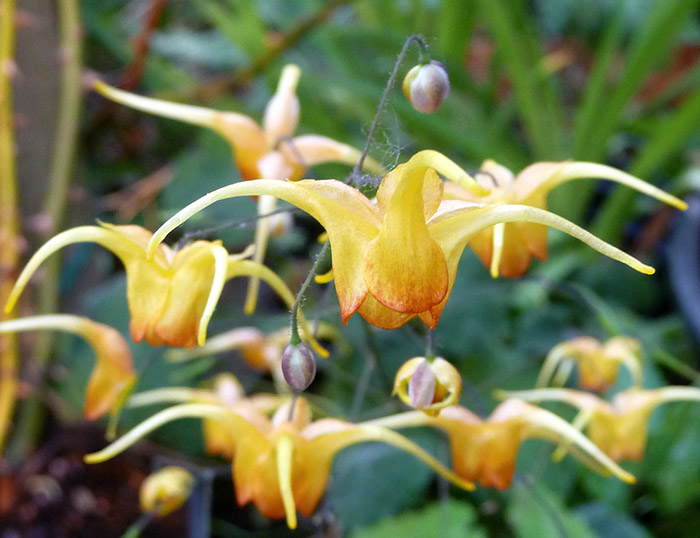
Late-spring groundcovers might include creeping phlox, foamflower, barrenwort, or hardy cranesbill. Above them, plants such as Baptisia, Siberian iris, peonies, and early daylilies can provide a stronger visual presence. Their flowering periods do not need to match exactly; a modest overlap helps the garden feel continuous.
Foliage is just as important as flowers. Blue-green leaves, finely divided textures, silver foliage, and glossy mounds can connect plants with different bloom dates. Coral bells, Brunnera, Japanese forest grass, and certain ferns can maintain a composed appearance after nearby flowers have faded.
In shady areas, foliage-led design is often more dependable than a flower-heavy scheme. The shade fern trials offer useful regional context for selecting plants that can hold their form beneath trees and alongside spring ephemerals.
Choose plants for the site, not just the season
A plant’s bloom period is only one part of its performance. Soil that stays wet after spring rain may delay growth or weaken a perennial that prefers sharp drainage. Conversely, a plant in dry, root-filled soil beneath mature trees may need more support to reach its expected size and flowering potential.
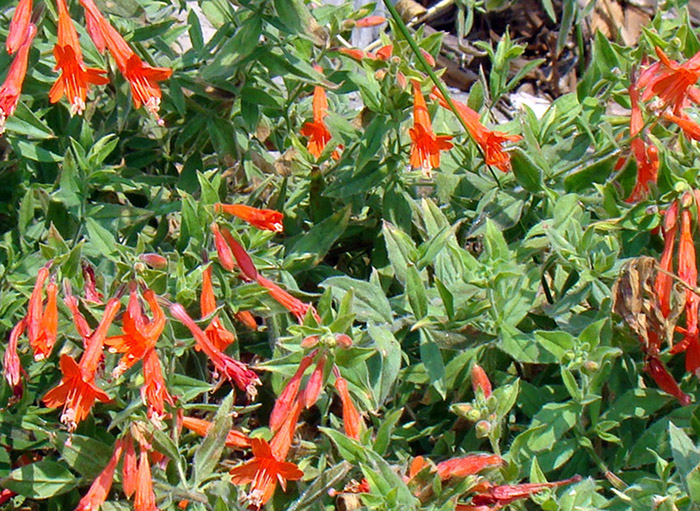
Wet or partially shaded gardens can still have a strong seasonal bridge. Cardinal flower, Japanese primrose, turtlehead, and certain sedges contribute color and texture where many sun-loving border plants struggle. Regional observations of the cardinal flower results can help gardeners assess how this vivid native performs in moisture-retentive settings.
Sun exposure should also be considered across the full growing season. A bed that receives full sun in April may become shaded after nearby trees leaf out. Plants chosen for the early season must tolerate the conditions that develop later, particularly in narrow borders along buildings or beneath deciduous trees.
Match bloom windows to garden roles
The following groups can help organize a planting around the spring-to-summer transition. Exact timing will vary by location and weather, but the sequence provides a useful starting point for evaluating combinations.
| Plant group | Typical seasonal role | Useful conditions | Contribution after flowering |
|---|---|---|---|
| Brunnera, foamflower, and woodland phlox | Late spring color in shade | Moist, well-drained soil and filtered light | Broad or textured foliage |
| Baptisia and Amsonia | Late spring to early summer focal display | Sun to light shade with moderate drainage | Strong stems and seed heads |
| Hardy geraniums and catmint | Extended bridge between seasons | Sun and average, well-drained soil | Mounded foliage and repeat bloom |
| Coral bells and ornamental grasses | Color and structure between flower flushes | Varies by cultivar; avoid stressful extremes | Persistent foliage and vertical form |
| Cardinal flower and turtlehead | Early summer color in moist sites | Moist soil, partial shade or sun | Upright stems and late-season texture |
Avoid placing every bridge plant in the same part of the border. Repeating a few dependable species throughout the garden creates rhythm, while using different heights and textures prevents the transition from appearing as a single band of color.
When selecting cultivars, pay attention to mature spread as well as height. Overcrowded plants may flower less freely and develop poor air circulation. Plants spaced with their mature dimensions in mind can knit together gradually without overwhelming neighboring perennials.
Support flowering through simple maintenance
Good maintenance begins before the seasonal gap appears. Allow spring bulbs to replenish their energy by keeping foliage in place until it yellows naturally. Perennials that emerge around the bulbs can disguise declining leaves without forcing premature removal.
Cutting back certain early perennials after their first flush can encourage fresh foliage and, in some cases, additional flowers. Hardy geraniums, catmint, and salvia often respond well to selective trimming. The timing should be guided by the plant’s condition rather than a strict date; a plant weakened by drought or transplanting may need to recover before being cut back.
Watering is particularly important in late spring, when temperatures rise but roots may still be shallow. A thorough, infrequent watering is generally more useful than light daily applications. Mulch can reduce moisture loss and moderate soil temperature, but it should remain a few inches away from plant crowns.
Deadheading also helps preserve the visual bridge. Removing spent flowers from peonies, iris, and other early bloomers keeps the border orderly while later plants take over. Some gardeners may leave seed heads on plants such as Amsonia or Baptisia for added texture and wildlife value.
Use observation to refine the planting
A garden journal can turn seasonal impressions into useful planting information. Record when each perennial begins flowering, reaches peak display, and loses its strongest color. Note weather conditions, soil moisture, plant age, and whether nearby vegetation changed the amount of available light.
These observations are especially helpful when comparing cultivars. Two plants with similar catalog descriptions may differ in height, flowering duration, branching, or ability to recover from heavy rain. Multi-site evaluations offer a broader perspective because they show whether a plant performs consistently beyond a single garden.
Look for gaps that last more than a week or two. A short lull may be natural and can be filled with foliage, ornamental seed heads, or annual accents. A persistent empty space may indicate that a plant is poorly matched to the site or that the border needs a perennial with a different bloom period.
A useful planting review includes more than flower color. Consider winter survival, stem strength, disease resistance, pollinator activity, and the plant’s appearance after bloom. A perennial that supports the garden for several months is often more valuable than one with a brief, dramatic display.
Practical choices for a continuous border
Begin with the plants already performing well in the garden. Keep dependable spring bloomers, then add perennials that begin flowering as those plants decline. Introduce new selections in small groups so their performance can be observed before they are used throughout the landscape.
- Pair early-season flowers with foliage plants that conceal their fading leaves.
- Include at least one late-spring performer for each major planting area.
- Repeat reliable bridge plants to create continuity across the landscape.
- Match moisture, light, and soil conditions before prioritizing flower color.
- Record bloom dates and plant performance for future adjustments.
The most successful seasonal sequence usually combines dependable regional performers with a few experimental selections. This approach gives the garden stability while leaving room to discover plants that may become valuable additions for Chicagoland landscapes.
Walk the garden regularly from May through June and note where color, texture, or height drops away. Use those observations to guide the next planting season, choosing perennials that overlap naturally and perform well under the conditions your site provides.
In the Garden
Evaluator gardens are located across the Chicagoland area, representing a range of growing conditions. Visit our retail and wholesale partners to find trialled perennials for your own garden.
Retail & Wholesale: Hinsdale Nurseries (Willowbrook, IL), Mariani Nurseries (Kenosha, WI & Garden Prairie, IL), Northwind Perennials (Burlington, WI), The Growing Place (Aurora, IL).
Wholesale Only: Hinsdale Nurseries (Plano, IL), Intrinsic Perennial Gardens (Hebron, IL).
Our Evaluation Program
The 2017–2020 evaluation cycle included Agastache 'Blue Boa', Allium senescens 'Blue Eddy', Amsonia ciliata var. filifolia 'Georgia Pancake', Astilbe 'Chocolate Shogun', Boltonia astroides 'James Crocket', Brunnera 'Alexander's Great', and Geranium cinereum 'Jolly Jewel Purple'. Completed evaluations include Amsonia 'Blue Ice' (2004–07).
On April 10, 2020, the program published snapshot profiles for Vernonia lettermanii 'Iron Butterfly', Stokesia laevis 'Elf', Stachys officinalis 'Pink Cotton Candy', Lobelia 'Monet Moment', Helleborus 'Winter Thrillers', Geum 'Mai Tai', Geranium soboliferum 'Butterfly Kisses', Gentiana x intermedia 'True Blue', Eurybia divaricata, Asparagus 'Purple Passion', and Agastache 'Bolero'.
Browse the full collection of snapshots organized alphabetically — from A–D, E–H, I–Q, and R–Z — to find detailed performance data on perennials trialled across Chicagoland.