Evaluating Perennials for Chicagoland Gardens
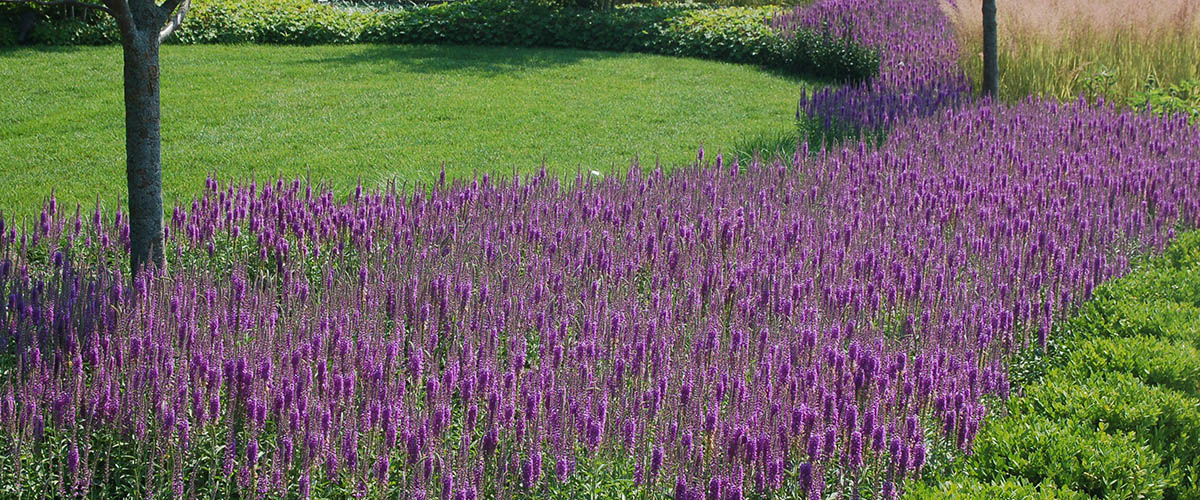
Perennials in Focus is a plant evaluation program that examines new and underused plants for Chicagoland, the third largest metropolitan area in the country. A group of horticultural experts trials and evaluates plants at numerous locations across the region. Results help consumers, public gardens, growers, landscape designers, breeders, and other industry professionals make informed plant choices.
Phlox Divaricata Vs Phlox Stolonifera In Dry Shade
Dry shade is one of the most demanding conditions for a perennial groundcover. Trees intercept rainfall, mature roots compete for moisture, and dense canopies reduce light just when plants need energy for new growth. In Australian gardens, the problem can be intensified by hot summers, sandy soils and water restrictions.
Phlox divaricata and Phlox stolonifera are both North American woodland phloxes, yet they fill space in different ways. Their performance in the Chicagoland region offers useful comparative evidence, while Australian gardeners need to adjust expectations for local heat, rainfall patterns, soil types and winter temperatures.
What Growth Rate Means In Dry Shade
Growth rate should not be judged only by height. For a groundcover, useful measures include the time taken to establish, the width gained each season, the number of rooted stems produced, and how quickly bare soil disappears. Flowering performance also matters because a plant that spreads rapidly but weakens in dry conditions may provide less long-term value than a slower, denser selection.
Phlox stolonifera usually gives the impression of faster coverage because it produces slender stolons that root at nodes. These stems can travel across the soil surface and create new crowns. Phlox divaricata generally forms a more open clump, expanding through short rhizomes and branching stems rather than sending out such obvious runners.
In dry shade, neither species should be treated as a drought-tolerant substitute for a Mediterranean groundcover. Both prefer humus-rich, well-drained soil with regular moisture during establishment. When tree roots remove available water, stoloniferous growth can pause, while divaricata may retain a more upright presence without rapidly increasing its footprint.
How The Two Phloxes Occupy Space
Phlox stolonifera is commonly selected where a low carpet is the priority. Its foliage stays close to the ground, and rooted runners can gradually knit plants together. In favourable woodland conditions, it may cover open patches more quickly than Phlox divaricata, especially when planted at moderate spacing and supported by reliable spring moisture.
Phlox divaricata tends to occupy space as a loose, leafy mound. It can reach greater flowering height, often producing fragrant blooms above the foliage in spring. Its slower lateral spread can be an advantage beside paths or among other perennials because it is less likely to cross a boundary suddenly.
The distinction is important in a narrow Australian side garden. A Melbourne gardener with a shaded bed beneath deciduous trees may value stolonifera for filling gaps after winter planting. In a Sydney garden beneath evergreen canopy, the slower but more architectural divaricata may be easier to manage where root competition remains constant throughout the year.
Soil, Water And Canopy Effects
Dry shade is rarely uniform. Shade beneath a deciduous tree may be relatively bright in winter and early spring, giving both species an opportunity to grow before the canopy closes. Evergreen trees create more continuous competition, while dense hedges can produce dry soil, poor airflow and a thin layer of leaf litter.
Adding compost and aged organic matter improves moisture retention, but digging heavily around established tree roots can cause damage. A shallow surface mulch is usually safer. Keep mulch away from crowns, and water deeply during the first growing season rather than applying frequent light sprinklings that wet only the surface.
Australian rainfall changes the comparison significantly. In Brisbane, warm wet periods can accelerate spread but also increase crown-rot risk if drainage is poor. In Adelaide or Perth, dry summers can stop active growth unless plants receive supplementary water. In Canberra, winter cold may slow the plant above ground, while Melbourne’s cool seasons can support steady root establishment.
Comparing Habit And Performance
The table below summarises the typical differences gardeners may observe. Actual results vary with cultivar, planting density, soil depth, irrigation and the intensity of root competition.
| Characteristic | Phlox divaricata | Phlox stolonifera |
|---|---|---|
| Main growth habit | Loose clump with branching stems and short rhizomes | Low mat formed by surface stolons |
| Typical flowering height | About 30–60 cm | About 15–30 cm |
| Usual spread pattern | Gradual outward expansion | Faster filling through rooted runners |
| Spring flowers | Often fragrant, commonly blue, lavender or white | Commonly pink, purple, blue or white |
| Response to dry shade | Maintains structure but spreads slowly | Can spread well initially, then stall under severe moisture stress |
| Best landscape role | Woodland drift, informal edging and mixed perennial beds | Low groundcover, gaps between larger plants and slope stabilisation |
| Main management concern | May look sparse if overcrowded by taller plants | Runners may move beyond the intended planting area |
These are broad tendencies rather than guarantees. A well-watered stolonifera planting may appear dramatically faster than divaricata, while a divaricata selection in deep, moisture-retentive soil can establish strongly. Trial observations are most valuable when the site conditions are recorded alongside flowering and spread.
Reading Chicagoland Trial Evidence
A regional evaluation program such as Perennials in Focus records performance across gardens and seasons, allowing growers to compare bloom period, height, spread and general garden value. That evidence is especially useful for identifying selections that remain reliable through cold winters, variable spring weather and the growing conditions of the American Midwest.
Australian readers should treat those findings as a guide to plant behaviour rather than a direct forecast. The cold-hardiness findings from another perennial trial demonstrate why winter survival is best interpreted in relation to the testing region. A plant that handles Chicago cold may still need protection from Australian heat, reflected radiation or prolonged summer drought.
The Chicagoland climate also has a different rhythm from many Australian cities. Freeze-thaw cycles, snow cover and humid summer periods influence roots and foliage in ways that may not occur in coastal New South Wales or Western Australia. Conversely, local Australian conditions may reveal strengths that a Chicago trial cannot measure, such as tolerance of mild winters or recovery after hot, dry weather.
Seasonal Performance In Australian Gardens
The two phloxes usually make their strongest visual contribution in spring, when flowering stems rise above fresh foliage. In Australia, spring warmth arrives at different times: Adelaide and Melbourne can move quickly from cool conditions into dry heat, while Sydney may experience earlier growth and Brisbane may provide a longer mild season.
A dry-shade planting should be assessed across the entire year. Record when shoots emerge, when flowers open, how long foliage remains attractive, and whether the plant produces new rooted stems after flowering. This approach prevents a spectacular spring display from disguising weak summer persistence.
Pairing phlox with plants that have complementary seasonal roles can make the bed more successful. The principles in these year-round planting notes are useful when combining spring-flowering woodland plants with foliage-focused perennials that carry the composition through summer and autumn.
Planting And Monitoring For A Fair Comparison
For a meaningful home trial, plant both species in comparable positions. Use the same soil preparation, irrigation schedule and mulch depth, while allowing enough space for each plant’s natural spread. Measuring the widest point at planting and again at the end of spring gives a clearer picture than relying on memory.
A practical spacing trial might use three plants of each species, placed in separate but similar sections beneath the same canopy. Count surviving crowns, measure lateral spread and note flower stems. Photographing the bed from the same position each month can reveal whether stolonifera is genuinely covering ground faster or simply producing longer runners.
Local availability will influence the choice. Australian nurseries may carry one species more consistently than the other, and named cultivars can vary in flower colour, vigour and habit. Commercial propagation and sale may also be affected by Plant Breeder’s Rights, so gardeners should buy legally propagated stock from reputable retailers rather than assuming every named selection can be multiplied or exchanged.
Choosing A Groundcover For The Long Term
Choose Phlox stolonifera when quick, low coverage is the main objective and the bed can receive dependable moisture during establishment. It is a strong candidate for softening the edge of a shaded path, filling spaces between shrubs or creating a spring-flowering carpet, provided its runners are monitored.
Choose Phlox divaricata when fragrance, flowering height and a looser woodland character are more important than rapid lateral spread. It may suit a mixed border beneath deciduous trees, especially where a gradual drift is preferable to a dense mat.
Before planting a large area, test both in small groups through one full warm season. Buy healthy local stock, improve the soil surface without disturbing major tree roots, and track spread, flowering and summer survival. Use those observations to build a phlox planting that matches the moisture available in your garden rather than relying on growth rate alone.
In the Garden
Evaluator gardens are located across the Chicagoland area, representing a range of growing conditions. Visit our retail and wholesale partners to find trialled perennials for your own garden.
Retail & Wholesale: Hinsdale Nurseries (Willowbrook, IL), Mariani Nurseries (Kenosha, WI & Garden Prairie, IL), Northwind Perennials (Burlington, WI), The Growing Place (Aurora, IL).
Wholesale Only: Hinsdale Nurseries (Plano, IL), Intrinsic Perennial Gardens (Hebron, IL).
Our Evaluation Program
The 2017–2020 evaluation cycle included Agastache 'Blue Boa', Allium senescens 'Blue Eddy', Amsonia ciliata var. filifolia 'Georgia Pancake', Astilbe 'Chocolate Shogun', Boltonia astroides 'James Crocket', Brunnera 'Alexander's Great', and Geranium cinereum 'Jolly Jewel Purple'. Completed evaluations include Amsonia 'Blue Ice' (2004–07).
On April 10, 2020, the program published snapshot profiles for Vernonia lettermanii 'Iron Butterfly', Stokesia laevis 'Elf', Stachys officinalis 'Pink Cotton Candy', Lobelia 'Monet Moment', Helleborus 'Winter Thrillers', Geum 'Mai Tai', Geranium soboliferum 'Butterfly Kisses', Gentiana x intermedia 'True Blue', Eurybia divaricata, Asparagus 'Purple Passion', and Agastache 'Bolero'.
Browse the full collection of snapshots organized alphabetically — from A–D, E–H, I–Q, and R–Z — to find detailed performance data on perennials trialled across Chicagoland.