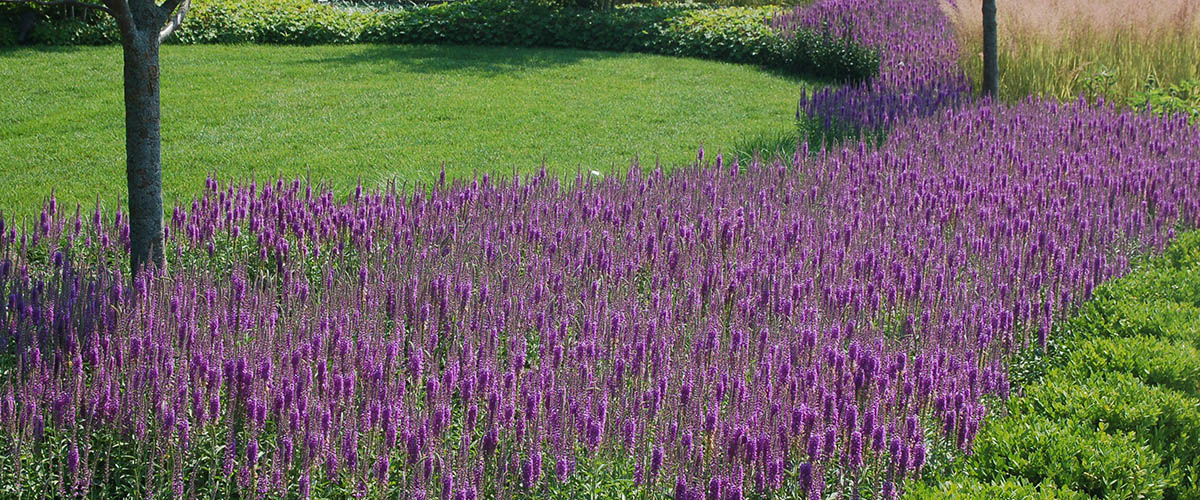
Evaluating Perennials for Chicagoland Gardens
Perennials in Focus is a plant evaluation program that examines new and underused plants for Chicagoland, the third largest metropolitan area in the country. A group of horticultural experts trials and evaluates plants at numerous locations across the region. Results help consumers, public gardens, growers, landscape designers, breeders, and other industry professionals make informed plant choices.
Evaluating Echinacea paradoxa through Chicago winters
Evaluating the cold hardiness of Echinacea paradoxa in Chicago winters requires more than checking whether a plant survives a single cold snap. The yellow coneflower must pass through fluctuating temperatures, saturated spring soils, drying winter winds, and repeated freeze-thaw cycles before its performance can be considered dependable.
This species is valued for its unusual yellow petals, sturdy stems, and prairie character. It can bring a different color and form to perennial borders dominated by pink, purple, and white coneflowers. Yet a promising appearance in summer does not automatically indicate reliable long-term performance in the Chicagoland region.
Regional trials are especially useful because winter conditions vary across a relatively small area. A protected urban garden, an exposed suburban planting, and a heavy clay site may produce very different results from the same plant. Careful observation helps separate true genetic hardiness from the benefits of drainage, snow cover, or a favorable microclimate.
The plant’s natural strengths and limits
Echinacea paradoxa is a central North American prairie perennial with a clumping habit and typically yellow, slightly drooping ray flowers surrounding a prominent cone. It prefers full sun and soil that drains well, particularly during the dormant season. Mature plants often tolerate summer heat and short periods of dryness once their root systems are established.
Cold tolerance is closely tied to crown health and root conditions. A plant may withstand very low air temperatures yet fail after winter if its crown remains wet, freezes and thaws repeatedly, or is weakened by poor establishment. This distinction matters in Chicago, where winter weather can shift rapidly from snow and frozen ground to rain and unseasonably mild temperatures.
The species is generally considered hardy across much of the Midwest, but a regional evaluation should avoid treating a published hardiness zone as a guarantee. Zone ratings describe broad minimum-temperature patterns; they do not capture wind exposure, soil structure, planting date, snow cover, or drainage. Those local factors often determine whether a perennial returns vigorously.
What Chicago winters test
Chicagoland gardens commonly experience several forms of winter stress at once. Deep cold can damage exposed crowns, while freeze-thaw cycles heave shallow-rooted plants and disturb their contact with the soil. Winter rain followed by frozen ground can leave water around the crown, creating conditions that encourage rot before spring growth begins.
Late winter and early spring can be especially revealing. A plant may appear intact in March but show delayed emergence, weak stems, or patchy crown loss in April. Conversely, slow growth may reflect cool soil rather than permanent injury. Evaluators should continue observations well into the growing season before assigning a final survival rating.
Wind exposure also deserves attention. Open sites lose protective snow cover and can dry dormant crowns. A sheltered planting near a building may remain several degrees warmer and receive less wind, producing better results than a roadside or elevated bed. Replicated plantings across different gardens provide a more realistic picture of regional reliability.
Measuring survival and recovery
A useful evaluation records more than simple survival. Observers should note whether each plant emerges, how many shoots appear, how quickly the clump rebuilds, and whether flowering matches the plant’s expected seasonal pattern. A surviving plant with half its crown missing may have limited landscape value even if it technically returns.
Important records include autumn condition, winter protection, spring emergence date, final plant width, stem strength, bloom period, and flower display. It is also helpful to record crown loss, frost injury, lodging, disease, and signs of winter wetness. Photographs taken from the same angle each season can reveal gradual decline that a single written rating may miss.
Several years of data are more informative than one winter. A mild season may hide weaknesses, while an unusually severe season can exaggerate them. Repeated trials across multiple locations help determine whether Echinacea paradoxa is broadly dependable or best reserved for well-drained, protected settings.
How it compares with familiar coneflowers
Gardeners often compare yellow coneflower with more familiar Echinacea species when deciding whether to include it in a planting. The comparison should focus on winter return, spring vigor, flower display, and tolerance of site conditions rather than color alone. Different species and cultivars can respond differently even when they share the same genus.
The following framework helps organize observations without implying that every cultivar will perform identically. Actual results should be based on local plant material, planting conditions, and multiple seasons of monitoring.
| Plant type | Distinctive feature | Winter questions in Chicagoland | Site considerations |
|---|---|---|---|
| Echinacea paradoxa | Yellow rays and prairie form | Does the crown return evenly after wet, fluctuating winters? | Full sun and sharply drained soil |
| Echinacea purpurea | Pink to purple flowers and broad availability | How does its spring recovery compare across cultivars? | Adaptable, but drainage still supports longevity |
| Echinacea pallida | Narrow, swept-back pink rays | Does its lean prairie habit tolerate exposed sites? | Prefers sun and soil that does not stay saturated |
| Hybrid coneflowers | Wide range of colors and forms | Are ornamental traits accompanied by reliable crown survival? | Performance varies considerably by selection |
Colorful hybrids may attract attention in retail settings, but a regional trial can reveal whether a visually distinctive plant also delivers durable landscape performance. For growers and designers, that information can be as valuable as the flower description.
Designing a fair regional trial
A strong trial begins with consistent planting material and clear site records. Plants should be established early enough to develop roots before winter, while the trial should document soil type, sun exposure, irrigation, mulch, planting date, and any supplemental protection. Without those details, winter losses are difficult to interpret.
The program’s evaluation team brings professional horticultural observation to this kind of regional comparison. Multiple gardens and seasons can expose patterns that are invisible in a single backyard, especially when evaluators record both ornamental traits and survival after stressful weather.
Trial managers should resist excessive winter protection if the goal is to measure ordinary landscape performance. A thin, consistent mulch layer may represent standard care, but heavy insulation, artificial drainage, or unusual shelter can make results less applicable to typical gardens. The best protocol defines acceptable care before the season begins.
Planting practices that clarify performance
Gardeners can improve the odds of success while still allowing the plant’s inherent hardiness to be evaluated. The most important step is choosing a site where water drains away from the crown. Raised beds, amended planting zones, or naturally sandy soils may be more suitable than compacted low spots.
- Plant in full sun so stems and foliage dry quickly after rain.
- Avoid locations where melting snow collects around the crown.
- Establish plants early enough to develop substantial roots before severe cold.
- Use modest winter mulch only after the ground has cooled, keeping it loose and away from the crown.
- Leave healthy stems standing through winter when practical, then remove them in late winter or early spring.
Fall fertilization and frequent late-season irrigation can encourage tender growth or prolong lush foliage when the plant should be entering dormancy. A well-established perennial generally benefits more from proper drainage and steady establishment than from intensive feeding.
Turning trial results into planting decisions
Cold hardiness should be interpreted alongside ornamental value. A plant that survives reliably but flowers briefly may fit a different market or design purpose than one with a longer bloom period and moderate winter losses. For public gardens and landscape professionals, consistent habit and predictable spring emergence may be more important than peak flower color.
Retailers and home gardeners can use regional findings to set realistic expectations. If yellow coneflower performs strongly in well-drained trial beds but inconsistently in heavier soils, the recommendation should reflect that distinction. Clear site guidance is more useful than labeling a plant simply “hardy” or “not hardy.”
For Echinacea paradoxa, the most meaningful result is likely a combination of crown survival, spring recovery, flowering quality, and consistency across sites. Those measures show whether the plant can become a dependable component of Chicago-area perennial gardens rather than merely surviving an isolated winter.
Use regional trial observations to choose the right planting location, compare yellow coneflower with proven alternatives, and track its return over several seasons. Explore the published evaluations from Perennials in Focus before adding this distinctive prairie perennial to a Chicagoland landscape.
In the Garden
Evaluator gardens are located across the Chicagoland area, representing a range of growing conditions. Visit our retail and wholesale partners to find trialled perennials for your own garden.
Retail & Wholesale: Hinsdale Nurseries (Willowbrook, IL), Mariani Nurseries (Kenosha, WI & Garden Prairie, IL), Northwind Perennials (Burlington, WI), The Growing Place (Aurora, IL).
Wholesale Only: Hinsdale Nurseries (Plano, IL), Intrinsic Perennial Gardens (Hebron, IL).
Our Evaluation Program
The 2017–2020 evaluation cycle included Agastache 'Blue Boa', Allium senescens 'Blue Eddy', Amsonia ciliata var. filifolia 'Georgia Pancake', Astilbe 'Chocolate Shogun', Boltonia astroides 'James Crocket', Brunnera 'Alexander's Great', and Geranium cinereum 'Jolly Jewel Purple'. Completed evaluations include Amsonia 'Blue Ice' (2004–07).
On April 10, 2020, the program published snapshot profiles for Vernonia lettermanii 'Iron Butterfly', Stokesia laevis 'Elf', Stachys officinalis 'Pink Cotton Candy', Lobelia 'Monet Moment', Helleborus 'Winter Thrillers', Geum 'Mai Tai', Geranium soboliferum 'Butterfly Kisses', Gentiana x intermedia 'True Blue', Eurybia divaricata, Asparagus 'Purple Passion', and Agastache 'Bolero'.
Browse the full collection of snapshots organized alphabetically — from A–D, E–H, I–Q, and R–Z — to find detailed performance data on perennials trialled across Chicagoland.