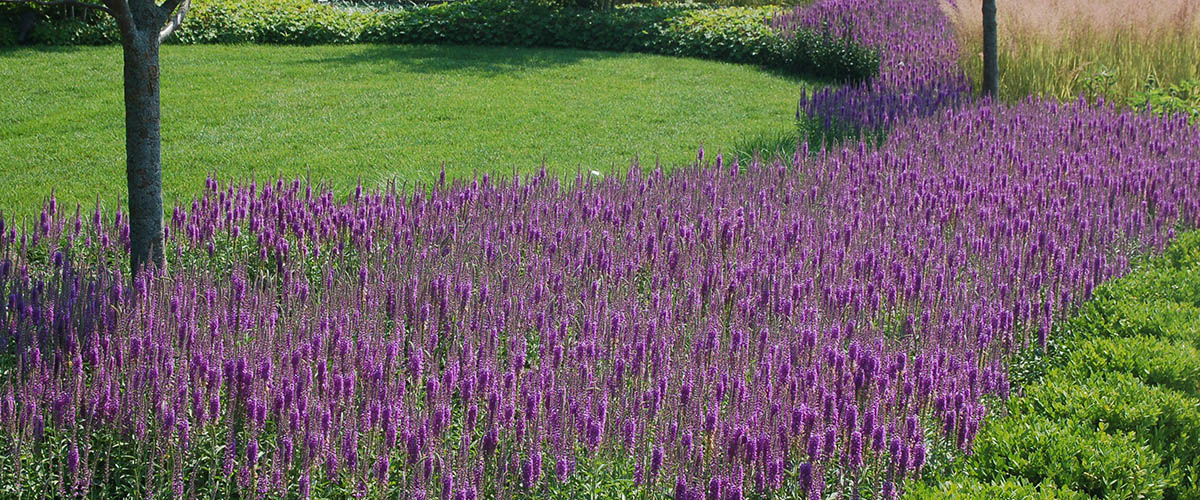
Evaluating Perennials for Chicagoland Gardens
Perennials in Focus is a plant evaluation program that examines new and underused plants for Chicagoland, the third largest metropolitan area in the country. A group of horticultural experts trials and evaluates plants at numerous locations across the region. Results help consumers, public gardens, growers, landscape designers, breeders, and other industry professionals make informed plant choices.
How to design a perennial bed that looks good all year
A successful perennial bed is planned as a sequence of seasonal moments rather than a single summer display. In Chicagoland, the garden must move through a long spring, humid summer, colorful autumn, and a winter of freeze-thaw cycles. The strongest designs account for every phase, including the months when flowers are scarce.
Begin with the bed’s overall shape, sunlight, soil, and viewing angles. Then combine plants with different bloom periods, heights, textures, and habits so that one group takes over as another fades. This approach creates a garden that feels continuously composed instead of briefly spectacular and then empty.
Regional performance matters as much as appearance. A perennial may look impressive in a catalog yet struggle with Chicago-area winters, heavy clay, summer humidity, or inconsistent moisture. Trial information from local gardens can help narrow the choices to plants with proven ornamental value and dependable vigor.
Start With Structure And Site Conditions
A year-round bed needs a permanent framework. Use shrubs, ornamental grasses, evergreen ground covers, seed heads, and strong perennial clumps to give the planting shape after flowers disappear. These elements also divide the space into visual layers, making the bed easier to read from a window, walkway, or patio.
Measure the site before choosing plants. Record how many hours of direct sun it receives in spring and summer, whether water collects after rain, and how quickly the soil dries. A sunny, well-drained border supports a different plant palette from a part-shade bed beneath mature trees. Improving compacted soil with organic matter can help, but drainage problems may require grading or a dedicated moisture-tolerant planting zone.
Plan mature width as carefully as mature height. Plants placed too closely may look lush during the first season but become crowded, weak, and disease-prone later. Leave room for each perennial to reach its expected spread, while using temporary annuals or bulbs to fill gaps during establishment.
Build A Sequence Of Seasonal Bloom
Spring interest can begin with bulbs, early woodland perennials, and low-growing plants that cover bare soil before the main border develops. Add midseason performers for late spring and early summer, then reserve space for heat-loving plants that reach their peak in July and August. Autumn bloomers, grasses, and plants with colorful foliage carry the display into October.
Think in overlapping bloom windows rather than isolated flowering dates. A late-spring perennial should share space with emerging summer plants, while an early-summer bloomer can be paired with a later plant whose foliage is already attractive. Repeating a few dependable species across the bed creates rhythm and makes the transitions feel intentional.
Color can also create seasonal continuity. Cool blues, whites, and soft pinks often suit spring, while saturated yellows, reds, and oranges bring energy to summer. In fall, burgundy foliage, copper seed heads, and purple or rose flowers can connect the planting to the changing landscape. Repeating one color in several areas prevents the bed from looking like a collection of unrelated specimens.
Balance Height, Texture, And Flower Form
Place the tallest plants where they will not block shorter companions. In a border viewed from one side, tall perennials usually belong toward the back; in an island bed, they can be placed near the center with shorter plants surrounding them. Avoid creating a rigid staircase, however. Slight height variation and a few plants that lean or arch toward paths make the composition feel more natural.
Texture keeps the garden interesting between bloom periods. Combine broad leaves with narrow grass blades, rounded flower clusters with flat-topped umbels, and upright stems with spreading or mounding forms. Plants with attractive foliage can carry the design through periods when flowers are absent, especially in shaded areas where bloom may be more limited.
Include plants with useful garden functions. Upright stems can provide winter silhouettes, dense foliage can suppress weeds, and seed-bearing flowers can support birds. If cutting flowers is part of the plan, select sturdy, productive plants that tolerate repeated harvesting. This guide to cut flowers that overwinter can help identify options suited to Chicago-area conditions.
| Season | Design role | Useful plant qualities | Placement ideas |
|---|---|---|---|
| Early spring | Wake the bed and cover emerging soil | Bulbs, low mounds, fresh foliage | Front edge, between slow-emerging perennials |
| Late spring | Establish color and pollinator activity | Clumping habit, reliable bloom, medium height | Repeated in drifts through the middle layer |
| Summer | Provide the main floral display | Heat tolerance, sturdy stems, long bloom period | Middle and rear layers, with foliage companions |
| Late summer | Carry color through peak heat | Drought tolerance, strong branching, textured leaves | Sunny gaps and transition zones |
| Autumn | Extend interest after summer plants fade | Late flowers, colored foliage, seed heads | Mixed throughout the bed for continuity |
| Winter | Preserve form and habitat | Persistent stems, grasses, evergreen foliage | Visible locations near windows and paths |
Use Repetition Instead Of Plant Collecting
A bed usually looks more cohesive when several plants are repeated in groups of three, five, or more. Repetition gives the eye a path through the planting and makes individual varieties feel part of a larger composition. Odd-numbered groupings are especially useful in informal borders, though the mature size of each plant should determine spacing.
Limit the number of primary flowering colors. Two or three dominant hues, supported by neutrals such as white, green, or silver, are easier to coordinate across multiple seasons. You can add contrast through foliage and flower form instead of introducing a different color for every bloom period.
Avoid scattering one plant in every open spot. That strategy often produces visual noise and makes maintenance difficult. Instead, create broad drifts that can be seen from a distance, then add a few distinctive accents near paths or focal points. Regional plant snapshots can provide useful examples of individual plants and their observed characteristics when you are deciding which accents deserve space.
Design For Foliage And Winter Interest
Flowers attract attention, but foliage carries the bed for much longer. Select a mixture of leaf shapes, colors, and surfaces, including deep green, blue-green, gold, silver, and variegated forms. Place delicate foliage beside bold leaves so each plant remains distinguishable. A strong foliage pattern can make a bed feel finished even after a flush of flowers has passed.
Do not cut everything down in autumn. Many perennials offer attractive stems, dried flower heads, or persistent foliage that catches frost and snow. These structures also provide shelter and food for wildlife. Remove only damaged, diseased, or unsafe material in fall, leaving sturdy stems until late winter or early spring when possible.
Winter visibility should influence plant placement. Grasses and seed heads are most valuable where they can be seen from indoors or along frequently used paths. Evergreen or semi-evergreen ground covers can protect bare soil and reduce the stark appearance of dormant beds. A few carefully chosen structural plants are usually more effective than leaving every perennial standing.
Keep The Planting Healthy And Manageable
A beautiful design should fit the amount of care available. Group plants with similar water and light needs, then make access paths wide enough for weeding, dividing, and adding compost. Mulch can conserve moisture and reduce weeds, but keep it away from crowns and stems to limit rot and pest problems.
Deadheading can extend bloom and improve appearance, though it should be selective. Remove spent flowers from plants that become untidy or stop blooming, while leaving seed heads that contribute to winter structure or wildlife value. Dividing overcrowded clumps every few years restores vigor and prevents aggressive plants from overwhelming slower companions.
Choose disease-resistant and regionally tested selections whenever possible. Performance records that include bloom period, mature size, flower color, and spread are especially valuable because they support realistic spacing and seasonal planning. The goal is a border that becomes fuller and more expressive with age, rather than one that requires constant replacement.
A Practical Planting Checklist
- Map sunlight, drainage, mature plant size, and the main viewing points before buying plants.
- Select dependable performers for early spring, summer, late summer, and autumn interest.
- Repeat key colors, foliage types, and plant groups to create visual rhythm.
- Leave winter stems, grasses, and seed heads where they provide structure or wildlife value.
- Review regional trial observations before committing large areas to unfamiliar perennials.
A bed that looks good in every season is built through succession, repetition, and restraint. Give the planting a lasting framework, then layer in flowers and foliage that take turns carrying attention. In Chicagoland, local performance information makes that process more reliable by showing which plants can handle the region’s real growing conditions.
Explore Perennials in Focus evaluations and plant snapshots as you refine your next border. With thoughtful selection and room for plants to mature, your perennial garden can offer color, texture, habitat, and structure from the first spring growth through the quiet beauty of winter.
In the Garden
Evaluator gardens are located across the Chicagoland area, representing a range of growing conditions. Visit our retail and wholesale partners to find trialled perennials for your own garden.
Retail & Wholesale: Hinsdale Nurseries (Willowbrook, IL), Mariani Nurseries (Kenosha, WI & Garden Prairie, IL), Northwind Perennials (Burlington, WI), The Growing Place (Aurora, IL).
Wholesale Only: Hinsdale Nurseries (Plano, IL), Intrinsic Perennial Gardens (Hebron, IL).
Our Evaluation Program
The 2017–2020 evaluation cycle included Agastache 'Blue Boa', Allium senescens 'Blue Eddy', Amsonia ciliata var. filifolia 'Georgia Pancake', Astilbe 'Chocolate Shogun', Boltonia astroides 'James Crocket', Brunnera 'Alexander's Great', and Geranium cinereum 'Jolly Jewel Purple'. Completed evaluations include Amsonia 'Blue Ice' (2004–07).
On April 10, 2020, the program published snapshot profiles for Vernonia lettermanii 'Iron Butterfly', Stokesia laevis 'Elf', Stachys officinalis 'Pink Cotton Candy', Lobelia 'Monet Moment', Helleborus 'Winter Thrillers', Geum 'Mai Tai', Geranium soboliferum 'Butterfly Kisses', Gentiana x intermedia 'True Blue', Eurybia divaricata, Asparagus 'Purple Passion', and Agastache 'Bolero'.
Browse the full collection of snapshots organized alphabetically — from A–D, E–H, I–Q, and R–Z — to find detailed performance data on perennials trialled across Chicagoland.