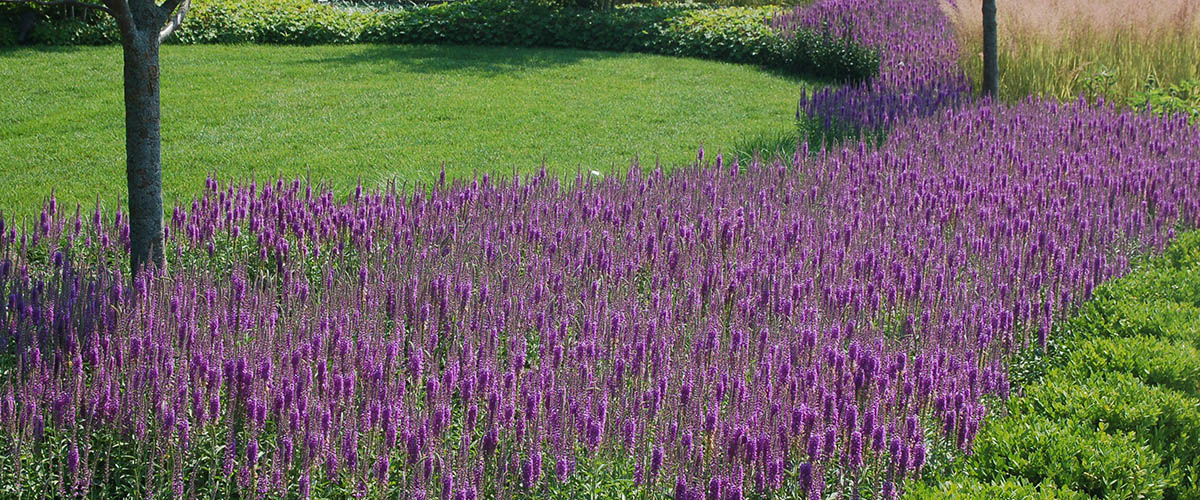
Evaluating Perennials for Chicagoland Gardens
Perennials in Focus is a plant evaluation program that examines new and underused plants for Chicagoland, the third largest metropolitan area in the country. A group of horticultural experts trials and evaluates plants at numerous locations across the region. Results help consumers, public gardens, growers, landscape designers, breeders, and other industry professionals make informed plant choices.
Penstemon Digitalis For Sunny Clay Gardens
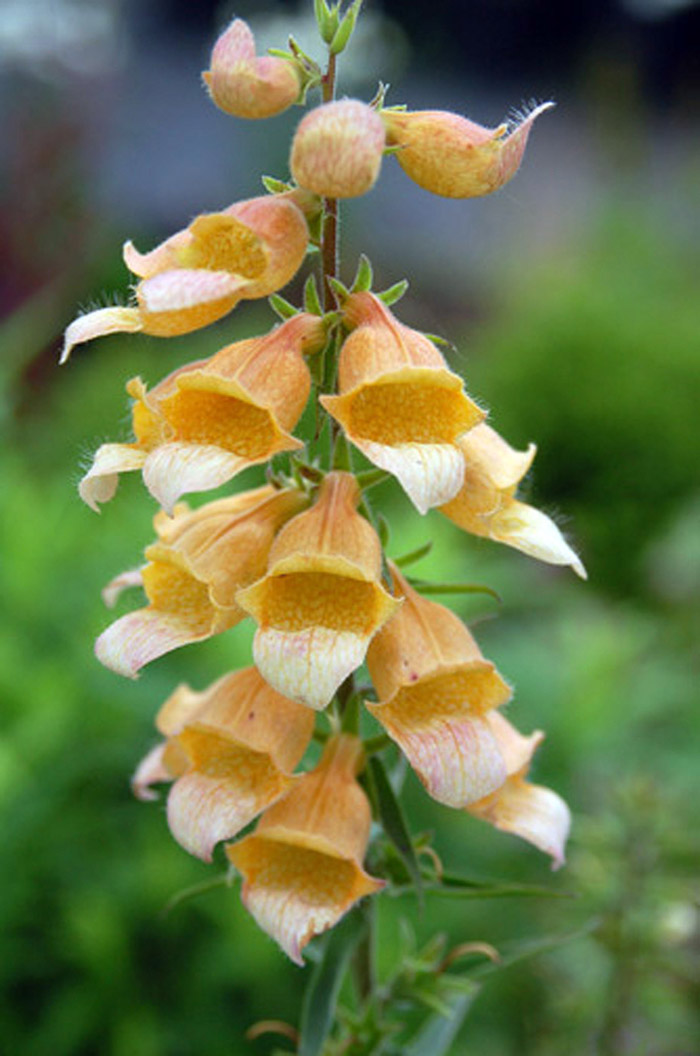
Penstemon digitalis is a North American perennial with upright flower stems, glossy basal foliage and a tidy clumping habit. Its pale tubular flowers usually appear in late spring to early summer, attracting bees and other pollinators while adding a strong vertical accent to mixed borders.
For growers and gardeners working with heavy clay, the plant raises a useful question: can a species adapted to well-drained conditions cope with compacted soil, seasonal saturation and hot summer exposure? Trialing the performance of Penstemon digitalis in heavy clay under full sun helps separate genuine resilience from simple survival.
The answer matters in both the Chicagoland evaluation region and Australian gardens. Clay is common around Melbourne, Geelong, Canberra and parts of Sydney, while local gardeners often need plants that can handle a wet winter, a dry summer and the occasional scorcher without constant fussing.
What The Trial Needs To Measure
A meaningful trial should examine more than whether plants remain alive. Record establishment speed, basal foliage quality, flowering time, stem strength, plant height, spread and the number of flower stems produced by each plant. It is also worth noting whether clumps collapse after heavy rain or need staking in exposed beds.
The soil should be described carefully. “Heavy clay” can mean a dense reactive clay that holds water for days, or a clay loam improved with compost and organic matter. Those conditions produce very different results. Record drainage, soil pH, irrigation, mulch depth and any soil preparation so that the findings are useful to home gardeners and landscape professionals.
In a Chicagoland setting, the plant’s crown must cope with freeze-thaw cycles, wet spring soil and humid summer weather. In Australia, the same planting may face a long dry spell, intense afternoon heat or sudden storm rainfall. A good evaluation therefore tracks seasonal performance rather than relying on a single flush of flowers.
Soil And Drainage In Clay
Penstemon digitalis can tolerate heavier soil when it is not permanently waterlogged. Its crown and roots need air, particularly through cool, wet periods. In compacted clay, shallow planting and gentle mounding are often safer than digging a narrow, deep hole that becomes a sump around the root ball.
Avoid filling the planting hole with rich compost alone. That creates an abrupt pocket with different moisture behaviour from the surrounding soil. Instead, loosen a broad area, incorporate modest amounts of well-decomposed organic matter across the bed and keep the crown level with, or slightly above, the finished soil surface.
A light organic mulch can reduce cracking and evaporation, but it should remain clear of the crown. In a Melbourne garden with heavy basalt clay, a raised position may be more valuable than extra fertiliser. In Sydney’s rainfall-prone suburbs, gardeners should watch for summer storms that leave compacted beds saturated even when the surrounding garden appears dry.
For broader guidance on matching perennial choices to seasonally wet sites, this rain garden guide provides useful regional context, especially when assessing drainage and water movement rather than simply choosing plants labelled “moisture tolerant”.
Flowering And Form In Full Sun
In full sun, Penstemon digitalis generally develops the strongest stems and most abundant flowering. The white to blush-pink flowers are held in narrow clusters above the foliage, giving the plant a clean, vertical shape. Some selections have darker foliage or stronger colour contrast, though performance should be judged alongside ornamental traits.
The trial should record flowering dates over several seasons. A plant that flowers early and finishes quickly may be useful in a spring-focused border, while a plant with a longer display may provide greater value in public landscapes and retail gardens. Deadheading can improve neatness and may encourage a modest second flush, but it should not be treated as essential for basic performance.
Full sun does not mean reflected heat from paving or a north-facing wall will suit every site. In Adelaide or inland New South Wales, afternoon heat can shorten flowering and stress shallow-rooted plants. Regular deep watering during establishment, followed by less frequent irrigation once roots are established, gives a clearer picture of the plant’s natural tolerance.
Air movement also matters. Dense planting and persistent humidity can encourage foliar blemishes, especially where foliage stays wet overnight. A trial should photograph the foliage at consistent intervals and distinguish cosmetic damage from a decline in plant vigour.
Establishment, Maintenance And Market Use
Young plants may look modest in their first season, particularly when supplied as small nursery tubes. By the second season, a well-rooted clump should show stronger basal growth and more flower stems. This timing is important for Australian growers, because retail customers often expect a perennial to make an immediate visual impact in a small pot.
Local availability can shape commercial potential. Australian nurseries commonly sell perennials through advanced tubes, 140 mm pots or seasonal benches, while specialist growers may supply plants to landscapers in larger batches. A cultivar that establishes reliably from small stock can be easier to produce and transport than one that only looks impressive in a large container.
Maintenance is relatively straightforward: remove spent stems after flowering, cut back tired foliage when appropriate and keep competing weeds away during establishment. Avoid excessive nitrogen, which can produce lush foliage at the expense of sturdy flowering stems. In Canberra, winter cold may naturally reset the plant; in frost-free districts, the foliage can remain present for longer.
For public gardens, streetscapes and water-sensitive landscapes, the plant’s value will depend on repeatability. Garden designers may accept a shorter flowering window if the clump has attractive foliage and dependable form. Home gardeners, by contrast, may prioritise low watering needs, pollinator activity and the ability to handle a “set and forget” sunny border once established.
Interpreting Results Across Gardens
A multi-site evaluation is stronger when every location uses the same basic scoring system. Rate winter survival, spring emergence, foliage quality, flower abundance, lodging, weed competition and overall appearance on a simple scale. Add written observations for events that numbers cannot explain, such as crown loss after prolonged rain or delayed recovery after heat.
The comparison below separates characteristics that are likely to remain fairly consistent from those strongly shaped by site conditions. It should guide trial interpretation rather than act as a guarantee for every Australian garden.
| Trait | Likely performance in heavy clay and full sun | What may change by site |
|---|---|---|
| Flower colour | Usually white to pale pink, depending on selection | Heat and light can affect colour intensity |
| Mature height | Commonly about 60–100 cm in flower | Fertility, moisture and wind can alter stem height |
| Spread | Often around 30–45 cm as a clump | Crowding and soil moisture influence density |
| Flowering period | Late spring to early summer in temperate regions | Warmer districts may bring earlier flowering |
| Clay tolerance | Reasonable when drainage is adequate | Poor drainage can cause crown decline |
| Water needs | Moderate during establishment, lower after rooting | Hot, dry Australian sites may need supplementary irrigation |
| Staking | Often unnecessary in open, sunny beds | Heavy rain, rich soil or wind may increase lodging |
| Pollinator value | Tubular flowers are attractive to bees and other insects | Flowering duration affects total garden value |
The most useful outcome is a clear description of where the plant succeeds and where it needs help. If Penstemon digitalis survives but flowers poorly in dense clay, the recommendation may be “use on a raised or sloping position” rather than “avoid clay”. If it retains strong foliage, upright stems and reliable flowering across several gardens, it becomes a credible candidate for tough sunny borders.
Trial results can help Australian retailers decide whether to promote it for Melbourne clay, Canberra’s colder conditions or milder coastal districts. They can also help breeders and growers identify which selections deserve further evaluation, especially when flower colour, compact habit or heat tolerance are important commercial traits.
Grow Penstemon digitalis beside other sun-loving perennials and record its progress through at least two seasons. Share observations on soil, rainfall, flowering and plant form with local gardening groups, nurseries or evaluation programs so that future recommendations reflect real garden conditions rather than catalogue descriptions alone.
In the Garden
Evaluator gardens are located across the Chicagoland area, representing a range of growing conditions. Visit our retail and wholesale partners to find trialled perennials for your own garden.
Retail & Wholesale: Hinsdale Nurseries (Willowbrook, IL), Mariani Nurseries (Kenosha, WI & Garden Prairie, IL), Northwind Perennials (Burlington, WI), The Growing Place (Aurora, IL).
Wholesale Only: Hinsdale Nurseries (Plano, IL), Intrinsic Perennial Gardens (Hebron, IL).
Our Evaluation Program
The 2017–2020 evaluation cycle included Agastache 'Blue Boa', Allium senescens 'Blue Eddy', Amsonia ciliata var. filifolia 'Georgia Pancake', Astilbe 'Chocolate Shogun', Boltonia astroides 'James Crocket', Brunnera 'Alexander's Great', and Geranium cinereum 'Jolly Jewel Purple'. Completed evaluations include Amsonia 'Blue Ice' (2004–07).
On April 10, 2020, the program published snapshot profiles for Vernonia lettermanii 'Iron Butterfly', Stokesia laevis 'Elf', Stachys officinalis 'Pink Cotton Candy', Lobelia 'Monet Moment', Helleborus 'Winter Thrillers', Geum 'Mai Tai', Geranium soboliferum 'Butterfly Kisses', Gentiana x intermedia 'True Blue', Eurybia divaricata, Asparagus 'Purple Passion', and Agastache 'Bolero'.
Browse the full collection of snapshots organized alphabetically — from A–D, E–H, I–Q, and R–Z — to find detailed performance data on perennials trialled across Chicagoland.