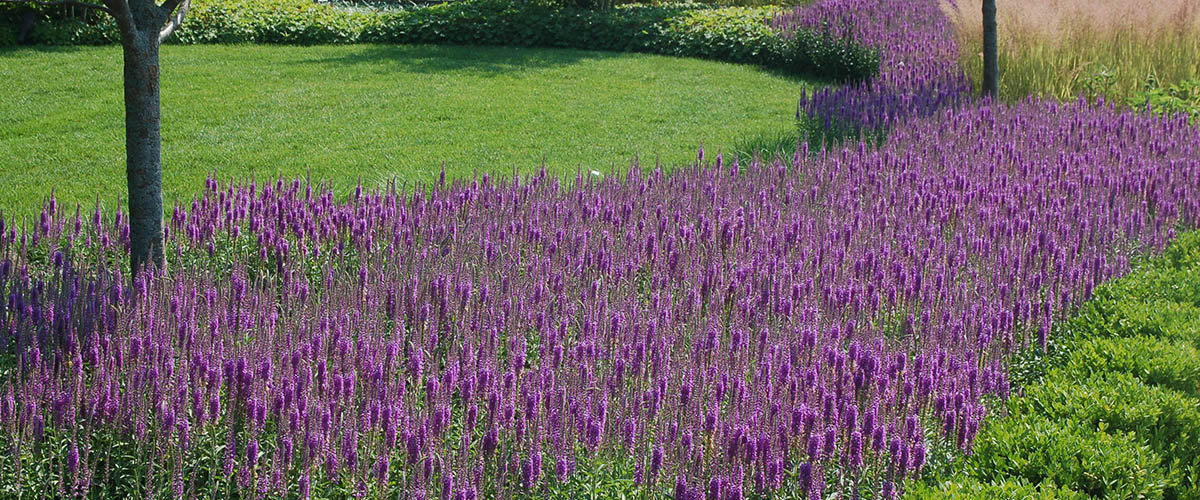
Evaluating Perennials for Chicagoland Gardens
Perennials in Focus is a plant evaluation program that examines new and underused plants for Chicagoland, the third largest metropolitan area in the country. A group of horticultural experts trials and evaluates plants at numerous locations across the region. Results help consumers, public gardens, growers, landscape designers, breeders, and other industry professionals make informed plant choices.
Trialing the cut flower vase life of Maximilian sunflowers
Trialing the cut flower vase life of Helianthus maximiliani in home arrangements turns a bold border perennial into a practical floral experiment. Instead of judging a bouquet after one weekend, gardeners can follow stems from harvest to final fade while comparing harvest stage, hydration and room conditions. Learn more about Evaluating The Self Seeding Tendencies Of Aquilegia Canadensis In Home Gardens Basics.
Perennials in Focus grew from collaborative Chicagoland trials recording bloom period, colour, height and spread across gardens and seasons. Its findings offer a useful reference point for Australia, but not a transplant of the calendar: local seasons run in the opposite direction, and Sydney, Melbourne and Adelaide place the same species in very different heat, humidity and wind. Learn more about Mission.
Setting up a repeatable home trial
Begin with healthy stems from plants of similar age and flower stage. Choose a sheltered patch because the large heads of Maximilian sunflower can become top-heavy after rain. Across much of southern Australia, flowering runs from late summer into early autumn; in frost-free districts, plants may behave as short-lived perennials or annuals, so record local growing conditions.
Cut at least six stems together and assign treatments. Use sharp tools, remove foliage below the waterline, and place stems into a shaded bucket. General flower-care guidance can support consistent handling, but the trial should change one variable at a time.
| Harvest treatment | Provisional vase-life band | Main point to watch |
|---|---|---|
| Tight buds, cool-morning harvest | 7–10 days | Even opening indoors |
| Flowers one-third open, cool-morning harvest | 6–9 days | Water clarity and stem firmness |
| Fully open flowers, cool-morning harvest | 4–7 days | Petal browning and drooping |
| Warm-afternoon harvest | 3–6 days | Heat stress and rapid water use |
Log the harvest date and time, bloom stage, stem length in centimetres, water and room temperatures in degrees Celsius, and the first day each head loses usable petals. Check at roughly the same hour daily. Photographs from one position on days one, three, five and seven make fading and drooping easier to compare than notes alone.
Actual life may be shorter in a hot room or longer with frequent recutting, so report the observed range rather than the best result. Pair a morning harvest with an afternoon harvest while keeping stem length, vase size and watering routine comparable.
Harvesting for the longest display
Harvest in the early morning after dew has dried, when stems are hydrated and the room is cool. Pick heads that are tight or about one-third open; fully expanded flowers look impressive but may shed petals sooner. Avoid leaning, damaged or drought-stressed plants.
Recut each thick stem with a sharp blade, preferably underwater, and remove every leaf below the waterline. Do not crush stems with blunt secateurs, because damaged tissue can restrict uptake. Carry buckets indoors rather than leaving cut stems in a hot vehicle, an important precaution during an Australian heatwave.
At home, use a clean vase with enough water to cover the stems and change the water every two or three days. Top up daily between changes and recut about 1–2 centimetres. Remove fallen petals and submerged foliage, and keep the arrangement away from ripening fruit and direct sun.
Tracking heat, wind, and water
Australian conditions can alter a vase trial quickly. Sydney homes may start warm and humid before an air-conditioned afternoon; Melbourne can swing from a windy night to strong morning sun; Adelaide often brings dry heat that draws water from the bucket rapidly. Record the temperature where the arrangement stands, not merely the outside forecast.
Water level is a useful stress indicator but should not be the only measure. Check whether water stays clear, stems feel firm and petals remain turgid at midday. In humid conditions, change cloudy water sooner; in dry conditions, a small vase may need more frequent top-ups than a broad decorative container.
Separate three causes of failure when a flower fades. Brown petals without a slimy stem can indicate heat, age or fruit-related gases; a soft base suggests poor hydration or contamination; sudden drooping may mean the heavy head needs support. Recording these signs with daily water levels is more useful than writing only “wilted”.
Styling relaxed Australian arrangements
The scale of Maximilian sunflower suits the relaxed, garden-inspired displays common in Australian homes, where one dramatic bloom can replace a dense formal posy. Put a tall stem in a floor vase or stable kitchen jar. A shallow bowl may trap the head against the rim, encouraging the stem to bend.
Pair one or two sunflowers with seasonal Australian material sold by local florists, such as eucalyptus foliage, grevillea or banksia. Check added stems separately because some natives have shorter vase lives that could conceal the sunflower’s performance. Leave space around the central flower instead of crowding it.
For longevity, place the arrangement on a dining table away from a fruit bowl, on an entry console with stable light, or in a bright room without hard afternoon sun. A back-door work surface may suit the informal style, but a doorway draught, heater or air-conditioner vent can shorten the display. Record the location for comparison.
Comparing results with other perennials
A perennial can perform beautifully in a border yet disappoint as a cut flower. Compare vase results with the plant’s recorded bloom period, flower colour, height and spread, as Perennials in Focus does across seasons. Note usable stems per plant: a sprawling clump may yield one dramatic stem, while a compact plant supplies several shorter ones.
Border performance is not the only question. Related Aquilegia self-seeding observations show another way garden behaviour can differ from expectations: seedlings may appear around a home, but that does not reveal flowering continuity or cut-flower performance. Keeping border and vase observations distinct makes the final plant recommendation more reliable.
Use a consistent endpoint, such as the day when half the petals on a head are no longer presentable, and report both the average and full range. Note exceptional conditions too. A hot week, delayed water change or unsupported stem may explain an unusually short result and help readers separate plant quality from household conditions.
Recording findings and sharing the trial
Create a simple record for each treatment with date, location, weather, bloom stage, water changes and daily stem condition. Include photographs of the flower face and stem base, plus days from cutting to the agreed endpoint. This creates an account that gardeners, growers, retailers and public gardens can interpret together.
The work aligns with the program’s trial mission: identify plants that genuinely perform in the region and publish observations that support informed choices. A vase-life note can sit alongside border data without replacing it, giving buyers a fuller picture of a perennial’s value at home.
Start this week by selecting six comparable stems, cutting four in the cool morning and two in the afternoon, and placing them in clean water with matched vases and care. Log the display daily, photograph the changes, and share the dated results and local conditions with Perennials in Focus so the next grower can trial with better evidence.
In the Garden
Evaluator gardens are located across the Chicagoland area, representing a range of growing conditions. Visit our retail and wholesale partners to find trialled perennials for your own garden.
Retail & Wholesale: Hinsdale Nurseries (Willowbrook, IL), Mariani Nurseries (Kenosha, WI & Garden Prairie, IL), Northwind Perennials (Burlington, WI), The Growing Place (Aurora, IL).
Wholesale Only: Hinsdale Nurseries (Plano, IL), Intrinsic Perennial Gardens (Hebron, IL).
Our Evaluation Program
The 2017–2020 evaluation cycle included Agastache 'Blue Boa', Allium senescens 'Blue Eddy', Amsonia ciliata var. filifolia 'Georgia Pancake', Astilbe 'Chocolate Shogun', Boltonia astroides 'James Crocket', Brunnera 'Alexander's Great', and Geranium cinereum 'Jolly Jewel Purple'. Completed evaluations include Amsonia 'Blue Ice' (2004–07).
On April 10, 2020, the program published snapshot profiles for Vernonia lettermanii 'Iron Butterfly', Stokesia laevis 'Elf', Stachys officinalis 'Pink Cotton Candy', Lobelia 'Monet Moment', Helleborus 'Winter Thrillers', Geum 'Mai Tai', Geranium soboliferum 'Butterfly Kisses', Gentiana x intermedia 'True Blue', Eurybia divaricata, Asparagus 'Purple Passion', and Agastache 'Bolero'.
Browse the full collection of snapshots organized alphabetically — from A–D, E–H, I–Q, and R–Z — to find detailed performance data on perennials trialled across Chicagoland.