Evaluating Perennials for Chicagoland Gardens
Perennials in Focus is a plant evaluation program that examines new and underused plants for Chicagoland, the third largest metropolitan area in the country. A group of horticultural experts trials and evaluates plants at numerous locations across the region. Results help consumers, public gardens, growers, landscape designers, breeders, and other industry professionals make informed plant choices.
Trialing New Salvia Sylvestris Cultivars for Zone 5b
Trialing the cold hardiness of newer Salvia sylvestris cultivars in Zone 5b reveals much more than whether a plant survives winter. The evaluation also shows how quickly each selection resumes growth, whether the crown remains healthy in wet soil, and how reliably it flowers after a harsh season.
For gardeners in Australia, these findings provide useful evidence even though Australian climate zones are mapped differently from USDA Zone 5b. A cultivar that withstands temperatures near -26°C has a substantial cold tolerance margin for many southern Australian gardens, while drainage, summer heat and humidity may become the greater concerns.
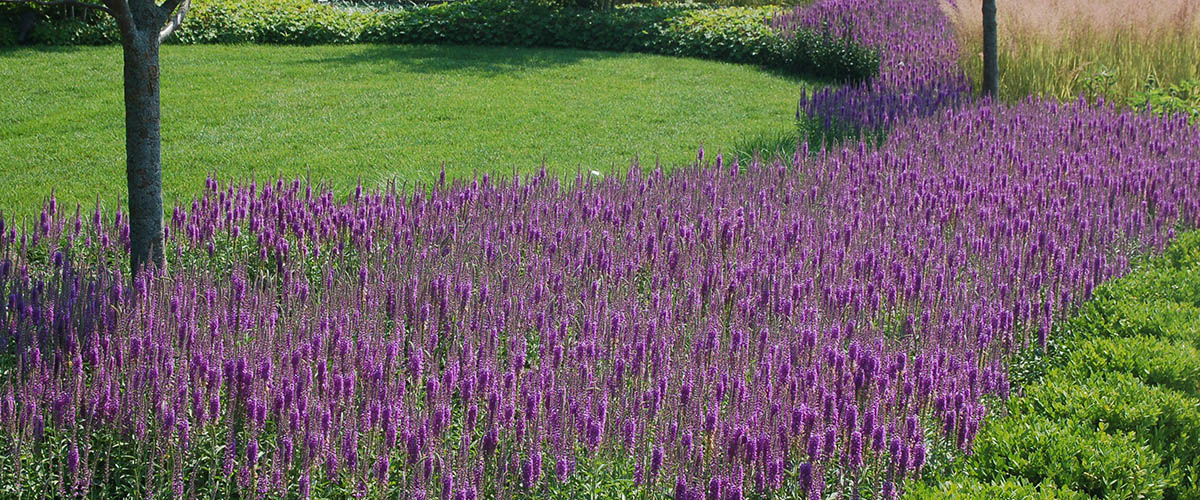
Salvia sylvestris, commonly sold as woodland sage, includes compact, upright and strongly branching forms with flower spikes in blue, violet, pink or white. Cultivars can look similar on a nursery bench yet respond very differently to freeze-thaw cycles, prolonged snow cover and late spring frosts.
| Trial feature | What it reveals | Why it matters to gardeners |
|---|---|---|
| Crown survival | Whether the plant remains alive below ground | Separates true hardiness from temporary winter dormancy |
| Spring emergence | Timing and uniformity of new shoots | Indicates recovery after freezing conditions |
| Stem loss | Damage to woody or semi-woody growth | Helps determine pruning and maintenance needs |
| Flowering performance | Spike number, timing and height | Shows whether winter survival leads to garden value |
| Wet-season response | Crown rot, collapse or weak regrowth | Identifies cultivars needing sharper drainage |
What Zone 5b Winter Reveals
USDA Zone 5b generally experiences minimum winter temperatures from -26.1°C to -23.4°C. That range tests the underground crown, basal buds and root system of a perennial, particularly when a cold snap arrives before the soil is consistently frozen. A cultivar may tolerate a brief low temperature yet fail after repeated freezing and thawing.
Winter survival is also influenced by snow cover. A stable blanket of snow can insulate the crown, whereas exposed plants face desiccating wind and rapid temperature changes. For this reason, a trial across several gardens gives a more reliable picture than a single showcase planting in a sheltered border.
Newer selections should be compared with an established Salvia sylvestris cultivar grown under the same conditions. The standard provides a reference point for survival, emergence and bloom. Without that comparison, a mild winter or unusually protected site can make an average plant appear exceptionally hardy.
How Trials Separate Cultivars
A useful evaluation begins with consistent planting conditions. Plants should be installed at the same depth, spaced according to mature spread and observed across more than one winter. Trial managers record autumn condition, crown damage, first visible shoots, percentage survival and flowering performance rather than relying on a simple alive-or-dead rating.
Site variation is valuable when it is documented. A sunny raised bed, a heavy clay border and a level garden that holds winter moisture can expose different weaknesses. Salvia sylvestris generally prefers full sun and free-draining soil, so a cultivar that survives only in a sharply drained bed may need a more cautious recommendation than one that recovers across several soil types.
Records should also distinguish winter damage from other causes of failure. Rabbits, crown rot, poor establishment, accidental cultivation and late frost can all reduce spring growth. Photographs and dated notes make the final assessment more useful to growers, garden designers and retailers deciding which cultivars deserve wider promotion.
Reading Survival And Recovery
Cold hardiness is not measured by survival alone. A plant that produces a few weak shoots in late May may be less useful than one that emerges strongly in early April and forms a dense flowering clump. Assessments should therefore include vigour, stem count, canopy shape and the time required to regain the previous season’s size.
Flowering data adds another layer. A cultivar may survive an extreme winter but flower several weeks later, produce shorter spikes or show reduced colour intensity. Others may lose old stems while quickly rebuilding from the crown. Those differences matter in mixed perennial borders, where a late-performing plant can leave an early-season gap.
Trial teams can record results using a simple scale: complete loss, poor recovery, acceptable recovery, strong recovery and outstanding recovery. Notes on height and spread should be taken at flowering rather than copied from catalogue descriptions. Such observations help buyers select plants for edging, mass planting, cottage-style borders or pollinator-focused schemes.
Mulch, Drainage And Winter Protection
Mulch can moderate soil temperature and protect shallow crowns, but excessive depth may delay spring emergence or keep the crown too wet. The timing and depth of organic material should be recorded alongside survival results. Guidance on this interaction is available in the spring mulch checklist, which is especially relevant when comparing early-emerging cultivars.
In Zone 5b, a light, loose mulch applied after the ground begins to freeze can reduce heaving without burying the crown. In milder climates, heavy winter mulch may do more harm than good. Australian gardeners often mulch to conserve moisture during hot weather, but in Melbourne’s cool wet winters or Hobart’s damp conditions, keeping the crown too enclosed can encourage rot.
Drainage deserves equal attention. A raised position, compost that improves structure and restrained irrigation can help roots survive wet periods. In Sydney or Brisbane, where winter cold is less severe but humidity and summer rainfall can be significant, a cultivar’s performance may depend more on airflow and drainage than on frost resistance.
Translating Findings For Australian Gardens
Australian gardeners should treat Zone 5b data as a cold-stress benchmark rather than a direct planting prescription. Canberra and inland New South Wales can deliver sharp frosts, while Melbourne gardens may combine cold nights with winter rainfall. Adelaide’s dry summers create a different test, and coastal Sydney usually offers mild winters but greater humidity and less predictable heat.
Everyday garden habits also influence results. Gardeners checking Bureau of Meteorology frost forecasts may delay cutting back damaged stems until new growth is visible. In areas affected by water restrictions, established Salvia sylvestris can be attractive because it generally prefers well-drained soil and moderate watering once settled, though new plantings still need consistent moisture.
Availability is another practical factor. Australian nurseries may carry a narrow selection of named salvias, with stock varying by state and season. Plant labels should be checked for cultivar identity rather than relying on flower colour alone. If a protected variety is propagated or sold, the Plant Breeder’s Rights Act 1994 may restrict commercial propagation, so growers should use licensed material and respect breeder rights.
Importing plant material from overseas is also governed by Australian biosecurity requirements. Seed, divisions and live plants may require permits, treatment or inspection, and many items are prohibited. Local trial results and reputable Australian nurseries are therefore safer sources than informal overseas exchanges.
Applying Results To Plant Choices
A strong trial report should present both strengths and limitations. It might identify a cultivar with excellent crown survival but slow spring emergence, another with fast recovery but poor performance in wet soil, and a third that combines reliable flowering with a compact habit. This is more useful than declaring one plant the universal winner.
Retailers and landscape professionals can use those distinctions to match cultivars with conditions. A compact selection with early flowering may suit a front garden or container, while a taller, vigorous form may perform better in a large perennial border. Public gardens can use replicated plantings to demonstrate seasonal change and help visitors understand why cultivars differ.
Clear photographs and seasonal notes make the information accessible to home gardeners. The Perennials in Focus seasonal trial snapshots can help readers connect written ratings with actual plant form, emergence and flowering habits. Seeing the whole clump through the year is often more informative than viewing a single peak-bloom image.
Use cold-hardiness results as one part of a wider selection process. Match the cultivar to winter exposure, drainage, summer moisture, mature size and local availability, then observe it for at least two growing seasons. By combining trial evidence with careful site preparation, Australian gardeners can choose Salvia sylvestris cultivars with greater confidence and fewer costly replacements.
In the Garden
Evaluator gardens are located across the Chicagoland area, representing a range of growing conditions. Visit our retail and wholesale partners to find trialled perennials for your own garden.
Retail & Wholesale: Hinsdale Nurseries (Willowbrook, IL), Mariani Nurseries (Kenosha, WI & Garden Prairie, IL), Northwind Perennials (Burlington, WI), The Growing Place (Aurora, IL).
Wholesale Only: Hinsdale Nurseries (Plano, IL), Intrinsic Perennial Gardens (Hebron, IL).
Our Evaluation Program
The 2017–2020 evaluation cycle included Agastache 'Blue Boa', Allium senescens 'Blue Eddy', Amsonia ciliata var. filifolia 'Georgia Pancake', Astilbe 'Chocolate Shogun', Boltonia astroides 'James Crocket', Brunnera 'Alexander's Great', and Geranium cinereum 'Jolly Jewel Purple'. Completed evaluations include Amsonia 'Blue Ice' (2004–07).
On April 10, 2020, the program published snapshot profiles for Vernonia lettermanii 'Iron Butterfly', Stokesia laevis 'Elf', Stachys officinalis 'Pink Cotton Candy', Lobelia 'Monet Moment', Helleborus 'Winter Thrillers', Geum 'Mai Tai', Geranium soboliferum 'Butterfly Kisses', Gentiana x intermedia 'True Blue', Eurybia divaricata, Asparagus 'Purple Passion', and Agastache 'Bolero'.
Browse the full collection of snapshots organized alphabetically — from A–D, E–H, I–Q, and R–Z — to find detailed performance data on perennials trialled across Chicagoland.