Evaluating Perennials for Chicagoland Gardens
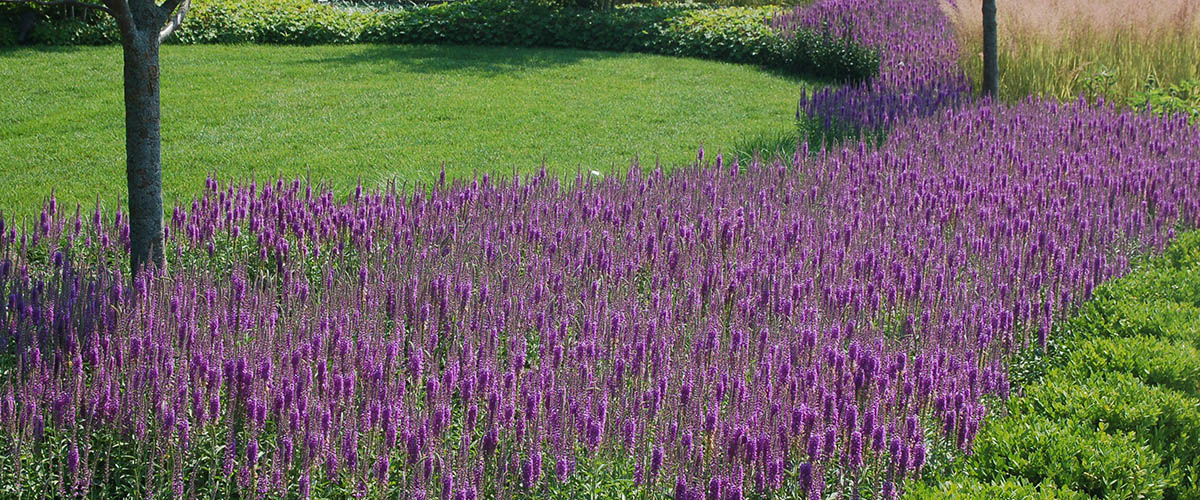
Perennials in Focus is a plant evaluation program that examines new and underused plants for Chicagoland, the third largest metropolitan area in the country. A group of horticultural experts trials and evaluates plants at numerous locations across the region. Results help consumers, public gardens, growers, landscape designers, breeders, and other industry professionals make informed plant choices.
How Spring Mulch Affects Early Perennial Emergence
Spring mulch protects perennial crowns from temperature swings, drying winds, and soil erosion, yet the same layer can delay shoots that are ready to emerge. In the Chicagoland region, where warm afternoons may alternate with freezing nights, mulch depth becomes a seasonal management decision rather than a fixed rule.
The impact of spring mulch depth on emergence of early perennials depends on plant habit, soil drainage, mulch material, and the timing of spring weather. A two-inch layer of shredded leaves may behave very differently from two inches of wet wood chips or compacted straw. Gardeners who adjust mulch according to these conditions can protect plants without smothering new growth.
Careful observation is especially useful for plants that emerge before the soil has fully warmed. Recording when shoots appear, how quickly they expand, and whether crowns show rot or winter injury creates practical information for future seasons. This type of regional evaluation reflects the purpose of the Perennials in Focus mission, which emphasizes performance across gardens and growing conditions.
Why mulch depth changes emergence timing
Mulch acts as an insulating blanket. A deep layer slows the movement of heat from the air into the soil, keeping the crown zone cooler in spring. That can postpone emergence by several days or longer, particularly for shallow-rooted perennials responding to soil temperature rather than daylight alone.
A delayed start is not always harmful. Later emergence can protect tender shoots from a late frost, and consistent moisture can support strong growth once the plant breaks dormancy. Problems arise when mulch remains piled over the crown after shoots begin pushing upward. Emerging stems may become pale, bent, or weak, while damp organic matter can encourage crown and stem diseases.
Early perennials most likely to respond
Spring bulbs and woodland perennials often appear through leaf litter while the soil is still cool. Hellebores, bleeding heart, epimedium, pulmonaria, and some native spring ephemerals generally benefit from a light, loose covering rather than a dense blanket. Their shoots may be able to lift through leaves, but compacted material can interfere with emergence and trap excess moisture.
The response varies within a single genus. A plant with a thick crown and upright shoots may tolerate more coverage than a low rosette or fine-stemmed species. Plants that emerge late, such as butterfly weed, may appear unaffected by early spring mulch simply because their dormancy period is longer. However, Asclepias tuberosa prefers sharply drained soil, and guidance on growing butterfly weed locally reinforces the importance of avoiding persistent, wet mulch around its crown.
How material and moisture interact
Depth alone does not tell the entire story. Shredded leaves usually settle into a loose, moisture-retentive layer, while fine bark can form a dense mat after repeated rain. Wood chips tend to allow air movement when applied loosely, but a thick layer against perennial crowns may hold water and delay warming. Straw provides insulation but can become matted or harbor rodents.
Site conditions amplify these differences. On heavy clay or poorly drained ground, deep mulch may keep the crown wet for too long. On sandy soil, a moderate layer can reduce rapid drying and protect shallow roots. Mulch touching stems is especially risky because it creates a humid transition zone where fungal problems can develop. Keeping the crown visible and the material fluffy improves air circulation.
| Spring mulch condition | Likely effect on emergence | Main concern | Practical response |
|---|---|---|---|
| 1 inch of loose shredded leaves | Minimal delay; good moisture moderation | Leaves may blow away | Leave in place if crowns remain visible |
| 2–3 inches of loose organic mulch | Moderate cooling and delayed emergence | Shoots may struggle through coverage | Thin over early-emerging crowns |
| More than 3 inches or compacted mulch | Noticeable delay and reduced airflow | Rot, weak stems, uneven emergence | Remove or rake back gradually |
| Wet mulch on heavy soil | Slow warming and persistent moisture | Crown decline | Clear the crown and improve drainage |
| Coarse mulch kept away from crowns | Moderate insulation with airflow | Uneven coverage | Maintain a shallow ring around plants |
Timing removal without losing protection
Removing all mulch too early can expose tender shoots to frost, drying winds, and rapid temperature changes. A gradual approach is usually safer. As daytime temperatures rise and shoots become visible, rake mulch away from the crown while leaving a thin layer between plants. This preserves moisture and reduces soil splash without covering the growing point.
The best timing depends on the weather forecast and the plant’s growth stage. If a hard freeze is expected after shoots emerge, keep the displaced mulch nearby and loosely return it overnight, then uncover the plants once temperatures moderate. Avoid pressing material against foliage. For plants that have already expanded leaves, a breathable frost cloth is often easier to manage than a heavy layer of wet mulch.
Building a useful observation record
A simple monitoring system can reveal patterns that a single season may hide. Mark several plants of the same variety, measure the mulch depth near each one, and note the date of first emergence. Continue recording the date when leaves fully open, the presence of damaged shoots, and the condition of the crown at the end of spring.
Use comparable sites whenever possible. A plant under two inches of leaf mulch in a sunny raised bed is not experiencing the same conditions as one under two inches of wood chips beside a north-facing foundation. Include soil type, exposure, drainage, rainfall, and whether the mulch was compacted. These details help separate the effect of mulch from other environmental influences.
Practical steps for healthier spring growth
Mulch management works best when it is adjusted to the plant rather than applied uniformly across the entire bed. Early-emerging species may need a thinner covering, while newly planted perennials or shallow-rooted plants may benefit from continued protection. The goal is stable moisture and temperature without burying the crown.
Use the following practices during the transition from winter to active growth:
- Check mulch depth in several spots instead of judging the bed by appearance alone.
- Rake dense or wet material away from crowns as soon as shoots begin to rise.
- Leave a thin, loose layer between plants to reduce evaporation and soil splash.
- Keep mulch several inches away from stems, crowns, and emerging foliage.
- Record emergence dates and weather conditions for comparison next year.
Applying regional findings in the garden
Chicagoland gardens can experience uneven spring conditions across very short distances. A sheltered urban bed may warm weeks before an exposed suburban site, while low areas remain cold and wet after upper slopes have dried. This makes local trial data more valuable than a single universal recommendation for every perennial and every garden.
Growers, designers, and home gardeners can use emergence records to refine plant placement and maintenance schedules. If a cultivar consistently emerges late under moderate mulch, it may simply have a naturally delayed growth cycle. If emergence is erratic only where mulch is deepest, the management practice is more likely responsible. Those distinctions support better plant selection and more reliable landscape performance.
Review spring observations alongside bloom time, mature height, spread, and summer vigor. Over several seasons, the record can show which perennials tolerate a protective mulch layer and which perform best when their crowns are uncovered early. Apply those findings to the next round of bed preparation, and use regional evaluations to make confident choices for gardens throughout Chicagoland.
In the Garden
Evaluator gardens are located across the Chicagoland area, representing a range of growing conditions. Visit our retail and wholesale partners to find trialled perennials for your own garden.
Retail & Wholesale: Hinsdale Nurseries (Willowbrook, IL), Mariani Nurseries (Kenosha, WI & Garden Prairie, IL), Northwind Perennials (Burlington, WI), The Growing Place (Aurora, IL).
Wholesale Only: Hinsdale Nurseries (Plano, IL), Intrinsic Perennial Gardens (Hebron, IL).
Our Evaluation Program
The 2017–2020 evaluation cycle included Agastache 'Blue Boa', Allium senescens 'Blue Eddy', Amsonia ciliata var. filifolia 'Georgia Pancake', Astilbe 'Chocolate Shogun', Boltonia astroides 'James Crocket', Brunnera 'Alexander's Great', and Geranium cinereum 'Jolly Jewel Purple'. Completed evaluations include Amsonia 'Blue Ice' (2004–07).
On April 10, 2020, the program published snapshot profiles for Vernonia lettermanii 'Iron Butterfly', Stokesia laevis 'Elf', Stachys officinalis 'Pink Cotton Candy', Lobelia 'Monet Moment', Helleborus 'Winter Thrillers', Geum 'Mai Tai', Geranium soboliferum 'Butterfly Kisses', Gentiana x intermedia 'True Blue', Eurybia divaricata, Asparagus 'Purple Passion', and Agastache 'Bolero'.
Browse the full collection of snapshots organized alphabetically — from A–D, E–H, I–Q, and R–Z — to find detailed performance data on perennials trialled across Chicagoland.