Evaluating Perennials for Chicagoland Gardens
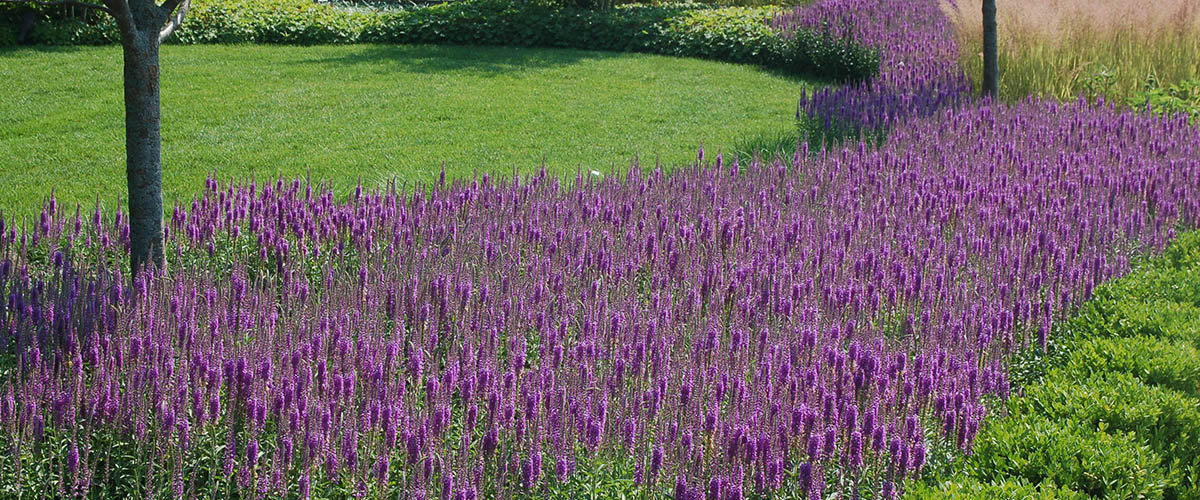
Perennials in Focus is a plant evaluation program that examines new and underused plants for Chicagoland, the third largest metropolitan area in the country. A group of horticultural experts trials and evaluates plants at numerous locations across the region. Results help consumers, public gardens, growers, landscape designers, breeders, and other industry professionals make informed plant choices.
English lavender winter hardiness in exposed sites
Testing the winter hardiness of Lavandula angustifolia in exposed sites asks a practical question for Australian gardeners: can English lavender survive wind, frost and prolonged winter wet without declining sharply the following spring? The plant is familiar from garden centres and herb nurseries, but performance depends on true species, cultivar, drainage and microclimate.
Perennials in Focus evaluates selected perennials across multiple Chicagoland gardens and seasons. Participants record winter survival alongside bloom period, flower colour, height and spread, creating region-specific evidence for home gardeners, growers, retailers, breeders and public gardens.
Chicago winters can combine hard frost, snow, ice, saturated soil and strong winds. Australia reverses the seasonal calendar, but its southern winter ranges from cool and wet in Melbourne to bright, dry and often frosty in inland districts, so an American result cannot be treated as a universal rating.
A sound account separates direct observations from local application. It identifies what an exposed plot actually tests, explains why winter injury may appear months later, and offers a practical protocol for judging plants bought through the Australian retail market.
How an exposed-site comparison works
An exposed plot tests the full pressure of a site without a windbreak, nearby fence or building shield. The sheltered reference bed experiences similar soil and management but offers protection from prevailing wind. Comparing the two reveals whether a cultivar’s limitations come from cold alone, wind exposure, saturated soil or the combined stresses.
| Trial factor | Exposed plot | Sheltered reference bed |
|---|---|---|
| Wind | Full exposure to gusts and wind chill | Partial protection from walls, fences or shrubs |
| Root zone | Similar soil, drainage and slope under open conditions | Comparable soil conditions with reduced wind and shelter |
| Main purpose | Measures realistic performance in a difficult landscape position | Shows the cultivar’s potential under milder protection |
| Interpretation | Results reflect site stress rather than poor establishment alone | Confirms that differences are linked to exposure |
The sheltered bed is not a “safe” control for every purpose. A plant may survive there but fail where no wind protection exists, while another may show modest winter damage in both beds yet recover strongly. Repeated counts and spring observations are therefore more informative than a simple survival percentage.
This multi-site approach is visible in the program’s heavy shade hosta results, where performance is tied to measured conditions rather than a single showcase garden. The same principle supports responsible plant selection in other challenging positions.
Reading winter injury correctly
Winter injury is not always visible at first. Leaves may remain green in early winter before browning in spring, while frost can lift the root crown or split stems. Persistent rain and poor aeration may cause root or crown rot, particularly when snow or ice covers cold, saturated soil. Wind desiccation can also damage evergreen foliage without freezing it.
Trial records should distinguish environmental stresses rather than grouping every loss under “winter kill”. Minimum temperature, frost duration, wind speed, rainfall, snow cover and soil moisture help explain the pattern. In Australia, the principal assessment period is June to August, but spring checks remain important because delayed decline often becomes apparent as new shoots emerge.
A plant that survives one winter may not remain commercially or horticulturally satisfactory. Evaluators should record dead plants, reduced vigour, bare centres, flowering delay and changes in habit. A named cultivar that regrows but never regains compactness may still be unsuitable for a demanding display position.
Preparing plants and the test site
Reliable comparisons begin with uniform plants. Use healthy, well-rooted specimens of the same L. angustifolia cultivar, similar age and size, and establish them at the same spacing. Randomise their positions within each bed so that edge effects and isolated pockets of water are not mistaken for cultivar differences.
Document soil texture, drainage, slope, irrigation and any nearby structures. Exposed sites need enough space for plants to experience ordinary wind without being damaged immediately by rubbing against a fence. Avoid creating an artificially severe planting hole in compacted soil, since that would test poor planting technique as much as plant hardiness.
Before assessments begin, clean tools and footwear and record the routine. A written protocol informed by equipment sanitation guidance helps prevent contamination from becoming an unexplained trial variable, especially where several gardens handle the same plants.
Translating the trial for Australia
Australian conditions demand attention to both temperature and moisture. Melbourne often combines cool, wet winters with drying winds, making root-zone drainage critical. Canberra experiences regular frosts, occasional snow and cold inversions in low areas. Sydney generally has milder winter temperatures, but humid conditions and persistent rain can favour root disease. Adelaide contrasts hot, dry summers with variable winter rain, while nearby sites may still experience severe frost.
The local plant market adds another layer. At weekend markets, garden centres and specialist herb nurseries, gardeners commonly buy plants for culinary, ornamental and floral use. Online suppliers also serve growers and landscape professionals. A correctly labelled, named L. angustifolia cultivar is preferable to generic “lavender”, since plants sold under that broad name may be another species or a hybrid with different cold tolerance.
Imported plant material must comply with the Commonwealth’s Biosecurity Act 2015, BICON import conditions and the applicable state or territory plant-quarantine requirements. Check the current rules before ordering or moving plants, and use clean, soil-free material. Local propagation is usually the simplest way to preserve a cultivar’s identity while avoiding unnecessary quarantine risks.
Run a small trial with clear records
A useful home or professional trial needs matched plants, an exposed position, a sheltered comparison and at least two winters of observation. Three to five plants per cultivar provide a stronger basis than a single specimen. Record establishment losses separately from winter losses, and photograph fixed viewpoints so shoot density and colour can be compared over time.
Keep a simple log with dates, weather events, plant health, regrowth, flowering period, height and spread. Record the percentage surviving, the percentage producing new shoots and any change in ornamental quality. Photographs taken from the same angle, combined with notes on pruning and irrigation, make patterns easier to recognise and more useful to other growers.
Start this season by selecting a named L. angustifolia cultivar from a reputable Australian nursery and preparing matched plants for exposed and sheltered positions. Record their winter and spring performance, then repeat the process with another cultivar. Consistent local observations can reveal which English lavender choices genuinely suit a site, whether it is a courtyard, native-style garden or open coastal landscape.
In the Garden
Evaluator gardens are located across the Chicagoland area, representing a range of growing conditions. Visit our retail and wholesale partners to find trialled perennials for your own garden.
Retail & Wholesale: Hinsdale Nurseries (Willowbrook, IL), Mariani Nurseries (Kenosha, WI & Garden Prairie, IL), Northwind Perennials (Burlington, WI), The Growing Place (Aurora, IL).
Wholesale Only: Hinsdale Nurseries (Plano, IL), Intrinsic Perennial Gardens (Hebron, IL).
Our Evaluation Program
The 2017–2020 evaluation cycle included Agastache 'Blue Boa', Allium senescens 'Blue Eddy', Amsonia ciliata var. filifolia 'Georgia Pancake', Astilbe 'Chocolate Shogun', Boltonia astroides 'James Crocket', Brunnera 'Alexander's Great', and Geranium cinereum 'Jolly Jewel Purple'. Completed evaluations include Amsonia 'Blue Ice' (2004–07).
On April 10, 2020, the program published snapshot profiles for Vernonia lettermanii 'Iron Butterfly', Stokesia laevis 'Elf', Stachys officinalis 'Pink Cotton Candy', Lobelia 'Monet Moment', Helleborus 'Winter Thrillers', Geum 'Mai Tai', Geranium soboliferum 'Butterfly Kisses', Gentiana x intermedia 'True Blue', Eurybia divaricata, Asparagus 'Purple Passion', and Agastache 'Bolero'.
Browse the full collection of snapshots organized alphabetically — from A–D, E–H, I–Q, and R–Z — to find detailed performance data on perennials trialled across Chicagoland.