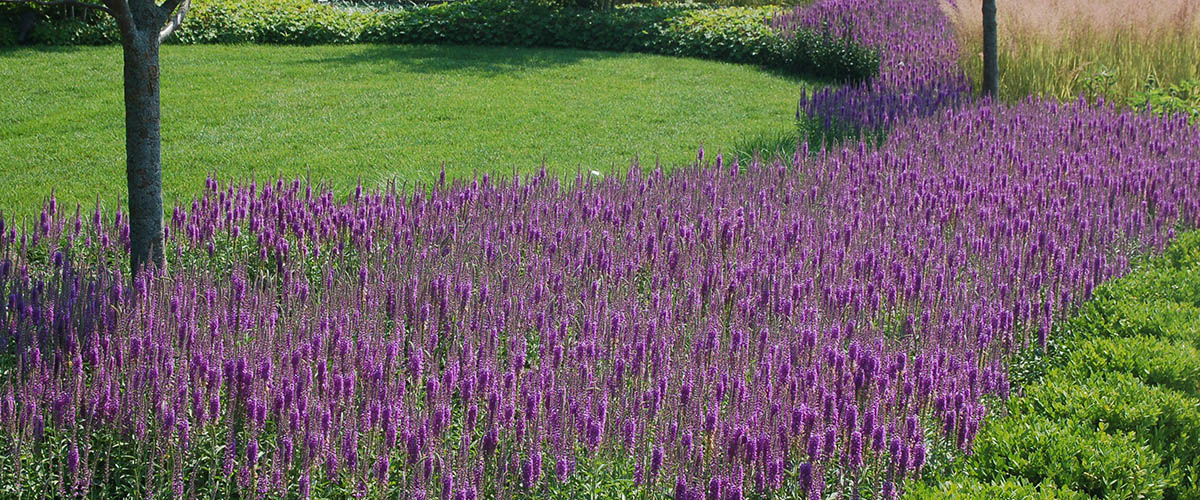
Evaluating Perennials for Chicagoland Gardens
Perennials in Focus is a plant evaluation program that examines new and underused plants for Chicagoland, the third largest metropolitan area in the country. A group of horticultural experts trials and evaluates plants at numerous locations across the region. Results help consumers, public gardens, growers, landscape designers, breeders, and other industry professionals make informed plant choices.
The Top Performing Hosta Cultivars in Heavy Shade Trials
Hostas are often treated as dependable shade plants, yet their performance can vary widely across the Chicagoland region. Dense tree cover, dry root competition, clay soil, winter exposure, and fluctuating spring temperatures all influence how a cultivar develops. A plant that looks exceptional in a protected garden may produce smaller leaves or weaker color in a difficult urban landscape.
Regional trials bring those differences into focus. Instead of relying only on a catalog photograph or a single season of observation, evaluators can compare hostas across several gardens and growing conditions. Traits such as emergence, foliage quality, flowering, plant size, pest damage, and end-of-season appearance help reveal which cultivars are genuinely useful for heavy shade.
The strongest selections are not identical. Some excel through rich blue foliage, others hold crisp variegation, create impressive scale, or form dense mounds with little intervention. The most reliable choice depends on the character of the site and the role the plant needs to fill.
What Heavy Shade Reveals
Heavy shade is more demanding than ordinary part shade. A location beneath mature maples or dense evergreens may receive only a few hours of filtered light, while tree roots remove moisture and nutrients from the same soil. In these settings, a hosta must maintain healthy foliage without depending on strong midday sun.
Trial observations can also expose weaknesses that are easy to miss in a retail display. Pale leaves may lose contrast, large plants may remain undersized, and cultivars with thin foliage may show more slug injury. A dependable shade perennial should retain an attractive habit through summer, recover well from weather stress, and finish the season with reasonable vigor.
Cultivars That Earn Attention
‘June’ remains a valuable choice where gardeners want medium scale and bright foliage in low light. Its blue-green leaves carry a chartreuse center that can add illumination without becoming visually harsh. In a Chicagoland planting, the color is most successful when the plant receives bright filtered light rather than deep, nearly black shade.
‘Halcyon’ is valued for its substantial blue foliage and composed, rounded habit. Its leaves can provide a cool visual anchor beneath trees, especially when paired with silver, green, or soft yellow companions. The plant may grow more slowly than vigorous green hostas, but its foliage character gives it strong design value.
For larger spaces, ‘Sagae’ offers a broad mound with blue-green leaves edged in pale cream to yellow. It needs room to develop and looks most convincing when given consistent moisture during establishment. ‘Frances Williams’ can provide a similar large-scale effect, though its broad variegated leaves may be more vulnerable to ragged edges in stressful weather.
‘Patriot’ and ‘Francee’ are useful where a cleaner, more upright variegated effect is preferred. Their green leaves with white margins bring definition to dark planting beds. ‘Guacamole’ contributes a softer combination of green, gold, and fragrant flowers, while ‘First Frost’ offers a compact-to-medium mound with blue-green leaves and margins that mature toward cream.
Comparing Traits Across the Growing Season
A hosta’s spring display can be misleading. Emerging leaves may show vivid color before summer heat, rainfall, and canopy closure alter the plant’s appearance. For this reason, a strong regional evaluation considers the entire season rather than ranking cultivars from a single visit.
Performance records are especially useful when comparing new introductions with familiar standards. A newer cultivar may have striking color, but a classic may produce a fuller mound, stronger stems, or more consistent foliage over several years. This same approach is useful in other perennial evaluations, including these regional daylily comparisons, where season-long behavior matters as much as the initial flower display.
| Cultivar | Mature scale | Foliage character | Strongest landscape use | Points to watch |
|---|---|---|---|---|
| ‘June’ | Medium | Blue-green with chartreuse center | Brightening filtered shade | Color may soften in very deep shade |
| ‘Halcyon’ | Medium | Dense blue foliage | Calm, refined groundcover effect | Establishes at a measured pace |
| ‘Sagae’ | Large | Blue-green leaves with pale margins | Bold specimen or background mass | Needs space and regular moisture |
| ‘Patriot’ | Medium | Green leaves with white margins | Edge definition and contrast | Avoid harsh reflected heat |
| ‘Guacamole’ | Large | Green, gold, and cream tones | Broad mixed borders | Can outgrow small beds |
| ‘First Frost’ | Medium | Blue leaves with creamy margins | Repeated group planting | Best color with filtered light |
These descriptions should be read as selection guidance rather than fixed rankings. Soil depth, irrigation, deer pressure, and the amount of root competition can shift results from one garden to another. A cultivar that performs moderately in a dry woodland may become outstanding in a well-prepared bed.
Color, Texture, and Plant Form
Foliage color has practical value in shade design. Blue hostas such as ‘Halcyon’ create visual coolness and pair well with dark greens, while gold-centered cultivars can prevent a planting from appearing flat. White-margined types such as ‘Patriot’ provide sharper contrast and can be especially effective along a path or near a shaded foundation.
Leaf texture changes the way a planting feels. Heavy, puckered foliage adds substance and can stand apart from fine-textured ferns or grass-like sedges. Smooth leaves create a quieter transition between neighboring plants. Large-leaved selections establish a strong focal point, while medium hostas are easier to repeat through a border.
Flowering should be considered a secondary benefit rather than the main reason to grow most hostas. Lavender, white, or near-white flowers rise above the foliage in summer and attract pollinators, but the plant’s mound and leaves provide the longest period of interest. Gardeners planning a sequence of seasonal color can also use ideas from this guide to extend bloom color around the hosta planting.
Matching Hostas to Difficult Sites
The best cultivar cannot compensate for a poorly prepared planting location. Before planting, examine whether the soil is compacted, whether tree roots dominate the bed, and whether rain actually reaches the ground beneath the canopy. Adding organic matter to the planting zone and applying a moderate mulch layer can improve establishment, though mulch should remain clear of the crown.
Water is particularly important during the first two growing seasons. Large-leaved hostas lose substantial moisture through transpiration, even in shade, and newly planted divisions have limited root systems. Deep, occasional watering is generally more useful than frequent shallow sprinkling. Good air movement also helps foliage dry after rainfall and reduces the conditions that favor some leaf diseases.
Slugs remain a significant concern in cool, moist shade. Cultivars with thicker or more textured leaves may tolerate feeding better, but no hosta is completely immune. Removing dense debris, avoiding excessive irrigation late in the day, and checking plants regularly can reduce damage. Deer browsing may require a separate management strategy, especially in suburban and woodland-edge gardens.
A Practical Shortlist for Garden Planning
Use trial information as a starting point, then match each plant to the conditions it will actually face. A measured selection process helps prevent overcrowding and creates a more coherent shade border.
- Choose ‘Halcyon’ for a composed blue mound in bright or moderate shade.
- Select ‘June’ when a medium-sized plant is needed to lift a dark planting bed.
- Use ‘Sagae’ or ‘Guacamole’ where there is room for a broad, long-lived specimen.
- Plant ‘Patriot’ or ‘Francee’ to create crisp margins along paths and foundations.
- Repeat one or two cultivars rather than collecting many unrelated forms in a small space.
Allow mature width when spacing plants, since hostas often look sparse during their first year and crowded after several seasons. Repetition gives a planting greater visual strength, while carefully placed contrasting foliage can highlight a specimen without making the bed feel busy.
Regional perennial trials are most valuable when their observations are translated into real planting decisions. For Chicagoland gardeners, the leading hostas are those that hold their form, color, and vigor through local weather patterns—not simply the cultivars with the most dramatic labels.
Explore the evaluated plants, compare their recorded traits, and use those findings to build a shade garden with greater confidence. Select cultivars according to site conditions, give them time to establish, and let several seasons of performance guide future additions.
In the Garden
Evaluator gardens are located across the Chicagoland area, representing a range of growing conditions. Visit our retail and wholesale partners to find trialled perennials for your own garden.
Retail & Wholesale: Hinsdale Nurseries (Willowbrook, IL), Mariani Nurseries (Kenosha, WI & Garden Prairie, IL), Northwind Perennials (Burlington, WI), The Growing Place (Aurora, IL).
Wholesale Only: Hinsdale Nurseries (Plano, IL), Intrinsic Perennial Gardens (Hebron, IL).
Our Evaluation Program
The 2017–2020 evaluation cycle included Agastache 'Blue Boa', Allium senescens 'Blue Eddy', Amsonia ciliata var. filifolia 'Georgia Pancake', Astilbe 'Chocolate Shogun', Boltonia astroides 'James Crocket', Brunnera 'Alexander's Great', and Geranium cinereum 'Jolly Jewel Purple'. Completed evaluations include Amsonia 'Blue Ice' (2004–07).
On April 10, 2020, the program published snapshot profiles for Vernonia lettermanii 'Iron Butterfly', Stokesia laevis 'Elf', Stachys officinalis 'Pink Cotton Candy', Lobelia 'Monet Moment', Helleborus 'Winter Thrillers', Geum 'Mai Tai', Geranium soboliferum 'Butterfly Kisses', Gentiana x intermedia 'True Blue', Eurybia divaricata, Asparagus 'Purple Passion', and Agastache 'Bolero'.
Browse the full collection of snapshots organized alphabetically — from A–D, E–H, I–Q, and R–Z — to find detailed performance data on perennials trialled across Chicagoland.