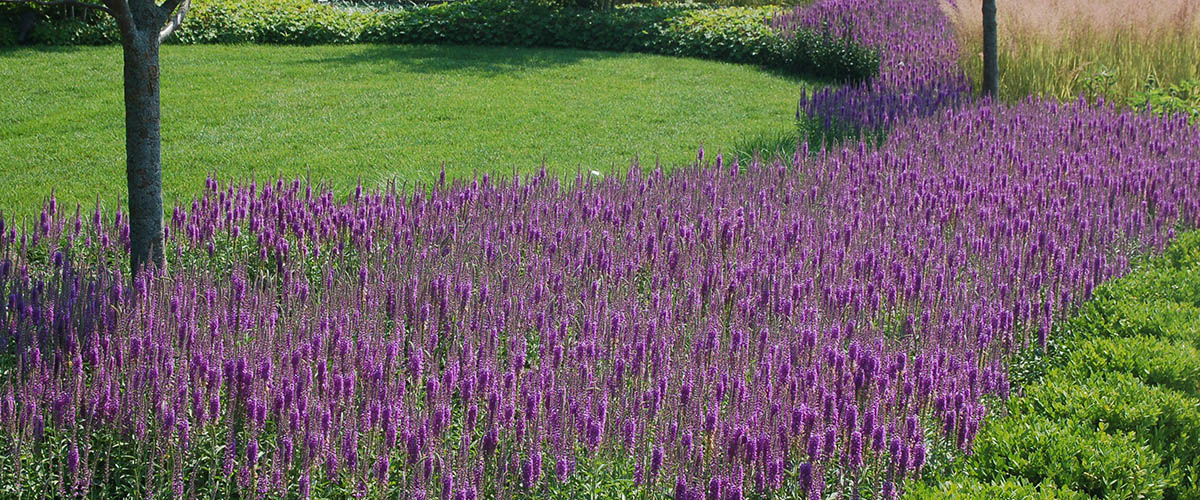
Evaluating Perennials for Chicagoland Gardens
Perennials in Focus is a plant evaluation program that examines new and underused plants for Chicagoland, the third largest metropolitan area in the country. A group of horticultural experts trials and evaluates plants at numerous locations across the region. Results help consumers, public gardens, growers, landscape designers, breeders, and other industry professionals make informed plant choices.
Testing Late Summer Deadheading and Seed Set in Rudbeckia Hirta
Rudbeckia hirta, commonly called black-eyed Susan, is valued for its bright yellow flowers, long display and usefulness in pollinator-friendly plantings. Once flowering begins to fade, gardeners often remove spent flower heads to keep plants looking tidy and encourage fresh blooms. That routine also removes developing seed, so the timing of deadheading may influence how much viable seed a plant produces.
A useful trial asks a simple question: does cutting back faded flowers in late summer reduce final seed set compared with leaving some heads to mature? The answer depends on when flowers were pollinated, how quickly seed develops, the cultivar being tested and the weather during the final weeks of the season.
Findings from the Perennials in Focus program are grounded in repeated observation across Chicagoland gardens. Australian growers and gardeners can apply the same disciplined approach, while adjusting for different seasons. A late-summer date in Illinois may correspond to a very different point in the flowering cycle in Melbourne, Sydney, Adelaide or Perth.
The purpose is not to discourage deadheading. It is to clarify the trade-off between a longer ornamental display, useful seed for propagation and habitat value from mature flower heads. A small, well-recorded comparison can reveal which approach best suits a home garden, retail crop or public planting.
Why Seed Set Matters
Seed set is the number of developed seeds produced by a flower head or plant. It is influenced by pollination, genetics, temperature, moisture, insect visitation and the length of time the head remains attached. A flower that looks finished may still contain immature seed, so cutting it immediately can prevent development.
For gardeners, seed set may support self-sowing and provide material for future propagation. For breeders and growers, it offers information about fertility and cultivar performance. For landscape managers, leaving some heads can extend structural interest into autumn and provide food for birds, although this benefit varies with local wildlife and seed accessibility.
Choosing A Late Summer Treatment
A practical comparison needs at least two treatments: plants that receive late-summer deadheading and plants whose flower heads remain intact. A third treatment can improve the trial by removing only some heads from each plant, leaving the rest for seed development. This reduces the risk that differences between individual plants will distort the result.
Choose a clear date or growth stage rather than relying only on the calendar. For example, remove heads when most outer petals have faded but the central cone is still green. Record the date, number of flowers cut and whether each head showed signs of developing seed. A second cut two weeks later could test whether delayed deadheading has a smaller effect.
Building A Reliable Garden Trial
Use plants of similar age, size and cultivar, placed in comparable light and soil. Randomly assign treatments instead of placing all cut plants together. Five or more plants per treatment provide a more useful indication than a single specimen, while larger trials are preferable for commercial decisions.
Keep normal care consistent. Record irrigation, fertiliser, pest damage, rainfall and periods of extreme heat. In Australia, a trial in Melbourne may encounter cool nights and late-season rain, while one in Brisbane may experience warmth and humidity that prolong flowering. Sydney gardens may also have irregular summer storms that affect pollinator activity and seed drying.
For a repeatable process, gardeners can follow methods for perennial performance records, including consistent notes, photographs and measurements. Label each plant clearly so observations remain linked to the correct treatment.
Measuring Seed Production
When seed heads turn brown and dry, harvest them separately by plant and treatment. Place each head in a labelled paper envelope rather than a sealed plastic bag, which can retain moisture and encourage mould. Allow the material to dry fully in a cool, ventilated area before counting.
Measure the number of heads harvested, the weight of cleaned seed and the number of apparently full seeds per head. A simple germination test is more informative than appearance alone. Sow equal numbers of seeds from each treatment under the same conditions and record emergence after a fixed period.
Seed set can be reported as seeds per head, viable seedlings per head or germination percentage. These measures answer different questions. A treatment might produce many seeds that germinate poorly, while another produces fewer but more vigorous seeds.
Accounting For Australian Conditions
Seasonal timing needs careful translation. In much of Australia, Rudbeckia hirta flowers through warmer months, but the exact period varies by latitude, rainfall and planting date. A late-summer trial in Adelaide or Melbourne may be conducted as flowering slows in February or March, whereas gardens in cooler upland areas may reach that stage later.
Water restrictions and everyday watering habits can affect results. A gardener in Sydney or Melbourne may water deeply on assigned days rather than keeping soil continuously moist, while a Perth trial may need to account for sandy soil and hot, dry conditions. These details should be recorded because drought stress can reduce both flowering and seed development.
The local market also influences the value of each treatment. Australian nurseries commonly promote low-maintenance, pollinator-friendly and water-wise plants, while cut-flower growers may prefer a longer clean display. If a cultivar is sold as a named selection, check whether propagation is restricted under Plant Breeders’ Rights before collecting or selling plants from seed. State and territory biosecurity rules also vary, so confirm whether Rudbeckia seed movement or cultivation has restrictions in the relevant jurisdiction.
Interpreting Pollinators And Self-Sowing
Deadheading changes more than the plant’s appearance. Removing heads can reduce late-season food for insects and eliminate sites where seed-eating birds may forage. However, leaving every head may result in unwanted seedlings, especially in open beds with bare soil. Monitor seedlings the following season and record where they appear.
Pollinator visitation should be observed alongside seed production. Count visits during a fixed ten-minute period on several suitable days, noting bees, hoverflies and butterflies where possible. Hot afternoons, wind, nearby flowering plants and pesticide use can all change visitation. A low seed count may reflect poor pollination rather than the deadheading treatment itself.
Comparing Practical Outcomes
The most useful result combines ornamental performance with propagation value. Record the number of new flowers after cutting, the final height and spread, the date flowering ended, and the amount of viable seed. Also note labour: repeated deadheading may suit a display garden but be impractical across a large public planting.
| Treatment | Flowering display | Seed development | Best use | Main consideration |
|---|---|---|---|---|
| Remove all faded heads in late summer | Often tidier and potentially longer flowering | Lowest seed supply | Formal beds and retail displays | Eliminates most mature heads |
| Leave all heads intact | Shorter tidy display as heads age | Highest opportunity for seed set | Seed collection and wildlife plantings | May encourage self-sowing |
| Remove some heads, leave others | Balances repeat flowers and seed production | Moderate, depending on timing | Home gardens and trials | Requires clear labelling |
| Delay cutting until heads begin drying | Preserves much of the seed crop | Often higher than early cutting | Propagation-focused plantings | May reduce late flowering |
A balanced approach is often the most informative starting point. Deadhead a defined proportion of plants or flower heads, leave the rest untouched, and compare results across the same season. Repeating the trial for two or three years will show whether the pattern is consistent or driven by unusual weather.
Use the records to make a decision suited to the planting’s purpose. A Melbourne cottage garden may leave several cones for self-sowing, while a nursery near Brisbane may remove heads to maintain a clean crop. A public garden in Canberra might combine both treatments to support seasonal interest and educational interpretation.
Begin with a labelled group of Rudbeckia hirta plants this flowering season, record the late-summer cut date, retain a control group and test the resulting seed for germination. Sharing clear observations with local growers, garden groups or the Perennials in Focus community can help build a stronger picture of how deadheading affects this adaptable perennial across different Australian conditions.
In the Garden
Evaluator gardens are located across the Chicagoland area, representing a range of growing conditions. Visit our retail and wholesale partners to find trialled perennials for your own garden.
Retail & Wholesale: Hinsdale Nurseries (Willowbrook, IL), Mariani Nurseries (Kenosha, WI & Garden Prairie, IL), Northwind Perennials (Burlington, WI), The Growing Place (Aurora, IL).
Wholesale Only: Hinsdale Nurseries (Plano, IL), Intrinsic Perennial Gardens (Hebron, IL).
Our Evaluation Program
The 2017–2020 evaluation cycle included Agastache 'Blue Boa', Allium senescens 'Blue Eddy', Amsonia ciliata var. filifolia 'Georgia Pancake', Astilbe 'Chocolate Shogun', Boltonia astroides 'James Crocket', Brunnera 'Alexander's Great', and Geranium cinereum 'Jolly Jewel Purple'. Completed evaluations include Amsonia 'Blue Ice' (2004–07).
On April 10, 2020, the program published snapshot profiles for Vernonia lettermanii 'Iron Butterfly', Stokesia laevis 'Elf', Stachys officinalis 'Pink Cotton Candy', Lobelia 'Monet Moment', Helleborus 'Winter Thrillers', Geum 'Mai Tai', Geranium soboliferum 'Butterfly Kisses', Gentiana x intermedia 'True Blue', Eurybia divaricata, Asparagus 'Purple Passion', and Agastache 'Bolero'.
Browse the full collection of snapshots organized alphabetically — from A–D, E–H, I–Q, and R–Z — to find detailed performance data on perennials trialled across Chicagoland.