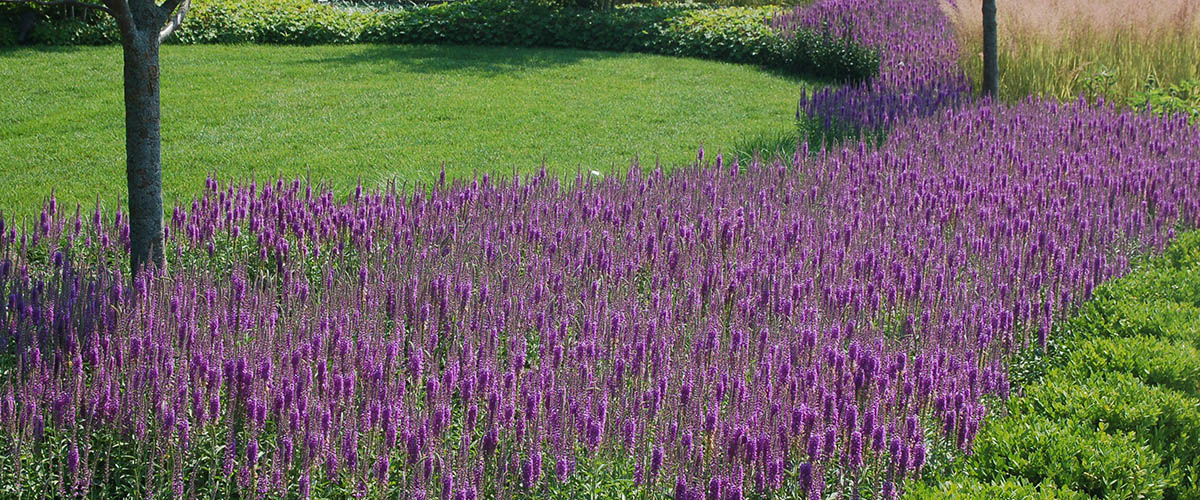
Evaluating Perennials for Chicagoland Gardens
Perennials in Focus is a plant evaluation program that examines new and underused plants for Chicagoland, the third largest metropolitan area in the country. A group of horticultural experts trials and evaluates plants at numerous locations across the region. Results help consumers, public gardens, growers, landscape designers, breeders, and other industry professionals make informed plant choices.
How To Document Perennial Performance In Your Garden
A perennial can look impressive when it arrives at a garden center, yet its long-term value depends on what happens after planting. Does it survive winter, return at a useful size, flower for several weeks, stay upright after rain, and hold its color through summer? Careful observation answers those questions more reliably than a catalog description alone.
Professional evaluation programs such as Perennials in Focus track these details across gardens and growing seasons. Home gardeners can use the same principles on a smaller scale. A notebook, a few labeled photographs, and consistent observation dates are enough to create a useful record of plant performance.
The goal is to document your own perennial performance in a way that supports future decisions. Your notes can reveal which cultivars deserve more space, which plants need special placement, and which promising introductions are better suited to your local conditions than their published descriptions suggest.
Choose A Clear Trial Question
Begin with a specific reason for evaluating a plant. You might want to compare several cultivars for drought tolerance, find a long-blooming perennial for a sunny border, or determine whether a particular variety survives the winter in your part of the Chicagoland region. A focused question makes the observations easier to organize.
Define what success will look like before planting. For example, a strong candidate for a pollinator garden might need to bloom for at least four weeks, attract bees or hummingbirds, remain upright without staking, and return reliably the following spring. A shade plant might be judged by foliage quality, spread, flowering, and resistance to slug damage.
Use the plant’s intended role as part of the evaluation. A compact perennial for a front border should not be judged by the same standards as a vigorous plant intended for mass planting. This distinction prevents you from labeling a plant as disappointing simply because it performs well in a setting it was never meant to occupy.
Design A Fair Planting
Record the planting site before the first perennial goes into the ground. Note the number of hours of direct sun, soil texture, drainage, slope, wind exposure, irrigation, and nearby plants. In the Midwest, small differences in moisture and winter exposure can produce large differences in survival and vigor.
Whenever possible, grow comparison plants under similar conditions. Place cultivars in the same bed or in nearby beds with comparable light and soil. If you are evaluating one new plant, include a familiar reference perennial with a similar habit. That comparison gives your observations context when weather conditions are unusually wet, dry, hot, or cold.
Avoid changing several variables at once. If one plant receives extra water, richer soil, or more frequent deadheading, its performance cannot be compared fairly with untreated plants. Keep a simple maintenance log that records watering, fertilizing, pruning, pest control, and any unusual intervention.
Plant labels are essential. Include the botanical name, cultivar, source, planting date, and location code. A weather-resistant label prevents confusion after foliage dies back or plants spread into one another.
Establish A Baseline Before Growth Begins
Document each plant when it arrives and again at planting. Take photographs from the same angle whenever possible, using a nearby ruler or familiar object to show scale. Record the plant’s initial height, width, number of stems, foliage condition, and root health if the plant is bare-root or divided.
A baseline helps separate establishment problems from normal performance. A small plant that doubles in size may be thriving even if it never reaches the height listed on a mature-plant label during its first year. Conversely, a large container specimen may flower heavily at first and then struggle after winter.
Use consistent terms for your notes. “Started flowering,” “peak bloom,” and “last significant bloom” are more useful than vague comments such as “flowered for a long time.” Record the approximate percentage of foliage showing damage, the number of flowering stems, and whether the plant remained attractive between bloom periods.
If pollinator value is part of the trial, observe visitors in a consistent way. Record the date, weather, time of day, and types of insects seen. A ten-minute observation made several times during the season will provide more meaningful evidence than a single impression.
Track Seasonal Performance
A reliable evaluation follows the plant through the entire year rather than focusing only on its best moment. Schedule observations during emergence, early growth, first bloom, peak bloom, late season, and dormancy. Add notes after major weather events such as drought, heavy rain, heat, or an early frost.
Photography makes the record easier to review. Take one wide image showing the plant in its setting and one closer image showing flowers, foliage, disease symptoms, or seedheads. Keep the camera position and distance similar so images from different dates can be compared.
Agastache hummingbird trials demonstrate why observations should include both ornamental traits and wildlife activity. A plant may have attractive flowers, but its usefulness in a garden can also depend on how long it blooms and whether it consistently draws visitors.
| Observation period | Details to record | Helpful method | What it can reveal |
|---|---|---|---|
| Emergence | Date, number of shoots, winter damage | Photograph crown and label | Winter survival and recovery speed |
| Early growth | Height, spread, foliage color, vigor | Measure widest point and tallest stem | Establishment and plant habit |
| Bloom | First flower, peak, final bloom, stem count | Weekly notes and close photos | Bloom duration and display quality |
| Stress period | Wilting, scorch, lodging, disease, pests | Note weather and irrigation | Tolerance of local conditions |
| Late season | Appearance, rebloom, seedheads, structure | Wide garden photograph | Extended ornamental value |
| Spring return | New growth and dead tissue | Compare with prior-year images | Reliability and longevity |
Evaluate More Than Flower Color
Flower color is easy to notice, but it should be only one part of a perennial assessment. Consider plant architecture, branching, foliage texture, scent, flower placement, and how well the plant fits among its neighbors. A shorter cultivar may be more useful than a taller one if it does not block paths or collapse onto adjacent plants.
Stability matters in regions with summer storms and fluctuating moisture. Record whether stems remain upright without support, whether flowers are held above the foliage, and whether the plant recovers quickly after rain. Also note whether deadheading improves appearance or extends flowering enough to justify the extra work.
Disease and pest observations should be specific. Instead of writing “poor foliage,” identify powdery mildew, rust, leaf spots, chewing damage, or premature yellowing when possible. Estimate severity using a simple scale, such as none, light, moderate, or severe. Include whether damage affected flowering or remained cosmetic.
For full-sun perennials, the Salvia full-sun results offer a useful reminder that site conditions and seasonal timing shape the final judgment. A plant can perform strongly in one exposed, well-drained bed and require a different assessment in heavy soil or partial shade.
Interpret Results Across Seasons
Do not make a final decision from one exceptional summer. A wet year may favor plants that tolerate poor drainage, while a dry year may exaggerate the value of drought-tolerant selections. At least two growing seasons provide a stronger basis for judging survival, habit, and consistency; three seasons are even more informative for slow-establishing plants.
Separate measured observations from personal impressions. “Reached 70 centimeters at peak bloom” is a measurement. “Looked refined in the border” is an opinion, but it remains useful when connected to specific traits such as dense branching, clean foliage, or a long display period. Keeping both types of information makes the record practical for garden design.
At the end of each season, assign a simple performance rating and explain it. A five-point scale might assess reliability, ornamental value, health, and maintenance needs separately. Written evidence matters more than the number itself, because it shows why a plant earned that rating.
Remember that a plant’s performance is always connected to its conditions. Your findings will be most valuable when they identify the setting in which the perennial succeeded or failed. “Good in irrigated morning sun” is more useful than “good plant,” especially when sharing notes with local gardeners or comparing plants across properties.
Build A Useful Garden Record
Organize observations so another person could understand them without seeing the garden. A spreadsheet works well for dates, measurements, ratings, and cultivar comparisons, while a digital photo folder can hold images labeled by year, plant code, and observation date. A paper notebook is equally effective if entries remain consistent and legible.
Include a short annual summary for every plant. Mention its strongest feature, its main limitation, maintenance required, response to weather, and whether you would plant it again. These summaries turn scattered notes into practical guidance for future purchases, garden renovations, and recommendations to others.
Use this checklist when setting up your own perennial evaluation:
- Choose a clear performance question before planting.
- Record site conditions, plant identity, source, and planting date.
- Photograph and measure plants at consistent seasonal milestones.
- Note bloom timing, habit, health, wildlife activity, and maintenance.
- Review results after multiple seasons before making a final judgment.
A well-documented trial does not need to be large. Even three cultivars in one border can produce valuable regional knowledge when the observations are careful and repeatable. Share especially useful findings with local gardeners, horticultural groups, growers, and public gardens so individual experiences can contribute to a broader understanding of perennial performance.
Start with one planting area this season, create a baseline before growth begins, and keep your observations going through winter return. With regular notes and honest comparisons, your garden can become a small but meaningful source of evidence about which perennials truly thrive where you live.
In the Garden
Evaluator gardens are located across the Chicagoland area, representing a range of growing conditions. Visit our retail and wholesale partners to find trialled perennials for your own garden.
Retail & Wholesale: Hinsdale Nurseries (Willowbrook, IL), Mariani Nurseries (Kenosha, WI & Garden Prairie, IL), Northwind Perennials (Burlington, WI), The Growing Place (Aurora, IL).
Wholesale Only: Hinsdale Nurseries (Plano, IL), Intrinsic Perennial Gardens (Hebron, IL).
Our Evaluation Program
The 2017–2020 evaluation cycle included Agastache 'Blue Boa', Allium senescens 'Blue Eddy', Amsonia ciliata var. filifolia 'Georgia Pancake', Astilbe 'Chocolate Shogun', Boltonia astroides 'James Crocket', Brunnera 'Alexander's Great', and Geranium cinereum 'Jolly Jewel Purple'. Completed evaluations include Amsonia 'Blue Ice' (2004–07).
On April 10, 2020, the program published snapshot profiles for Vernonia lettermanii 'Iron Butterfly', Stokesia laevis 'Elf', Stachys officinalis 'Pink Cotton Candy', Lobelia 'Monet Moment', Helleborus 'Winter Thrillers', Geum 'Mai Tai', Geranium soboliferum 'Butterfly Kisses', Gentiana x intermedia 'True Blue', Eurybia divaricata, Asparagus 'Purple Passion', and Agastache 'Bolero'.
Browse the full collection of snapshots organized alphabetically — from A–D, E–H, I–Q, and R–Z — to find detailed performance data on perennials trialled across Chicagoland.