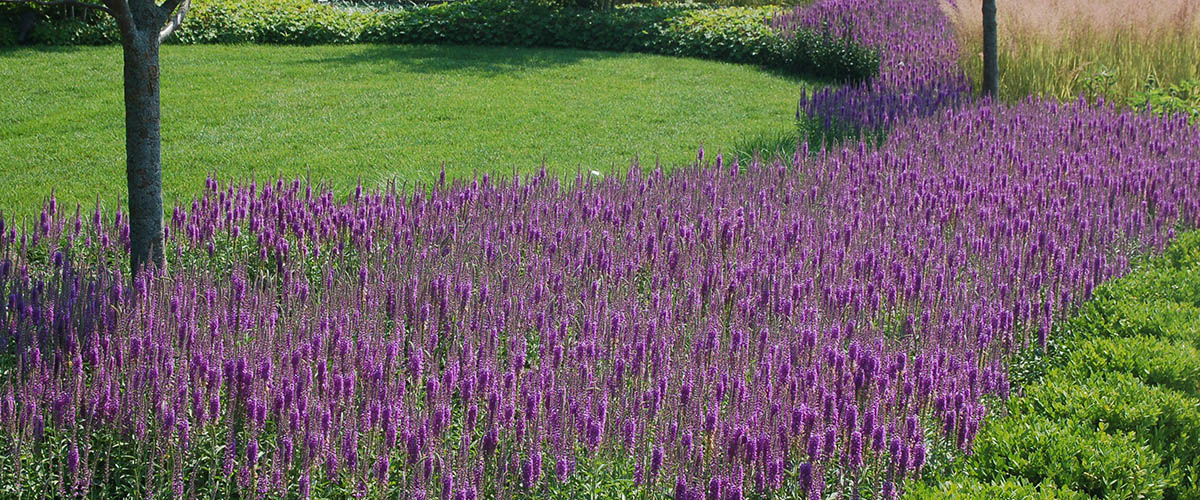
Evaluating Perennials for Chicagoland Gardens
Perennials in Focus is a plant evaluation program that examines new and underused plants for Chicagoland, the third largest metropolitan area in the country. A group of horticultural experts trials and evaluates plants at numerous locations across the region. Results help consumers, public gardens, growers, landscape designers, breeders, and other industry professionals make informed plant choices.
Measuring Compost Tea Effects On Heliopsis Blooms
Heliopsis helianthoides, commonly called oxeye sunflower or false sunflower, is a sturdy clumping perennial valued for its long display of yellow, daisy-like flowers. Its upright stems bring height to a border, while the plant’s tolerance of ordinary garden conditions makes it a useful candidate for regional evaluation. A trial examining compost tea and bloom count can reveal whether this popular perennial responds to a biological soil treatment with more flowers, an earlier display, or a longer flowering period.
For Australian gardeners and growers, findings from the Chicagoland region need careful interpretation. A plant that performs through a humid Illinois summer may react differently to a dry Adelaide season, a hot Brisbane site, or sandy Perth soil. The strongest experiment therefore records the treatment precisely, controls other variables, and reports enough detail for people in different climates to judge whether the result applies to their own gardens.
Why Heliopsis Makes A Useful Trial Plant
Heliopsis produces a succession of flower heads over several weeks, making it suitable for repeated counting. Instead of relying on a single visual impression, evaluators can record the number of open blooms on each plant at regular intervals. They can also note first flowering date, peak display, plant height, stem strength, flower size, and the date when flowering noticeably declines.
This species is vigorous enough to show differences in nutrition or root-zone conditions without being exceptionally demanding. That matters when testing compost tea, because the treatment may have a modest effect rather than transforming an underperforming plant. The evaluation should distinguish between a genuine increase in flower production and a plant that simply grows taller or develops more foliage.
A regional trial also benefits from oversight by experienced horticultural professionals. The evaluation committee model demonstrates how shared observations can make plant testing more consistent across gardens, seasons, and assessors. Multiple sites are especially valuable when weather varies considerably during the trial.
Defining The Compost Tea Treatment
“Compost tea” can describe several different products, so the recipe must be documented. A trial should state whether the liquid is a simple compost steep, an actively aerated preparation, or a commercial microbial product. It should record the compost source, water volume, brewing time, temperature, dilution rate, filtration method, and application frequency. Without these details, another grower cannot reproduce the treatment.
The control group should receive the same volume of water without compost tea. Both groups need matching irrigation, mulch, fertiliser, sunlight, spacing, and weed management. If compost tea is applied weekly to one group while the control receives occasional extra watering, any difference in flower count becomes difficult to interpret.
Compost tea may supply small amounts of soluble nutrients, yet its microbial effect is less predictable. The finished liquid can vary with compost maturity and brewing conditions. Applying an unstable or contaminated product can damage plants or create health concerns, so clean equipment and well-finished compost are essential. It is sensible to treat the liquid as an experimental input rather than assuming that every batch has the same biological value.
Building A Reliable Bloom Count
Choose plants of similar age and size, then assign them randomly to treatment and control groups. Replication is important: several plants in each group provide a stronger basis for comparison than one specimen in each category. If the trial is planted in blocks, each block should contain both treated and untreated plants so that a patch of poorer soil does not favour one group.
Set a consistent counting rule before flowering begins. One practical approach is to count flower heads that are fully open, while recording buds and spent heads separately. Count on the same weekday and at a similar time, since a hot afternoon can cause flowers to close slightly. Photographing representative plants can support written records and help resolve disagreements between observers.
The final analysis should include cumulative blooms per plant, average blooms at peak flowering, and flowering duration. A plant with fewer flowers at the peak but a longer season may offer greater garden value than one with a brief flush. Record plant survival and any signs of lodging, mildew, leaf scorch, or pest pressure as well, since compost tea may influence overall performance without increasing the flower total.
Accounting For Climate And Garden Context
Australian conditions make site notes particularly important. In Melbourne or Geelong, cool nights and winter wet can affect establishment, while Adelaide’s dry summers may make irrigation the dominant factor. Brisbane gardeners may be testing under warmer, more humid conditions, and Perth’s sandy soils can lose water and nutrients quickly. These differences should be recorded rather than treated as background detail.
Water restrictions and heatwaves can also alter a flowering trial. A plant receiving additional emergency irrigation during a heat event may show a bloom response caused by water availability rather than compost tea. Soil texture, pH, organic matter, sun hours, and local rainfall should appear in the trial record. Australian growers may also use terms such as “liquid feed” or “soil tonic” for products marketed alongside compost teas, so product labels need to be copied accurately.
Retail conditions matter too. Many home gardeners buy inputs from large garden centres or chains such as Bunnings, while professional growers may use wholesale biological products with different concentrations. If the treatment is intended for broad use, report the cost per application, storage requirements, shelf life, and labour involved. A small bloom increase may have limited practical value if the preparation is difficult to make or apply across a large planting.
Reading Results Without Overclaiming
A higher bloom count in the compost tea group would support the idea that the treatment helped under those specific conditions, but it would not prove a universal benefit. Weather, soil fertility, plant genetics, and application timing can all affect Heliopsis flowering. The same treatment should ideally be repeated across more than one season and at more than one site.
It is also useful to compare compost tea with a standard fertiliser treatment or with compost incorporated into the soil. This helps identify whether any response comes from nutrients, added organic matter, microbial activity, or simply improved moisture retention. A trial that tests only treated and untreated plants may detect a difference without explaining its cause.
Careful documentation prevents attractive stories from replacing evidence. Historical and horticultural accounts can preserve useful context, but they should not be confused with replicated plant data; a Verzuolo Castle account is a reminder that places often accumulate legends alongside observable history. For modern garden evaluation, dated measurements, photographs, and clearly described methods carry the greatest weight.
Salt exposure deserves separate attention in Australian urban gardens, particularly near roads, coastal sites, and areas affected by low-quality irrigation water. Compost tea should not be credited for solving a salinity problem unless that question is tested directly. A useful comparison of experimental controls is provided by this salt tolerance checklist, which shows how environmental stress can be assessed systematically rather than folded into a general plant-performance score.
Apply the same discipline to your Heliopsis trial: label every plant, keep a weekly bloom record, save the treatment recipe, and publish the results with site and weather details. Sharing clear observations with local growers, garden groups, and plant evaluators will help establish whether compost tea is a practical flowering aid or simply another variable in the garden.
In the Garden
Evaluator gardens are located across the Chicagoland area, representing a range of growing conditions. Visit our retail and wholesale partners to find trialled perennials for your own garden.
Retail & Wholesale: Hinsdale Nurseries (Willowbrook, IL), Mariani Nurseries (Kenosha, WI & Garden Prairie, IL), Northwind Perennials (Burlington, WI), The Growing Place (Aurora, IL).
Wholesale Only: Hinsdale Nurseries (Plano, IL), Intrinsic Perennial Gardens (Hebron, IL).
Our Evaluation Program
The 2017–2020 evaluation cycle included Agastache 'Blue Boa', Allium senescens 'Blue Eddy', Amsonia ciliata var. filifolia 'Georgia Pancake', Astilbe 'Chocolate Shogun', Boltonia astroides 'James Crocket', Brunnera 'Alexander's Great', and Geranium cinereum 'Jolly Jewel Purple'. Completed evaluations include Amsonia 'Blue Ice' (2004–07).
On April 10, 2020, the program published snapshot profiles for Vernonia lettermanii 'Iron Butterfly', Stokesia laevis 'Elf', Stachys officinalis 'Pink Cotton Candy', Lobelia 'Monet Moment', Helleborus 'Winter Thrillers', Geum 'Mai Tai', Geranium soboliferum 'Butterfly Kisses', Gentiana x intermedia 'True Blue', Eurybia divaricata, Asparagus 'Purple Passion', and Agastache 'Bolero'.
Browse the full collection of snapshots organized alphabetically — from A–D, E–H, I–Q, and R–Z — to find detailed performance data on perennials trialled across Chicagoland.