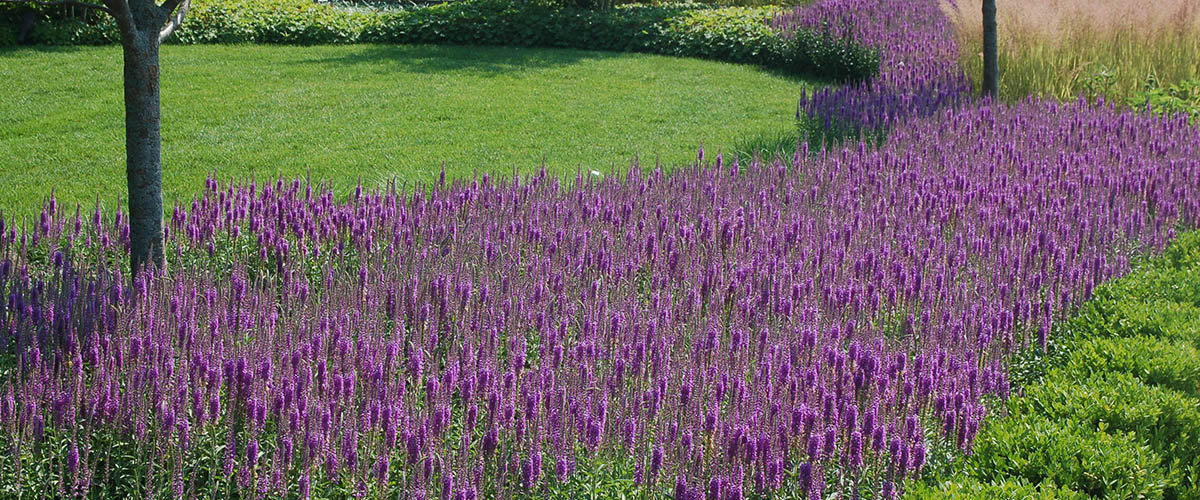
Evaluating Perennials for Chicagoland Gardens
Perennials in Focus is a plant evaluation program that examines new and underused plants for Chicagoland, the third largest metropolitan area in the country. A group of horticultural experts trials and evaluates plants at numerous locations across the region. Results help consumers, public gardens, growers, landscape designers, breeders, and other industry professionals make informed plant choices.
Late-Season Nectar Plants for Monarch Butterflies
Perennials that provide late-season nectar for migrating monarch butterflies can keep a pollinator border productive when many summer flowers have faded. The Perennials in Focus program tests selected new and underused plants across multiple Chicagoland gardens and seasons, recording bloom period, flower colour, height and spread. That multi-site approach offers a more dependable starting point than a plant’s appearance in a single catalogue photograph.
Australian growers should treat those results as comparative evidence rather than a planting prescription. The northern-hemisphere migration is not mirrored across Australia, where monarchs are occasional visitors rather than regular annual migrants. The practical goal is therefore broader: sustain late nectar for monarchs that do arrive while giving Australia’s resident pollinators a continuous, climate-appropriate food supply.
What the Chicagoland trials reveal
Perennials in Focus is a collaborative evaluation rather than a single-garden showcase. Selected cultivars and underused species are observed in different soils and exposures through more than one growing season, allowing flowering duration, stature and spread to be compared. These findings can guide home gardeners, growers, landscape professionals, retailers, breeders and public gardens when deciding whether a plant merits wider use.
Timing is especially important for nectar. A plant that flowers for six weeks from late summer into autumn can offer more than a brief display, while an open, flat-faced flower gives a visiting butterfly an accessible landing surface. Trial records still need local checking because heat, frost and winter rainfall can move the flowering window substantially. The sequence and duration of bloom are more useful than copying a northern calendar into Australian conditions.
The Australian gardening context
Australian conditions vary sharply across the country. Melbourne’s changeable springs and frosty autumns, Sydney’s humid summers, Brisbane’s subtropical growth, Adelaide’s dry heat and Canberra’s cold winters all change establishment and bloom. A phlox that thrives in rich Chicago soil may struggle in alkaline, water-limited Adelaide, while a plant suited to wet clay can become loose and vulnerable to disease in a raised bed. Matching a perennial to the local pattern is more useful than copying a Midwest plant list.
Australian garden centres and mail-order nurseries offer familiar dahlias, salvias and grevilleas, while native-plant nurseries can supply locally appropriate alternatives to North American asters and goldenrods. That gives growers several routes into the late-season market without importing wild seed. State weed lists and council advice should guide every choice, particularly because some species sold as pollinator favourites have naturalised in parts of Australia.
For the physical arrangement, garden layout inspiration can help readers place low flowers at the front and taller nectar plants where they remain visible to flying insects. The planting pattern should still follow the site’s sun, wind and water movement, and it should leave enough open space for adults to approach the blooms without forcing them through prickly or densely tangled foliage.
Late-season plants to evaluate
Chicagoland observations point to several dependable plant groups. Garden phlox can carry colour into early autumn, asters can continue after many perennials have finished, and tall goldenrods or perennial salvias add nectar late in the season. These are trial candidates rather than universal recommendations: check mature size, flowering window, seed production and local weed status before adding them to an Australian garden.
Dahlias offer a more familiar option for many Australian gardeners. Sold as tubers and widely used in local cut-flower and exhibition culture, named cultivars can provide nectar through autumn in frost-free areas. Choose open, single-flowered types where possible, remove faded heads to encourage continued flowering, and contain spent seed if the cultivar self-sows readily. In cooler districts, lift and store tubers according to local guidance.
Australian native alternatives can fill the same seasonal role. A compact grevillea, a suitable daisy-bush or another regional perennial selected for autumn flowers may support many nectar-feeding insects without adding a potentially invasive North American species. Ask specialist nurseries for bloom times under local conditions, and select flowers with accessible centres rather than relying on a plant’s general reputation as a butterfly favourite.
Disease-resistant phlox for reliable bloom
Phlox deserves careful selection because its flowering period can be excellent while its health is inconsistent. Perennials in Focus’s phlox disease resistance findings compare the performance of newer and established forms of Phlox paniculata, giving gardeners a useful starting point for choosing a cultivar less vulnerable to powdery mildew and leaf problems. This matters in humid Sydney and Brisbane gardens, where dense growth and damp nights can quickly weaken a plant.
Give the chosen phlox sun, reasonable spacing and water close to the roots rather than a nightly spray over the foliage. Divide crowded clumps, remove diseased material after flowering and avoid adding a generic fungicide as a substitute for good siting. Melbourne and Canberra growers should also protect young crowns from late frost, while Adelaide gardeners may need to account for summer drought before the autumn display begins.
Matching plants to site and soil
Trees can make a late-season border either more attractive or less dependable. The program’s black walnut trial findings show how mature tree roots can affect establishment and perennial vigour while making clear that site conditions require direct observation. The transferable lesson is to inspect the ground beneath large trees before choosing plants, not to assume that the root behaviour of black walnut operates in every climate.
Australian streets and gardens often contain mature eucalypts, angophoras and council-managed trees. Their shade, root competition and fallen leaves can differ from those around North American walnuts, so trial results should guide questions rather than supply answers. Keep new perennials outside major root zones where possible, maintain an organic surface layer without burying crowns, and irrigate during establishment without creating a waterlogged root zone.
Containers offer more control in difficult sites, but large dahlias and phlox need generous, stable volumes and a reliable watering plan. Group pots by sun and moisture needs, raise them slightly above hard surfaces, and use a free-draining mix suited to the species. This approach suits compact Australian courtyards and balconies where a permanent bed may be unavailable.
Supporting the wider pollinator community
Nectar plants serve adult monarchs, but caterpillars require specific milkweed hosts. Australian gardeners should not import North American Asclepias seed or treat a generalist perennial as a substitute host plant. If monarchs are recorded locally, seek advice from a wildlife authority or experienced butterfly group before introducing any non-native host, and follow quarantine and council rules. Protecting established native vegetation remains the safest way to support the wider insect community.
Build the habitat around more than one flower shape. Flat asters and daisies suit smaller insects, tubular salvias suit longer-tongued visitors, and deeper phlox or dahlia blooms provide landing platforms for larger butterflies. Keep pesticides out of the bed, retain leaf litter and sheltered stems through winter, and provide a shallow water source with stones. Record bloom dates and butterfly visits in a simple garden log, then share observations with Landcare groups or local wildlife networks.
Build a nectar pathway this autumn
A workable plan begins with the flowering calendar. Select one reliable late-season perennial, one locally suitable native nectar plant and one earlier-flowering companion, then place them where each remains visible and undisturbed. Buy from reputable Australian nurseries, check labels for mature dimensions, and monitor growth through the first full season. A public garden, landscape designer or local nursery can help compare plants suited to the same soil and climate.
Choose a compact, locally appropriate late-season bloomer this week, plant it beside an existing nectar flower, and keep a simple record of its first blooms and butterfly visitors through autumn. Repeating the process in a second garden or sharing the observations with a local nursery turns one planting into the start of a useful regional record. Small, well-placed perennial beds can provide nectar when migratory routes are uncertain and dependable habitat when they are not.
In the Garden
Evaluator gardens are located across the Chicagoland area, representing a range of growing conditions. Visit our retail and wholesale partners to find trialled perennials for your own garden.
Retail & Wholesale: Hinsdale Nurseries (Willowbrook, IL), Mariani Nurseries (Kenosha, WI & Garden Prairie, IL), Northwind Perennials (Burlington, WI), The Growing Place (Aurora, IL).
Wholesale Only: Hinsdale Nurseries (Plano, IL), Intrinsic Perennial Gardens (Hebron, IL).
Our Evaluation Program
The 2017–2020 evaluation cycle included Agastache 'Blue Boa', Allium senescens 'Blue Eddy', Amsonia ciliata var. filifolia 'Georgia Pancake', Astilbe 'Chocolate Shogun', Boltonia astroides 'James Crocket', Brunnera 'Alexander's Great', and Geranium cinereum 'Jolly Jewel Purple'. Completed evaluations include Amsonia 'Blue Ice' (2004–07).
On April 10, 2020, the program published snapshot profiles for Vernonia lettermanii 'Iron Butterfly', Stokesia laevis 'Elf', Stachys officinalis 'Pink Cotton Candy', Lobelia 'Monet Moment', Helleborus 'Winter Thrillers', Geum 'Mai Tai', Geranium soboliferum 'Butterfly Kisses', Gentiana x intermedia 'True Blue', Eurybia divaricata, Asparagus 'Purple Passion', and Agastache 'Bolero'.
Browse the full collection of snapshots organized alphabetically — from A–D, E–H, I–Q, and R–Z — to find detailed performance data on perennials trialled across Chicagoland.