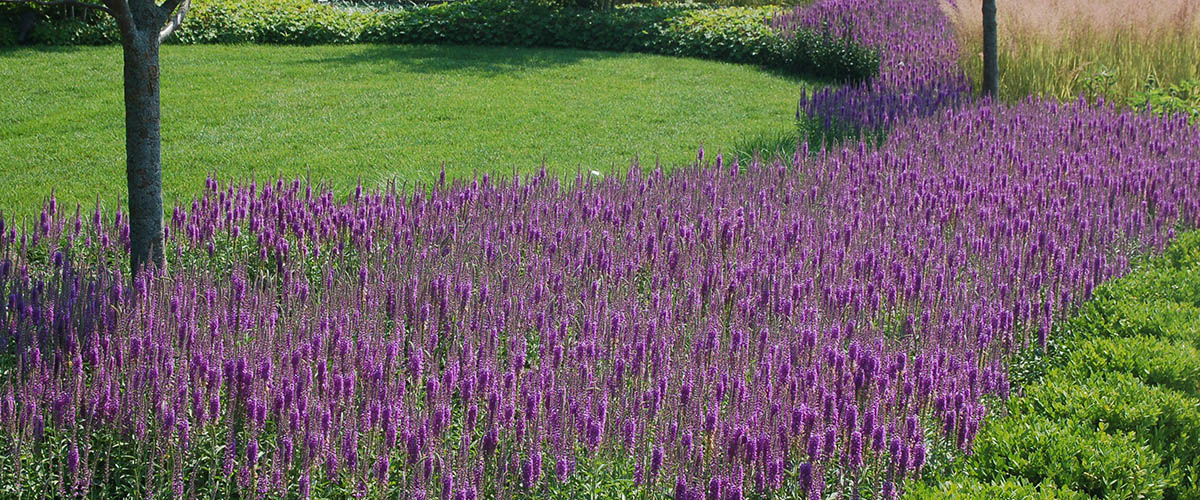
Evaluating Perennials for Chicagoland Gardens
Perennials in Focus is a plant evaluation program that examines new and underused plants for Chicagoland, the third largest metropolitan area in the country. A group of horticultural experts trials and evaluates plants at numerous locations across the region. Results help consumers, public gardens, growers, landscape designers, breeders, and other industry professionals make informed plant choices.
Perennials With Colour That Lasts Into Autumn
A perennial garden can keep earning attention after its flowers fade. Leaves may turn amber, copper, burgundy, plum, or brilliant red, giving borders structure and seasonal interest when summer colour has passed. In a mixed planting, this foliage can carry the garden through the change of season instead of leaving a gap between late bloomers and winter dormancy.
For Australian gardeners, the timing and intensity of this display depend heavily on climate. A plant that colours reliably in the cool autumns of Melbourne may remain green in Sydney or scorch before changing in Adelaide. Trials from the Chicagoland region offer useful clues about habit, resilience, and performance, but local conditions, water availability, and state biosecurity rules still deserve careful consideration.
Why Autumn Foliage Deserves A Place In The Plan
Flowering is often the main reason a perennial is purchased, yet foliage provides the longer visual framework. Heuchera, baptisia, amsonia, peonies, and certain ornamental grasses can remain attractive for weeks after their peak bloom. Their leaves create contrast against paving, evergreen shrubs, and fading annuals, while seedheads and upright stems add texture.
The best autumn performers usually have healthy foliage late into the season. Dense, disease-free leaves can produce stronger colour than plants that have been weakened by drought, poor drainage, or intense pest pressure. Site selection matters: morning sun, adequate air movement, and soil that drains without becoming bone-dry will support better leaf quality.
In Australian gardens, autumn often coincides with renewed planting activity. Weekend gardeners may be replacing summer annuals, mulching before winter, or reducing irrigation as temperatures fall. This is an ideal time to assess which perennials still look substantial and which disappear too early.
Plants That Shift From Green To Rich Colour
Heuchera is among the most dependable choices for extended foliage interest. Cultivars range from lime green and silver to chocolate, rose, burgundy, and near-black purple. Many hold their colour through cool weather, although intense heat, reflected light, and inconsistent watering can cause leaf scorch. Research into heuchera colour retention can help gardeners distinguish stable performers from plants that look impressive only in a catalogue photograph.
Amsonia offers a softer transformation. Its narrow green leaves often turn clear gold in autumn, forming a rounded mound after the blue spring flowers have finished. Baptisia can develop blue-green to charcoal foliage and attractive black seed pods, while peonies may turn bronze, red, or deep wine before the stems collapse.
For warmer Australian districts, look for plants that can maintain leaf quality through summer before beginning their autumn change. In Melbourne and Canberra, cool nights may intensify colour. In Sydney, the transition can be subtler, and in Perth or Brisbane, evergreen foliage may provide more reliable interest than dramatic deciduous change.
Matching Foliage Colour With Climate
A plant’s autumn performance is shaped by temperature, day length, moisture, and genetics. Cool nights and bright days often encourage vivid red and purple pigments, while warm nights can produce a slower, less pronounced shift. Drought can sometimes trigger early colour, but that stressed display is not a sign of good garden performance.
Chicagoland trials are especially valuable for identifying plants that tolerate cold winters, snow, and long seasonal transitions. Australian gardeners should treat those results as a guide to plant behaviour rather than a direct guarantee. A perennial that survives Chicago’s winter may still struggle with a hot, humid Brisbane summer or the dry winds common around Adelaide.
Garden position can improve the result. Place colour-focused perennials where they receive sufficient light without harsh reflected heat from masonry. Improve sandy soil with compost, mulch around—but not against—the crown, and use deep, occasional watering during establishment. In areas affected by council water restrictions, prioritise plants with proven low-water performance rather than trying to maintain thirsty species through every season.
Keeping Foliage Healthy Until Autumn
Late-season colour begins with good care in spring and summer. Remove badly damaged leaves, avoid overhead watering late in the day, and give crowded plants enough space for air circulation. These habits reduce the chance that fungal problems will shorten the foliage display. A clean, open border also makes colour changes easier to see.
Daylilies are often valued for their flowers, yet their strappy leaves can remain useful after flowering. Cultivar choice and disease management matter in humid conditions, so this guide to daylily rust resistance is relevant when planning gardens in wetter parts of Australia. Remove heavily affected foliage according to local advice, disinfect cutting tools between plants, and avoid moving diseased material around the garden.
Fertiliser timing also influences the display. Excess nitrogen can encourage soft, lush growth that is more vulnerable to pests and weather damage. A balanced soil program, followed by a light mulch layer, is generally more useful than repeated high-nitrogen feeding. Leave attractive seedheads standing when they provide winter structure or food for birds, then cut back only when the plant becomes untidy or dormant.
Building A Border For A Longer Season
Foliage colour works best when it is planned as a sequence. Pair an early-changing perennial such as peony with a later-colouring heuchera or amsonia, then add grasses whose tan seedheads persist into winter. Evergreen or semi-evergreen plants can bridge periods when deciduous perennials have been cut back.
Consider height and spread at maturity, not just the size of a nursery pot. A low heuchera can edge a path, while amsonia suits the middle of a border and a large grass can provide a late-season backdrop. Repeating a foliage colour in several parts of the garden creates cohesion, particularly in compact suburban blocks in Melbourne, Sydney, or Hobart.
Plant labels and local trial information are useful, but observe performance in nearby gardens and independent nurseries as well. Australian plant availability changes with regional demand, and a cultivar stocked at a large chain such as Bunnings may behave differently from a locally propagated selection. Before purchasing unfamiliar plants, check state or territory weed lists and biosecurity requirements; a vigorous perennial that is harmless in one region may be restricted in another.
| Perennial | Typical Late-Season Effect | Best Use | Australian Considerations |
|---|---|---|---|
| Heuchera | Burgundy, bronze, silver, or lime foliage | Edging and containers | Provide afternoon protection in hot districts |
| Amsonia | Clear gold leaves | Mid-border massing | Performs best with reliable moisture while establishing |
| Baptisia | Blue-green leaves and dark seed pods | Structural clumps | Needs space and dislikes frequent relocation |
| Peony | Bronze, red, or wine tones | Seasonal focal point | More reliable in cool-winter regions |
| Ornamental grasses | Gold, straw, or copper tones | Backdrop and winter structure | Choose species suited to local rainfall and fire conditions |
| Daylily | Green to yellowing strap-like leaves | Repeated border planting | Monitor foliage disease in humid climates |
Choose a small group of proven plants and record how they perform from spring through autumn. Note flowering time, leaf health, colour intensity, water needs, and spread. These observations will make future purchases more reliable than relying on bloom photographs alone.
Explore regional trial findings, visit reputable local nurseries, and add perennials whose foliage remains attractive after flowering has finished. With thoughtful placement and climate-aware selection, your garden can offer colour well beyond the final flush of summer blooms.
In the Garden
Evaluator gardens are located across the Chicagoland area, representing a range of growing conditions. Visit our retail and wholesale partners to find trialled perennials for your own garden.
Retail & Wholesale: Hinsdale Nurseries (Willowbrook, IL), Mariani Nurseries (Kenosha, WI & Garden Prairie, IL), Northwind Perennials (Burlington, WI), The Growing Place (Aurora, IL).
Wholesale Only: Hinsdale Nurseries (Plano, IL), Intrinsic Perennial Gardens (Hebron, IL).
Our Evaluation Program
The 2017–2020 evaluation cycle included Agastache 'Blue Boa', Allium senescens 'Blue Eddy', Amsonia ciliata var. filifolia 'Georgia Pancake', Astilbe 'Chocolate Shogun', Boltonia astroides 'James Crocket', Brunnera 'Alexander's Great', and Geranium cinereum 'Jolly Jewel Purple'. Completed evaluations include Amsonia 'Blue Ice' (2004–07).
On April 10, 2020, the program published snapshot profiles for Vernonia lettermanii 'Iron Butterfly', Stokesia laevis 'Elf', Stachys officinalis 'Pink Cotton Candy', Lobelia 'Monet Moment', Helleborus 'Winter Thrillers', Geum 'Mai Tai', Geranium soboliferum 'Butterfly Kisses', Gentiana x intermedia 'True Blue', Eurybia divaricata, Asparagus 'Purple Passion', and Agastache 'Bolero'.
Browse the full collection of snapshots organized alphabetically — from A–D, E–H, I–Q, and R–Z — to find detailed performance data on perennials trialled across Chicagoland.