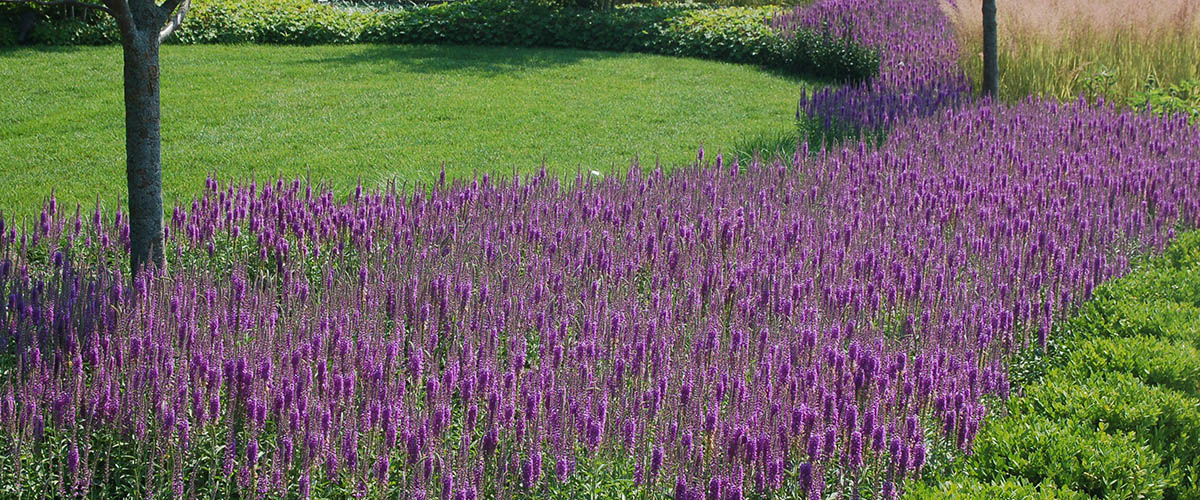
Evaluating Perennials for Chicagoland Gardens
Perennials in Focus is a plant evaluation program that examines new and underused plants for Chicagoland, the third largest metropolitan area in the country. A group of horticultural experts trials and evaluates plants at numerous locations across the region. Results help consumers, public gardens, growers, landscape designers, breeders, and other industry professionals make informed plant choices.
Evaluating daylily rust resistance in humid summers
Daylilies are valued for their reliable flowering, broad color range, and ability to fill difficult parts of a perennial border. In the Chicagoland region, however, a cultivar’s performance depends on more than bloom count and winter survival. Warm, humid summers can expose meaningful differences in foliage health, especially when wet leaves remain damp overnight.
Daylily rust, caused by the fungus Puccinia hemerocallidis, produces yellow-orange spots and powdery pustules on leaves and scapes. Severe infections can weaken plants, reduce their visual quality, and leave beds looking tired before the flowering season ends. Evaluating resistance under local conditions gives gardeners more useful information than relying on labels or observations from a different climate.
A regional trial also reflects the practical goals of the program mission: comparing plants across gardens, seasons, and growing conditions so that recommendations are grounded in evidence. For daylilies, that evidence should include both ornamental performance and the ability to maintain healthy foliage during periods of heat and moisture.
Why daylily rust deserves attention
Rust is often easiest to identify on the undersides of daylily leaves, where raised orange or yellow pustules release spores. Corresponding yellow flecks may appear on the upper leaf surface. Infections can spread from individual leaves to much of the clump when rain, irrigation, or frequent dew keeps foliage wet.
The disease has a complex life cycle. In many regions, rust alternates between daylilies and plants in the genus Patrinia, although the pathogen can also spread through infected plant material and airborne spores. This means a clean-looking plant at the beginning of summer may develop symptoms later as weather conditions become favorable.
Rust resistance is not always absolute. A cultivar may show a few lesions while retaining strong green foliage, whereas another may develop widespread pustules and premature yellowing. Trial notes should therefore distinguish between minor symptoms and disease that interferes with the plant’s appearance or vigor.
Building a useful Chicagoland trial
A meaningful evaluation begins with consistent planting conditions. Cultivars should be grown in comparable soil, light exposure, spacing, and irrigation zones whenever possible. Full sun and good air movement can reduce disease pressure, but a trial should still include realistic garden conditions rather than an artificially dry or widely spaced display.
Repeated observation is essential because rust expression changes with weather. A single inspection after a dry week can miss an infection that becomes obvious after several humid nights. Evaluators can inspect plants every one or two weeks from early summer through senescence, recording the first date symptoms appear and whether they expand.
The trial should include established cultivars alongside newer or underused selections. Older, widely planted daylilies provide familiar reference points, while newer plants may offer improved foliage health, distinctive flowers, or a longer bloom period. Using more than one plant per cultivar also helps separate genetic performance from an isolated damaged leaf or an unfavorable planting position.
What to record in the garden
Disease scoring works best when it is simple enough to repeat. A five-point scale can describe the percentage of affected foliage: zero for no visible symptoms, one for isolated lesions, two for light spotting, three for moderate infection across several leaves, and four for extensive pustules, yellowing, or dieback. Photographs taken from the same angle add useful visual evidence.
Observers should note where symptoms occur. Rust concentrated on lower leaves may have little effect on the display, while infection on upper foliage or flower scapes is more disruptive. Record whether the plant continues producing healthy leaves, opens flowers normally, and recovers after infected foliage is removed.
Other observations help put resistance in context. Include cultivar name, plant age, height, spread, bloom period, rebloom, flower form, and surrounding plants. Also record rainfall, irrigation, air circulation, and any fungicide applications. These details make it easier to identify whether a poor result reflects susceptibility, environmental stress, or inconsistent maintenance.
Reading results across cultivars
A strong evaluation compares disease resistance with the traits gardeners actually want. A cultivar with excellent foliage but a short bloom period may suit a foliage-focused border, while a heavily blooming cultivar with moderate rust symptoms might still be valuable in a high-visibility bed if it receives careful maintenance.
| Field observation | More favorable result | Caution when interpreting |
|---|---|---|
| First visible symptoms | Late-season or no symptoms | A dry summer may delay disease in every cultivar |
| Leaf coverage | Few isolated lesions | Small symptoms can be missed without checking leaf undersides |
| Disease progression | Little change over several weeks | Repeated scoring is needed to confirm stability |
| Foliage appearance | Green leaves with minimal yellowing | Natural senescence can resemble disease stress |
| Flower scapes | Healthy, upright scapes | Heavy flowering can hide lower-leaf symptoms |
| Recovery | Continued growth after minor infection | Severe defoliation may affect next season’s vigor |
Results should be summarized by cultivar and by site. If the same daylily remains relatively clean in several gardens during humid weather, confidence in its resistance increases. If performance varies sharply, the cultivar may be responding to differences in soil moisture, shade, plant density, or local disease pressure.
Turning observations into planting decisions
Home gardeners can use rust ratings to place cultivars more strategically. Highly resistant or consistently clean selections are appropriate for prominent borders, mass plantings, and locations where regular leaf inspection is unlikely. Moderately affected plants may work well in mixed beds where their flowers receive attention during peak bloom and their foliage is less exposed.
Landscape professionals and retailers can also benefit from regional data. A cultivar that performs beautifully in a dry western trial may be a weaker recommendation for the Midwest if it develops unattractive foliage during humid summers. Local performance information supports more accurate plant tags, sales conversations, and maintenance expectations.
Disease resistance should never be treated as the only selection criterion. Flower quality, bloom timing, winter hardiness, clump form, pollinator value, and tolerance of clay or compacted soil all influence a plant’s usefulness. The best choices combine acceptable rust resistance with the ornamental and cultural traits required by the site.
Managing rust pressure in display beds
Cultural practices cannot make a susceptible cultivar immune, but they can reduce the duration and intensity of infection. Good sanitation also helps keep trial results clearer by limiting avoidable sources of disease.
- Space daylilies to allow air movement through the clump and to help leaves dry after rain.
- Water at the soil line in the morning instead of wetting foliage late in the day.
- Remove heavily infected leaves and clear fallen debris after the growing season.
- Disinfect cutting tools between plants when removing symptomatic foliage.
- Choose cultivars with strong local performance for humid, high-visibility planting areas.
Avoid judging a cultivar solely by a late-season plant that has naturally begun to yellow. Compare symptoms with nearby healthy daylilies, inspect both sides of the leaf, and look for the characteristic orange pustules before recording a rust rating. When disease pressure is consistently high, fungicides may have a role, but they are most effective as part of an integrated approach and should be used according to the product label.
The same careful observation can improve the design of the whole perennial border. For example, combining daylilies with plants selected for compatible height, texture, and airflow can create a healthier display; regional guidance on ornamental grasses can help broaden that planting palette without overcrowding the bed.
Reliable rust evaluations take more than a single photograph or a cultivar claim. They require repeated scoring, comparable growing conditions, and observations across multiple seasons. When those records are shared among trial gardens, they become a practical resource for choosing daylilies that stay attractive through the heat and humidity of a Chicagoland summer.
Document symptoms carefully, compare cultivars under similar conditions, and share regional observations with growers, retailers, landscape professionals, and gardeners. Better local evidence leads to healthier beds and more confident perennial choices.
In the Garden
Evaluator gardens are located across the Chicagoland area, representing a range of growing conditions. Visit our retail and wholesale partners to find trialled perennials for your own garden.
Retail & Wholesale: Hinsdale Nurseries (Willowbrook, IL), Mariani Nurseries (Kenosha, WI & Garden Prairie, IL), Northwind Perennials (Burlington, WI), The Growing Place (Aurora, IL).
Wholesale Only: Hinsdale Nurseries (Plano, IL), Intrinsic Perennial Gardens (Hebron, IL).
Our Evaluation Program
The 2017–2020 evaluation cycle included Agastache 'Blue Boa', Allium senescens 'Blue Eddy', Amsonia ciliata var. filifolia 'Georgia Pancake', Astilbe 'Chocolate Shogun', Boltonia astroides 'James Crocket', Brunnera 'Alexander's Great', and Geranium cinereum 'Jolly Jewel Purple'. Completed evaluations include Amsonia 'Blue Ice' (2004–07).
On April 10, 2020, the program published snapshot profiles for Vernonia lettermanii 'Iron Butterfly', Stokesia laevis 'Elf', Stachys officinalis 'Pink Cotton Candy', Lobelia 'Monet Moment', Helleborus 'Winter Thrillers', Geum 'Mai Tai', Geranium soboliferum 'Butterfly Kisses', Gentiana x intermedia 'True Blue', Eurybia divaricata, Asparagus 'Purple Passion', and Agastache 'Bolero'.
Browse the full collection of snapshots organized alphabetically — from A–D, E–H, I–Q, and R–Z — to find detailed performance data on perennials trialled across Chicagoland.