Evaluating Perennials for Chicagoland Gardens
Perennials in Focus is a plant evaluation program that examines new and underused plants for Chicagoland, the third largest metropolitan area in the country. A group of horticultural experts trials and evaluates plants at numerous locations across the region. Results help consumers, public gardens, growers, landscape designers, breeders, and other industry professionals make informed plant choices.
Vivid Perennials That Lure Ruby-Throated Hummingbirds to the Garden
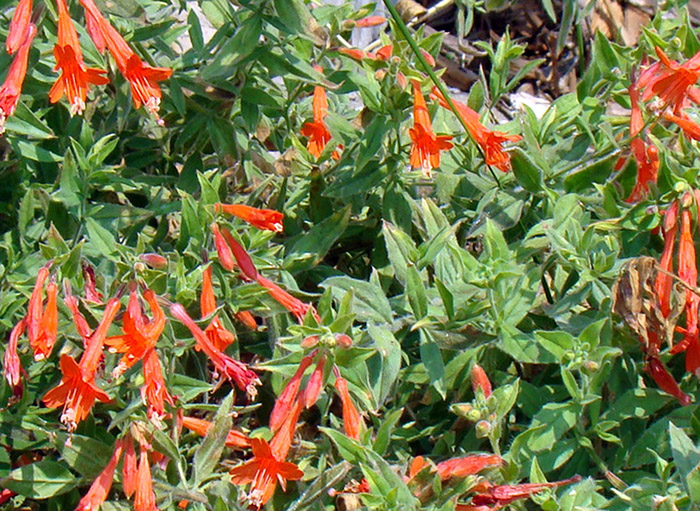
Brilliant red, deeply tubular flowers are the calling card of the ruby-throated hummingbird, and few perennials deliver that signal more unmistakably than Lobelia cardinalis. Gardeners across the temperate world have long prized this cardinal flower for its torch-like August spikes, and Australian plant enthusiasts are increasingly seeking out hummingbird-pollinated favourites for their own backyards. While ruby-throated hummingbirds are native to eastern North America, the same tubular blossoms pull in Australia's nectar-hungry birds, including eastern spinebills, red wattlebirds, and New Holland honeyeaters.
Understanding which perennial partners thrive alongside cardinal flower helps create a hummingbird-friendly planting that lasts well beyond a single season. Plant evaluation programs test newcomers and old reliables in real garden conditions, providing growers with data on bloom length, stem strength, and resistance to local stressors. Pairing that research with an eye for flower shape, colour saturation, and continuous bloom is the surest path to a feeding station that hums with life throughout the growing months.
Why Ruby-Throated Hummingbirds Crave Tubular Blooms
Ruby-throated hummingbirds have remarkably long, needle-like bills and extendable tongues adapted to reach nectar deep inside tubular corollas. Red wavelengths register strongly in their visual system, while many bees and other pollinators register red poorly, which means tubular crimson or scarlet flowers can devote more energy to nectar production without losing access to pollinators. Because hummingbirds must feed almost constantly to fuel their racing metabolism, they remember productive flower patches and return repeatedly throughout the day, often defending them against rivals.
This feeding behaviour has made them valuable garden allies in their native range, where they consume enormous numbers of small insects in addition to nectar, providing a measure of natural pest control. Each successful planting becomes a tiny step in supporting migratory corridors that stretch from the Gulf Coast up through the boreal forests of Canada, a journey that requires reliable food stops along the way.
Spotlight on Lobelia Cardinalis and Its Close Relatives
Lobelia cardinalis, sometimes called cardinal flower, sends up vivid scarlet racemes on three to four foot stems from late summer into early autumn. It prefers consistently moist, humus-rich soil and dappled sun, conditions that mirror creek banks and woodland seeps in its native habitat. In Australian gardens, similar performance can be coaxed by planting in clay-enriched beds that retain moisture through dry spells, with protection from the harshest afternoon rays in places like western Sydney or the Adelaide Hills.
Hybridisers have expanded the colour range in recent decades, offering cultivars in deep rose, magenta, and bi-colour forms. Lobelia 'Queen Victoria' pairs bronze-purple foliage with the classic scarlet flower for a particularly dramatic effect, while the compact 'Fried Green Tomatoes' adds interest with olive-toned leaves. Related Lobelia speciosa selections deliver longer bloom periods and greater tolerance of garden soil, making them excellent choices for first-time growers.
A Supporting Cast of Pollinator Favourites
A hummingbird border relies on overlapping bloom times and a mix of flower shapes. The perennials below pair well with cardinal flower in a sunny to partly shaded bed, providing nectar across several months and supplying beneficial architectural contrast.
| Perennial | Bloom colour | Height (m) | Sun | Bloom period |
|---|---|---|---|---|
| Lobelia cardinalis | Scarlet red | 0.9 – 1.2 | Part shade | Late summer |
| Penstemon 'Dark Towers' | Pink-purple | 0.6 – 0.9 | Full sun | Summer |
| Monarda didyma | Red, pink, white | 0.9 – 1.5 | Full to part | Midsummer |
| Salvia guaranitica | Deep blue | 1.2 – 1.8 | Full sun | Summer to autumn |
| Agastache 'Blue Fortune' | Lavender-blue | 0.6 – 1.0 | Full sun | Mid to late summer |
| Helenium autumnale | Yellow, copper, red | 0.9 – 1.5 | Full sun | Late summer to autumn |
Helenium deserves particular attention in mixed plantings because it bridges the gap between midsummer bloomers and the autumn display. Its daisy-like flowers provide a contrasting shape alongside the tubular blooms, and bees, butterflies, and hummingbirds all work its clusters. Recent field observations of Helenium height consistency in trial beds offer helpful guidance on selecting sturdy cultivars that stand up to wind and rain, an important consideration in exposed garden positions.
Adjusting Cultivation for Australian Conditions
Most hummingbird-attracting perennials originate in temperate North America, so growing them in Australia means thinking about reversed seasons, intense summer UV, and varying soil profiles. In Melbourne and parts of Tasmania, the climate is forgiving, with cool summers and reliable rainfall that suit Lobelia cardinalis and Penstemon beautifully. Brisbane's subtropical humidity opens up options for Salvia guaranitica but may demand more aggressive mildew management on Monarda.
Water management matters more than any other factor. Installing drip irrigation beneath a layer of coarse mulch keeps root systems cool and evenly moist, the conditions these plants crave. In regions with strict water restrictions, such as parts of Perth during dry summers, gardeners can group thirsty perennials together in a dedicated hydrozone and supplement with greywater where local regulations permit. Retailers like Bunnings and specialist native nurseries in cities from Adelaide to Cairns now stock a respectable range of these perennials, often sourced from wholesale growers in Victoria and New South Wales.
Australia's Biosecurity Act 2015 governs the importation of live plants and propagation material, and growers should always source from reputable nurseries that comply with state-level plant health certification. Importing cuttings or seeds from overseas without the appropriate permits risks fines and, more importantly, the introduction of pests or pathogens that could devastate native flora. Choosing accredited Australian suppliers keeps gardens, and the broader environment, safer.
Lessons from Midwestern Trial Programs
The Perennials in Focus program runs multi-year trials across northern Illinois gardens, recording how cultivars perform under hot summers, freezing winters, and unpredictable rainfall. Findings consistently show that pollinator-friendly perennials with strong stems and long bloom windows outperform flashier novelties after a few seasons, simply because they hold up to weather and rebloom reliably. Gardeners anywhere in the world can apply those lessons by prioritising plants with proven resistance to lodging, disease, and stress.
Beyond bloom data, the program evaluates habit, foliage quality, and winter interest, giving designers a fuller picture of how a perennial contributes across the calendar. Gardeners wrestling with screen plantings along fences in exposed positions find that the same observational rigour applies, with height and spread data informing reliable barrier choices that resist prevailing winds.
Composing a Long-Blooming Border
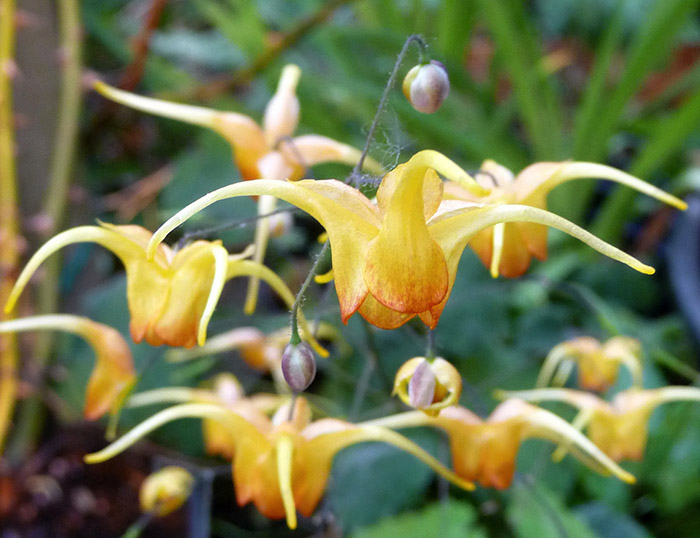
A thriving hummingbird border begins with three bloom waves: an early summer opening featuring Aquilegia and Penstemon, a midsummer crescendo with Monarda, Agastache, and Salvia, and an autumn finale anchored by Lobelia cardinalis and Helenium. Layering plants by height keeps the tallest stems at the back, mid-sized perennials in the centre, and low mounds of Catmint or hardy Geranium at the front. Repeating flower colours at intervals draws the eye through the bed and helps visiting birds locate productive clumps quickly.
Adding rough timber perches near the planting gives hummingbirds a place to rest between feeding bouts, while a shallow water source with safe footing completes the habitat. With attentive siting, sensible irrigation, and a backbone of trial-proven perennials, any garden from a Sydney courtyard to a sprawling Adelaide Hills allotment can become a vibrant stage for hummingbirds and their fascinating Australian counterparts.
Browse the full catalogue of evaluated perennials, design notes, and trial reports at Perennials in Focus to plan a border that performs reliably from spring through the first cool nights of autumn. Start with a single bed of cardinal flower and a supporting perennial, then expand into successive colour waves as confidence grows.
In the Garden
Evaluator gardens are located across the Chicagoland area, representing a range of growing conditions. Visit our retail and wholesale partners to find trialled perennials for your own garden.
Retail & Wholesale: Hinsdale Nurseries (Willowbrook, IL), Mariani Nurseries (Kenosha, WI & Garden Prairie, IL), Northwind Perennials (Burlington, WI), The Growing Place (Aurora, IL).
Wholesale Only: Hinsdale Nurseries (Plano, IL), Intrinsic Perennial Gardens (Hebron, IL).
Our Evaluation Program
The 2017–2020 evaluation cycle included Agastache 'Blue Boa', Allium senescens 'Blue Eddy', Amsonia ciliata var. filifolia 'Georgia Pancake', Astilbe 'Chocolate Shogun', Boltonia astroides 'James Crocket', Brunnera 'Alexander's Great', and Geranium cinereum 'Jolly Jewel Purple'. Completed evaluations include Amsonia 'Blue Ice' (2004–07).
On April 10, 2020, the program published snapshot profiles for Vernonia lettermanii 'Iron Butterfly', Stokesia laevis 'Elf', Stachys officinalis 'Pink Cotton Candy', Lobelia 'Monet Moment', Helleborus 'Winter Thrillers', Geum 'Mai Tai', Geranium soboliferum 'Butterfly Kisses', Gentiana x intermedia 'True Blue', Eurybia divaricata, Asparagus 'Purple Passion', and Agastache 'Bolero'.
Browse the full collection of snapshots organized alphabetically — from A–D, E–H, I–Q, and R–Z — to find detailed performance data on perennials trialled across Chicagoland.