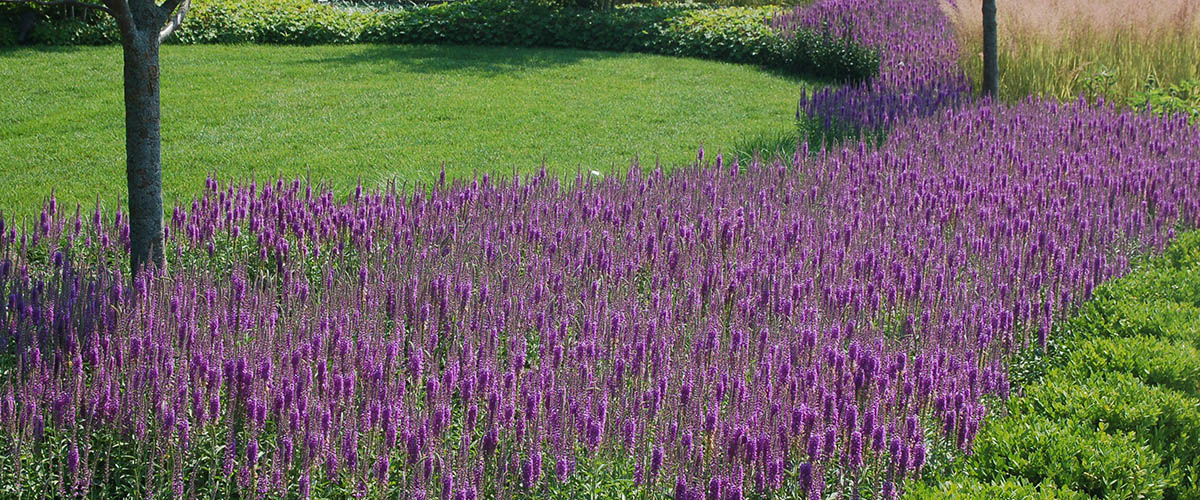
Evaluating Perennials for Chicagoland Gardens
Perennials in Focus is a plant evaluation program that examines new and underused plants for Chicagoland, the third largest metropolitan area in the country. A group of horticultural experts trials and evaluates plants at numerous locations across the region. Results help consumers, public gardens, growers, landscape designers, breeders, and other industry professionals make informed plant choices.
Perennials for Screen Planting Along Fences in Windy Chicago
A fence can define a property line, but it rarely creates a complete visual screen. In a windy Chicago garden, the most useful planting combines height, movement, seasonal interest, and enough structural strength to withstand strong gusts. Perennial plants can soften boards, chain link, and metal panels while making a narrow boundary feel more established.
The best choices depend on the fence’s exposure, soil moisture, available width, and desired level of privacy. A sunny west-facing edge may become hot and dry, while a north-facing fence can produce shade and lingering winter moisture. Airflow also matters: plants placed directly beside a solid fence may experience turbulent wind rather than calm shelter.
Regional trial information is especially valuable for this type of planting. A perennial that looks impressive in a protected garden may flop, split, or fail to return reliably along an exposed suburban boundary. Chicagoland gardeners can use local observations to refine plant combinations before committing to a long border.
Read The Fence-Side Microclimate
Begin by observing the area through more than one season. Note the hours of direct sunlight, whether rain reaches the soil, and how quickly the bed dries after summer storms. Fences can cast long shadows in spring and autumn, while reflective surfaces may increase heat during July and August.
Wind direction is equally important. A fence running across the prevailing wind may create eddies at its ends and a strong updraft over the top. Plants with flexible stems often handle these conditions better than rigid, top-heavy selections. Grasses that bend and recover can be more dependable than plants with large flower heads held on narrow stems.
Measure the planting strip before selecting anything. Many perennial screens require at least 24 to 36 inches of soil width for a full root system, though upright cultivars can work in narrower spaces. Leave room for mature spread, fence maintenance, snow movement, and access to gates or utility equipment.
Match Plant Form To Screening Needs
Perennial screening is usually seasonal rather than year-round. Tall stems and foliage can obscure a fence from late spring through autumn, but many herbaceous plants die back in winter. For winter structure, combine perennials with appropriately sized shrubs, ornamental grasses, or an attractive fence material rather than expecting one plant to perform every function.
Look for plants with a strong basal clump, sturdy stems, and a height that suits the viewing angle. A 5-foot plant may screen a seated patio effectively but leave an upper-story window completely exposed. Medium-height plants can be more successful near a sidewalk because they preserve visibility while hiding the lower portion of a fence.
Color and bloom time should support the screen rather than define it. Flowers attract attention, while foliage, seed heads, and persistent stems provide much of the visual mass. Blue-green grasses, upright leaves, and warm autumn tones can keep the border interesting after peak bloom has passed.
The regional evaluation program’s program mission emphasizes observations that help gardeners make informed choices for local conditions. That perspective is useful when comparing plants that share a similar mature height but differ greatly in durability and habit.
Reliable Perennial Forms For Exposed Borders
Several plant groups are worth considering for a sunny, moderately drained fence line. Switchgrass and little bluestem offer upright foliage, movement, and seed heads that can remain attractive into winter. Baptisia forms a substantial clump with strong stems, while sneezeweed and false sunflower provide summer color without requiring a narrow, highly managed hedge.
Moist sites open additional possibilities. Joe-Pye weed, certain goldenrods, and moisture-tolerant grasses can create a tall, pollinator-friendly screen where runoff collects. In dry soil beneath roof overhangs or beside pavement, drought-adapted prairie plants are usually a better fit than moisture-loving perennials.
The following comparison focuses on plant behavior that matters beside a fence. Mature size varies by cultivar and site, so local trial notes and nursery specifications should be checked before planting.
| Perennial type | Approximate height | Main season | Wind and fence-line value |
|---|---|---|---|
| Switchgrass (Panicum virgatum) | 3–6 feet | Summer to winter | Upright clump, flexible stems, strong seed-head display |
| Little bluestem (Schizachyrium scoparium) | 2–4 feet | Summer to winter | Excellent for dry soil and narrow prairie-style borders |
| Baptisia (Baptisia australis) | 3–4 feet | Late spring to summer | Dense habit and sturdy stems once established |
| False sunflower (Heliopsis helianthoides) | 3–5 feet | Summer to fall | Bright flowers and substantial foliage for sunny sites |
| Sneezeweed (Helenium hybrids) | 3–5 feet | Late summer to fall | Extends seasonal color; may need support in rich soil |
| Joe-Pye weed (Eutrochium selections) | 4–7 feet | Late summer | Tall pollinator screen for moist soil and generous space |
Layer Heights Along The Boundary
A single row of identical plants can look formal, but it may expose gaps when stems lean or individual plants fail. A layered border is more resilient. Place tall grasses or upright perennials toward the fence, medium-height flowering plants in the middle, and shorter clump-forming species along the path or lawn edge.
Stagger plants rather than arranging them in a rigid straight line. Overlapping foliage creates a stronger visual screen and reduces the chance that every gap lines up with a gap in the fence. Use the mature spread—not the container size—to determine spacing, then expect the border to look open during its first year or two.
Mixing bloom periods also keeps the fence softened over a longer season. Early foliage and spring flowers can lead into summer grasses, midseason daisies, and late goldenrods or asters. Seed heads left standing through winter feed wildlife and provide texture, though some may be cut back if snow shedding or access is a concern.
Establish Plants For Stronger Growth
Wind exposes weak root systems, especially during the first growing season. Prepare a broad planting bed rather than digging isolated holes in compacted soil. Remove perennial weeds, loosen the soil, and add organic matter only when needed to improve structure. Excess fertility can produce tall, lush stems that are more likely to flop.
Water deeply during establishment, allowing the soil surface to dry slightly where appropriate. A 2- to 3-inch mulch layer helps conserve moisture, but keep it away from crowns and stems. Avoid piling mulch against the fence, where it can remain wet and reduce airflow.
Use these practical guidelines when planning the border:
- Choose plants whose mature height and spread fit the fence and available setback.
- Group plants by similar moisture, sunlight, and soil requirements.
- Select flexible stems and strong clumps for locations exposed to prevailing winds.
- Leave maintenance access near gates, posts, foundations, and utility connections.
- Keep a few specimens standing through winter to test their structure before cutting back.
Overfertilized plants often grow quickly but develop soft stems. A leaner, well-drained site can produce shorter growth with better resistance to wind. If a tall selection repeatedly falls toward the walkway, discreet supports or a shorter cultivar may be more effective than repeated pruning.
Use Trial Evidence Before Finalizing The Design
Plant labels provide useful basics, but regional performance records can reveal differences in flowering, height, spread, winter survival, and habit. These details matter when a screen needs to remain upright beside a property line. A plant that stays compact in one garden may become much taller in fertile soil, while another may flower later in a cooler or shadier exposure.
Reviewing plant snapshots can help narrow choices by observed traits rather than appearance alone. Compare several plants with similar heights, then select a group that covers different seasons and tolerates the same site conditions. It is often wiser to repeat a dependable plant in several clusters than to create a collection of unrelated specimens with conflicting needs.
Keep records after planting. Photograph the border in June, August, and late October, and note which plants lean, bloom reliably, hold foliage, or attract pollinators. Those observations will make future additions more accurate and help identify whether a problem comes from wind, shade, soil moisture, or overcrowding.
A successful fence planting should look intentional from both sides. Combine durable perennial masses with suitable winter structure, allow enough room for mature growth, and use region-specific trial findings to guide the final palette. Explore the Chicagoland evaluations, select plants suited to the exact microclimate, and begin with a measured border that can become a dependable screen over time.
In the Garden
Evaluator gardens are located across the Chicagoland area, representing a range of growing conditions. Visit our retail and wholesale partners to find trialled perennials for your own garden.
Retail & Wholesale: Hinsdale Nurseries (Willowbrook, IL), Mariani Nurseries (Kenosha, WI & Garden Prairie, IL), Northwind Perennials (Burlington, WI), The Growing Place (Aurora, IL).
Wholesale Only: Hinsdale Nurseries (Plano, IL), Intrinsic Perennial Gardens (Hebron, IL).
Our Evaluation Program
The 2017–2020 evaluation cycle included Agastache 'Blue Boa', Allium senescens 'Blue Eddy', Amsonia ciliata var. filifolia 'Georgia Pancake', Astilbe 'Chocolate Shogun', Boltonia astroides 'James Crocket', Brunnera 'Alexander's Great', and Geranium cinereum 'Jolly Jewel Purple'. Completed evaluations include Amsonia 'Blue Ice' (2004–07).
On April 10, 2020, the program published snapshot profiles for Vernonia lettermanii 'Iron Butterfly', Stokesia laevis 'Elf', Stachys officinalis 'Pink Cotton Candy', Lobelia 'Monet Moment', Helleborus 'Winter Thrillers', Geum 'Mai Tai', Geranium soboliferum 'Butterfly Kisses', Gentiana x intermedia 'True Blue', Eurybia divaricata, Asparagus 'Purple Passion', and Agastache 'Bolero'.
Browse the full collection of snapshots organized alphabetically — from A–D, E–H, I–Q, and R–Z — to find detailed performance data on perennials trialled across Chicagoland.