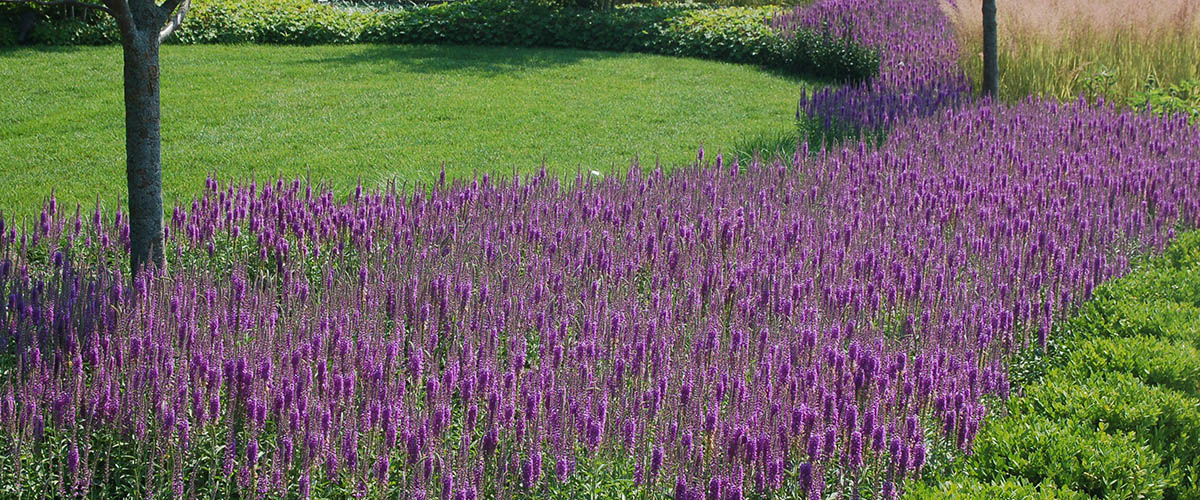
Evaluating Perennials for Chicagoland Gardens
Perennials in Focus is a plant evaluation program that examines new and underused plants for Chicagoland, the third largest metropolitan area in the country. A group of horticultural experts trials and evaluates plants at numerous locations across the region. Results help consumers, public gardens, growers, landscape designers, breeders, and other industry professionals make informed plant choices.
Perennials That Bring Beneficial Wasps to Vegetable Gardens
A productive vegetable garden needs more than flowers, compost and regular watering. It also benefits from a living network of predators and parasitoids that can reduce aphids, caterpillars, whitefly, thrips and other pests. Among the most useful allies are tiny parasitoid wasps, many of which are harmless to people and spend their adult lives feeding on nectar.
Perennial plants provide a dependable source of small, accessible flowers between vegetable crops. In Australian gardens, they can also help soften the effects of hot summers, irregular rainfall and long growing seasons. The strongest plant choices are those that flower repeatedly, tolerate local conditions and fit comfortably beside paths, raised beds and productive borders.
How beneficial wasps support pest control
Most beneficial wasps are much smaller than the large stinging wasps associated with outdoor dining. Species in families such as Braconidae and Ichneumonidae lay eggs in or on pest insects, while some tiny chalcid wasps parasitise whitefly, scale insects and caterpillar eggs. Their offspring develop by using the pest as a food source, eventually reducing the next generation.
Adult parasitoid wasps need energy-rich nectar, particularly when they are searching for hosts or producing eggs. Flat flower heads and shallow blooms are valuable because a wasp can reach the nectar without a long, specialised tongue. Many species also use flowering plants as shelter, especially where foliage remains close to the soil and the garden is not excessively tidy.
Planting for these insects does not mean tolerating an uncontrolled pest outbreak. It means creating enough habitat for natural enemies to arrive early and keep pest populations from increasing rapidly. Avoid broad-spectrum insecticides wherever possible, as they can kill helpful insects along with the target species.
Perennials worth growing around vegetables
Yarrow (Achillea millefolium) is a practical choice for many temperate Australian gardens. Its clusters of white, cream, yellow or pink flowers are easy for small insects to use, and its fern-like foliage forms a useful low mound. It handles lean soil once established, although it may need additional water during a hot Melbourne or Adelaide summer.
Catmint (Nepeta), oregano, thyme and perennial wallflower provide extended flowering with different shapes and heights. Their aromatic foliage can be useful near paths and seating areas, while their flowers attract a range of small pollinators and predatory insects. In Sydney and Perth, provide sharp drainage and afternoon protection for plants that struggle in reflected heat.
Fennel is another strong nectar plant, particularly when allowed to flower at the edge of a food garden. It can become tall and self-seed freely, so position it where spreading is acceptable rather than among small vegetables. Lavender and rosemary suit drier areas, but their woody structure offers less soft cover than leafy perennials, so combine them with lower plants and a few undisturbed patches of mulch.
| Perennial | Useful feature | Suitable placement | Main consideration |
|---|---|---|---|
| Yarrow | Broad, shallow flower clusters | Beside beans, brassicas and paths | Can spread in fertile soil |
| Catmint | Long flowering and soft foliage | Full sun near tomatoes or cucumbers | Needs room to mound |
| Oregano | Small nectar-rich flowers | Bed edges and containers | Trim after flowering |
| Fennel | Tall, abundant flower umbels | Back of a border | Self-seeds readily |
| Lavender | Long-lasting flowers and drought tolerance | Dry, sunny margins | Requires excellent drainage |
| Rosemary | Evergreen structure and winter flowers | Paths and raised beds | Can become woody |
| Perennial wallflower | Repeated colour in mild climates | Containers or mixed borders | Replace plants as they age |
Designing a wasp-friendly vegetable garden
Use layers rather than a single ribbon of flowers. Place taller fennel or flowering stems at the back, medium plants such as yarrow and catmint through the middle, and low oregano or thyme along the edge. This arrangement gives parasitoid wasps nectar at several heights while keeping vegetables accessible for harvesting.
A small flowering island near tomatoes, capsicums or cucumbers can be especially effective. These crops often attract sap-sucking insects or caterpillars, and nearby nectar reduces the distance natural enemies need to travel. In a compact Brisbane courtyard, pots of oregano, thyme and catmint can provide the same principle without taking up valuable bed space.
Allow some plants to flower fully before cutting them back. Leave hollow stems, leaf litter and a little bare soil through winter, as ground-dwelling insects may shelter there. A shallow water source with stones can help during dry weather, although it must be kept clean and positioned where mosquitoes cannot breed.
Managing flowers in Australian conditions
Choose plants according to the climate zone rather than relying on a generic “low maintenance” label. A perennial that thrives in cool, damp Hobart conditions may struggle in inland New South Wales, while a drought-tolerant Mediterranean plant may fail in a poorly drained tropical garden. Local trial information, nursery advice and observations from nearby gardens are often more useful than a photograph on a plant tag.
Australian home gardeners should also account for water restrictions and sudden heatwaves. Group plants with similar irrigation needs, mulch the soil deeply and water at the root zone in the early morning. In Canberra or Melbourne, protect young perennials from harsh summer drying; in tropical areas, prioritise airflow and drainage during the wet season.
Regular observation is more valuable than automatic spraying. Inspect the underside of leaves, identify the pest before treating it and look for parasitised aphids or caterpillars. If intervention is necessary, use targeted products at dusk and avoid flowering periods. Physical removal, a strong water spray and fine insect exclusion mesh can often solve small problems without damaging beneficial insects.
Keeping productive borders healthy
Perennials become more useful when they remain vigorous and open enough for air to circulate. Remove exhausted flower heads if a plant is becoming invasive, but retain some seed heads where they provide food or winter structure. Divide congested clumps when flowering declines, the centre dies out or new shoots are crowded around the edges. This also creates additional plants for other parts of the garden.
Timing varies with climate and species, but division is generally safest during mild weather when the plant is not under heat or drought stress. Water the clump beforehand, lift it carefully and replant divisions at the same depth. The guide to dividing overgrown perennials is useful when a mature border needs renovation without losing established plants.
Avoid filling every gap with imported ornamentals simply because they are flowering. Native Australian plants can provide valuable habitat, particularly when selected from local provenance and matched to soil and rainfall. Small-flowered native shrubs, everlasting daisies and groundcovers may complement European herbs and temperate perennials, creating a longer succession of nectar through the year.
Choosing plants with confidence
A garden-centre label may promise colour and height, but it rarely explains how long a plant flowers, whether it flops after rain or how aggressively it spreads. Look for plants that have been observed across several seasons, especially if you are buying for a public garden, market garden or landscape project. Regional evaluation programs such as Perennials in Focus offer useful performance information, even when Australian gardeners need to interpret it through their own climate.
Local availability also shapes good decisions. Independent nurseries, specialist native plant growers and weekend plant markets may stock varieties that are absent from large retail chains. Ask whether a plant has survived more than one summer in your area, how much irrigation it needs and whether it is known to self-seed. A slightly less fashionable perennial that performs reliably is usually a better investment than a short-lived impulse purchase.
Aim for flowering continuity rather than a single spectacular display. Combine early, mid-season and late-flowering plants so adult wasps can feed throughout the vegetable-growing year. With nectar, shelter, careful pest monitoring and sensible plant maintenance, a productive garden can support its own small pest-management workforce. Select a few suitable perennials this season, place them near vulnerable crops and track which plants attract the greatest insect activity.
In the Garden
Evaluator gardens are located across the Chicagoland area, representing a range of growing conditions. Visit our retail and wholesale partners to find trialled perennials for your own garden.
Retail & Wholesale: Hinsdale Nurseries (Willowbrook, IL), Mariani Nurseries (Kenosha, WI & Garden Prairie, IL), Northwind Perennials (Burlington, WI), The Growing Place (Aurora, IL).
Wholesale Only: Hinsdale Nurseries (Plano, IL), Intrinsic Perennial Gardens (Hebron, IL).
Our Evaluation Program
The 2017–2020 evaluation cycle included Agastache 'Blue Boa', Allium senescens 'Blue Eddy', Amsonia ciliata var. filifolia 'Georgia Pancake', Astilbe 'Chocolate Shogun', Boltonia astroides 'James Crocket', Brunnera 'Alexander's Great', and Geranium cinereum 'Jolly Jewel Purple'. Completed evaluations include Amsonia 'Blue Ice' (2004–07).
On April 10, 2020, the program published snapshot profiles for Vernonia lettermanii 'Iron Butterfly', Stokesia laevis 'Elf', Stachys officinalis 'Pink Cotton Candy', Lobelia 'Monet Moment', Helleborus 'Winter Thrillers', Geum 'Mai Tai', Geranium soboliferum 'Butterfly Kisses', Gentiana x intermedia 'True Blue', Eurybia divaricata, Asparagus 'Purple Passion', and Agastache 'Bolero'.
Browse the full collection of snapshots organized alphabetically — from A–D, E–H, I–Q, and R–Z — to find detailed performance data on perennials trialled across Chicagoland.