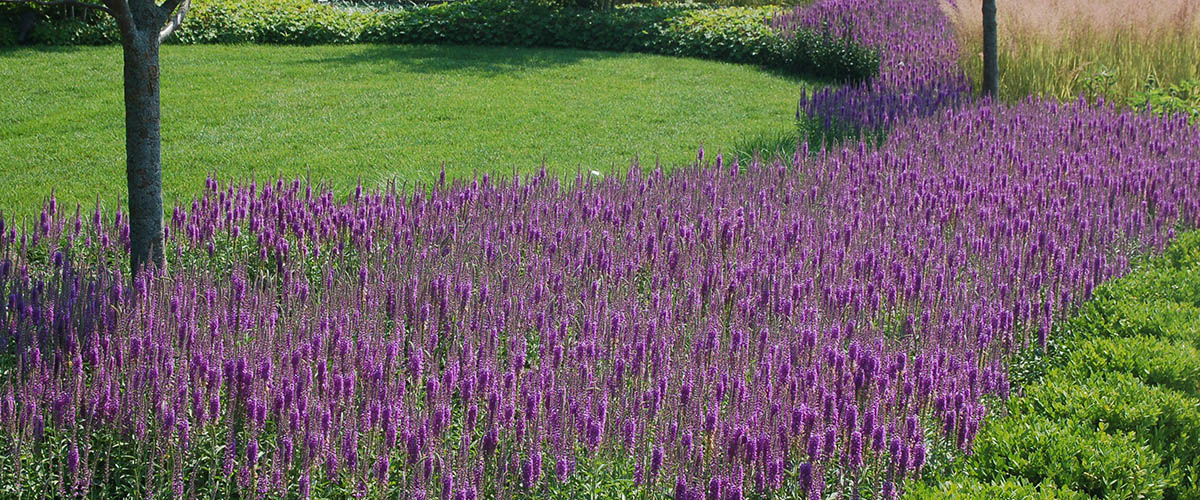
Evaluating Perennials for Chicagoland Gardens
Perennials in Focus is a plant evaluation program that examines new and underused plants for Chicagoland, the third largest metropolitan area in the country. A group of horticultural experts trials and evaluates plants at numerous locations across the region. Results help consumers, public gardens, growers, landscape designers, breeders, and other industry professionals make informed plant choices.
How to divide overgrown perennials without killing them
A mature perennial can become the strongest feature in a garden, yet even a vigorous plant eventually outgrows its space. Crowded crowns produce fewer flowers, stems may flop outward, and the center of the clump can turn bare or weak. Dividing the plant restores access to water, nutrients, light, and air while giving you new plants for other parts of the landscape.
The safest approach is to treat division as a careful transplanting job rather than a quick act of cutting. The right season, a sharp tool, intact roots, and prompt replanting all matter. Some perennials tolerate rough handling, while others need their crowns separated slowly by hand.
Regional performance is important, too. A plant that divides easily in a mild climate may recover more slowly after a stressful Midwest summer or winter. Programs such as regional plant trials offer useful context about perennial vigor, bloom timing, and habit in the Chicagoland area.
Know when a perennial needs dividing
An overgrown perennial often shows several signs before it declines seriously. The outer ring may grow well while the center becomes hollow, woody, or unproductive. Flowering can become lighter, stems may lean into nearby plants, and the clump may spread beyond its intended footprint.
Division is also useful when a plant has become too dense for good air circulation. Damp foliage that dries slowly is more vulnerable to fungal problems, especially in crowded borders. If a perennial is still flowering heavily, holding its shape, and staying within its allotted space, there may be no need to disturb it yet.
Check the plant’s natural growth pattern before reaching for a spade. Some perennials expand from distinct crowns and are easy to split. Others spread by rhizomes, stolons, bulbs, or fibrous roots and require a different method. A plant’s mature height and spread should guide both the decision to divide and the size of its replacement sections.
Choose the safest season
For many hardy perennials, early spring is an excellent time to divide. New shoots are visible, temperatures are moderate, and the plant has an entire growing season to rebuild its roots. The work should be done after the soil is workable but before the plant is in full flower.
Early fall is another reliable window, particularly for spring- and early-summer bloomers. Divide at least four to six weeks before the ground typically freezes in your area so new divisions can establish feeder roots. Water them thoroughly after planting and apply a light mulch layer without covering the crowns.
Avoid dividing during hot, dry weather or while a plant is at peak bloom. A flowering perennial is already directing energy above ground, and root disturbance adds stress. Some plants, including ornamental grasses and many late-season bloomers, are better handled in spring. The timing should fit the plant’s growth cycle, not simply your available weekend.
Prepare the plant and tools
Water the perennial deeply one or two days before dividing. Moist soil holds together around roots, making the clump easier to lift, while saturated soil can become heavy and damage delicate roots. Clear away nearby stems, weeds, and mulch so you can see the plant’s base.
Use a clean, sharp spade for lifting and a sturdy soil knife, garden fork, or sharp knife for separating smaller crowns. Large, woody clumps may require two spades placed back to back. Disinfect cutting tools before and after use, especially when working with plants that show signs of rot or disease.
Prepare the new planting holes before the parent plant comes out of the ground. Incorporate compost only if the soil needs organic matter; overly rich soil can encourage soft, floppy growth. Each hole should be wide enough for the roots to spread naturally and deep enough to keep the crown at its original soil level.
Lift and separate the crown carefully
Start by cutting foliage back modestly if it is dense, but avoid removing every leaf unless the plant is being divided after flowering. Insert the spade several inches away from the crown and work around the entire clump. Lift from beneath rather than pulling on stems, which can tear the crown away from its roots.
Shake or rinse away enough soil to identify natural divisions. Look for separate crowns, visible buds, or “eyes” attached to healthy roots. A good division usually includes several growing points and enough root mass to support them. Tiny pieces may survive, but they take longer to establish and are more vulnerable to drying.
Pull interlocking sections apart by hand whenever possible. For firm crowns, make one decisive cut with a clean knife rather than sawing repeatedly through the roots. Discard soft, black, hollow, or badly damaged sections. If a perennial has a dense woody center, use the younger, vigorous outer portions for replanting.
| Perennial growth type | Best separation method | Useful timing | Important caution |
|---|---|---|---|
| Clumping crowns, such as daylilies | Pull or cut crown sections apart | Early spring or early fall | Keep several fans and healthy roots together |
| Fibrous-rooted plants, such as hostas | Slice the crown with a sharp spade or knife | Spring, before full leaf expansion | Avoid divisions with too few roots |
| Rhizomatous plants, such as bearded iris | Cut rhizomes into sections with fans | Soon after flowering | Keep each piece firm and free of rot |
| Offset-producing plants, such as some ornamental bulbs | Separate offsets by hand | After foliage matures or in fall | Do not remove offsets before they are well developed |
| Woody, slow-recovering perennials | Divide sparingly or use outer sections | Early spring | Small pieces may struggle to reestablish |
Replant divisions without delay
Set each division at the same depth where it grew before. The crown should not be buried under several inches of soil, and exposed roots should not remain above the surface. Backfill gently, firm the soil around the roots, and water until the entire root zone is moist.
Give divisions enough room to reach their mature spread. Planting them too close together recreates the original problem and may force another disruptive division sooner than necessary. For a Chicagoland garden, allow for seasonal growth rather than judging spacing only by the size of the freshly divided pieces.
Cut back damaged leaves, but leave healthy foliage when possible. Leaves help the plant continue photosynthesis and rebuild its root system. If transplant shock causes temporary wilting, provide consistent moisture rather than repeatedly moving or pruning the plant.
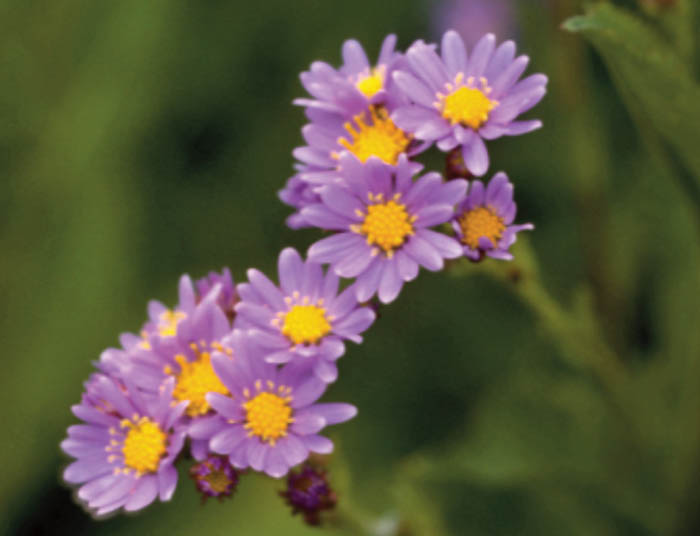
Plants selected for regional reliability are often better candidates for long-term division and landscape use. The observations in these Chicago aster trials show why habit, vigor, and seasonal performance matter when choosing perennials for local conditions.
Help new divisions recover
Water newly planted sections deeply at planting and monitor them through the first several weeks. The soil should remain evenly moist, not constantly saturated. Check beneath the surface before watering because a damp mulch layer can hide dry soil around the roots.
Apply two to three inches of organic mulch around, but not directly against, the crowns. Mulch moderates soil temperature and reduces moisture loss while roots reestablish. Do not fertilize immediately unless a soil test or specific plant requirement calls for it; fresh roots can be damaged by excessive soluble fertilizer.
Expect some divisions to look quiet during their first season. Root growth comes before a strong display of flowers, and a plant that appears slow may still be establishing successfully. Remove weeds that compete for moisture, protect tall divisions from wind if needed, and wait until the following growing season before judging the result.
Use these practices for reliable results
Successful propagation depends on matching the technique to the perennial rather than applying the same method to every crowded clump. Keep a simple record of the plant’s original location, division date, and recovery. This is especially useful when managing several cultivars with different growth rates or bloom periods.
Before dividing, identify the plant and check its preferred timing, soil moisture, and mature size. Keep replacement divisions evenly sized, label them if they are going into a nursery bed, and avoid allowing roots to dry during the process.
- Divide only healthy, actively growing plants with adequate moisture.
- Work during cool weather and choose a calm, overcast day when possible.
- Preserve several buds or growing points on every division.
- Replant immediately at the original crown depth.
- Water consistently while new roots develop.
A thoughtful division can rejuvenate an aging border without sacrificing the parent plant. Lift carefully, separate natural growth points, and give every piece time to settle into its new space. Record which divisions thrive through the next season, then use those observations to refine future plant choices and create a more resilient perennial garden.
In the Garden
Evaluator gardens are located across the Chicagoland area, representing a range of growing conditions. Visit our retail and wholesale partners to find trialled perennials for your own garden.
Retail & Wholesale: Hinsdale Nurseries (Willowbrook, IL), Mariani Nurseries (Kenosha, WI & Garden Prairie, IL), Northwind Perennials (Burlington, WI), The Growing Place (Aurora, IL).
Wholesale Only: Hinsdale Nurseries (Plano, IL), Intrinsic Perennial Gardens (Hebron, IL).
Our Evaluation Program
The 2017–2020 evaluation cycle included Agastache 'Blue Boa', Allium senescens 'Blue Eddy', Amsonia ciliata var. filifolia 'Georgia Pancake', Astilbe 'Chocolate Shogun', Boltonia astroides 'James Crocket', Brunnera 'Alexander's Great', and Geranium cinereum 'Jolly Jewel Purple'. Completed evaluations include Amsonia 'Blue Ice' (2004–07).
On April 10, 2020, the program published snapshot profiles for Vernonia lettermanii 'Iron Butterfly', Stokesia laevis 'Elf', Stachys officinalis 'Pink Cotton Candy', Lobelia 'Monet Moment', Helleborus 'Winter Thrillers', Geum 'Mai Tai', Geranium soboliferum 'Butterfly Kisses', Gentiana x intermedia 'True Blue', Eurybia divaricata, Asparagus 'Purple Passion', and Agastache 'Bolero'.
Browse the full collection of snapshots organized alphabetically — from A–D, E–H, I–Q, and R–Z — to find detailed performance data on perennials trialled across Chicagoland.