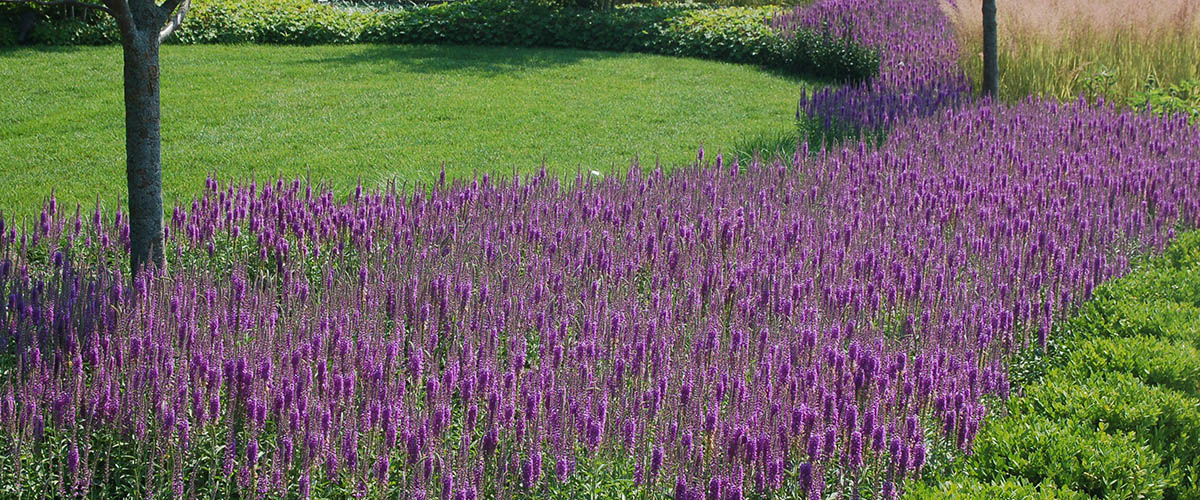
Evaluating Perennials for Chicagoland Gardens
Perennials in Focus is a plant evaluation program that examines new and underused plants for Chicagoland, the third largest metropolitan area in the country. A group of horticultural experts trials and evaluates plants at numerous locations across the region. Results help consumers, public gardens, growers, landscape designers, breeders, and other industry professionals make informed plant choices.
Perennials That Attract And Support Rusty Patched Bumble Bees
The rusty patched bumble bee, Bombus affinis, is an endangered North American pollinator once widespread across the upper Midwest. Its decline is linked to habitat loss, disease, pesticides, climate pressures and the disappearance of flowering plants across the seasons. For gardeners, supporting this bee means creating a dependable habitat rather than planting a single fashionable flower.
Perennials in Focus provides a useful model for making those decisions. Its Chicagoland trials assess plants over several seasons and record practical traits such as flowering period, height, spread and flower colour. Australian gardeners can apply the same careful approach while remembering that the rusty patched bumble bee is not an Australian species and that local native bees need locally suitable food and nesting habitat.
Understand The Bee’s Seasonal Needs
Rusty patched bumble bees need nectar and pollen from early spring until late autumn. Queens emerge early, workers build colonies through summer, and new queens require food before winter dormancy. A garden that flowers only in November or December leaves a serious gap during the rest of the colony’s life cycle.
Early forage can come from willows, native spring ephemerals and flowering perennials such as woodland phlox or Virginia bluebells in suitable North American gardens. Summer options include bee balm, mountain mint, coneflowers and catmint, while asters and goldenrods provide valuable late-season resources. A succession of blooms is more useful than a crowded bed that reaches peak colour for only three weeks.
Flowers also need to offer accessible pollen and nectar. Double-flowered cultivars may look impressive but can conceal reproductive parts or produce little usable food. Open flowers, clusters of small florets and plants that attract a range of insects generally provide a stronger feeding base.
Select Reliable Nectar And Pollen Plants
A resilient planting can combine native prairie plants with well-behaved ornamental perennials. Purple coneflower, smooth blue aster, New England aster, showy goldenrod, wild bergamot, mountain mint, prairie clover and Culver’s root are examples of plants that can extend the flowering calendar in the Chicago region. Their value increases when several species bloom together and are repeated across the garden.
Plant form matters as much as flower colour. Upright stems give bees landing points, while flat-topped clusters and densely packed flower heads allow efficient foraging. Plants with different heights create layers: low-growing groundcovers, medium clumps and taller structural species can all contribute without leaving bare soil.
Australian gardeners should translate this principle rather than copy a Midwestern plant list. A Melbourne garden might use locally appropriate flowering natives alongside tested perennials, while a Sydney or Brisbane garden needs choices suited to warmer winters and different rainfall patterns. Specialist native nurseries and council plant lists can help identify species that support local blue-banded, resin, reed and teddy bear bees.
Plan For Long Blooming Windows
Plant labels often promote a peak flowering month, but pollinator habitat depends on the complete season. Look for early, mid-season and late performers, then allow some plants to remain standing after flowering. Seed heads provide winter structure and may shelter insects, even when the garden looks less manicured than a formal display.
A mixed border could begin with spring bulbs or early-flowering perennials, move into bee balm and coneflowers in summer, and finish with asters and goldenrods. In Australia, seasonal timing will vary by climate zone. Water restrictions in Adelaide, hot summers in western Sydney and humid conditions in Brisbane all affect whether a plant can flower reliably without excessive irrigation.
Record bloom dates for two or three years. This simple habit mirrors professional evaluation and reveals whether a plant performs consistently or merely has one exceptional season. Notes about flowering, plant health, bee visits and spread are more useful than relying solely on nursery descriptions.
Create Nesting And Overwintering Habitat
Flowers alone cannot sustain a bumble bee population. Rusty patched bumble bees commonly nest in abandoned rodent burrows or other cavities at ground level, so a perfectly tidy garden can remove important shelter. Leave a few undisturbed edges, avoid thick landscape fabric and retain small areas of leaf litter where practical.
A garden can include rough grass, fallen stems, brushy corners and lightly mulched soil. Mow less often where safety and access allow, and set mower blades high enough to reduce harm to insects. These measures also benefit Australian native bees, many of which nest in soil, hollow stems or timber rather than in commercial bee hotels.
Avoid placing nesting features next to busy paths or frequently cultivated beds. A quiet margin beside a fence, under shrubs or at the back of a perennial border can provide cover without compromising the garden’s appearance. This approach suits community gardens and suburban blocks, where small habitat patches may connect with neighbouring yards.
Reduce Pesticide And Invasive Plant Risks
Insecticides can harm bees directly or reduce the insects and plants on which a functioning habitat depends. Treat pest problems only when necessary, identify the pest first and use non-chemical measures where possible. Never spray open flowers when pollinators are active, and follow all Australian product directions, withholding periods and state regulations.
Plant choice also requires restraint. Aggressive perennials can escape gardens, crowd native vegetation and reduce habitat quality. Before buying an unfamiliar plant from a large retail chain or online marketplace, check its behaviour in your region. This invasive perennial review explains why performance data should include spread and environmental risk, not just attractive flowers.
For Australian gardens, consult state weed databases and local biosecurity guidance before planting. A perennial that behaves well in a cold Illinois trial may spread rapidly in a frost-free Australian suburb. Choosing sterile cultivars where appropriate, deadheading responsibly and disposing of unwanted plants through approved green-waste systems can limit accidental escape.
Use Regional Trials As A Decision Tool
The strength of a regional evaluation program is its attention to real performance. A plant may receive an excellent nursery rating but fail in heavy clay, suffer in humid summers or flop under strong winds. Trials across multiple Chicagoland gardens expose those differences and help distinguish dependable plants from short-lived novelties.
Australian gardeners can use the same checklist when comparing plants: flowering duration, mature height, spread, drought tolerance, disease resistance, winter behaviour and value to insects. Ask whether a plant has been observed over several seasons, rather than judging it from a single display bench at a garden centre.
This is especially helpful when shopping at Bunnings, independent nurseries or native plant markets. Keep the plant tag, photograph the bed during flowering and note irrigation needs. Over time, these records reveal which choices deserve repetition and which should be replaced with better-adapted species.
Match Plants To Their Purpose
No single perennial can provide every resource. Some offer early food, some fill a late-season gap, and others contribute nesting cover or shelter. The following comparison gives a practical way to assess a planting rather than treating every flowering plant as equally valuable.
| Plant or plant group | Main habitat role | Useful season in suitable regions | Important selection note |
|---|---|---|---|
| Bee balm and wild bergamot | Nectar-rich summer flowers | Summer | Provide airflow and divide regularly in humid conditions |
| Mountain mint | Abundant small flowers and long bloom | Summer to early autumn | Choose a contained site because some forms spread strongly |
| Purple coneflower | Nectar and pollen in open flowers | Summer | Single-flowered forms are generally more accessible |
| Asters | Late-season forage | Late summer to autumn | Select species suited to soil moisture and available space |
| Goldenrods | Late nectar and pollen | Late summer to autumn | Prefer well-behaved regional species or cultivars |
| Prairie clover | Pollen-rich flower spikes | Summer | Needs sun and well-drained soil |
| Locally native Australian perennials | Food for local native bees | Varies by city and climate | Confirm local suitability with native nurseries and councils |
Use the comparison as a starting point, then assess each plant in context. A clump of three compatible species can be more useful than a long list of isolated specimens. Repetition also creates visual rhythm and makes it easier for bees to locate reliable food.
Support for rusty patched bumble bees begins with regionally informed planting, protected soil and a long flowering season. In Australia, that work should be paired with plants and practices that benefit native pollinators already living in the local landscape. Explore evaluated perennials, keep seasonal records and build a garden where flowers, shelter and responsible maintenance work together.
In the Garden
Evaluator gardens are located across the Chicagoland area, representing a range of growing conditions. Visit our retail and wholesale partners to find trialled perennials for your own garden.
Retail & Wholesale: Hinsdale Nurseries (Willowbrook, IL), Mariani Nurseries (Kenosha, WI & Garden Prairie, IL), Northwind Perennials (Burlington, WI), The Growing Place (Aurora, IL).
Wholesale Only: Hinsdale Nurseries (Plano, IL), Intrinsic Perennial Gardens (Hebron, IL).
Our Evaluation Program
The 2017–2020 evaluation cycle included Agastache 'Blue Boa', Allium senescens 'Blue Eddy', Amsonia ciliata var. filifolia 'Georgia Pancake', Astilbe 'Chocolate Shogun', Boltonia astroides 'James Crocket', Brunnera 'Alexander's Great', and Geranium cinereum 'Jolly Jewel Purple'. Completed evaluations include Amsonia 'Blue Ice' (2004–07).
On April 10, 2020, the program published snapshot profiles for Vernonia lettermanii 'Iron Butterfly', Stokesia laevis 'Elf', Stachys officinalis 'Pink Cotton Candy', Lobelia 'Monet Moment', Helleborus 'Winter Thrillers', Geum 'Mai Tai', Geranium soboliferum 'Butterfly Kisses', Gentiana x intermedia 'True Blue', Eurybia divaricata, Asparagus 'Purple Passion', and Agastache 'Bolero'.
Browse the full collection of snapshots organized alphabetically — from A–D, E–H, I–Q, and R–Z — to find detailed performance data on perennials trialled across Chicagoland.