Evaluating Perennials for Chicagoland Gardens
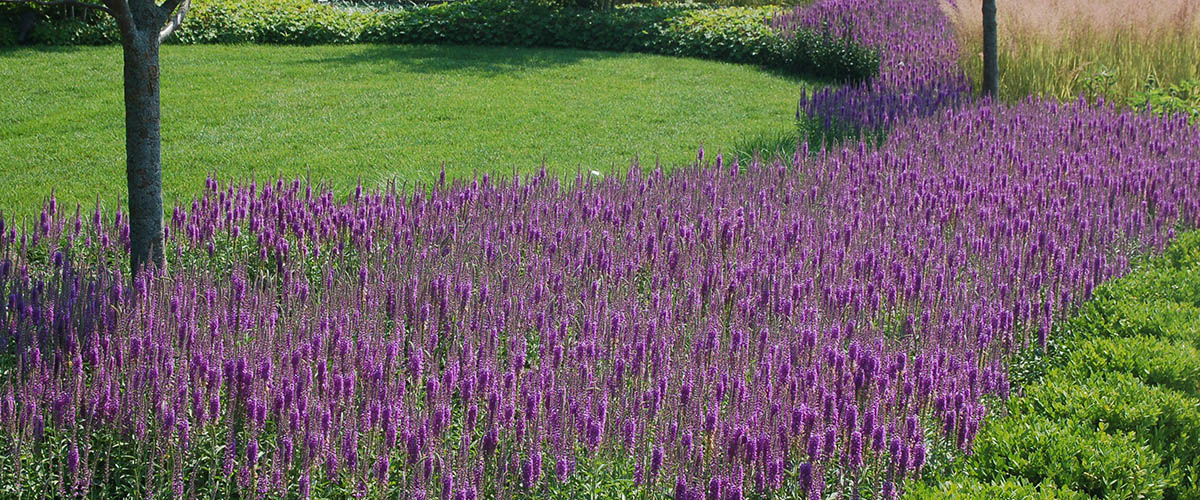
Perennials in Focus is a plant evaluation program that examines new and underused plants for Chicagoland, the third largest metropolitan area in the country. A group of horticultural experts trials and evaluates plants at numerous locations across the region. Results help consumers, public gardens, growers, landscape designers, breeders, and other industry professionals make informed plant choices.
Why You Should Avoid Invasive Perennials in Chicagoland Gardens
A perennial can look like a bargain when it fills an empty bed quickly, survives winter, and needs little attention. Yet vigorous growth is not the same as good garden performance. In Chicagoland, a plant that spreads aggressively can soon crowd out more valuable ornamentals, escape into natural areas, and create years of removal work.
The region’s long growing season, fertile soils, seasonal rainfall, and network of waterways give certain non-native plants excellent opportunities to expand. A species that seems manageable in a small suburban border may behave very differently after several growing seasons.
Choosing well-behaved perennials supports healthier beds and more diverse landscapes. It also gives gardeners a clearer way to compare bloom time, mature size, foliage, and durability before investing in plants that will remain in the ground for years.
What makes a perennial invasive in Chicagoland
An invasive perennial reproduces and spreads beyond its intended location, often displacing native vegetation or reducing plant diversity. It may spread through underground rhizomes, stolons, abundant seed, or pieces of root and stem left behind during cultivation. Some plants use several of these strategies at once.
Aggressive spread does not automatically make every vigorous perennial legally invasive. The terms “invasive,” “naturalized,” and “aggressive” describe different levels of ecological and horticultural concern. Gardeners should check current Illinois regulations and reliable regional resources before buying a plant marketed as easy, fast-growing, or low-maintenance.
The important question is whether the plant remains controllable in the conditions where it will be grown. A perennial that stays in a compact clump can be useful; one that crosses paths, lawns, fences, and drainage areas can become a liability.
Why local conditions accelerate spread
Chicagoland gardens experience cold winters, spring moisture, hot summers, and frequent freeze-thaw cycles. These changes can stress some ornamentals while favoring adaptable plants with extensive root systems. Heavy clay soils may slow drainage, but they do not necessarily prevent rhizomatous plants from traveling.
Urban and suburban landscapes also contain many pathways for escape. Perennials can move through stormwater corridors, vacant lots, railroad edges, and unmanaged strips between properties. Seeds may be carried by birds, water, animals, or mowing equipment, while root fragments can travel with soil or compost.
A plant’s performance in a container or carefully edged display bed therefore does not tell the whole story. Regional trials across multiple gardens provide a more realistic picture of how a perennial behaves through changing seasons, soil types, and maintenance routines.
The hidden costs of an aggressive planting
The first cost is often time. Gardeners may need to divide, dig, edge, deadhead, or remove an invasive perennial repeatedly. Small root fragments can regenerate after an incomplete removal, turning a simple redesign into a multi-season project. Herbicide use may become necessary near desirable plants, sidewalks, or drainage areas.
There are ecological costs as well. Dense colonies can shade out spring wildflowers and young native plants, simplify habitat structure, and reduce food sources for insects. Once an invasive perennial reaches a natural area, removal becomes more difficult and expensive because the surrounding vegetation must be protected during control work.
These plants can also reduce the visual quality of a designed landscape. A single dominant texture may replace a sequence of flowers, foliage forms, and seasonal interest. The result is a bed that appears full but offers less diversity and fewer opportunities for pollinators.
Compare long-term planting outcomes
The table below shows why mature behavior matters more than a plant’s appearance at the garden center. A fast-filling perennial may solve an immediate design problem while creating a larger maintenance problem later.
| Planting choice | Short-term appeal | Long-term concern | Better evaluation focus |
|---|---|---|---|
| Rhizomatous groundcover | Quickly covers bare soil | Moves under edging and into adjacent beds | Stable spread and root behavior |
| Heavy self-seeder | Produces many plants with little effort | Appears in paths, lawns, and natural areas | Seed production and deadheading needs |
| Large, vigorous perennial | Fills a border and suppresses weeds | Crowds companions and reduces diversity | Mature height, width, and clumping |
| Regionally tested selection | May fill in more gradually | Usually offers clearer performance expectations | Bloom period, habit, and seasonal durability |
Avoiding invasive perennials does not mean choosing weak or fussy plants. It means selecting durable species with predictable growth, appropriate scale, and a manageable relationship to neighboring plants. A well-chosen clumper can provide excellent coverage without becoming a colony.
How to choose dependable alternatives
Start by defining the job a plant must perform. Is it needed for shade, dry soil, wet soil, a pollinator border, erosion control, or late-season color? Matching the plant to the site reduces the temptation to rely on a highly aggressive species simply because it tolerates difficult conditions.
Look for information gathered over several years rather than relying on a single photograph or a short nursery description. Regional evaluation programs can reveal whether a plant stands upright, flowers reliably, tolerates local weather, and remains proportionate at maturity. The evaluation committee behind a collaborative trial program can help connect gardeners with observations grounded in Chicagoland conditions.
Pay attention to spread as carefully as height. A plant listed as 18 inches tall may still travel several feet through underground stems. Ask whether it spreads by seed, whether seedlings resemble the parent plant, and how easily unwanted growth can be removed.
Build a resilient and diverse planting
A resilient garden uses several compatible plants rather than depending on one fast-growing filler. Combine different bloom seasons, heights, textures, and root habits so that no single species has to occupy every available space. Plants with distinct forms are easier to monitor, divide, and replace when needed.
Dense planting can suppress weeds without relying on invasive behavior. Use compost appropriately, maintain a layer of mulch that does not touch plant crowns, and allow each perennial enough room to reach its mature size. Early maintenance is usually easier than trying to restrain an established colony.
Native and well-adapted non-native perennials can both have a place in an ornamental landscape when their behavior is understood. The goal is a planting that supports ecological value, seasonal interest, and practical maintenance at the same time.
Practical steps before bringing a perennial home
A few checks at the purchasing stage can prevent years of corrective work:
- Confirm the plant’s current invasive or noxious-weed status in Illinois.
- Check mature width, spread rate, seed production, and underground growth habits.
- Read regional trial observations instead of relying only on nursery marketing.
- Avoid disposing of roots, seed heads, or pulled stems in natural areas or ordinary compost.
- Plan a monitoring routine during the first two growing seasons.
If a perennial is already spreading, remove seed heads before they mature and trace runners or rhizomes back to their source. Bag viable plant material when appropriate, and monitor the area for regrowth. For large infestations or sites near waterways, seek guidance from local conservation or horticultural professionals.
A responsible choice today protects the design, maintenance budget, and ecological function of the garden tomorrow. Use regional performance information to compare candidates, then select perennials that stay where they are planted and contribute something distinctive through the seasons.
Explore Chicagoland-focused perennial evaluations before your next plant purchase, and use those findings to create beds that remain attractive, diverse, and manageable for years to come.
In the Garden
Evaluator gardens are located across the Chicagoland area, representing a range of growing conditions. Visit our retail and wholesale partners to find trialled perennials for your own garden.
Retail & Wholesale: Hinsdale Nurseries (Willowbrook, IL), Mariani Nurseries (Kenosha, WI & Garden Prairie, IL), Northwind Perennials (Burlington, WI), The Growing Place (Aurora, IL).
Wholesale Only: Hinsdale Nurseries (Plano, IL), Intrinsic Perennial Gardens (Hebron, IL).
Our Evaluation Program
The 2017–2020 evaluation cycle included Agastache 'Blue Boa', Allium senescens 'Blue Eddy', Amsonia ciliata var. filifolia 'Georgia Pancake', Astilbe 'Chocolate Shogun', Boltonia astroides 'James Crocket', Brunnera 'Alexander's Great', and Geranium cinereum 'Jolly Jewel Purple'. Completed evaluations include Amsonia 'Blue Ice' (2004–07).
On April 10, 2020, the program published snapshot profiles for Vernonia lettermanii 'Iron Butterfly', Stokesia laevis 'Elf', Stachys officinalis 'Pink Cotton Candy', Lobelia 'Monet Moment', Helleborus 'Winter Thrillers', Geum 'Mai Tai', Geranium soboliferum 'Butterfly Kisses', Gentiana x intermedia 'True Blue', Eurybia divaricata, Asparagus 'Purple Passion', and Agastache 'Bolero'.
Browse the full collection of snapshots organized alphabetically — from A–D, E–H, I–Q, and R–Z — to find detailed performance data on perennials trialled across Chicagoland.