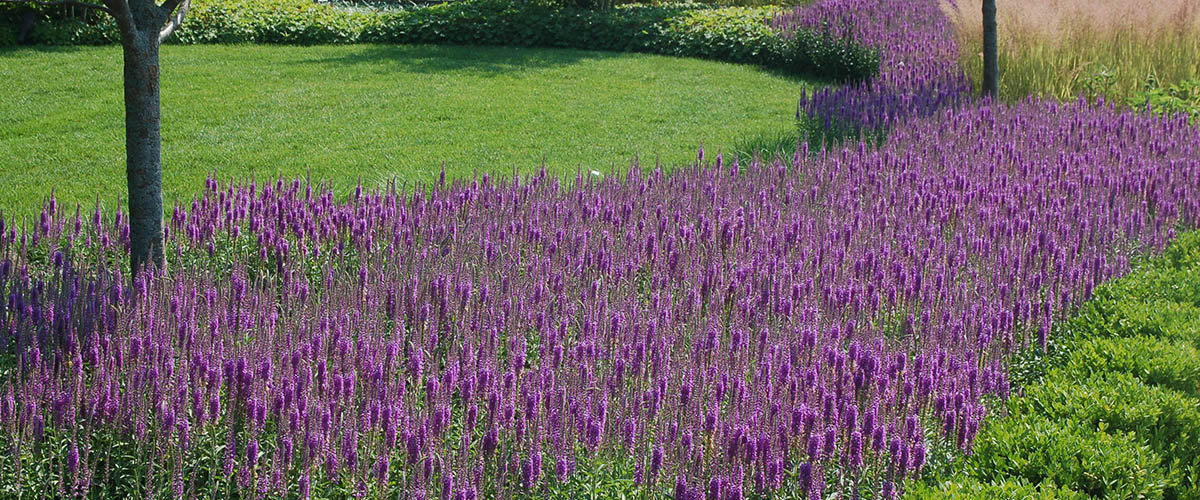
Evaluating Perennials for Chicagoland Gardens
Perennials in Focus is a plant evaluation program that examines new and underused plants for Chicagoland, the third largest metropolitan area in the country. A group of horticultural experts trials and evaluates plants at numerous locations across the region. Results help consumers, public gardens, growers, landscape designers, breeders, and other industry professionals make informed plant choices.
Brown-Eyed Susan Seed Viability in Australian Conditions
Rudbeckia triloba, sold as brown-eyed Susan or three-lobed coneflower, gives Australian gardeners yellow flowers with dark centres. Its small seeds can lose germination capacity quickly in warm, humid storage, so seed viability—the share producing a normal seedling—should be checked before sowing or sale. Perennials in Focus uses multi-site Chicagoland trials to document regional performance, offering a model for testing storage effects instead of trusting one promising packet.
Australian conditions complicate any Chicago finding. Southern-hemisphere seasons, different humidity and time spent in heated or air-conditioned rooms change how stored seed ages. A practical trial can compare room, refrigerator and freezer storage while keeping watering, temperature and light identical during germination, then connect the laboratory result with field emergence.
Set a baseline before storage begins
Begin with one identified lot: R. triloba, supplier, harvest or packing date, and stated germination percentage. Establish a fresh-seed baseline within days of receipt using four groups of 25 randomly selected seeds sealed in a moisture-resistant container. Do not choose only full-looking seeds, because subjective selection inflates the result.
Build the Australian timetable around the local growing cycle, not the supplier’s northern-hemisphere calendar. Chicago-grown seed may already have spent months in storage before reaching Australia; locally grown seed should be tested from the day it is cleaned. Record the lot’s age and every temperature or humidity excursion, since “stored since harvest” alone is inadequate.
For seed bought through Australian garden centres or online nurseries, ask for packing date and storage history rather than relying on “fresh” on a label. Check overseas purchases against current Australian biosecurity and import requirements. Treat undocumented history as an unknown treatment, while comparing documented and undocumented lots to show why retail seed needs clearer storage information.
Separate the main storage factors
Use reproducible treatments: sealed seed at room temperature, sealed seed in a cool, dry cabinet, and sealed seed at about –18°C after suitable drying. A refrigerator near 10–15°C can provide an accessible cool treatment if humidity is monitored. Place a data logger beside the samples, because room temperature in Brisbane in February can differ greatly from Melbourne in July.
Moisture is inseparable from temperature. Dry seed before long-term storage; for many orthodox seeds, a conservative moisture target is roughly 5–8%, although the lot and local humidity still matter. Air-dry in shade with ventilation, avoid heated ovens, condition every sample identically, and package small lots in sealed bags or glass containers with dated labels.
Give each environment a defined purpose. Room storage reflects many household conditions, while cool, dry storage is usually the practical compromise. Freezing can extend longevity when seed is dry and packaging sound, but freezing damp seed can cause ice injury. The trial should expose those trade-offs instead of declaring one method universally best.
Measure germination rather than guessing from appearance
Use four replicates of 25 seeds per treatment and testing date. Place seeds on moistened paper or sterile, seed-safe medium, maintain the same incubation temperature and light cycle, and count normal radicle emergence daily. Continue until emergence stops; calculate viability as the percentage producing normal seedlings, and record when each treatment reaches its final count.
A fresh baseline matters because some lots begin with uneven germination. Apply any warm-moist after-ripening or mild chilling consistently to part of the relevant sample and compare it with untreated seed. This helps separate physiological dormancy from actual viability loss. If firm, intact seeds still fail, a correctly performed tetrazolium assay can support the diagnosis, but it should complement rather than replace a germination test.
Reliable scoring depends on consistent attention. Scheduling counts when volunteers are rested is sensible experimental practice; background on sleep and cognitive function explains why fatigue can weaken observation and calculation. Use the same scorer where possible, score blind to treatment when practical, and retain raw daily counts for auditing.
Interpret decline, speed and seedling quality
Analyse final viability, loss relative to baseline and germination speed. A lot retaining 90% of baseline viability differs from one with the same final percentage but reaching it much more slowly. Plot results by storage age and attach unusual events, such as a heat wave, power failure or freezer thaw, to their dates rather than discarding them.
Replication shows whether differences are dependable. With four groups of 25 seeds, a modest percentage difference may reflect sampling variation, especially with patchy emergence. Report totals and replicate variation, not one polished percentage. Say that cool, dry storage maintained higher viability than room storage across several dates, rather than claiming every sample followed one pattern.
Laboratory germination predicts only part of field performance. Check seedling normality, root development and later emergence in a pot or bed. Perennials in Focus reporting on the native bee magnet illustrates why species-specific observations are more informative than broad claims. Storage results belong to R. triloba, while flower performance, pollinator activity and garden longevity need separate observations.
Apply the findings across Australian conditions
Australian results will differ by city and season. Melbourne’s cool-temperate climate can give damp spring emergence; humid Sydney and Brisbane can make summer storage challenging; and Perth’s dry heat may dry seed unevenly in an open packet. Tested containers should remain indoors under stated conditions, with outdoor humidity and temperature recorded separately.
Good viability supports ornamental use, but successful storage is only the start. Rudbeckia triloba is an introduced North American perennial, so Australian gardeners should not present it as native flora. Mixed-border planning can broaden its value, and guidance on Allium giganteum companions can help designers test vertical contrasts and bloom timing. Local Australian native flowers should supply region-appropriate pollinator resources.
| Storage treatment | Likely viability pattern to test | Main limitation | Best practical use |
|---|---|---|---|
| Fresh seed tested promptly | Reference for later comparisons | Can decline if receipt-to-testing time is long | Establishing the baseline |
| Sealed at room temperature | Usually declines first as heat and moisture increase ageing | Short life is likely in warm, humid conditions | Short-term holding and home-sown packets |
| Sealed at 10–15°C with low humidity | Often preserves viability well with simple equipment | Humidity must still be controlled | Practical storage for gardeners and small nurseries |
| Properly dried and sealed at about –18°C | Often offers the strongest retention over long periods | Initial drying and thawing must be managed | Long-term storage or specialist collections |
Run a small trial worth repeating
A convincing Australian study starts by budgeting 100 seeds for every treatment and testing date. Four replicates of 25 seeds across three storage environments and four dates require a substantial collection, making collaboration especially valuable. Record lot source, packing date, drying method, storage temperature, relative humidity, replicate counts, normal seedlings, germination speed and interruptions in a simple spreadsheet.
A garden club, council nursery, independent nursery, botanic garden or university horticulture group can supply a local condition, while a common protocol keeps data comparable. Coordinate observations with Perennials in Focus and other regional evaluators so Australian results can be compared with future Chicagoland findings.
Start the first count on a fixed date, label each storage container, and keep observing until emergence has clearly stopped. Careful trials repeated across Australian cities will reveal more about seed longevity than an untested storage promise, and give growers evidence they can use at sowing time.
In the Garden
Evaluator gardens are located across the Chicagoland area, representing a range of growing conditions. Visit our retail and wholesale partners to find trialled perennials for your own garden.
Retail & Wholesale: Hinsdale Nurseries (Willowbrook, IL), Mariani Nurseries (Kenosha, WI & Garden Prairie, IL), Northwind Perennials (Burlington, WI), The Growing Place (Aurora, IL).
Wholesale Only: Hinsdale Nurseries (Plano, IL), Intrinsic Perennial Gardens (Hebron, IL).
Our Evaluation Program
The 2017–2020 evaluation cycle included Agastache 'Blue Boa', Allium senescens 'Blue Eddy', Amsonia ciliata var. filifolia 'Georgia Pancake', Astilbe 'Chocolate Shogun', Boltonia astroides 'James Crocket', Brunnera 'Alexander's Great', and Geranium cinereum 'Jolly Jewel Purple'. Completed evaluations include Amsonia 'Blue Ice' (2004–07).
On April 10, 2020, the program published snapshot profiles for Vernonia lettermanii 'Iron Butterfly', Stokesia laevis 'Elf', Stachys officinalis 'Pink Cotton Candy', Lobelia 'Monet Moment', Helleborus 'Winter Thrillers', Geum 'Mai Tai', Geranium soboliferum 'Butterfly Kisses', Gentiana x intermedia 'True Blue', Eurybia divaricata, Asparagus 'Purple Passion', and Agastache 'Bolero'.
Browse the full collection of snapshots organized alphabetically — from A–D, E–H, I–Q, and R–Z — to find detailed performance data on perennials trialled across Chicagoland.