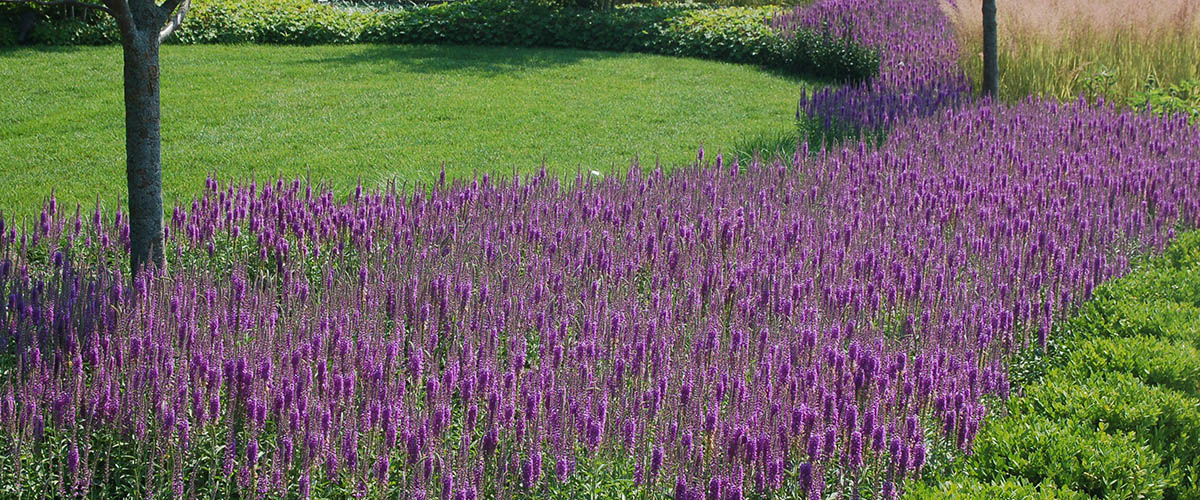
Evaluating Perennials for Chicagoland Gardens
Perennials in Focus is a plant evaluation program that examines new and underused plants for Chicagoland, the third largest metropolitan area in the country. A group of horticultural experts trials and evaluates plants at numerous locations across the region. Results help consumers, public gardens, growers, landscape designers, breeders, and other industry professionals make informed plant choices.
Living Mulch for Productive Vegetable Garden Paths
A path between vegetable beds can do more than provide access. When planted with low-growing perennials, it becomes a living mulch that shades soil, slows evaporation, softens muddy edges and supports a more connected garden design. The right plants also reduce the visual dominance of bare gravel or compacted earth.
This approach works particularly well in Australian home gardens, where hot summers, sudden downpours and water restrictions can make exposed paths difficult to maintain. A planted walkway can protect soil from heat, although it still needs careful plant selection and occasional trimming so vegetables are not crowded.
Perennials in Focus evaluates plants across seasons and sites, with a focus on traits such as height, spread, flowering and garden performance. Those principles are useful in Australia too, provided that gardeners treat regional trial information as a starting point and test plants against local rainfall, soil and temperature.
| Living mulch option | Best path position | Main strength | Watch for |
|---|---|---|---|
| Native violet (Viola hederacea) | Sheltered, partly shaded paths | Soft foliage and small flowers | Can dry out in exposed heat |
| Creeping thyme | Sunny, sharply drained paths | Aromatic, drought-tolerant foliage | Performs poorly in humid or waterlogged sites |
| Dichondra | Lightly used paths and bed edges | Dense, low green cover | May need summer irrigation |
| Irish moss or similar groundcover | Cool, protected gardens | Fine-textured surface | Not suited to harsh, dry exposure |
| Low sedges | Part shade or damp soil | Tough foliage and habitat value | Select clumping types rather than runners |
Choose Plants For Traffic And Climate
The best living mulch is low enough to step over, resilient enough to tolerate occasional contact and restrained enough to stay out of vegetable beds. Look for plants that remain under about 10 centimetres, recover from light trampling and form a dense cover without producing aggressive underground runners.
Australian conditions vary sharply. A Melbourne path may support native violet or dichondra in a cooler, irrigated position, while a Brisbane garden needs plants that cope with humidity and heavy summer rain. In Adelaide or Perth, drainage and heat tolerance may matter more than winter cold. Match the plant to the microclimate rather than choosing solely from a nursery label marked “groundcover.”
Flowering time and height are useful selection details, too. A perennial that sprawls into the path during spring may be manageable in a cool climate but become untidy after a wet subtropical summer. Regional trial notes, such as these heat-tolerance findings, demonstrate why observing performance through several seasons is more valuable than relying on a single impressive display.
Prepare The Path Before Planting
Remove perennial weeds first, then loosen the upper soil without creating a deep, rich bed that encourages the groundcover to invade vegetable rows. A path 60 to 90 centimetres wide gives most gardeners room to move, carry a harvest basket and kneel beside the beds. Narrower paths can work, but they are harder to maintain once foliage spreads.
Improve drainage where water pools, particularly in heavy clay or compacted urban soils. In sandy areas, incorporate compost into the planting zone rather than adding a thick layer across the whole path. A modest top-dressing of composted organic matter helps establishment, while a thin layer of fine mulch between plants suppresses weeds during the first few months.
Keep the crown of each plant level with the surrounding soil. Planting too deeply can cause crown rot, while raised crowns dry rapidly. In Australia, autumn is often the easiest planting season because the soil remains warm and rainfall can assist establishment before the hottest part of summer. In frost-prone inland districts, early spring may be safer.
Balance Coverage With Vegetable Access
Set living mulch plants back from the vegetable stems and leave a narrow inspection strip along each bed. A 10 to 15 centimetre gap makes it easier to spot snails, weeds and irrigation problems. It also prevents a dense mat from competing directly with shallow-rooted crops such as lettuce, onions and herbs.
Plant in staggered rows rather than a rigid grid. Small plugs spaced 15 to 25 centimetres apart usually knit together faster than widely spaced specimens, but the exact distance depends on mature spread and water availability. Overplanting creates a lush result quickly, yet it can make the path congested and increase fungal problems in humid regions.
Paths are working surfaces, not ornamental borders. Place stepping stones through higher-use sections, or choose tougher plants beside the compost bay and less durable species near beds that require frequent attention. Native violet can suit a sheltered family garden, while a thyme path may be better beside a sunny, well-drained herb garden where occasional foot contact is expected.
Manage Water, Weeds And Spread
Living mulch still needs water during establishment. Dripline or porous hose beneath the foliage delivers moisture efficiently and keeps leaves drier than overhead watering. Once plants have rooted, reduce irrigation gradually, but do not assume every groundcover is drought tolerant. Even hardy plants may need occasional deep watering during an Australian heatwave.
Trim the path edge several times a year with hand shears. This simple task stops runners from entering vegetable beds and keeps the walkway usable. Remove spent flowers or seed heads where self-sowing could become a nuisance. Clumping sedges and restrained groundcovers are generally easier to manage than plants that spread rapidly through stolons.
Weed while the mulch is still establishing. Small weeds are easier to remove before the perennial canopy closes, and pulling them after rain is gentler on young roots. Avoid broad-spectrum herbicide close to edible crops, especially where wind drift or runoff could carry spray into the beds.
Use Trials To Refine The Design
Record what happens in your own garden. Note planting date, weekly rainfall, irrigation frequency, flowering period, bare patches, trampling and how quickly each plant returns after pruning. A simple notebook or phone photograph taken from the same position each month can reveal whether a groundcover is genuinely stable or merely attractive during one season.
Local nurseries and garden centres are useful sources of practical information, especially when staff understand the conditions of their area. In Australia, compare advice from independent specialist nurseries with what is available through large retailers such as Bunnings, because stock availability often reflects broad demand rather than the best choice for a particular soil or climate.
The wider perennial trial program offers a useful model for making decisions based on repeated observations rather than one-off impressions. Gardeners who enjoy keeping a scorecard can even turn plant monitoring into a relaxing hobby; after the tools are put away, casual online entertainment can provide a separate break from the garden.
Begin with one short path rather than converting the whole vegetable garden at once. Test two or three plants in contrasting positions, mark their names and review them through summer, winter and the busiest harvest periods. Replace failures promptly, reward plants that stay compact and gradually build a living walkway suited to your soil, climate and gardening routine.
In the Garden
Evaluator gardens are located across the Chicagoland area, representing a range of growing conditions. Visit our retail and wholesale partners to find trialled perennials for your own garden.
Retail & Wholesale: Hinsdale Nurseries (Willowbrook, IL), Mariani Nurseries (Kenosha, WI & Garden Prairie, IL), Northwind Perennials (Burlington, WI), The Growing Place (Aurora, IL).
Wholesale Only: Hinsdale Nurseries (Plano, IL), Intrinsic Perennial Gardens (Hebron, IL).
Our Evaluation Program
The 2017–2020 evaluation cycle included Agastache 'Blue Boa', Allium senescens 'Blue Eddy', Amsonia ciliata var. filifolia 'Georgia Pancake', Astilbe 'Chocolate Shogun', Boltonia astroides 'James Crocket', Brunnera 'Alexander's Great', and Geranium cinereum 'Jolly Jewel Purple'. Completed evaluations include Amsonia 'Blue Ice' (2004–07).
On April 10, 2020, the program published snapshot profiles for Vernonia lettermanii 'Iron Butterfly', Stokesia laevis 'Elf', Stachys officinalis 'Pink Cotton Candy', Lobelia 'Monet Moment', Helleborus 'Winter Thrillers', Geum 'Mai Tai', Geranium soboliferum 'Butterfly Kisses', Gentiana x intermedia 'True Blue', Eurybia divaricata, Asparagus 'Purple Passion', and Agastache 'Bolero'.
Browse the full collection of snapshots organized alphabetically — from A–D, E–H, I–Q, and R–Z — to find detailed performance data on perennials trialled across Chicagoland.