Evaluating Perennials for Chicagoland Gardens
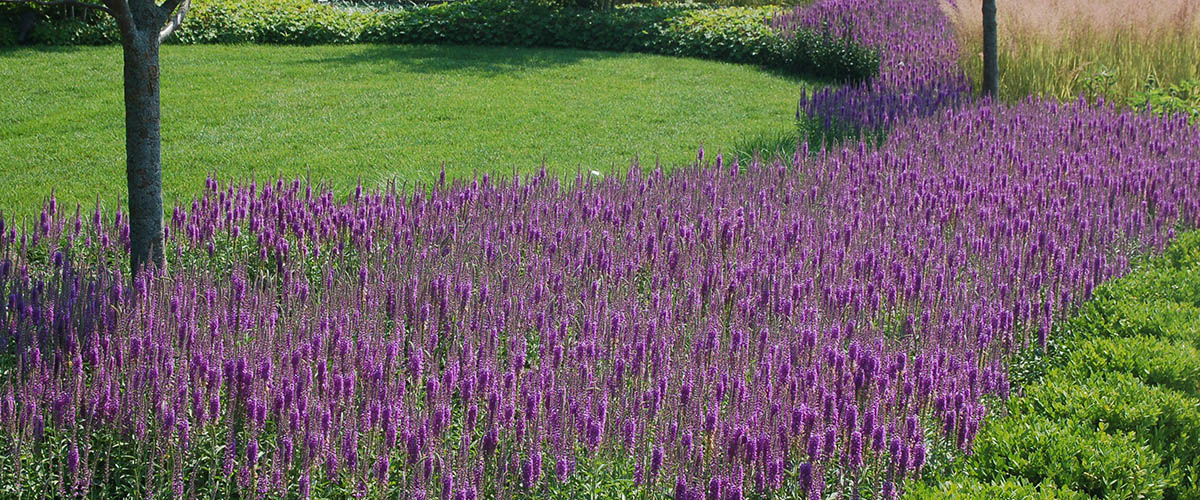
Perennials in Focus is a plant evaluation program that examines new and underused plants for Chicagoland, the third largest metropolitan area in the country. A group of horticultural experts trials and evaluates plants at numerous locations across the region. Results help consumers, public gardens, growers, landscape designers, breeders, and other industry professionals make informed plant choices.
Testing Chelone Obliqua for Heat in South-Facing Beds
South-facing garden beds create a demanding environment for perennial plants. They receive intense summer light, reflect heat from paving and walls, and often dry quickly near the soil surface. A plant that thrives in ordinary garden conditions may wilt, scorch, or stop flowering when placed in this warmer microclimate.
Chelone obliqua, commonly called red turtlehead, is usually associated with moist soil and partial shade. Its late-summer flowers and upright habit make it appealing for perennial borders, rain gardens, and pollinator plantings, but its performance in full sun deserves careful regional evaluation. Trialing the species in exposed beds can reveal whether it tolerates heat through strong growth or merely survives with frequent irrigation.
For gardeners in Chicagoland, reliable observations matter more than assumptions based on plant tags or performance in distant climates. The regional trial findings from Perennials in Focus help place individual plants in the conditions that local gardens actually experience, including fluctuating temperatures, humid summers, winter weather, and variable soils.
Why South-Facing Beds Are A Serious Test
A south-facing bed may receive direct sun from late morning through afternoon, when temperatures and evaporative demand are highest. Dark mulch, stone edging, brick walls, and nearby pavement can raise the temperature around foliage and flowers. The soil may remain warm well into the evening, shortening the period available for recovery after a hot day.
Water availability is equally important. A plant can appear heat tolerant when its roots remain consistently moist, yet struggle when irrigation is interrupted. For that reason, a meaningful evaluation should distinguish between tolerance of high temperatures and tolerance of hot, drying conditions. Chelone obliqua may withstand strong sun if its root zone stays evenly moist, while showing stress in compacted or rapidly draining soil.
Building A Useful Chicagoland Trial
Several plants should be grown in more than one location, with at least one south-facing bed and a comparison site receiving morning sun or light afternoon shade. Repeated plantings reduce the chance that one unusual specimen, soil pocket, or irrigation line will determine the result. If possible, use the same cultivar and similar-sized divisions in each location.
The soil should be amended consistently before planting, but the trial should preserve realistic garden conditions. Record soil texture, drainage, mulch depth, irrigation frequency, and nearby hardscape. A rich, moisture-retentive loam will produce a different result from a shallow bed over construction fill, even if both locations are labeled “full sun.”
Planting time also affects interpretation. A spring-planted Chelone obliqua has an entire season to establish roots before the most intense heat arrives. Newly divided plants should be evaluated separately from mature clumps, since temporary wilting during establishment does not necessarily indicate poor long-term heat tolerance.
Measurements That Reveal More Than Survival
Weekly observations should include wilt rating, leaf color, leaf-edge browning, stem strength, and the amount of new growth. Note whether foliage recovers by evening or remains limp overnight. Repeated overnight recovery suggests short-term water stress, while persistent wilt, premature yellowing, or leaf drop may indicate that the site exceeds the plant’s practical tolerance.
Flowering records are also essential. Count the date of first bloom, the length of the flowering period, the number of flowering stems, and whether blooms remain upright during hot weather. Turtlehead flowers are valuable late-season resources for bees and other pollinators, so a plant that survives but produces few flowers has limited landscape value.
Measure height and spread at several points in the season. A heat-stressed plant may remain alive but produce a shorter, narrower clump. Compare its appearance with plants in cooler sites, and photograph the same plants from the same angle. Consistent images make it easier to separate heat effects from normal seasonal decline.
Comparing Performance Across Site Conditions
The following framework can help organize observations during a summer evaluation. Ratings should be recorded throughout the season rather than assigned after a single heat wave.
| Characteristic | Strong Performance | Intermediate Performance | Weak Performance |
|---|---|---|---|
| Midday foliage | Leaves remain firm with minimal curl | Temporary droop during extreme heat | Frequent or prolonged wilt |
| Leaf quality | Green, full foliage with little scorch | Some edge browning or yellowing | Extensive scorch, bleaching, or leaf loss |
| Flowering | Abundant, upright blooms over several weeks | Reduced bloom count or shorter display | Few blooms or collapsed stems |
| Recovery after watering | Rapid recovery with no lasting damage | Recovery occurs but damage accumulates | Little recovery or progressive decline |
| Growth and habit | Dense clump with sturdy stems | Smaller clump or mild flopping | Stunted, open, or declining plant |
| Irrigation requirement | Performs with ordinary deep watering | Needs supplemental watering in hot spells | Requires frequent watering to remain presentable |
A strong result would combine good foliage, reliable flowering, and a stable habit rather than simply surviving. Record the weather alongside plant observations, including maximum temperature, rainfall, humidity, and the number of consecutive hot days. A plant may perform well during a single hot afternoon but struggle after a week of temperatures above 90 degrees Fahrenheit.
Interpreting Heat Tolerance And Moisture Needs
Chelone obliqua should be evaluated as a moisture-dependent perennial, even if a particular selection handles full sun. Heat tolerance does not mean drought tolerance. The plant’s natural preference for evenly moist soil remains relevant, especially when roots are exposed to reflected heat and rapid evaporation.
A useful trial can reveal the best combination of sun and moisture rather than produce a simple pass-or-fail verdict. For example, a selection may perform impressively in a south-facing bed with deep, organic soil and a two- to three-inch mulch layer, while becoming unattractive in a sandy bed that dries daily. That distinction helps gardeners choose the right placement and maintenance level.
Irrigation should be deep and occasional once plants are established, allowing water to reach the main root zone. Avoid shallow daily sprinkling, which encourages surface roots and can make plants more vulnerable during heat waves. Water early in the day, keep mulch away from crowns, and inspect soil moisture below the surface before deciding that a wilted plant needs another application.
Recommendations For Trial Managers And Gardeners
Regional evaluation becomes most useful when observations are converted into clear planting guidance. The following practices can improve both the accuracy of a trial and the success of Chelone obliqua in a home landscape:
- Plant replicated specimens in full sun, morning sun, and partial shade, using comparable soil preparation.
- Record wilt, leaf scorch, flowering, height, spread, and recovery after each major heat event.
- Maintain even moisture in the root zone while documenting irrigation so performance is not separated from water availability.
- Use organic mulch to reduce evaporation, but leave space around the crown to discourage rot and crown problems.
- Judge the plant over at least two growing seasons, since establishment, rainfall, and heat patterns vary widely.
For residential gardens, place turtlehead where afternoon sun is strong but soil does not dry immediately. The edge of a rain garden, a moisture-retentive border, or a bed near a downspout may provide a better balance than a raised strip beside concrete. In very hot exposures, afternoon shade from a deciduous tree can preserve flower quality without eliminating the bright conditions needed for sturdy growth.
Growers and retailers can use trial notes to describe plants more precisely. Instead of calling a selection simply “sun tolerant,” records can state that it performs in full sun with consistent moisture, retains foliage during short heat waves, or needs protection from reflected heat. Such language gives customers practical expectations and supports better plant placement.
A well-designed evaluation of Chelone obliqua in a south-facing bed can answer a valuable regional question: where does this moisture-loving perennial remain attractive when summer conditions become intense? Track the plant through establishment, heat waves, flowering, and recovery, then share those observations with local horticultural networks and gardeners. Careful evidence can turn an uncertain planting into a confident recommendation for Chicagoland landscapes.
In the Garden
Evaluator gardens are located across the Chicagoland area, representing a range of growing conditions. Visit our retail and wholesale partners to find trialled perennials for your own garden.
Retail & Wholesale: Hinsdale Nurseries (Willowbrook, IL), Mariani Nurseries (Kenosha, WI & Garden Prairie, IL), Northwind Perennials (Burlington, WI), The Growing Place (Aurora, IL).
Wholesale Only: Hinsdale Nurseries (Plano, IL), Intrinsic Perennial Gardens (Hebron, IL).
Our Evaluation Program
The 2017–2020 evaluation cycle included Agastache 'Blue Boa', Allium senescens 'Blue Eddy', Amsonia ciliata var. filifolia 'Georgia Pancake', Astilbe 'Chocolate Shogun', Boltonia astroides 'James Crocket', Brunnera 'Alexander's Great', and Geranium cinereum 'Jolly Jewel Purple'. Completed evaluations include Amsonia 'Blue Ice' (2004–07).
On April 10, 2020, the program published snapshot profiles for Vernonia lettermanii 'Iron Butterfly', Stokesia laevis 'Elf', Stachys officinalis 'Pink Cotton Candy', Lobelia 'Monet Moment', Helleborus 'Winter Thrillers', Geum 'Mai Tai', Geranium soboliferum 'Butterfly Kisses', Gentiana x intermedia 'True Blue', Eurybia divaricata, Asparagus 'Purple Passion', and Agastache 'Bolero'.
Browse the full collection of snapshots organized alphabetically — from A–D, E–H, I–Q, and R–Z — to find detailed performance data on perennials trialled across Chicagoland.