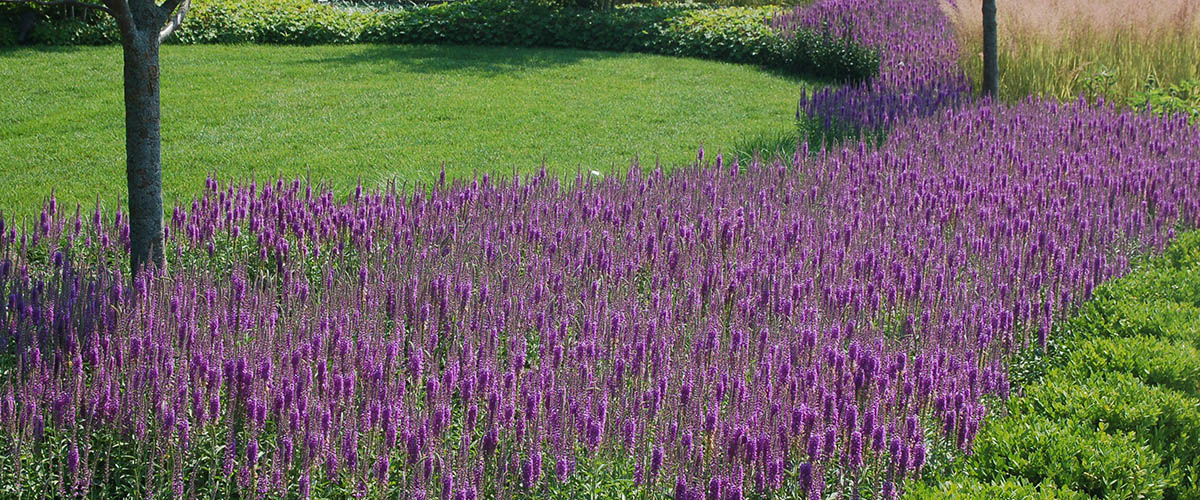
Evaluating Perennials for Chicagoland Gardens
Perennials in Focus is a plant evaluation program that examines new and underused plants for Chicagoland, the third largest metropolitan area in the country. A group of horticultural experts trials and evaluates plants at numerous locations across the region. Results help consumers, public gardens, growers, landscape designers, breeders, and other industry professionals make informed plant choices.
Choosing Perennials for Salt-Exposed Suburban Driveways
Road salt can turn a narrow driveway edge into a difficult planting site. Splash from passing vehicles, ploughed snow, salty runoff and winter spray may leave sodium and chloride in the soil, where they damage roots, dehydrate foliage and weaken plants over several seasons. The most reliable choices combine salt tolerance with good drainage, strong root systems and a habit that suits the available space.
For Australian gardeners, this issue is most familiar near coastal roads, heavily treated bridges and alpine towns rather than the average suburban street. The same selection principles still apply in Melbourne, Canberra, Hobart and regional areas where winter maintenance products are used, while salt-laden wind creates a related problem in Sydney and other coastal cities. Trials from colder regions, including Chicagoland, offer useful evidence when interpreted alongside local growing conditions.
Understand how salt reaches the planting bed
Salt injury usually arrives in two forms. Spray and slush land directly on leaves and stems, causing scorched margins and premature browning. Runoff moves into the soil, where salt accumulates near the driveway edge and interferes with water uptake. A plant may appear healthy in spring, then decline after repeated exposure.
Observe the site after rain or irrigation. Is water flowing from the driveway towards the bed? Does a low section collect dirty meltwater? Are plants positioned where tyres regularly throw spray? A raised planting strip, shallow swale or gravel drainage channel can reduce exposure before any plant is purchased.
The material used for de-icing also matters. Sodium chloride is common in colder regions, while calcium chloride and magnesium chloride products are marketed as alternatives. None should be treated as harmless to plants. Ask local contractors what they apply, and avoid placing delicate perennials beside areas where concentrated piles of salt are stored or cleared.
Match plant habit to the driveway edge
Compact, clump-forming perennials are usually easier to protect than broad, soft-stemmed plants that flop into traffic. Look for foliage that emerges from a dense crown, stems that remain upright during wet weather and mature dimensions that leave a practical buffer from vehicles. A plant listed as 60 centimetres wide may need more space when it bends over the pavement.
Evergreen or semi-evergreen foliage can provide useful structure, but it may also receive salt spray throughout winter. Deciduous perennials often escape the worst foliar damage because their leaves are absent during the main de-icing period. Tough grasses and plants with narrow, waxy or leathery leaves can be worth considering, provided their root zones do not remain waterlogged.
Do not select solely by flower colour. A long-blooming cultivar may look appealing in a catalogue but perform poorly when its foliage is repeatedly contaminated. Regional trial data that records height, spread, flowering period and plant health gives a much clearer basis for choosing.
Use regional trial evidence wisely
The Perennials in Focus program evaluates new and underused perennials across multiple gardens and seasons in the Chicagoland region. Its findings are particularly valuable for understanding winter survival, salt exposure, crown durability and performance in heavy suburban soils. Look for plants that remain vigorous across several locations rather than relying on a single impressive photograph.
Cultivar comparisons can reveal differences hidden behind a familiar plant name. For example, daylily trial notes can help gardeners distinguish flower performance from overall landscape reliability. Daylilies are often resilient, but cultivar habit, foliage density and recovery after stress still deserve attention when planting near pavement.
Australian conditions require a second layer of judgement. A perennial that handles frozen, salted clay in Illinois may struggle in Brisbane heat, Perth’s dry summers or a poorly drained Melbourne garden. Treat cold-climate trial results as evidence of toughness, then check Australian availability, hardiness, water needs and local nursery observations.
Shortlist proven plant groups
Several perennial groups commonly deserve consideration for a salt-exposed driveway. Daylilies, Siberian iris, ornamental grasses, yarrow, catmint and some sedums offer combinations of firm structure, dependable regrowth and relatively modest maintenance. Their success depends on species and cultivar, so the label should be checked rather than assuming every member of a group performs equally.
Plants with silvery or aromatic foliage, such as some sages and artemisias, may cope well with reflected heat and dry soil, though their response to direct salt spray varies. Tough groundcovers can stabilise the soil, but avoid spreading types that quickly cover the pavement and collect salty debris. In smaller Australian gardens, a restrained clump is often more useful than an aggressive runner.
| Plant group | Useful qualities | Watch-outs near driveways | Best placement |
|---|---|---|---|
| Daylilies | Dense crowns, strong regrowth, broad cultivar range | Foliage can brown after direct spray | Set back from the splash zone |
| Siberian iris | Upright leaves, dependable clumps, cold tolerance | Needs consistent moisture and drainage | Slightly raised, well-drained beds |
| Ornamental grasses | Fibrous roots, movement, winter structure | Cut foliage may trap salty debris | Behind a low edge or barrier |
| Yarrow | Tough stems, drought tolerance, long flowering | Some cultivars spread quickly | Dry, sunny outer margins |
| Sedums | Low water use, succulent foliage | Can suffer in heavy wet soil | Gravelly, raised positions |
| Catmint | Aromatic foliage, long flowering, compact habit | May flop if overfed or shaded | Sunny areas beyond tyre spray |
Build protection into the soil
Good soil preparation cannot make a sensitive perennial salt-proof, but it can improve recovery. Incorporate mature compost into compacted beds, break up hard layers and create a gentle fall that moves runoff away from the crown. Avoid creating a rich pocket that holds water directly beside the driveway.
Mulch reduces evaporation and helps prevent salt from concentrating at the surface. Use a two- to five-centimetre layer of composted bark, leaf mould or another suitable organic mulch, keeping it clear of the crown. Coarse mulch can also reduce soil splash onto foliage during heavy rain.
Where salt has accumulated, thorough flushing with clean water during the growing season can move soluble salts below the root zone. This works only when drainage is adequate. Soil testing is worthwhile if plants repeatedly fail, especially in beds beside a long driveway or where winter runoff is concentrated.
Plan planting and maintenance around exposure
Place the most tolerant plants closest to the pavement, then use a second row of less exposed species behind them. A low wall, dense hedge or line of ornamental grasses can intercept spray, although the barrier itself may need occasional washing. Keep branches and foliage clear of vehicle paths so pruning does not become severe every season.
In regions that use de-icing products, ask snow-removal workers to push treated material away from planted beds. In Australia, the equivalent may involve managing runoff from highly trafficked roads, coastal wind or occasional frost treatment near Canberra and alpine routes. A simple kerbside drain or gravel strip may protect plants better than replacing them repeatedly.
Rinse salt from evergreen foliage with clean water when weather permits, and remove heavily damaged leaves only after the risk of further exposure has passed. Do not over-fertilise stressed plants. Balanced watering, sensible pruning and patient observation usually support recovery more effectively than forcing soft new growth.
Check availability and long-term performance
Australian nurseries and retailers may list salt tolerance inconsistently. Staff at independent garden centres, specialist perennial growers and local botanic gardens can provide practical information that a generic online description misses. Plants stocked by major retailers such as Bunnings may be easy to find, but compare the actual cultivar and mature size rather than buying from a broad category label.
Read trial reports for consistency across seasons. A perennial that flowers heavily in its first year but loses vigour after winter exposure is a poor investment for a driveway border. Prioritise survival, crown density, manageable spread and recovery after damage, then select flower colour and bloom sequence.
Keep a simple record after planting: position, cultivar, exposure, rainfall, visible scorch and spring regrowth. Over two or three seasons, this creates a useful local shortlist. It can also reveal whether the real problem is salt, drought, reflected heat, compacted soil or a combination of stresses.
Design for resilience rather than perfection
The strongest driveway planting combines plant choice with site design. Allow a buffer between tyres and crowns, direct runoff away from the bed, improve drainage and group plants with similar moisture needs. Repetition of a few dependable perennials generally looks calmer and performs better than a crowded collection of marginal choices.
For Australian homes, include the local climate in the final decision. A salt-tolerant perennial suited to a Chicago winter may need afternoon shade in Adelaide, extra summer water in Canberra or sharper drainage in a humid Sydney garden. Regional evidence is a starting point, not a substitute for observing the microclimate.
Choose a small trial group first, label each cultivar and assess it through a full cycle of wet weather, heat and traffic exposure. Once the strongest performers are clear, extend them along the driveway and replace weak plants with confidence. Build the border around evidence, drainage and realistic maintenance, and it will be far more likely to stay attractive after the next season of spray and runoff.
In the Garden
Evaluator gardens are located across the Chicagoland area, representing a range of growing conditions. Visit our retail and wholesale partners to find trialled perennials for your own garden.
Retail & Wholesale: Hinsdale Nurseries (Willowbrook, IL), Mariani Nurseries (Kenosha, WI & Garden Prairie, IL), Northwind Perennials (Burlington, WI), The Growing Place (Aurora, IL).
Wholesale Only: Hinsdale Nurseries (Plano, IL), Intrinsic Perennial Gardens (Hebron, IL).
Our Evaluation Program
The 2017–2020 evaluation cycle included Agastache 'Blue Boa', Allium senescens 'Blue Eddy', Amsonia ciliata var. filifolia 'Georgia Pancake', Astilbe 'Chocolate Shogun', Boltonia astroides 'James Crocket', Brunnera 'Alexander's Great', and Geranium cinereum 'Jolly Jewel Purple'. Completed evaluations include Amsonia 'Blue Ice' (2004–07).
On April 10, 2020, the program published snapshot profiles for Vernonia lettermanii 'Iron Butterfly', Stokesia laevis 'Elf', Stachys officinalis 'Pink Cotton Candy', Lobelia 'Monet Moment', Helleborus 'Winter Thrillers', Geum 'Mai Tai', Geranium soboliferum 'Butterfly Kisses', Gentiana x intermedia 'True Blue', Eurybia divaricata, Asparagus 'Purple Passion', and Agastache 'Bolero'.
Browse the full collection of snapshots organized alphabetically — from A–D, E–H, I–Q, and R–Z — to find detailed performance data on perennials trialled across Chicagoland.