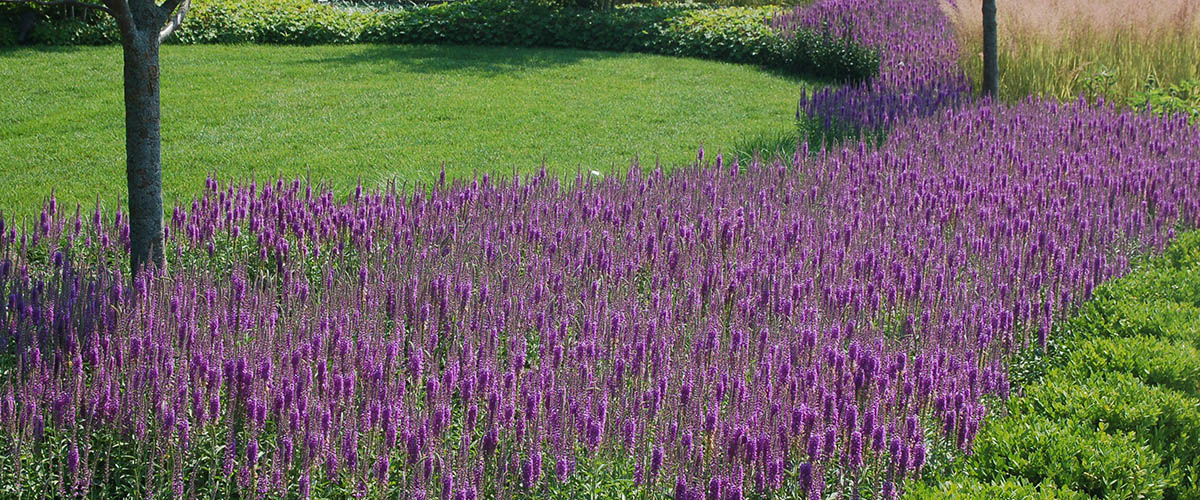
Evaluating Perennials for Chicagoland Gardens
Perennials in Focus is a plant evaluation program that examines new and underused plants for Chicagoland, the third largest metropolitan area in the country. A group of horticultural experts trials and evaluates plants at numerous locations across the region. Results help consumers, public gardens, growers, landscape designers, breeders, and other industry professionals make informed plant choices.
Daylilies in Chicagoland Trials: New Cultivars and Proven Classics
Daylilies have earned their place in Midwestern gardens through dependable growth, colorful flowers, and relatively simple care. Yet a familiar cultivar that succeeds in one neighborhood may perform differently in another, especially when winter temperatures, spring moisture, soil type, and summer heat vary across the Chicagoland region.
Comparing new versus classic daylily cultivars in local trials provides a more useful picture than relying on catalog descriptions alone. Established varieties bring years of grower experience, while recent introductions may offer improved flower form, longer rebloom, sturdier scapes, or unusual colors that need several seasons of observation.
The Perennials in Focus program evaluates plants across multiple gardens and growing seasons, emphasizing practical traits that matter to gardeners and horticultural professionals. Its regional trial mission reflects the value of evidence gathered under local conditions rather than assumptions based only on a plant’s national reputation.
Why Local Performance Matters
Chicagoland gardens experience a demanding cycle: fluctuating winter temperatures, late spring frosts, heavy spring rainfall, humid summers, and occasional drought. Daylilies are generally resilient, but individual cultivars differ in their response to wet crowns, inconsistent snow cover, and short periods of extreme heat.
A plant may be marketed as a vigorous rebloomer yet produce only a modest second flush in a cool or shaded local site. Another may have spectacular flowers but weak scapes that bend during rain. These distinctions become visible when plants are observed repeatedly instead of judged from a single nursery visit.
Local trials also place new introductions beside familiar standards. This makes it possible to ask whether a new cultivar contributes a genuine improvement or simply offers a different color and flower shape. For landscape planning, both outcomes can be valuable, but they serve different purposes.
What Classic Cultivars Still Offer
Classic daylilies such as ‘Stella de Oro’, ‘Happy Returns’, ‘Hyperion’, and ‘Chicago Apache’ remain useful reference points because their basic habits are well known. Many have demonstrated durable crowns, reliable flowering, and broad adaptability over years of home garden and commercial use.
‘Stella de Oro’, for example, is widely recognized for its compact habit and recurring golden flowers. Its scale makes it practical near paths, in foundation beds, and toward the front of a perennial border. It may not provide the large, heavily ruffled blooms associated with newer hybrids, but its consistent garden presence is a meaningful quality.
Older cultivars can also be easier to place in a design. Their mature height and spread are often predictable, and growers may have abundant propagation material. For public gardens, municipalities, and landscape contractors, that predictability can outweigh novelty, particularly where maintenance crews need plants that recover quickly and flower dependably.
How New Introductions Are Being Judged
Recent daylily breeding has expanded the range of flower sizes, eye zones, petal edges, color blends, and forms. Newer cultivars may be dormant, semi-evergreen, or evergreen, and they can differ considerably in their response to the local winter. Tetraploid varieties often have substantial flowers and strong visual presence, but flower quality alone does not establish landscape value.
Trial observers typically record bloom initiation, peak flowering, rebloom, scape strength, foliage appearance, plant height, clump width, and overall vigor. They also note whether flowers open fully in cool weather, how long individual blooms remain attractive, and whether foliage stays presentable after flowering.
The most promising new daylilies are those that combine distinctive flowers with sound garden performance. A dramatic bloom is less useful if the plant produces sparse scapes, collapses after storms, or takes several years to establish. Conversely, a cultivar with a familiar yellow or pink flower may deserve attention if it has unusually strong rebloom and an orderly habit.
| Trait | Classic Cultivars | Newer Introductions | Local Trial Value |
|---|---|---|---|
| Establishment | Often well documented and dependable | Can vary widely by parentage and selection | Shows how quickly plants settle into Chicagoland gardens |
| Flower form | Frequently simpler or more familiar | Often larger, ruffled, edged, or patterned | Reveals whether form remains attractive in local weather |
| Rebloom | Reliable in some compact standards | A common breeding goal, but not guaranteed locally | Separates true repeat flowering from marketing claims |
| Scape strength | Usually known from long-term use | May be excellent or still uncertain | Identifies cultivars that hold flowers above the foliage |
| Winter response | Historical experience provides useful guidance | Dormancy and cold response may be less established | Tracks survival and spring recovery across seasons |
| Landscape role | Predictable for massing and repetition | Offers novelty and specialized design effects | Helps match plants to borders, containers, and display beds |
Reading Results Beyond Flower Color
Flower color attracts attention, but it should be considered alongside plant structure. A daylily with a saturated red bloom may blend into the foliage if its scapes are short. A pale yellow cultivar may be more visible in evening light and may combine more effectively with ornamental grasses or blue-flowering perennials.
Bloom timing is equally important. Early cultivars can bridge the gap between late spring perennials and midsummer flowers. Midseason varieties provide the main display, while late bloomers and rebloomers can extend color into late summer. A mixed planting of different bloom periods may produce a longer visual sequence than a bed filled with one highly promoted cultivar.
Foliage quality also affects the garden after the main display. Some plants maintain upright, clean leaves, while others become floppy or develop unattractive browning. Trial notes that include foliage and clump form help gardeners evaluate daylilies as whole-season plants rather than isolated flowers.
Conditions That Shape Trial Performance
Plant spacing, soil drainage, sunlight, and irrigation can influence results as much as genetics. Daylilies generally flower best in full sun, although some cultivars tolerate light afternoon shade. Excess shade may reduce scape production, while poorly drained soil can weaken crowns over time.
A fair comparison requires consistent cultural conditions. Trial plants should receive similar spacing, watering, and weed control so that differences are more likely to reflect cultivar traits. Repeating observations across multiple sites helps reveal whether a plant performs broadly or only under particularly favorable conditions.
Seasonal variation matters too. A cultivar may have an exceptional display during a warm spring and a less impressive one after a late freeze. Recording performance over several years gives a clearer picture of winter survival, flowering reliability, and long-term clump development than a single season can provide.
Selecting Daylilies for Real Gardens
Gardeners do not need to choose between every classic cultivar and every new introduction. A practical planting often combines dependable standards with a few newer selections chosen for specific traits. Classics can provide structure and repetition, while newer plants supply focal points or extend the flowering calendar.
Before purchasing, compare the trial observations with the conditions of the intended site. Consider available sun, soil moisture, desired height, mature spread, and whether the bed needs early, midseason, or late color. A compact rebloomer may suit a walkway, whereas a tall cultivar with strong scapes may be more effective in the middle or back of a border.
Use these priorities when weighing trial findings:
- Favor strong winter survival and spring recovery for exposed or low-maintenance sites.
- Match mature height and spread to the planting bed rather than relying on container size.
- Look for sturdy scapes and clean foliage when flowers will be viewed from a distance.
- Treat rebloom as a site-dependent trait and verify it across more than one season.
- Combine established cultivars with newer selections to balance reliability and visual interest.
A local evaluation does not declare one daylily universally superior. Instead, it clarifies which plants are dependable under regional conditions and which deserve further observation. That distinction helps growers decide what to propagate, retailers decide what to stock, and gardeners decide where novelty is worth the investment.
Explore the Perennials in Focus trial findings when planning your next Chicagoland perennial bed, and use the recorded bloom, habit, and seasonal performance details to build a daylily collection that is both distinctive and dependable.
In the Garden
Evaluator gardens are located across the Chicagoland area, representing a range of growing conditions. Visit our retail and wholesale partners to find trialled perennials for your own garden.
Retail & Wholesale: Hinsdale Nurseries (Willowbrook, IL), Mariani Nurseries (Kenosha, WI & Garden Prairie, IL), Northwind Perennials (Burlington, WI), The Growing Place (Aurora, IL).
Wholesale Only: Hinsdale Nurseries (Plano, IL), Intrinsic Perennial Gardens (Hebron, IL).
Our Evaluation Program
The 2017–2020 evaluation cycle included Agastache 'Blue Boa', Allium senescens 'Blue Eddy', Amsonia ciliata var. filifolia 'Georgia Pancake', Astilbe 'Chocolate Shogun', Boltonia astroides 'James Crocket', Brunnera 'Alexander's Great', and Geranium cinereum 'Jolly Jewel Purple'. Completed evaluations include Amsonia 'Blue Ice' (2004–07).
On April 10, 2020, the program published snapshot profiles for Vernonia lettermanii 'Iron Butterfly', Stokesia laevis 'Elf', Stachys officinalis 'Pink Cotton Candy', Lobelia 'Monet Moment', Helleborus 'Winter Thrillers', Geum 'Mai Tai', Geranium soboliferum 'Butterfly Kisses', Gentiana x intermedia 'True Blue', Eurybia divaricata, Asparagus 'Purple Passion', and Agastache 'Bolero'.
Browse the full collection of snapshots organized alphabetically — from A–D, E–H, I–Q, and R–Z — to find detailed performance data on perennials trialled across Chicagoland.