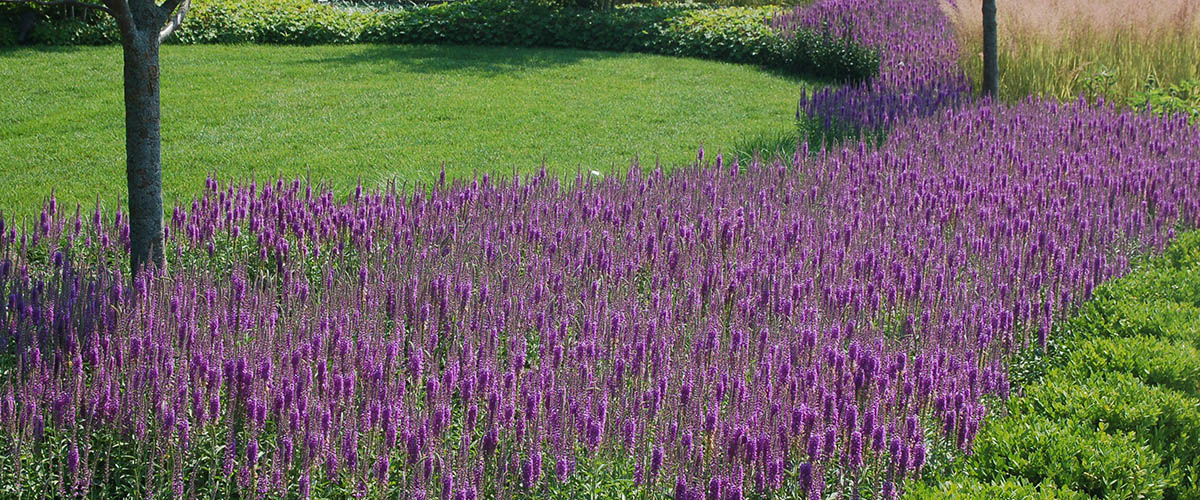
Evaluating Perennials for Chicagoland Gardens
Perennials in Focus is a plant evaluation program that examines new and underused plants for Chicagoland, the third largest metropolitan area in the country. A group of horticultural experts trials and evaluates plants at numerous locations across the region. Results help consumers, public gardens, growers, landscape designers, breeders, and other industry professionals make informed plant choices.
Interplant Perennials with Spring Ephemerals for Seasonal Transitions
A well-planted garden should change gradually rather than switch abruptly from bare soil to summer growth. Spring ephemerals provide the first colour of the season, while reliable perennials take over as temperatures rise. Together, they create a planting design that feels continuous, layered and purposeful.
This approach is especially useful in Australian gardens, where spring conditions can vary sharply between regions. Melbourne may offer cool, damp weeks followed by sudden warmth, Sydney often moves quickly from mild winter into humid growth, and Adelaide gardeners may need to plan for dry soil soon after flowering finishes.
Trials from cooler climates can still provide valuable planting principles, even when the calendar differs. The Perennials in Focus program assesses bloom period, height, spread and garden performance across multiple sites, giving gardeners a useful framework for judging which plants can carry a border from one season to the next.
Start With The Seasonal Sequence
Begin by mapping the garden month by month. Note when bulbs or other short-lived spring plants emerge, flower and fade, then identify the point at which summer perennials reach enough height to cover their declining foliage. The aim is to overlap these stages rather than leave visible gaps.
In southern Australia, snowdrops and crocuses are less widely used than in colder northern gardens, while freesias, jonquils, Dutch iris and species tulips may be more familiar choices. In warmer districts, consider carefully placed cyclamen, ixia or other climate-appropriate bulbs. Choose plants suited to local rainfall and winter temperatures instead of copying a planting scheme designed for Chicago.
Allow the perennial foliage to appear before the ephemeral display finishes. Early growth from hardy geraniums, salvias, heucheras, catmint and ornamental grasses can soften the transition. These plants do not need to be fully mature when the bulbs bloom; their emerging leaves simply provide a second layer of interest.
Pair Plants By Growth Habit
Successful combinations usually depend on contrasting habits. Low bulbs can occupy spaces between clumps of later perennials, while upright plants can rise behind a carpet of short-lived flowers. A spreading perennial may be useful for covering fading bulb leaves, provided it does not smother them too early.
Consider the height and spread recorded in regional plant evaluations. A perennial listed as 60 centimetres wide may need more room than its nursery pot suggests, particularly in fertile Australian soils. Leave enough space for air movement around foliage in humid Sydney conditions, while using tighter groupings in exposed, drying sites where plants remain smaller.
Texture also helps seasonal transitions. Fine-leaved bulbs look effective beside broad hosta foliage in cool, shaded gardens, although hostas may struggle in hot or dry parts of Australia. In a sunny Melbourne or Canberra border, try ornamental onions with yarrow, penstemon or compact grasses. Their fading flower heads can remain attractive after the petals fall.
Prepare For Fading Foliage
Spring ephemerals should be allowed to complete their growth cycle so they can replenish their bulbs or underground storage organs. Avoid cutting leaves immediately after flowering. Instead, place them among perennials whose expanding leaves will gradually disguise the yellowing foliage.
A simple planting rhythm is to set bulbs in groups of five or more, then position three to five compatible perennials around them. Repeated clusters look more natural than isolated specimens and make the fading stage less noticeable. In a small courtyard, drift the same combination through several containers or narrow beds to create continuity.
Mulch can support this transition, especially in regions where spring moisture disappears quickly. Use a thin layer of composted organic material or fine bark, keeping it away from crowns and bulb necks. Heavy mulch may delay emergence in cool districts and can retain too much moisture around dormant bulbs in warm, wet weather.
Watering should change with the seasons. Keep newly planted bulbs and perennials evenly moist while roots establish, then reduce irrigation as the perennials mature. For dry-climate gardens, compare the performance of plants with similar water needs; the drought tolerance checklist offers a useful example of how plant choices can be assessed beyond flower colour.
Match The Scheme To Australian Conditions
Local climate determines which seasonal combinations will remain attractive after spring. In Perth, sandy soil and dry summers favour well-drained bulb plantings with Mediterranean perennials such as lavender, teucrium and santolina. In Brisbane, winter-growing bulbs may need protection from excessive summer moisture and should be placed where drainage is excellent.
Retail availability also affects practical design. Australian garden centres and independent nurseries commonly stock jonquils, freesias, bearded iris, salvias and grasses, while unusual species may be available only through specialist bulb suppliers. Check the mature size and dormancy period on plant labels rather than choosing solely from a colourful display in the nursery.
Planting time is another local consideration. Many gardeners establish spring-flowering bulbs in autumn, often combining the task with seasonal garden clean-up after summer. In frost-prone inland areas, delay tender perennials until the risk of severe frost has passed. In coastal districts, monitor fungal problems and avoid overcrowding plants during wet spring weather.
For a broader view of how professional trials are selected and reviewed, the evaluation committee provides useful context. A measured approach helps gardeners distinguish a plant that looks impressive in a pot from one that maintains form, health and flowering across several seasons.
Build A Border That Evolves
Think of the planting as a relay. Ephemerals begin the display, early perennials extend it, and summer or autumn plants carry the border forward. For example, jonquils can bloom among emerging salvias, followed by catmint and gaura, while low grasses fill the spaces as the bulbs retreat underground.
Colour repetition makes the change feel deliberate. Echo the yellow of early narcissus in achillea or coreopsis later in the year, or connect blue muscari with blue-flowering salvia. White flowers from ornamental pears, bulbs or early perennials can provide a visual pause between stronger colours.
The following combinations illustrate the principle rather than prescribe a fixed planting list. Always adjust for soil, rainfall, frost and the mature dimensions of each cultivar.
| Spring ephemeral or bulb | Later perennial partner | Best transition feature | Australian consideration |
|---|---|---|---|
| Jonquil | Salvia or catmint | Foliage hides fading bulb leaves | Suitable for many temperate gardens with good drainage |
| Dutch iris | Yarrow | Upright forms overlap without crowding | Protect from waterlogged soil in wet districts |
| Freesia | Gaura or compact grass | Airy summer growth follows spring colour | Useful in sunny, well-drained beds |
| Species tulip | Sedum or low dianthus | Low mounds cover declining leaves | Choose drought-tolerant partners for hot summers |
| Cyclamen | Hardy geranium | Shade-loving foliage maintains coverage | Best in sheltered, free-draining positions |
Good interplanting leaves room for observation. Record flowering dates, plant height, disease issues and how quickly each perennial fills the space. A combination that performs in Melbourne may need wider spacing in Adelaide or a different moisture strategy in Sydney. These notes become more valuable each year and can guide future purchases from local nurseries.
Choose a small number of dependable combinations, plant them in repeated groups and allow each layer to overlap naturally. Select bulbs for the first display, perennials for the handover and late-season plants for the finish, then give every component enough space to thrive. Explore regionally tested plant characteristics, source suitable material through Australian garden suppliers and begin planning the next seasonal transition in your own beds.
In the Garden
Evaluator gardens are located across the Chicagoland area, representing a range of growing conditions. Visit our retail and wholesale partners to find trialled perennials for your own garden.
Retail & Wholesale: Hinsdale Nurseries (Willowbrook, IL), Mariani Nurseries (Kenosha, WI & Garden Prairie, IL), Northwind Perennials (Burlington, WI), The Growing Place (Aurora, IL).
Wholesale Only: Hinsdale Nurseries (Plano, IL), Intrinsic Perennial Gardens (Hebron, IL).
Our Evaluation Program
The 2017–2020 evaluation cycle included Agastache 'Blue Boa', Allium senescens 'Blue Eddy', Amsonia ciliata var. filifolia 'Georgia Pancake', Astilbe 'Chocolate Shogun', Boltonia astroides 'James Crocket', Brunnera 'Alexander's Great', and Geranium cinereum 'Jolly Jewel Purple'. Completed evaluations include Amsonia 'Blue Ice' (2004–07).
On April 10, 2020, the program published snapshot profiles for Vernonia lettermanii 'Iron Butterfly', Stokesia laevis 'Elf', Stachys officinalis 'Pink Cotton Candy', Lobelia 'Monet Moment', Helleborus 'Winter Thrillers', Geum 'Mai Tai', Geranium soboliferum 'Butterfly Kisses', Gentiana x intermedia 'True Blue', Eurybia divaricata, Asparagus 'Purple Passion', and Agastache 'Bolero'.
Browse the full collection of snapshots organized alphabetically — from A–D, E–H, I–Q, and R–Z — to find detailed performance data on perennials trialled across Chicagoland.