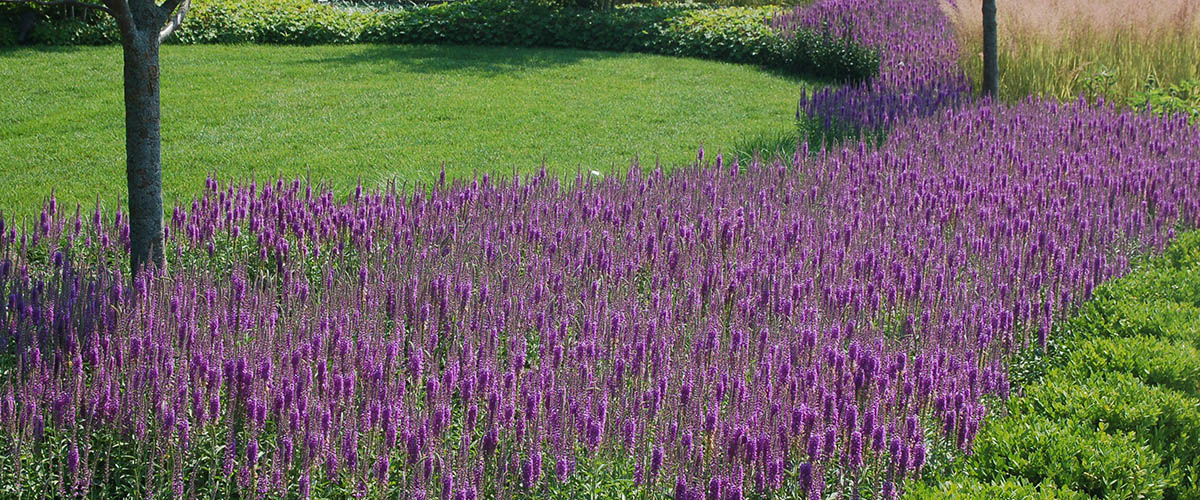
Evaluating Perennials for Chicagoland Gardens
Perennials in Focus is a plant evaluation program that examines new and underused plants for Chicagoland, the third largest metropolitan area in the country. A group of horticultural experts trials and evaluates plants at numerous locations across the region. Results help consumers, public gardens, growers, landscape designers, breeders, and other industry professionals make informed plant choices.
Planting perennials with deciduous grasses for year-round structure
Gardens across southern Australia rarely face the deep freezes that shape plantings further north, yet many home gardeners still crave the layered, four-season look designers associate with temperate meadows. Deciduous ornamental grasses offer exactly that scaffold: tall, narrow leaves through summer, warm copper tones in autumn, and a hollow, sculptural skeleton during the cool months when colour is otherwise scarce. Pairing them with the right perennials turns a winter-stem border into something that earns its keep in July and August, not just in the November peak.
The trick is to think of each grass clump as a vertical column, then fill the spaces between with plants that answer it in shape, scale, or timing. Done well, the bed reads as composed rather than crowded, and the grass stems catch the low winter light while the perennials carry the floral work earlier in the year. The guidance below is built around the seasonal rhythm of gardens in Melbourne, Sydney, Adelaide, and similar regions, with plant suggestions drawn from local retail availability and trial-ground data.
Reading the seasonal arc of a deciduous grass
Before choosing partners, it helps to understand how a typical deciduous grass moves through the year in an Australian backyard. In early spring the new blades emerge tightly furled, often flushed pale green or gold. By November they reach full height — anywhere from 80 centimetres for a compact Pennisetum to over two metres for a tall Miscanthus. Late summer brings feathery plumes or bristly seed heads above the foliage.
Once the cooler months arrive, the leaves dry in place. Many gardeners leave the clumps standing rather than cutting them back, which is the single most important decision for winter structure. The straw-coloured skeletons hold their shape through wind and rain, and they cast shadows on paths and walls in the low sun. Cutting back too early — a habit passed down from lawn-care thinking — removes exactly the architectural element that makes a grass worth growing. Plan the perennial partners around this skeleton, not against it.
Building the early-season layer
Late winter and early spring are when most deciduous grass beds look emptiest, so the perennials planted closest to the crown should be the earliest risers. Hardy geraniums, particularly the blue-flowered Geranium 'Rozanne' and its relatives, push through cool soil in Melbourne and Adelaide gardens well before the grasses wake. Their sprawling habit covers bare ground at the base of the clump and weaves through the new blades as they emerge.
For a contrasting note, consider the textural weight of Helleborus hybrids, which flower from midwinter in shaded parts of the border. Their leathery, deeply cut leaves sit low and broad, an opposite geometry to the vertical grass. In milder Sydney or Brisbane gardens, Salvia species can take this role, blooming through the cooler months before the grasses dominate. Layering these plants at the front edge keeps the composition looking finished during the quiet weeks of July.
Carrying colour through summer
The middle of the year is the busiest period visually, and it is where many plantings become top-heavy. Grass plumes alone can carry a border, but perennials blooming at roughly the same height create the layered, tapestry effect that makes naturalistic borders feel generous rather than sparse. Rudbeckia, Echinacea, and longer-flowering Achillea cultivars hold their colour through the heat of an Australian summer, including in the dry inland gardens around Canberra and the slopes of the Adelaide Hills.
A useful rule is to repeat a single perennial in drifts of three to five rather than scattering individual plants. Repetition ties the composition to the rhythm of the grass clumps, which are themselves repeated down the bed. Perovskia and Nepeta work as the airy, blue-misted layer that softens the base of taller grasses; Sedum 'Autumn Joy' and its relatives provide flat, plate-like flower heads that contrast with vertical plumes. For gardeners weighing which sedum forms survive harsh winter weather without collapsing, snow-load sedum trial findings offer a useful starting point, even when selecting for Australian conditions.
Adding texture in shade
Not every part of a grass border sits in full sun. Along a fence line, beneath a deciduous tree, or beside a north-facing wall shaded by the house, the planting shifts toward foliage plants that appreciate lower light. This is where ferns earn their place, their finely divided fronds offering a soft counterpoint to the linear grass leaves. In the cooler microclimates of Hobart or the Dandenong Ranges, ferns thrive without protection.
Choosing varieties that hold their form through the year keeps the border from collapsing into green mush in winter. Dryopteris, Polystichum, and Asplenium species all retain their structure when temperatures drop, whereas more delicate Adiantum forms may die back. For gardeners weighing which species cope best with shaded beds in temperate climates, ferns for shaded beds is a worthwhile reference, even though the trial gardens sit further north. Position ferns at the cooler, eastern edge of a grass clump so morning sun catches the fronds while roots remain shaded.
Letting the winter silhouette speak
By late autumn, most flowering perennials have finished, and the border becomes a study in dried stems, seed heads, and bleached foliage. This is the moment the deciduous grass earns its place. The hollow canes of Miscanthus sinensis, the arching wands of Calamagrostis, and the upright columns of Panicum virgatum all hold their shape through wind, and they look especially fine when rimmed with frost in inland regions such as Ballarat or Orange.
To support this winter look, leave seed-bearing perennials standing rather than cutting them back. Echinacea, Rudbeckia, and many ornamental Allium species keep their sculptural heads well into winter. Grasses with airy seed heads, such as Molinia, pair well with perennials that have strong vertical stems of their own, creating a layered rhythm of upright lines. The combined effect is far richer than either group would achieve alone.
Soil, spacing, and planting technique
Australian gardens vary enormously in their soils, from the heavy clays of suburban Melbourne to the freedraining sands of Perth and the rocky profiles common around Sydney's north shore. Deciduous grasses tolerate a wide range of conditions once established, but they resent winter wet around the crown, so drainage is the priority in clay soils. Raised beds, mounded plantings, or generous incorporation of coarse compost at planting time will set the bed up for the long term.
Space grass clumps according to their mature spread rather than their pot size. A Miscanthus sold in a 15-centimetre tube may reach 90 centimetres across within two seasons, and perennials tucked too close will be swallowed. Plant the grass first, then infill with perennials at roughly half the grass's mature spread, leaving the bed to knit together over the first two years. Water deeply during the first summer to encourage deep root systems, then reduce supplementary irrigation as the plants establish.
Long-term care and renewal
A well-built grass-and-perennial border should improve with age, but it does need attention to stay at its best. Cut the deciduous grasses back to about 15 centimetres in late winter, just before new growth begins. Doing this too early exposes the crown to cold and wet; doing it too late sacrifices the new shoots. In most Australian climates, late July to mid-August is the right window.
Divide congested grass clumps every three to five years, lifting the entire plant in late winter and splitting it with a sharp spade. Replant only the vigorous outer sections and discard the tired centre. Many perennials in the same border — geraniums, salvias, Achillea — appreciate similar renewal, and dividing them at the same time keeps the planting balanced. Mulch lightly with compost after cutting back, and resist the urge to over-fertilise, which produces lush growth that flops in summer storms.
If you are planning a new border or rethinking an existing one, start by walking the bed through a full year and noting what is present in each season. Choose two or three grasses as the structural backbone, then build the perennial palette around their height, colour, and timing. Local growers at places like the Garden of St Erth near Melbourne or Sydney's Botanic Gardens plant sales can advise on which cultivars perform best in your particular suburb, and the regional notes published by Perennials in Focus translate trial-ground results into practical choices for home gardeners and designers across the country.
In the Garden
Evaluator gardens are located across the Chicagoland area, representing a range of growing conditions. Visit our retail and wholesale partners to find trialled perennials for your own garden.
Retail & Wholesale: Hinsdale Nurseries (Willowbrook, IL), Mariani Nurseries (Kenosha, WI & Garden Prairie, IL), Northwind Perennials (Burlington, WI), The Growing Place (Aurora, IL).
Wholesale Only: Hinsdale Nurseries (Plano, IL), Intrinsic Perennial Gardens (Hebron, IL).
Our Evaluation Program
The 2017–2020 evaluation cycle included Agastache 'Blue Boa', Allium senescens 'Blue Eddy', Amsonia ciliata var. filifolia 'Georgia Pancake', Astilbe 'Chocolate Shogun', Boltonia astroides 'James Crocket', Brunnera 'Alexander's Great', and Geranium cinereum 'Jolly Jewel Purple'. Completed evaluations include Amsonia 'Blue Ice' (2004–07).
On April 10, 2020, the program published snapshot profiles for Vernonia lettermanii 'Iron Butterfly', Stokesia laevis 'Elf', Stachys officinalis 'Pink Cotton Candy', Lobelia 'Monet Moment', Helleborus 'Winter Thrillers', Geum 'Mai Tai', Geranium soboliferum 'Butterfly Kisses', Gentiana x intermedia 'True Blue', Eurybia divaricata, Asparagus 'Purple Passion', and Agastache 'Bolero'.
Browse the full collection of snapshots organized alphabetically — from A–D, E–H, I–Q, and R–Z — to find detailed performance data on perennials trialled across Chicagoland.