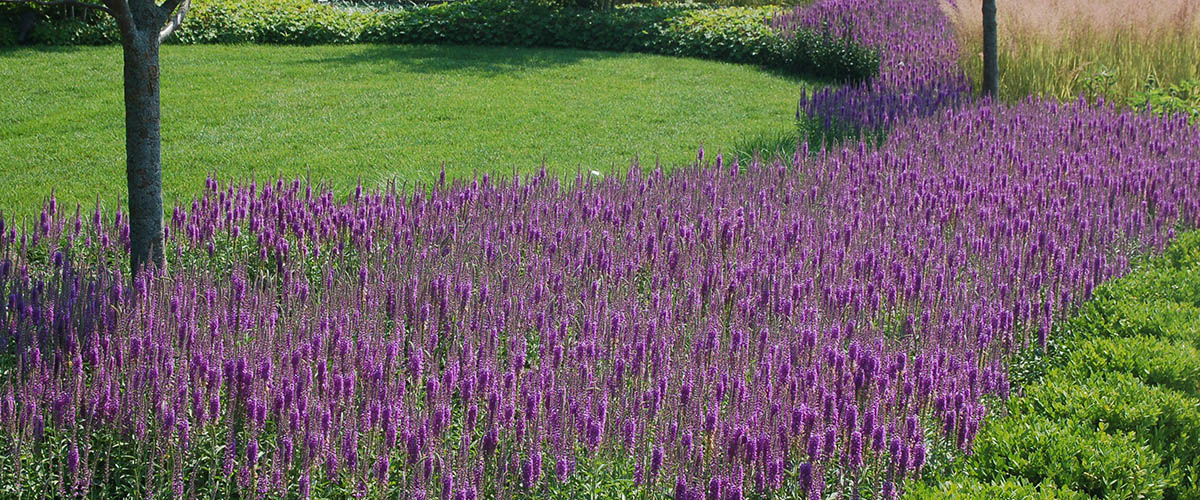
Evaluating Perennials for Chicagoland Gardens
Perennials in Focus is a plant evaluation program that examines new and underused plants for Chicagoland, the third largest metropolitan area in the country. A group of horticultural experts trials and evaluates plants at numerous locations across the region. Results help consumers, public gardens, growers, landscape designers, breeders, and other industry professionals make informed plant choices.
Evaluating Bergenia cordifolia in windy exposures
Bergenia cordifolia, commonly called elephant ears, is a tough clump-forming perennial valued for broad, leathery foliage and clusters of pink flowers in early spring. Its reputation for resilience can make it an appealing choice for exposed borders, coastal-style gardens and low-maintenance planting schemes. Yet winter damage is not always a simple measure of cold tolerance. Wind, sun, moisture, soil drainage and the timing of temperature changes can combine to cause leaf scorch even when the crowns remain healthy.
For gardeners in Australia, findings from the Perennials in Focus evaluation program offer a useful framework rather than a direct planting prescription. A Chicagoland trial may experience frozen soil, thaw cycles and sustained winter winds that differ from conditions in Melbourne, Hobart, Adelaide or the tablelands of New South Wales. The underlying method still translates well: assess the whole plant across seasons, record exposure accurately and separate cosmetic leaf injury from genuine plant loss.
What winter burn looks like on bergenia
Winter burn is usually seen first on the foliage. Leaves may develop brown margins, bleached patches or a dry, papery texture, particularly along the windward side of the clump. In severe cases, entire leaves collapse after a cold spell. The damage can appear several days after the weather event, which makes it easy to blame frost alone.
The main mechanism is moisture loss. Frozen or waterlogged soil can limit root uptake while cold, dry air strips water from exposed leaves. Bright winter sunshine can intensify the problem by warming leaf tissue and increasing transpiration. Bergenia’s thick leaves reduce water loss during ordinary conditions, but they cannot prevent desiccation when roots are inactive and wind continues for long periods.
A damaged leaf does not automatically indicate a failed plant. Healthy crowns often produce fresh foliage during spring, especially when the growing point is protected at soil level. Evaluation should therefore record both the percentage of foliage injured and the speed and completeness of recovery.
Why windy sites need closer observation
Wind exposure varies sharply within a single garden. A bergenia beside a solid fence may sit in a turbulent eddy, while a plant several metres away receives a more consistent airflow. Raised beds, reflective walls, open lawns and slopes can also increase exposure. The most revealing trial locations are often those where plants face prevailing winds without being completely isolated from surrounding vegetation.
In Chicago-area gardens, winter wind may arrive with freezing temperatures and repeated freeze-thaw cycles. In Australia, the equivalent stress may involve a cold, drying wind followed by intense sun rather than prolonged snow cover. Melbourne’s winter fronts, Adelaide’s dry air and Sydney’s occasional southerly busters can all test foliage differently. In warmer regions, summer heat and hot northerlies may create a separate form of scorch that should not be confused with winter burn.
Site records should include wind direction, nearby structures, slope, irrigation and soil type. Comparing plants in a sheltered courtyard with those in an open verge produces misleading conclusions unless the exposure is clearly documented. A useful assessment also notes whether leaves were wet, frozen, dusty or covered by mulch when damage occurred.
A practical evaluation framework
The strongest assessment begins before planting. Record the cultivar or seed source, planting date, crown size, spacing and soil preparation. Photograph each clump from the same angle in autumn, midwinter and spring. A simple scoring system can then distinguish clean foliage, minor edge browning, moderate patching, extensive scorch and complete defoliation.
| Observation | What it may indicate | Follow-up during spring |
|---|---|---|
| Crisp brown margins on older leaves | Wind desiccation or salt-laden air | Check new leaves and crown firmness |
| Pale, bleached patches on exposed surfaces | Sun and cold injury | Compare with the sheltered side of the clump |
| Soft, dark leaves at the crown | Excess moisture, rot or freeze injury | Inspect drainage and remove collapsed tissue |
| Leaves lost but firm crown remains | Cosmetic or seasonal setback | Record speed of new growth |
| No regrowth by late spring | Crown damage, severe rot or unsuitable conditions | Compare with nearby plants and site records |
The assessment should use a consistent date rather than waiting for the garden to look attractive again. In a professional trial, ratings might be taken at the end of winter and again four to eight weeks after active growth begins. Home gardeners can use a similar schedule. This helps distinguish a plant that looks poor temporarily from one that cannot maintain a reliable display in that position.
The same disciplined approach is valuable when evaluating other perennials under contrasting conditions. For example, the wet-and-dry site trials show why plant performance needs to be interpreted alongside the growing environment rather than judged from a single characteristic.
Interpreting performance for Australian gardens
Bergenia generally prefers moisture-retentive, well-drained soil and partial shade, though established plants can tolerate a wider range of conditions. In Australia, morning sun with afternoon protection is often safer than a fully exposed western aspect. In hot districts, deep shade may reduce flowering, while reflected heat from paving or masonry can scorch leaves even when air temperatures are moderate.
Gardeners in Hobart or elevated inland areas may see more familiar cold-related foliage damage than those in Brisbane, where the main concern is often heat, humidity and poor drainage. In Sydney and Melbourne, the same plant may be evergreen in a protected garden but lose older leaves after a dry, windy winter. These differences are why local nursery observations matter. Stock labelled simply as “hardy” may have been selected for a different climate, while specialist perennial growers can often identify strains that hold foliage more reliably.
The Australian retail market also shapes plant choice. Bergenia is available through independent nurseries, online perennial sellers and some larger garden centres, but cultivar names and quantities can vary seasonally. Before buying several plants, purchase a small group and observe them through one winter. Ask whether the stock was grown locally, because a plant raised under protected nursery conditions may need gradual acclimatisation after planting.
A coarse mulch can help moderate soil temperature and reduce root-zone drying, but it should not cover the crown. In windy coastal areas, avoid piling fertiliser against the plant, and rinse foliage occasionally if salt spray is likely. These measures will not eliminate exposure, yet they can reduce secondary stress and make the trial more representative of the plant’s true garden performance.
Selecting and placing reliable plants
The best bergenia for a windy position is not necessarily the one with the largest leaves or the most flowers in its first season. Look for compact growth, firm crowns, strong leaf attachment and rapid spring recovery. Cultivars with thick, dark foliage may offer better visual persistence, although individual performance can still vary with provenance and site.
Use groups of three or more plants when space allows. A single specimen can be damaged by an unusually severe weather event, while a small group reveals whether injury is consistent across the position. Planting near deciduous shrubs, low walls or evergreen groundcovers can provide filtered protection without creating a stagnant, overly wet pocket.
Flowering should be scored separately from winter appearance. Some clumps may lose older leaves yet produce a strong spring display, while others retain foliage but flower weakly because of excessive shade or drought. For broader perennial planning, regional timing is equally important; guidance on late-season monarch planting illustrates how flowering records can support decisions beyond simple plant survival.
A plant that emerges cleanly, flowers dependably and recovers quickly deserves priority over one that looks perfect in autumn but repeatedly collapses after exposure. That distinction is particularly useful for public gardens, landscape contractors and retailers deciding which plants deserve more space in demonstration beds or local stock lists.
Track Bergenia cordifolia through at least two winters, using photographs and short notes on wind, moisture, foliage damage and spring recovery. Share observations with local gardening groups, nurseries or plant evaluation networks so that performance records become more useful than isolated impressions. For a home border, start with a few plants in contrasting exposures, protect the crown with sensible drainage and mulch, and choose the position where reliable recovery matters most.
In the Garden
Evaluator gardens are located across the Chicagoland area, representing a range of growing conditions. Visit our retail and wholesale partners to find trialled perennials for your own garden.
Retail & Wholesale: Hinsdale Nurseries (Willowbrook, IL), Mariani Nurseries (Kenosha, WI & Garden Prairie, IL), Northwind Perennials (Burlington, WI), The Growing Place (Aurora, IL).
Wholesale Only: Hinsdale Nurseries (Plano, IL), Intrinsic Perennial Gardens (Hebron, IL).
Our Evaluation Program
The 2017–2020 evaluation cycle included Agastache 'Blue Boa', Allium senescens 'Blue Eddy', Amsonia ciliata var. filifolia 'Georgia Pancake', Astilbe 'Chocolate Shogun', Boltonia astroides 'James Crocket', Brunnera 'Alexander's Great', and Geranium cinereum 'Jolly Jewel Purple'. Completed evaluations include Amsonia 'Blue Ice' (2004–07).
On April 10, 2020, the program published snapshot profiles for Vernonia lettermanii 'Iron Butterfly', Stokesia laevis 'Elf', Stachys officinalis 'Pink Cotton Candy', Lobelia 'Monet Moment', Helleborus 'Winter Thrillers', Geum 'Mai Tai', Geranium soboliferum 'Butterfly Kisses', Gentiana x intermedia 'True Blue', Eurybia divaricata, Asparagus 'Purple Passion', and Agastache 'Bolero'.
Browse the full collection of snapshots organized alphabetically — from A–D, E–H, I–Q, and R–Z — to find detailed performance data on perennials trialled across Chicagoland.