Evaluating Perennials for Chicagoland Gardens
Perennials in Focus is a plant evaluation program that examines new and underused plants for Chicagoland, the third largest metropolitan area in the country. A group of horticultural experts trials and evaluates plants at numerous locations across the region. Results help consumers, public gardens, growers, landscape designers, breeders, and other industry professionals make informed plant choices.
Best late-flowering perennials for migrating monarchs in Chicagoland
By late summer, monarchs moving through the Chicagoland region need dependable nectar as they build energy for the journey south. Many spring and early-summer flowers have already faded, so a garden with fresh blooms from August through October can provide valuable fuel when natural resources become less consistent.
The best choices combine a long flowering period, accessible nectar, reliable performance in regional soils, and enough flower density to attract pollinators. Local conditions matter: a perennial that thrives in a sunny Chicago garden may struggle in heavy clay, winter wet, or the filtered light beneath mature trees.
Perennials in Focus evaluates plants across multiple gardens and seasons, making regional trial information especially useful. Bloom timing, mature size, flower color, winter survival, and garden behavior all help determine which late-season nectar plants deserve space in a home landscape.
Why late-season nectar matters
Monarchs passing through northern Illinois depend on flowering plants during a period when heat, drought, mowing, and declining roadside vegetation can reduce food availability. Adults need nectar for daily flight and for storing energy before migration. A garden that remains in bloom after midsummer supports monarchs alongside native bees, skippers, and other beneficial insects.
Late-flowering perennials are particularly valuable when planted in groups. Several plants of the same species create a visible, concentrated nectar source that is easier for insects to locate than a scattered collection of single specimens. Grouping also produces a stronger visual display and makes maintenance more efficient.
Flowering overlap is important as well. Instead of relying on one autumn bloomer, combine plants that begin in midsummer with others that peak in September. This creates a continuous sequence of nectar availability rather than a brief flush followed by an empty bed.
Strong perennial choices for Chicagoland gardens
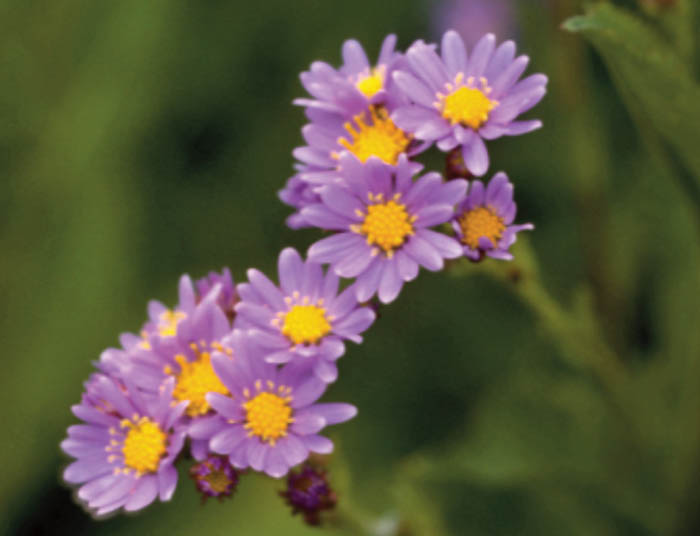
Smooth blue aster, New England aster, and aromatic aster are among the most useful late-season plants for the region. Their daisy-like flowers offer nectar when many other perennials are setting seed. New England aster can become tall and substantial, while aromatic aster generally forms a shorter, more manageable mound for the front or middle of a border.
Goldenrods deserve a prominent place in monarch gardens. Showy goldenrod and stiff goldenrod provide masses of yellow flowers in late summer and fall, and their reputation for causing hay fever is largely undeserved; wind-pollinated ragweed is the more common source of airborne allergy symptoms. Goldenrods also support a wide range of native insects.
For a taller planting, late-blooming Joe-Pye weed offers clusters of mauve-pink flowers above sturdy stems. It performs best in sun with consistent moisture and can serve as an anchor near a rain garden or low area. Maximilian sunflower and woodland sunflower add height and strong late-season color, although they require room and may need support in exposed sites.
Other useful choices include stiff-leaved mountain mint, obedient plant, culver’s root, and various sneezeweeds. Their value depends on site conditions and bloom timing, so regional trial observations are more informative than a generic plant list. Cultivar differences can affect height, spread, flowering date, and resistance to flopping.
Comparing late-flowering options
The following overview provides a practical starting point for selecting plants. Bloom periods can shift with weather, soil moisture, exposure, and cultivar, so gardeners should treat the timing as an approximate regional guide.
| Perennial | Typical bloom period | Height and habit | Best site | Monarch-garden value |
|---|---|---|---|---|
| New England aster | August–October | Tall, upright clump | Full sun, average soil | Dense late nectar display |
| Aromatic aster | August–October | Compact, mounding | Full sun, well-drained soil | Long bloom and manageable size |
| Showy goldenrod | August–September | Upright, spreading | Full sun, average to dry soil | Heavy flower production |
| Joe-Pye weed | July–September | Tall, moisture-loving | Sun, medium to wet soil | Early-to-late overlap and height |
| Maximilian sunflower | September–October | Very tall, colony-forming | Full sun, average soil | Strong late-season nectar source |
| Sneezeweed | August–October | Upright, branching | Full sun, evenly moist soil | Extended color in fall |
| Obedient plant | August–September | Upright, rhizomatous | Sun to part shade | Useful mid-to-late succession bloom |
Plant height should guide placement. Tall asters, goldenrods, Joe-Pye weed, and sunflowers work well at the back of a border or in a naturalistic drift. Shorter asters and compact cultivars can fit near paths, patios, or the front edge of a pollinator bed.
Building a continuous flowering sequence
A successful monarch planting begins before autumn. Penstemon, wild indigo, milkweed, catmint, mountain mint, and beardtongue can provide nectar earlier in the season, while late-flowering asters and goldenrods carry the display into September and October. Including multiple bloom periods supports monarchs throughout the growing season rather than concentrating resources in a single month.
Milkweed remains essential because monarch caterpillars can feed only on milkweed species. Adult butterflies, however, need nectar from many different flowers. A bed with both host plants and abundant late-season nectar offers more complete habitat than a planting devoted to either function alone.
Allowing some plants to retain seed heads can benefit birds and add winter structure, but spent stems should not hide every late flower. Selectively deadhead plants that become overly floppy or self-seed aggressively, while leaving sturdy stems for seasonal interest and overwintering insects.
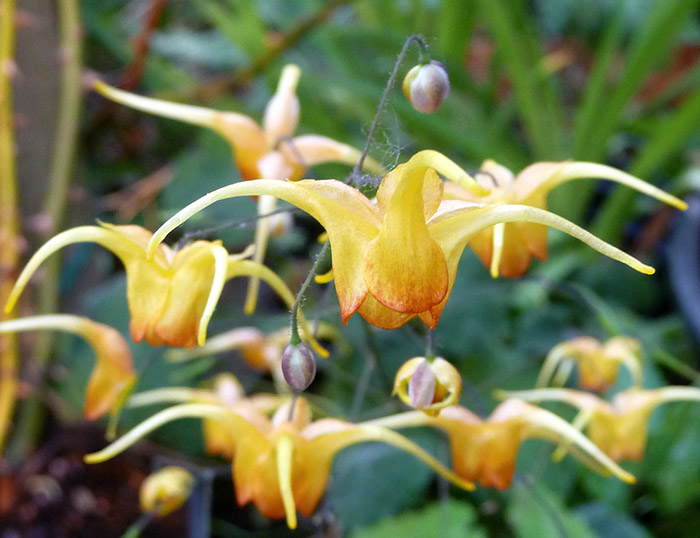
Self-sowing can be useful in an informal native planting, yet it may become a maintenance concern in a small garden. Before placing a vigorous reseeder near paths or vegetable beds, review regional observations such as this research on Aquilegia canadensis, which illustrates why garden behavior matters alongside flower appearance.
Matching plants to Chicagoland conditions
Full sun generally means at least six hours of direct light, especially for asters, goldenrods, sneezeweed, and sunflowers. Plants grown in insufficient light may produce fewer flowers or develop weak stems. In windy locations, grouping plants closely and trimming selected stems in early summer can encourage a shorter, sturdier form.
Soil moisture is equally important. Joe-Pye weed and sneezeweed appreciate consistent moisture, while aromatic aster and stiff goldenrod tolerate drier, sharply drained sites once established. Improving compacted clay with organic matter and choosing plants suited to existing moisture conditions is usually more effective than trying to force every perennial into the same bed.
Avoid broad-spectrum insecticides on flowering plants, particularly during bloom. Pesticide drift and contaminated plant material can reduce the value of a monarch garden even when the plant list is excellent. Provide shallow water or damp soil in a protected location, and leave some bare ground for insects that nest or shelter at soil level.
Practical recommendations for a resilient planting
Regional evaluations can help gardeners move beyond attractive catalog photographs and assess how plants behave over time. Look for information on flowering dates, disease resistance, winter survival, mature spread, and whether a plant remains upright after heavy rain. These details are especially important in a small urban garden, where a vigorous perennial can quickly overwhelm neighboring plants.
Use the following guidelines when planning a late-season nectar bed:
- Plant several specimens of each major nectar perennial in drifts rather than placing individual plants throughout the garden.
- Combine tall asters, goldenrods, and sunflowers with shorter asters, sneezeweed, or obedient plant for layered bloom and structure.
- Match moisture needs carefully, placing Joe-Pye weed and sneezeweed in areas that do not dry out rapidly.
- Include native milkweed for monarch reproduction, while using diverse nectar plants to support adult butterflies.
- Track flowering dates and pollinator activity each year so future plant choices reflect actual garden performance.
Gardeners should also record which plants remain attractive after flowering, which spread beyond their intended space, and which require staking. This simple observation can reveal the best candidates for a particular property more accurately than a single season’s display.
A monarch-friendly garden does not need to be large. A sunny strip beside a driveway, a border along a fence, or a few large containers can provide meaningful nectar when planted densely and maintained without routine insecticide use. Replacing a portion of lawn with late-flowering perennials creates habitat while adding color during the season when many landscapes begin to decline.
Choose a few dependable asters, goldenrods, or other regionally tested late bloomers this season, then pair them with milkweed and earlier nectar plants. Use local trial findings to refine the planting over time, and let your Chicagoland garden become a reliable stop for monarchs preparing for migration.
In the Garden
Evaluator gardens are located across the Chicagoland area, representing a range of growing conditions. Visit our retail and wholesale partners to find trialled perennials for your own garden.
Retail & Wholesale: Hinsdale Nurseries (Willowbrook, IL), Mariani Nurseries (Kenosha, WI & Garden Prairie, IL), Northwind Perennials (Burlington, WI), The Growing Place (Aurora, IL).
Wholesale Only: Hinsdale Nurseries (Plano, IL), Intrinsic Perennial Gardens (Hebron, IL).
Our Evaluation Program
The 2017–2020 evaluation cycle included Agastache 'Blue Boa', Allium senescens 'Blue Eddy', Amsonia ciliata var. filifolia 'Georgia Pancake', Astilbe 'Chocolate Shogun', Boltonia astroides 'James Crocket', Brunnera 'Alexander's Great', and Geranium cinereum 'Jolly Jewel Purple'. Completed evaluations include Amsonia 'Blue Ice' (2004–07).
On April 10, 2020, the program published snapshot profiles for Vernonia lettermanii 'Iron Butterfly', Stokesia laevis 'Elf', Stachys officinalis 'Pink Cotton Candy', Lobelia 'Monet Moment', Helleborus 'Winter Thrillers', Geum 'Mai Tai', Geranium soboliferum 'Butterfly Kisses', Gentiana x intermedia 'True Blue', Eurybia divaricata, Asparagus 'Purple Passion', and Agastache 'Bolero'.
Browse the full collection of snapshots organized alphabetically — from A–D, E–H, I–Q, and R–Z — to find detailed performance data on perennials trialled across Chicagoland.