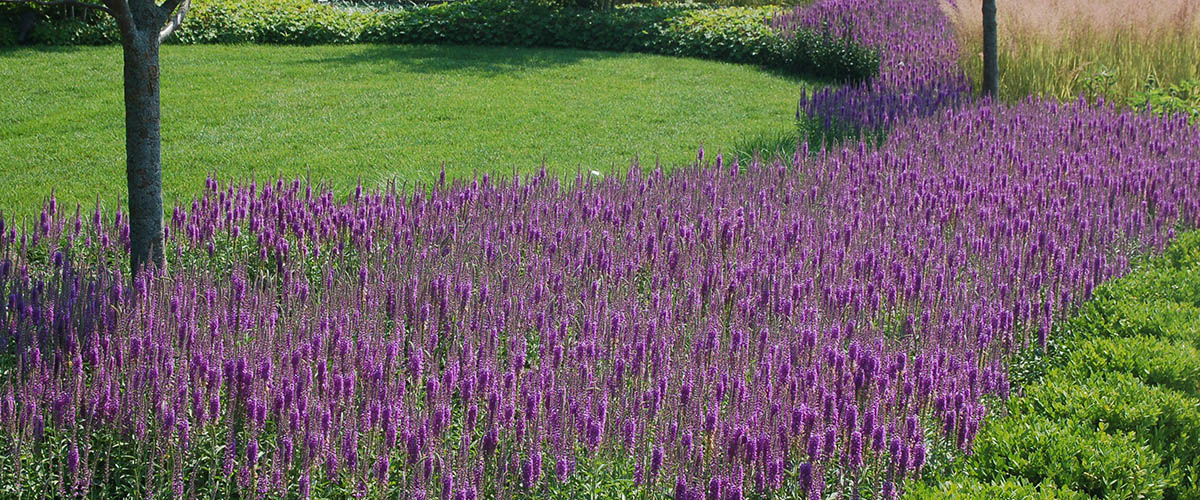
Evaluating Perennials for Chicagoland Gardens
Perennials in Focus is a plant evaluation program that examines new and underused plants for Chicagoland, the third largest metropolitan area in the country. A group of horticultural experts trials and evaluates plants at numerous locations across the region. Results help consumers, public gardens, growers, landscape designers, breeders, and other industry professionals make informed plant choices.
Evaluating Native Perennials for Healthier Pollinator Gardens
Native plants grown without neonicotinoid insecticides are attracting attention from gardeners, growers and public land managers seeking practical ways to support bees, butterflies and other beneficial insects. Their value lies in the combination of local floral resources, habitat suitability and reduced exposure to systemic pesticides.
For Australian gardeners, the question is more complex than choosing a plant labelled “pollinator-friendly”. Flowering time, nectar quality, pesticide history, climate adaptation and the availability of nesting habitat all influence whether a planting genuinely benefits insects. A native perennial may be well suited to one region while struggling in another.
A careful evaluation can reveal which plants provide reliable flowers, withstand heat and drought, and continue supporting pollinators through gaps in the seasonal food supply. It can also separate the effects of plant genetics and garden management from the effects of removing neonicotinoids from production.
The Perennials in Focus model offers a useful framework. Its collaborative trials record bloom period, flower colour, plant height, spread and seasonal performance across multiple gardens. Applying that discipline to neonicotinoid-free native plants can produce evidence that is more useful than broad claims about “natural” gardening.
Why pesticide-free production matters
Neonicotinoids are systemic insecticides, meaning plants can absorb them through roots, stems and leaves. They are used in some horticultural and agricultural systems to control sap-sucking and soil-dwelling pests. Residues may occur in pollen, nectar, foliage or soil, depending on the active ingredient, application method, dose and time since treatment.
Research on pollinator effects has reported concerns including impaired navigation, reduced foraging efficiency, weakened colony development and increased vulnerability to disease or poor nutrition. The outcome is not identical in every study, and exposure levels in gardens can vary widely. For that reason, evaluations should avoid claiming that every neonicotinoid-treated plant causes the same harm.
A neonicotinoid-free label is most meaningful when supported by transparent production records. Nurseries and growers should identify whether plants were raised from untreated seed, grown in untreated media and protected from coated plugs or drenches. Other insecticides may still affect insects, so an assessment should record the full pest-management history rather than treating one chemical class as the only concern.
Measuring benefits in Australian gardens
A useful trial begins with repeated observations rather than a single visit during peak flowering. Record the first and last flowering dates, the number of open blooms, plant survival, canopy size and flowering after heat or heavy rain. Pollinator observations can be standardised by counting visits during a fixed period, such as ten minutes in the morning and again in the afternoon.
The visitor record should distinguish honey bees, native bees, hoverflies, butterflies, moths and other flower-visiting insects where possible. A phone photograph can support later identification, while notes about temperature, wind and recent irrigation help explain unusual results. The goal is to identify patterns, not to produce a perfect inventory.
Australian conditions make regional replication especially important. A plant performing well in Melbourne’s cooler gardens may require different watering in Adelaide, while a species that flowers heavily in Brisbane can respond differently to Sydney’s humidity. Trials near Perth, Canberra or regional towns would add further information about soil, frost, heat and rainfall variation.
Choosing native plants with lasting value
The strongest candidates offer a succession of flowers rather than one short burst. Early, mid-season and late-flowering species can support insects when few other plants are in bloom. For gardeners interested in long-distance butterfly movement, guidance on late-flowering perennials demonstrates how bloom timing can be evaluated as part of a wider habitat network.
Plant structure matters as much as flower colour. Flat or shallow flower heads may be accessible to short-tongued bees and hoverflies, while tubular flowers can favour particular bees, butterflies or birds. Dense foliage can provide shelter, and seed heads may feed birds or offer overwintering sites for insects if stems are left standing through the cooler months.
Australian gardeners also need to consider water use and local provenance. A native plant sourced from a distant climate zone is not automatically the best choice for a suburban garden. In Melbourne, Perth or Canberra, species adapted to local rainfall and seasonal temperatures may provide more dependable habitat with less supplementary irrigation than plants selected only for attractive flowers.
Turning observations into reliable evidence
Comparisons work best when untreated plants are assessed beside equivalent plants with a known production history. The plants should be similar in age, pot size and planting position, with enough replication to reduce the influence of one poor specimen. If a comparison group is unavailable, a before-and-after design can still document changes, provided weather and garden management are recorded carefully.
Researchers should track more than insect numbers. A planting that receives many visits but flowers for only two weeks may be less valuable across a season than a modestly visited plant that blooms for three months. Plant survival, weed competition, disease, maintenance time and seed production all help determine whether the recommendation is practical for home gardens and commercial landscapes.
The trial snapshots approach is useful because concise, repeatable records can make results easier to compare across sites. For Australian programs, adding fields for irrigation, bushfire risk, extreme heat, soil type and local pest pressure would make those records more relevant to gardeners and growers working under varied conditions.
Connecting science with everyday gardening
The Australian market is increasingly interested in locally grown plants, pollinator mixes and low-input garden designs, but labels can differ between suppliers. Garden centres and online sellers should state whether plants are native to the region, where they were propagated and whether systemic insecticides were used. Clear records give consumers a basis for comparison and help reputable growers distinguish their practices.
Legislation is part of this picture. The Australian Pesticides and Veterinary Medicines Authority regulates agricultural and veterinary chemical products, including insecticides, while states and territories manage additional aspects of chemical use. Australia does not have one simple national ban covering all garden applications of neonicotinoids, so gardeners should follow product labels and local rules rather than assume “bee-safe” claims have the same legal meaning everywhere.
Everyday habits can reduce exposure and improve habitat at the same time. Avoid routine spraying when flowers are open, do not treat healthy plants “just in case”, and choose hand removal or targeted control for minor infestations. In Sydney or Brisbane, a small flowering patch beside a balcony or courtyard can support insects if it includes water, shelter and pesticide-free management. In outer Melbourne or Adelaide, retaining leaf litter and hollow stems can provide nesting and overwintering sites.
| Evaluation feature | What to record | Why it matters |
|---|---|---|
| Flowering period | First bloom, peak bloom and final bloom | Shows whether food is available across the season |
| Plant performance | Height, spread, survival and regrowth | Identifies dependable choices for local conditions |
| Pollinator activity | Visitor type, visit frequency and weather | Helps compare attraction without overstating results |
| Production history | Seed treatment, growing media and pest controls | Clarifies potential pesticide exposure |
| Garden practicality | Watering, maintenance, disease and seed set | Supports realistic recommendations for home and public gardens |
A well-designed evaluation of neonicotinoid-free natives should therefore link chemical records with plant performance and insect observations. It should recognise uncertainty, publish regional results and repeat trials over several seasons. That approach can guide retailers, breeders, landscape professionals and household gardeners towards plants that are both ecologically useful and resilient in real Australian landscapes.
Explore the Perennials in Focus findings, compare flowering and growth records, and use the same careful observation in your own garden. By choosing well-documented native perennials, asking growers about pesticide practices and recording pollinator activity, gardeners can help build stronger local evidence for healthier insect habitat.
In the Garden
Evaluator gardens are located across the Chicagoland area, representing a range of growing conditions. Visit our retail and wholesale partners to find trialled perennials for your own garden.
Retail & Wholesale: Hinsdale Nurseries (Willowbrook, IL), Mariani Nurseries (Kenosha, WI & Garden Prairie, IL), Northwind Perennials (Burlington, WI), The Growing Place (Aurora, IL).
Wholesale Only: Hinsdale Nurseries (Plano, IL), Intrinsic Perennial Gardens (Hebron, IL).
Our Evaluation Program
The 2017–2020 evaluation cycle included Agastache 'Blue Boa', Allium senescens 'Blue Eddy', Amsonia ciliata var. filifolia 'Georgia Pancake', Astilbe 'Chocolate Shogun', Boltonia astroides 'James Crocket', Brunnera 'Alexander's Great', and Geranium cinereum 'Jolly Jewel Purple'. Completed evaluations include Amsonia 'Blue Ice' (2004–07).
On April 10, 2020, the program published snapshot profiles for Vernonia lettermanii 'Iron Butterfly', Stokesia laevis 'Elf', Stachys officinalis 'Pink Cotton Candy', Lobelia 'Monet Moment', Helleborus 'Winter Thrillers', Geum 'Mai Tai', Geranium soboliferum 'Butterfly Kisses', Gentiana x intermedia 'True Blue', Eurybia divaricata, Asparagus 'Purple Passion', and Agastache 'Bolero'.
Browse the full collection of snapshots organized alphabetically — from A–D, E–H, I–Q, and R–Z — to find detailed performance data on perennials trialled across Chicagoland.