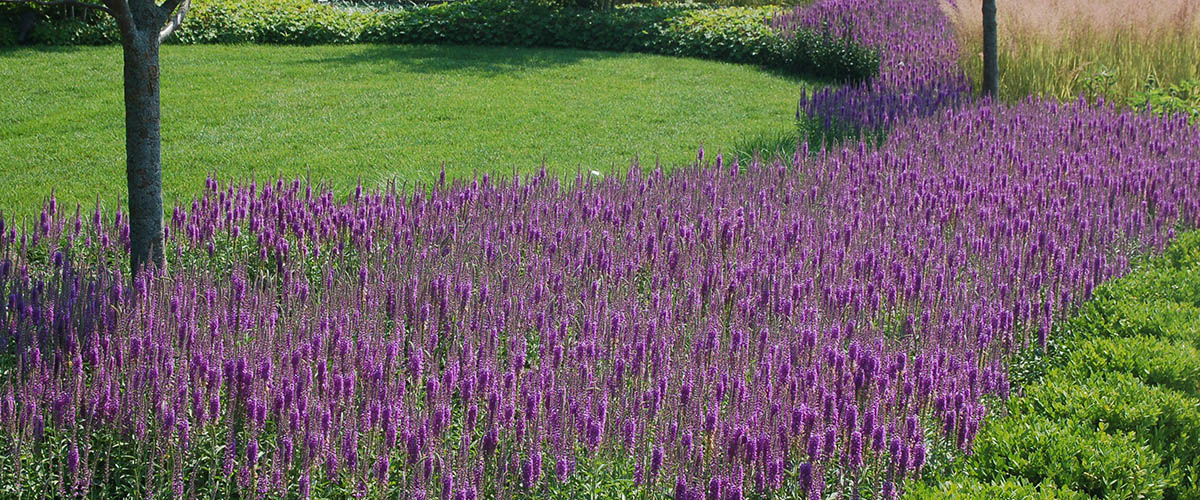
Evaluating Perennials for Chicagoland Gardens
Perennials in Focus is a plant evaluation program that examines new and underused plants for Chicagoland, the third largest metropolitan area in the country. A group of horticultural experts trials and evaluates plants at numerous locations across the region. Results help consumers, public gardens, growers, landscape designers, breeders, and other industry professionals make informed plant choices.
How Double Echinaceas Hold Their Shape Through the Seasons
Double echinaceas are valued for their layered blooms, strong colours and ability to bring a full, almost pompon-like effect to a perennial border. Yet a flower that looks perfectly formed in June may open differently after repeated rain, intense heat or a long spell of drought. For growers and gardeners, the important question is how reliably that form is maintained from first bloom to the end of the display.
Perennials in Focus examines this performance across multiple gardens and growing seasons in the Chicagoland region. That repeated observation matters because flower shape is influenced by more than genetics. Soil moisture, temperature, plant maturity, wind exposure and the timing of deadheading can all affect whether a double echinacea remains layered, becomes partially open or loses its symmetry.
The findings are also useful for Australian gardeners, even though the climates are different. A double echinacea trialled in Illinois faces cold winters and humid summers, while a plant grown in Melbourne, Adelaide or Canberra may encounter dry heat, sudden temperature changes and different winter moisture patterns. The evaluation method remains relevant, provided local conditions are considered.
For retail staff, landscape designers and home gardeners, stable flower form is a practical selection trait. It influences how a plant looks in a mixed border, how easily it can be photographed for sale, and whether a cultivar continues to justify its premium price after several weeks in the garden.
| Flower characteristic | Early season observation | Midseason observation | Late season observation | What it indicates |
|---|---|---|---|---|
| Petal layering | Dense and evenly arranged | May loosen in heat or rain | Can become sparse or uneven | Structural consistency |
| Central cone visibility | Mostly hidden | May begin to show | Often more exposed | Degree of doubleness |
| Stem support | Upright and firm | May bend under flower weight | Weak stems can lean | Landscape reliability |
| Colour retention | Clear and saturated | May fade in strong sun | Browning or bleaching may appear | Seasonal display value |
| Recovery after weather | Flowers remain intact | Some distortion possible | Damaged blooms may fail to recover | Resilience in real gardens |
Defining Stable Flower Form
A stable double flower does not need to look identical every day. Natural variation is expected as a bloom opens, ages and responds to weather. The useful distinction is between gradual, attractive change and rapid collapse of the intended form. A cultivar with stable architecture may open from a tight rosette into a broad, layered flower while retaining an even outline and a concealed central cone.
Evaluators should record the shape of several flowers on several plants rather than judging one perfect bloom. Useful notes include petal count impression, symmetry, cone exposure, petal reflexing and the proportion of flowers that remain recognisably double. Photographs taken from the same angle each week can reveal changes that memory tends to overlook.
The assessment should also separate flower form from colour. A bloom may keep its layered structure while fading from vivid pink to soft rose, or retain strong colour while becoming flat and untidy. Recording these traits independently produces better information for plant buyers and breeders.
Following Performance From First Bud to Frost
Seasonal monitoring begins before the first flowers open. Bud size, branching and stem strength can hint at how a plant will carry its display. As the first flush develops, evaluators can note whether flowers open evenly across the plant or appear at different heights and stages, which affects the overall impression in a border.
Midseason is often the most revealing period. In Chicagoland, hot weather, thunderstorms and periods of high humidity may test petal arrangement and stem support. A plant that performs well for ten days but loses form after a major rain event should be described differently from one that recovers quickly and continues flowering.
Late-season observations are equally valuable. Older blooms may expose the cone, bleach in strong sunlight or develop ragged petals. That does not automatically make a cultivar poor; some gardeners appreciate a softer, natural finish. The key is to describe whether the plant declines evenly and attractively or develops a patchy appearance that requires frequent grooming.
Weather, Water and Garden Position
Growing conditions can exaggerate differences between double echinacea varieties. Heavy clay, irregular irrigation and poor air movement may encourage weak stems or delayed drying after rain. In an exposed site, wind can distort flowers even when the plant has sound genetic form. Trials should therefore include more than one position where possible, with notes on soil, exposure and maintenance.
Australian conditions call for careful interpretation. A cultivar that holds its petals in a humid Chicago summer may respond differently during a Brisbane wet season, while a plant tested in a protected Melbourne courtyard may not behave the same way in an open Adelaide garden. In hot districts, afternoon shade and consistent deep watering can help preserve flower quality, though excessive feeding or overwatering may produce soft growth.
Temperature records and rainfall notes make the observations more useful beyond the trial site. Growers can then distinguish a genetic weakness from a site response. This is especially important when recommending plants through Australian garden centres, where the same cultivar may be sold from Sydney to Hobart under very different growing conditions.
Turning Observations Into Plant Choices
A strong evaluation report should state how many plants were observed, how often they were checked and which conditions affected the result. Descriptions such as “most flowers remained fully layered through midsummer” are more helpful than broad claims that a plant is simply “excellent”. Notes on plant height, spread and bloom timing also show whether the flowers are well suited to the surrounding planting.
Flower form must be considered alongside garden composition. A double echinacea with a long, steady display may be valuable in a border designed for continual colour, while a shorter cultivar may work better near paths or in containers. Guidance on year-round perennial design can help place these plants where their strongest flowering period supports the wider planting sequence.
For Australian retailers, reliable form can support clearer merchandising. Customers often judge a plant in flower at the nursery, then expect the same character at home. Labels and staff advice should explain mature height, flowering window, deadheading needs and likely responses to heat or heavy rain. In the local market, where spring sales and weekend garden-centre visits are important, honest performance notes build trust more effectively than exaggerated claims.
Building Better Recommendations Across Regions
The most useful conclusion from multi-season trials is rarely that one cultivar is perfect everywhere. Instead, the records show which plants are dependable under particular conditions and which need a favourable position. A double echinacea may earn a strong recommendation for sheltered borders, for example, while receiving a more cautious rating for exposed sites or high-rainfall districts.
Breeders and growers can use these observations to select for consistent doubleness, firm stems and attractive ageing. Public gardens may focus on visitor impact and low maintenance, while home gardeners may value a long flowering period and flowers that remain attractive without constant deadheading. Each audience can interpret the same measurements according to its needs.
For gardeners comparing plants in Australia, look beyond the first nursery flower. Check whether the cultivar produces several stems, whether older blooms retain a pleasing outline and whether the plant recovers after heat or rain. Ask local growers how it performs in your region, particularly if your garden sits in a frost pocket, coastal position or dry inland climate.
Choose double echinaceas using evidence gathered across the full season, not a single peak display. Record flower shape, stem strength, weather response and late-season character in your own garden, then share those observations with local growers and plant-evaluation programmes to help build better regional recommendations.
In the Garden
Evaluator gardens are located across the Chicagoland area, representing a range of growing conditions. Visit our retail and wholesale partners to find trialled perennials for your own garden.
Retail & Wholesale: Hinsdale Nurseries (Willowbrook, IL), Mariani Nurseries (Kenosha, WI & Garden Prairie, IL), Northwind Perennials (Burlington, WI), The Growing Place (Aurora, IL).
Wholesale Only: Hinsdale Nurseries (Plano, IL), Intrinsic Perennial Gardens (Hebron, IL).
Our Evaluation Program
The 2017–2020 evaluation cycle included Agastache 'Blue Boa', Allium senescens 'Blue Eddy', Amsonia ciliata var. filifolia 'Georgia Pancake', Astilbe 'Chocolate Shogun', Boltonia astroides 'James Crocket', Brunnera 'Alexander's Great', and Geranium cinereum 'Jolly Jewel Purple'. Completed evaluations include Amsonia 'Blue Ice' (2004–07).
On April 10, 2020, the program published snapshot profiles for Vernonia lettermanii 'Iron Butterfly', Stokesia laevis 'Elf', Stachys officinalis 'Pink Cotton Candy', Lobelia 'Monet Moment', Helleborus 'Winter Thrillers', Geum 'Mai Tai', Geranium soboliferum 'Butterfly Kisses', Gentiana x intermedia 'True Blue', Eurybia divaricata, Asparagus 'Purple Passion', and Agastache 'Bolero'.
Browse the full collection of snapshots organized alphabetically — from A–D, E–H, I–Q, and R–Z — to find detailed performance data on perennials trialled across Chicagoland.