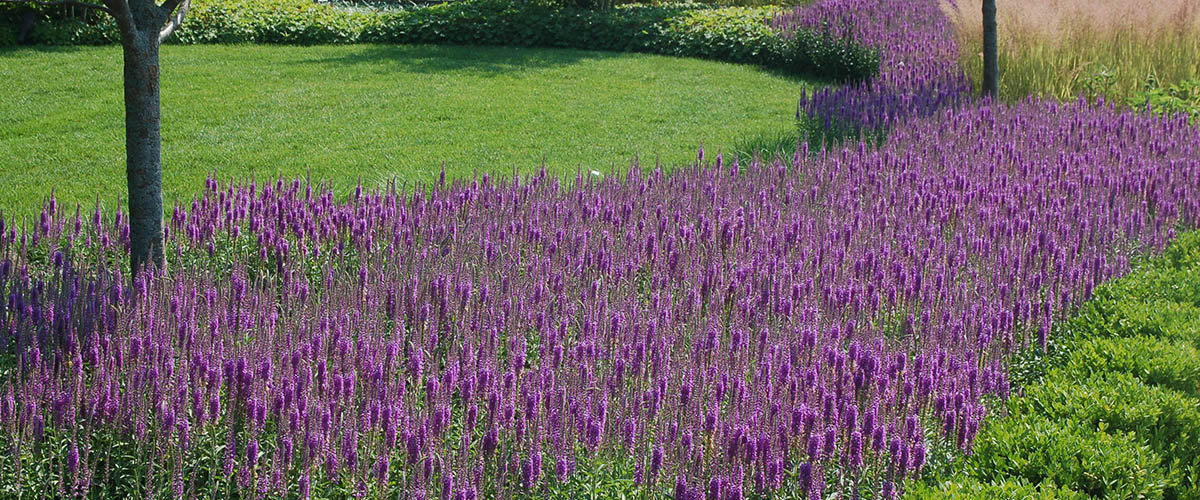
Evaluating Perennials for Chicagoland Gardens
Perennials in Focus is a plant evaluation program that examines new and underused plants for Chicagoland, the third largest metropolitan area in the country. A group of horticultural experts trials and evaluates plants at numerous locations across the region. Results help consumers, public gardens, growers, landscape designers, breeders, and other industry professionals make informed plant choices.
Echinacea Purpurea Spacing For More Flowers
Echinacea purpurea, commonly called purple coneflower, is a reliable perennial for sunny Australian gardens, yet its flower display depends on more than cultivar choice. Planting too closely can create soft, congested growth with reduced airflow, while excessive spacing may leave gaps, encourage weeds and make a border look unfinished during the first seasons.
Determining the optimal spacing for Echinacea purpurea to maximize flower production requires a balance between mature plant size, local climate, soil moisture and the way each planting will be managed. Trial observations from region-specific perennial programs, including the Chicagoland-focused work of Perennials in Focus, are useful because they assess plants across several seasons rather than relying only on catalogue descriptions.
| Planting situation | Suggested centre-to-centre spacing | Likely result |
|---|---|---|
| Compact cultivars under 60 cm wide | 30–40 cm | Dense colour with quicker ground coverage |
| Medium cultivars around 60–75 cm wide | 45–55 cm | Strong flowering and useful airflow |
| Large, vigorous cultivars | 60–75 cm | Better shape, access and disease management |
| High-rainfall or humid gardens | 55–75 cm | Reduced crowding and quicker foliage drying |
| Dry, exposed beds | 40–60 cm | Less bare soil without excessive competition |
Choose Spacing From Mature Width
The most useful starting point is the plant’s expected mature spread, not the size of the nursery pot. A cultivar that reaches 70 cm wide should generally be placed with its centres about 50–60 cm apart. This allows neighbouring plants to knit together while leaving enough space for stems and leaves to develop without constant contact.
For a massed effect, reduce the recommended distance by roughly 10 cm, but avoid turning individual crowns into one continuous block. A 45 cm grid often suits medium Echinacea in a mixed perennial border. Plants placed in staggered rows usually cover soil more evenly than plants arranged in straight lines, improving the visual effect without requiring tighter spacing.
Match Distance To Cultivar Habit
Not all purple coneflowers behave alike. Compact selections may remain upright and relatively narrow, making them suitable for smaller suburban beds, raised planters and the front of a perennial border. Taller cultivars can produce more flowering stems, but they need room for their basal foliage and may lean into neighbouring plants if crowded.
Read trial data alongside the retail label. Height, spread, flowering period and stem strength are more helpful than a simple “space 30 cm apart” instruction. The European perennial network also reflects the value of comparing plants under different conditions, since a cultivar that stays compact in a cool trial garden may become broader and more vigorous in a warm Australian site.
When purchasing in Australia, remember that nursery plants are often sold in small tubes or 140 mm pots even when they will eventually form substantial clumps. Planting based on the container width is a common cause of overcrowding. Allow for the second and third seasons, when the crown expands and flowering stems increase.
Adjust For Australian Climate
Australian conditions can alter the ideal distance considerably. In humid Brisbane or coastal New South Wales, wider spacing helps foliage dry after summer storms and reduces the length of time leaves remain wet overnight. In Melbourne, Canberra and elevated inland districts, autumn planting can give roots time to establish before cold weather, although young plants still need protection from severe frost.
Hot, dry areas around Adelaide, Perth and inland districts bring a different concern: competition for water. Plants spaced very widely may leave exposed soil that heats rapidly and loses moisture. A moderate 45–60 cm distance, combined with organic mulch kept clear of the crown, can provide a practical balance between airflow and soil cover.
In sandy Western Australian soils, incorporate suitable organic matter before planting and monitor irrigation closely during the first summer. In heavier clay, improve drainage rather than compensating with greater spacing alone. Echinacea prefers free-draining soil, and wet roots can weaken a plant regardless of how much room surrounds it.
Prepare The Bed For Even Growth
Uniform spacing works best when every plant starts with similar access to light, water and nutrients. Remove perennial weeds, loosen compacted soil and position the bed where plants receive at least six hours of direct sun. Morning sun and good air movement are especially valuable in humid districts.
Set out pots before digging. Measure from plant centre to plant centre, then view the arrangement from the path, house and main garden outlook. This is more accurate than estimating by eye, particularly when combining coneflower with grasses, salvias or rudbeckias.
A sloped site needs additional attention because water may run away from upper plants and collect around lower ones. Perennials in Focus has also examined sloped front-yard planting, a useful reminder that plant spacing should work with the movement of water and soil rather than treating every bed as level.
Manage Crowding Through The Season
Spacing is only the beginning. Water new plants deeply and consistently while roots establish, then allow the surface to dry slightly between irrigation sessions where soil and weather permit. Drip irrigation or a low-flow system is preferable to frequent overhead watering, especially in humid summer conditions.
Apply a modest mulch layer to reduce evaporation and suppress weeds, leaving a clear ring around each crown. Avoid high-nitrogen fertiliser, which can produce lush foliage at the expense of sturdy flowering stems. A balanced soil and occasional spring feeding are usually more beneficial than repeated applications.
Remove spent flowers if the aim is to extend the display and encourage additional branching. If seedheads are valued for birds or winter structure, leave some stems standing and cut them back in late winter. Do not rush to divide healthy Echinacea; division is usually considered when a mature clump becomes congested or loses vigour, often after several years.
Measure Flowers Rather Than Guessing
A useful spacing trial records more than whether plants look attractive. Mark groups planted at different distances and note the number of flowering stems, average stem height, bloom period, flower diameter and any lodging. Also record how quickly the foliage dries after rain and whether lower leaves remain healthy.
Compare plants at their peak rather than during the first few months after planting. A tightly spaced bed may look fuller in its first year, while a wider arrangement can produce stronger crowns and more flowers in later seasons. Record irrigation, rainfall and fertiliser as well, since these factors can disguise the effect of spacing.
Disease observations deserve particular attention in dense plantings. Powdery mildew, leaf spots and crown problems are often influenced by humidity, irrigation and plant stress. Guidance on phlox disease resistance offers a comparable approach: evaluate performance over time and distinguish inherited resistance from conditions created by a crowded site.
For most Australian gardens, begin with 45–60 cm between Echinacea centres, then adjust for cultivar size and local weather. Use the narrower end for compact plants in dry, open beds and the wider end for vigorous cultivars or humid locations. Gardeners, growers and landscape professionals can improve future plant choices by recording these results and sharing clear observations through regional perennial evaluation work.
In the Garden
Evaluator gardens are located across the Chicagoland area, representing a range of growing conditions. Visit our retail and wholesale partners to find trialled perennials for your own garden.
Retail & Wholesale: Hinsdale Nurseries (Willowbrook, IL), Mariani Nurseries (Kenosha, WI & Garden Prairie, IL), Northwind Perennials (Burlington, WI), The Growing Place (Aurora, IL).
Wholesale Only: Hinsdale Nurseries (Plano, IL), Intrinsic Perennial Gardens (Hebron, IL).
Our Evaluation Program
The 2017–2020 evaluation cycle included Agastache 'Blue Boa', Allium senescens 'Blue Eddy', Amsonia ciliata var. filifolia 'Georgia Pancake', Astilbe 'Chocolate Shogun', Boltonia astroides 'James Crocket', Brunnera 'Alexander's Great', and Geranium cinereum 'Jolly Jewel Purple'. Completed evaluations include Amsonia 'Blue Ice' (2004–07).
On April 10, 2020, the program published snapshot profiles for Vernonia lettermanii 'Iron Butterfly', Stokesia laevis 'Elf', Stachys officinalis 'Pink Cotton Candy', Lobelia 'Monet Moment', Helleborus 'Winter Thrillers', Geum 'Mai Tai', Geranium soboliferum 'Butterfly Kisses', Gentiana x intermedia 'True Blue', Eurybia divaricata, Asparagus 'Purple Passion', and Agastache 'Bolero'.
Browse the full collection of snapshots organized alphabetically — from A–D, E–H, I–Q, and R–Z — to find detailed performance data on perennials trialled across Chicagoland.