Evaluating Perennials for Chicagoland Gardens
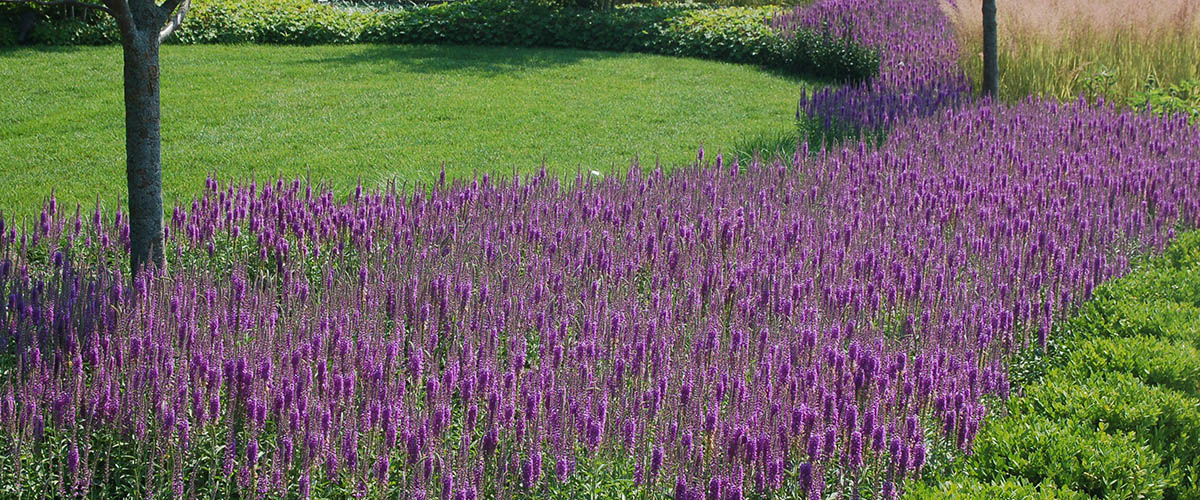
Perennials in Focus is a plant evaluation program that examines new and underused plants for Chicagoland, the third largest metropolitan area in the country. A group of horticultural experts trials and evaluates plants at numerous locations across the region. Results help consumers, public gardens, growers, landscape designers, breeders, and other industry professionals make informed plant choices.
How to use perennials to stabilize a sloped Chicago front yard
A sloping front yard can lose valuable topsoil during spring snowmelt, summer thunderstorms, and freeze-thaw cycles. Water follows the grade, gathers speed, and may carve channels through planting beds or expose the roots of shrubs and trees. A thoughtful perennial planting can slow that flow while making the entrance more attractive throughout the growing season.
The strongest approach combines plants with fibrous or spreading root systems, strategic paths, mulch, and small physical barriers where needed. Perennials will not replace proper grading or drainage on a severe slope, but they can help hold soil in place and create a layered landscape that is easier to maintain than turf.
Chicago-area gardeners also need to account for clay soil, compacted construction fill, salt exposure, partial shade from mature trees, and a growing season that can shift from wet springs to hot, dry summers. Regional trial information is especially valuable because a plant that performs well in another climate may not establish quickly or remain upright on a local slope.
Read the slope before choosing plants
Begin by observing where water enters, where it concentrates, and where soil accumulates after a heavy rain. A gentle grade may need only dense planting and a protective mulch layer. A steeper bank, unstable edge, or slope with visible rills may require a landscape professional to assess drainage, retaining features, or erosion-control fabric before planting.
Notice the amount of sun at different times of day. A south-facing bank can become hot and dry, while a north-facing slope may stay cool and damp. Soil texture matters as well: Chicago-area clay can hold water near the surface, yet compacted slopes may shed rainfall instead of absorbing it. Testing the soil and loosening compacted areas before planting gives roots a better chance to spread.
Build stability with layered roots
A stable planting usually contains several plant forms rather than a single mass of one species. Low ground-covering perennials protect the soil surface, medium-height clumps interrupt runoff, and taller plants add structure without leaving bare gaps beneath them. Ornamental grasses can be useful when their roots are well established, especially on sunny slopes with moderate drainage.
Favor plants that form dense crowns, rhizomes, or broad root networks, but avoid aggressive spreaders that can escape into natural areas. Ground covers should knit together over time without swallowing paths or neighboring beds. Planting in staggered rows, rather than straight lines running downhill, helps distribute water and reduces the chance that runoff will follow a continuous channel.
Select Chicago-tough plants for the conditions
Plant performance should guide the palette. Perennials in Focus evaluates new and underused plants across Chicagoland gardens and seasons, recording traits such as bloom time, height, spread, and flower color. Those observations can help gardeners compare plants for real regional conditions instead of relying only on generalized hardiness ratings.
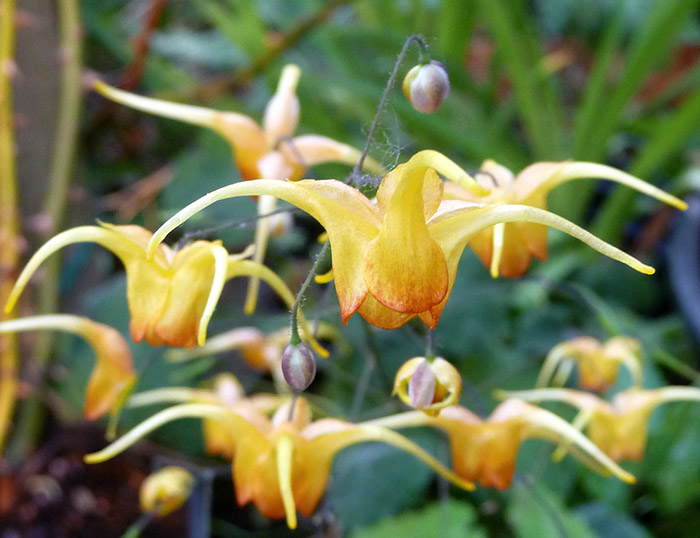
Good choices depend on the site, but the following combinations illustrate useful roles. For sunny, moderately dry banks, consider creeping phlox, prairie dropseed, little bluestem, catmint, prairie smoke, coreopsis, and sedum. For part shade, wild geranium, barrenwort, foamflower, heuchera, brunnera, and woodland phlox may provide better coverage. Moist lower sections can support turtlehead, swamp milkweed, cardinal flower, and sedges if drainage remains adequate.
| Slope condition | Useful perennial roles | Examples to investigate | Main design purpose |
|---|---|---|---|
| Full sun and dry upper bank | Low spreaders and deep-rooted clumps | Creeping phlox, catmint, prairie dropseed, little bluestem | Cover exposed soil and reduce runoff |
| Sun with average moisture | Upright flowering plants and grasses | Coreopsis, coneflower, black-eyed Susan, switchgrass | Add seasonal color and root density |
| Part shade beneath trees | Fibrous-rooted woodland plants | Wild geranium, heuchera, foamflower, brunnera | Hold leaf-covered soil in lower light |
| Moist lower slope | Moisture-tolerant perennials and sedges | Turtlehead, sedges, swamp milkweed | Manage damp conditions and soften drainage areas |
| Salt-exposed street edge | Tough, low-growing plants | Sedum, catmint, yarrow, ornamental grasses | Tolerate reflected heat and winter splash |
Treat this list as a starting point, not a fixed recipe. A plant that thrives at the base of a slope may languish at the dry top, and a spreading perennial that is useful for soil coverage in one garden may become difficult to control in another. Check mature height and spread before spacing plants, then allow room for them to fill in without crowding.
Arrange plants across the contour
Planting across the slope is generally more effective than creating long rows that point downhill. Curving bands, offset groups, and broad drifts break up the path of moving water. Place taller plants toward the upper or middle portions where they will not block windows, and use lower perennials near steps, sidewalks, and the street edge.
Where the grade is pronounced, shallow terraces or small contour berms can create planting pockets. These features do not need to look formal; low stone edging, logs, or carefully placed pavers can slow water while giving the garden visual structure. Any retaining element must be stable, properly supported, and suited to the amount of soil it holds.
A layered front-yard design can remain welcoming when paths cross the slope rather than descend directly down it. Steps should have secure footing, and planting should leave enough space for snow removal and routine access. Avoid placing loose mulch where it can wash onto sidewalks or storm drains.
Establish plants during the right window
Early fall is often an excellent planting season in the Chicago region because cooler air reduces stress while warm soil encourages root growth. Spring planting also works well, particularly for moisture-loving perennials, but new plants need consistent watering as temperatures rise. Water slowly and deeply at the root zone instead of relying on short surface sprinkling.
Prepare planting pockets rather than turning the entire slope into a loose, unstable bed. Remove competing weeds, blend compost into poor soil without creating a sharply different soil layer, and set crowns at the depth recommended for each plant. On a bank prone to washing, use biodegradable erosion-control netting or fiber blankets until roots and foliage provide sufficient cover.
A two- to three-inch layer of shredded wood mulch can protect bare soil during establishment. Keep mulch away from crowns and stems, and inspect it after major storms. Stone mulch may move downhill and heat exposed sites, so it is best used selectively around paths or architectural features rather than across the entire planting.
Plan for a succession of flowers
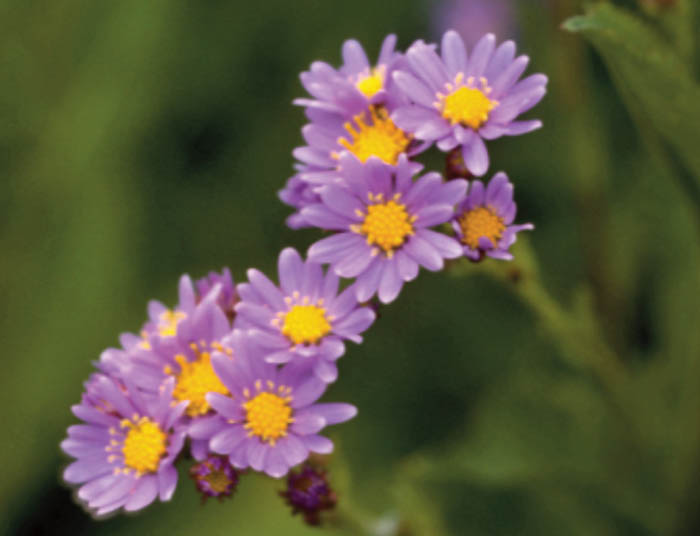
A slope can be stable and attractive before midsummer if the planting includes foliage that remains dense from spring through fall. Early bloomers such as creeping phlox, woodland phlox, and wild geranium can hand off color to catmint, coreopsis, coneflowers, and daylilies. Late-season sedums, asters, goldenrods, and ornamental grasses keep the bank visually active after many spring perennials have finished.
Use foliage contrast as carefully as flower color. Fine-textured grasses can sit beside broad-leaved heuchera, while rounded clumps of geranium or sedum can soften upright stems. For a more continuous display, use guidance on how to stagger bloom times when selecting early-, mid-, and late-season plants.
Allow some seedheads to remain through winter if they offer habitat and attractive structure. Cut back diseased or collapsed growth as needed, but avoid stripping the slope bare in autumn. Standing stems and leaf litter can cushion rainfall, protect crowns, and provide cover for beneficial insects.
Keep maintenance simple and deliberate
The first two growing seasons require the most attention. Weed regularly before unwanted plants become rooted through the new planting, replenish thin mulch, and water during extended dry periods. Walk the slope after storms to look for exposed crowns, accumulating mulch, or channels that need correction.
Once the perennials knit together, maintenance should focus on selective division, trimming paths, and removing plants that spread beyond their assigned space. Avoid frequent cultivation because digging can disturb the root network that stabilizes the soil. A small number of well-adapted plants repeated through the design is usually easier to manage than a collection of isolated specimens.
For a front entrance that balances resilience with curb appeal, combine erosion-conscious planting with the principles in this guide to low-maintenance front yards. The goal is a garden that looks intentional while reducing bare soil, mowing difficulty, and seasonal runoff.
A practical planting checklist
Before purchasing plants, match each section of the slope to its sun, moisture, soil, and salt conditions. Then sketch planting bands across the grade, marking paths, drainage routes, utilities, and sightlines from the street. Regional trial data can help refine the list toward plants with reliable height, spread, bloom period, and winter performance.
- Correct concentrated drainage problems before relying on plants for erosion control.
- Choose several compatible perennials with overlapping root coverage and staggered bloom periods.
- Plant in offset bands across the contour instead of straight downhill rows.
- Protect new soil with appropriate mulch or biodegradable erosion-control material.
- Inspect the slope after heavy rain and adjust drainage, mulch, or plant spacing promptly.
A Chicago sloped front yard can become a durable garden rather than a recurring maintenance problem when plants, water movement, and access are designed together. Review regional perennial trial findings, assess your site in each season, and build the planting in manageable phases so every root system has time to establish.
In the Garden
Evaluator gardens are located across the Chicagoland area, representing a range of growing conditions. Visit our retail and wholesale partners to find trialled perennials for your own garden.
Retail & Wholesale: Hinsdale Nurseries (Willowbrook, IL), Mariani Nurseries (Kenosha, WI & Garden Prairie, IL), Northwind Perennials (Burlington, WI), The Growing Place (Aurora, IL).
Wholesale Only: Hinsdale Nurseries (Plano, IL), Intrinsic Perennial Gardens (Hebron, IL).
Our Evaluation Program
The 2017–2020 evaluation cycle included Agastache 'Blue Boa', Allium senescens 'Blue Eddy', Amsonia ciliata var. filifolia 'Georgia Pancake', Astilbe 'Chocolate Shogun', Boltonia astroides 'James Crocket', Brunnera 'Alexander's Great', and Geranium cinereum 'Jolly Jewel Purple'. Completed evaluations include Amsonia 'Blue Ice' (2004–07).
On April 10, 2020, the program published snapshot profiles for Vernonia lettermanii 'Iron Butterfly', Stokesia laevis 'Elf', Stachys officinalis 'Pink Cotton Candy', Lobelia 'Monet Moment', Helleborus 'Winter Thrillers', Geum 'Mai Tai', Geranium soboliferum 'Butterfly Kisses', Gentiana x intermedia 'True Blue', Eurybia divaricata, Asparagus 'Purple Passion', and Agastache 'Bolero'.
Browse the full collection of snapshots organized alphabetically — from A–D, E–H, I–Q, and R–Z — to find detailed performance data on perennials trialled across Chicagoland.