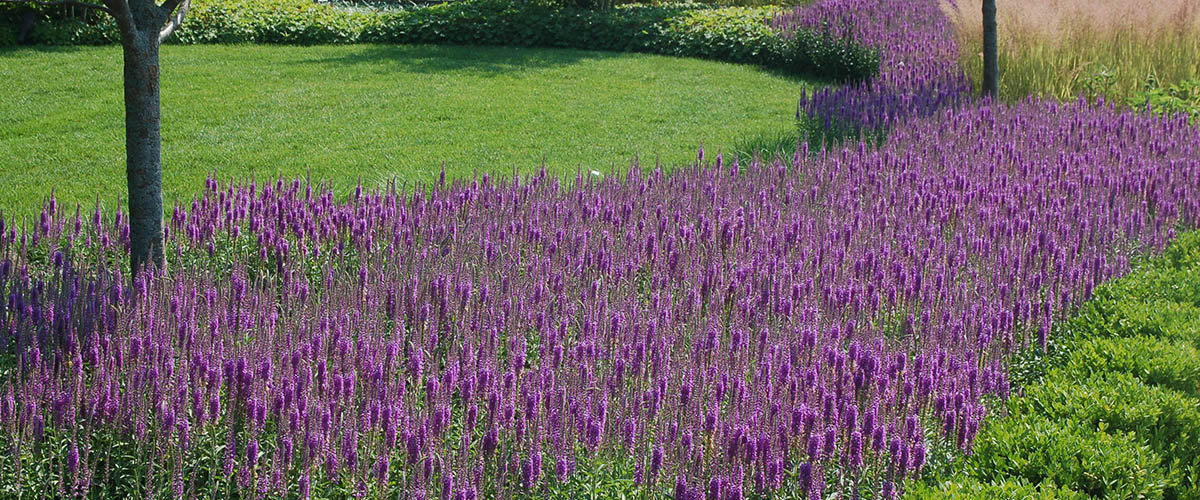
Evaluating Perennials for Chicagoland Gardens
Perennials in Focus is a plant evaluation program that examines new and underused plants for Chicagoland, the third largest metropolitan area in the country. A group of horticultural experts trials and evaluates plants at numerous locations across the region. Results help consumers, public gardens, growers, landscape designers, breeders, and other industry professionals make informed plant choices.
Clematis Recta And Clematis Integrifolia: Pest Resistance Compared
Clematis recta and Clematis integrifolia are useful alternatives to the familiar climbing clematis. Both are herbaceous or semi-herbaceous perennials, so they bring a different habit to the border: rather than scrambling up a trellis, they form upright or loosely supported clumps among grasses, salvias and other long-lived plants.
Their pest performance is broadly similar, but the way each plant grows can change the level of damage gardeners notice. A compact clump may hide feeding around the crown, while a taller, more open plant can expose foliage and flowers to caterpillars, aphids and sap-sucking insects.
The Perennials in Focus programme evaluates perennial plants across gardens and seasons, with attention to traits such as flowering, height, spread and garden performance. Its regional approach is especially helpful because pest pressure in the Chicagoland area does not always match what gardeners experience in Australia.
For Australian growers, the comparison needs to account for local conditions. A clematis planted in a cool Melbourne courtyard, a humid Brisbane garden or a dry Adelaide border may face very different combinations of snails, mites, fungal problems and summer stress.
How The Two Clematis Grow
Clematis recta is generally a taller, more substantial plant, often producing a cloud of small white flowers above divided foliage. It can benefit from neighbouring plants or discreet support, particularly after rain or strong wind. The denser upper growth may make early pest inspection slightly less convenient.
Clematis integrifolia is usually shorter and more compact, with single, nodding or bell-shaped flowers depending on the selection. Its leaves are generally simpler than those of C. recta, and the plant often sits neatly in a mixed perennial planting. Its lower, bushier habit can place foliage closer to slugs, snails and splash-borne disease.
Neither species should be described as pest-proof. Their value lies in being robust, adaptable perennials when correctly sited, rather than in having a special chemical defence that excludes insects. Plant vigour, air movement, watering and surrounding vegetation can influence damage as much as the species name.
Aphids, Mites And Sap-Feeding Insects
Aphids may gather on young stems, flower buds and tender new leaves of either species. C. recta can produce a generous flush of upright growth, giving aphids plenty of soft tissue early in the season. C. integrifolia may show similar infestations around flower stems, particularly when new growth is lush after regular watering.
Spider mites are more likely to become troublesome where plants are hot, dry and dusty. That makes them a greater consideration in inland Australian gardens, exposed Perth sites and sheltered areas beside north-facing walls. Fine webbing, stippled leaves and pale foliage are warning signs. Heat-stressed plants often tolerate feeding less well than well-watered plants with cool roots and good mulch.
Natural predators can make a meaningful difference. Ladybirds, lacewings, hoverfly larvae and small parasitic wasps often help suppress aphids without intervention. Avoiding broad-spectrum insecticides preserves these beneficial insects and is usually a better first response than treating every visible aphid.
Gardeners wanting broader seasonal context can also review this guide to spring pest activity, while remembering that an Australian spring does not follow the same pest timetable as a North American one.
Caterpillars, Leaf Feeders And Chewing Damage
Caterpillars and other chewing insects may leave irregular holes in leaves, nibble flower buds or remove sections of tender growth. The fine texture of C. recta foliage can make damage look conspicuous, especially when the plant is grown as a specimen. C. integrifolia’s broader leaves may conceal small feeding marks until the damage becomes more extensive.
The practical difference is often plant architecture rather than inherent resistance. A tall C. recta clump can be checked by inspecting the upper stems and flower clusters, while C. integrifolia requires attention close to the crown and within the foliage. Look in the early morning or near dusk, when many caterpillars are active and easier to remove by hand.
In Australian gardens, imported and native pests may both be involved. Green looper-type caterpillars, armyworms and local moth larvae can appear after warm weather or nearby lawn growth. A few nibbled leaves are rarely serious; repeated defoliation, damaged buds or weakening stems deserve closer investigation.
Slugs, Snails And Crown Problems
Slugs and snails are a more important practical concern for the lower-growing C. integrifolia in damp, sheltered situations. Melbourne gardens with cool, wet winters, Sydney gardens with dense mulch and shaded Brisbane beds may all provide attractive hiding places. Young shoots emerging through mulch can be grazed before the gardener notices.
C. recta is not immune, but its upright stems may place more foliage above the most active feeding zone. Its crown can still be damaged when plants are surrounded by wet debris, thick groundcovers or constantly irrigated soil. Clear away fallen leaves and keep mulch slightly back from the base rather than creating a damp collar.
Hand-picking after dark, reducing hiding places and improving drainage are useful low-impact measures. In gardens where molluscs are persistent, select controls that are suitable for household pets and wildlife, and follow Australian product labels carefully. Avoid assuming that a product approved overseas has the same registration or use directions locally.
Clematis Wilt And Environmental Stress
Clematis wilt is often discussed alongside insect damage, although it is a disease issue rather than a pest problem. Sudden collapse, blackened stems or wilting despite moist soil should prompt inspection of the stem base and roots. Herbaceous clematis can die back naturally at the end of the growing season, so timing matters when judging whether symptoms are abnormal.
Poor drainage, root disturbance, heat and inconsistent watering can make either species look pest-ridden. In Adelaide or western Sydney, reflected heat and drying soil may cause leaf scorch that resembles mite injury. In tropical or subtropical districts, persistently wet foliage and crowded planting may encourage fungal problems that have little to do with insect resistance.
Give both plants morning sun or bright filtered light, cool root conditions and soil that drains freely while retaining moisture. A layer of compost can improve the root zone, but excessive nitrogen may produce soft, aphid-prone growth. Staking C. recta early and spacing C. integrifolia away from congested perennials also improves airflow and inspection.
What Trial Observations Can Tell Gardeners
A useful comparison should record pest incidence over several seasons rather than rely on one plant in one garden. Note the percentage of damaged foliage, the timing of symptoms, whether flowering is affected and how quickly the plant recovers. A plant with minor cosmetic damage but strong regrowth may be a better garden performer than one that remains untouched but grows weakly.
Regional trial information should be read as evidence of performance under particular conditions, not as a guarantee for every site. The Chicagoland focus of Perennials in Focus offers valuable discipline in observing plants across multiple gardens, yet Australian gardeners should translate those observations through local climate, soil and pest patterns.
For Australian retail and landscape use, the best choice may depend on the planting brief. C. recta suits a taller mixed border, cottage-style planting or meadow effect where its airy flowers can rise above companions. C. integrifolia works well near paths, in smaller gardens and in perennial combinations where a compact clump is easier to manage.
Both species can contribute to a wildlife-friendly planting when grown without routine insecticide use. Ideas for combining flowering perennials in a relaxed design can be found in this perennial meadow guide, then adapted for local Australian rainfall and soil conditions.
Choose C. recta when height, flower display and open structure are priorities; choose C. integrifolia when a lower, tidier habit is more useful. In pest terms, neither has a decisive universal advantage. Careful siting, regular inspection and good moisture management will usually matter more than the species label.
Record what happens in your own garden: when pests first appear, which plant parts are affected and how the clematis performs after pruning or seasonal dieback. Those observations can guide future purchases and help nurseries, designers and gardeners identify the forms that truly cope with local Australian conditions.
In the Garden
Evaluator gardens are located across the Chicagoland area, representing a range of growing conditions. Visit our retail and wholesale partners to find trialled perennials for your own garden.
Retail & Wholesale: Hinsdale Nurseries (Willowbrook, IL), Mariani Nurseries (Kenosha, WI & Garden Prairie, IL), Northwind Perennials (Burlington, WI), The Growing Place (Aurora, IL).
Wholesale Only: Hinsdale Nurseries (Plano, IL), Intrinsic Perennial Gardens (Hebron, IL).
Our Evaluation Program
The 2017–2020 evaluation cycle included Agastache 'Blue Boa', Allium senescens 'Blue Eddy', Amsonia ciliata var. filifolia 'Georgia Pancake', Astilbe 'Chocolate Shogun', Boltonia astroides 'James Crocket', Brunnera 'Alexander's Great', and Geranium cinereum 'Jolly Jewel Purple'. Completed evaluations include Amsonia 'Blue Ice' (2004–07).
On April 10, 2020, the program published snapshot profiles for Vernonia lettermanii 'Iron Butterfly', Stokesia laevis 'Elf', Stachys officinalis 'Pink Cotton Candy', Lobelia 'Monet Moment', Helleborus 'Winter Thrillers', Geum 'Mai Tai', Geranium soboliferum 'Butterfly Kisses', Gentiana x intermedia 'True Blue', Eurybia divaricata, Asparagus 'Purple Passion', and Agastache 'Bolero'.
Browse the full collection of snapshots organized alphabetically — from A–D, E–H, I–Q, and R–Z — to find detailed performance data on perennials trialled across Chicagoland.