Evaluating Perennials for Chicagoland Gardens
Perennials in Focus is a plant evaluation program that examines new and underused plants for Chicagoland, the third largest metropolitan area in the country. A group of horticultural experts trials and evaluates plants at numerous locations across the region. Results help consumers, public gardens, growers, landscape designers, breeders, and other industry professionals make informed plant choices.
How to Create a Perennial Meadow Inspired by Our Trials
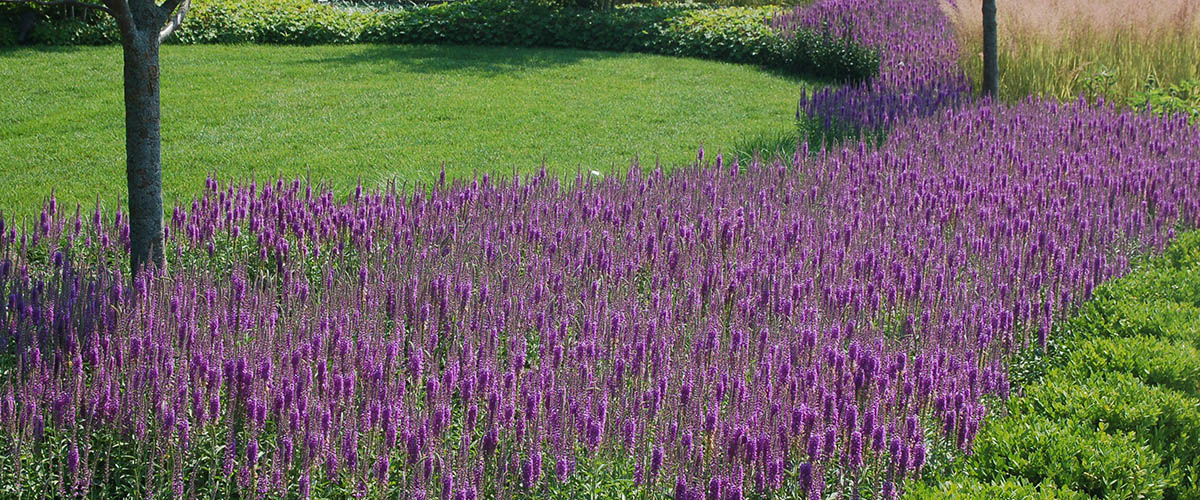
A perennial meadow brings movement, seasonal color, habitat, and a more natural character to the garden. In the Chicagoland region, the most successful versions are not random collections of prairie plants. They are carefully composed communities selected for light, soil, moisture, mature size, and dependable performance through hot summers and cold winters.
The Perennials in Focus trials offer a useful way to approach this style. Horticultural professionals observe plants across multiple gardens and seasons, noting bloom time, flower color, height, spread, vigor, and overall garden value. Those observations can guide a home planting that feels abundant while remaining manageable.
A meadow-inspired border also rewards patience. The first year is largely about roots and weed control, the second brings stronger structure, and the third often reveals the intended rhythm of grasses, flowering perennials, and seedheads. Thoughtful planning at the start makes that transition far easier.
Start with the site rather than the plant list
Observe the proposed planting area throughout the day before choosing plants. Full sun generally means at least six hours of direct light, while woodland-edge conditions may require plants that tolerate afternoon shade. Note where water collects after heavy rain, where snow is piled, and whether nearby trees create dry soil through dense surface roots.
A soil test can reveal pH, organic matter, and nutrient levels, but texture and drainage matter just as much. Many prairie and meadow perennials perform best in average, well-drained soil and may grow weakly in rich, constantly damp ground. Avoid adding large amounts of compost or fertilizer simply to make plants grow faster; excessive fertility often produces floppy stems and aggressive spread.
Decide how the planting will be viewed and maintained. A narrow strip beside a walkway needs shorter plants and a crisp edge, while a broad backyard bed can accommodate tall grasses and plants with a looser habit. Leave access paths or stepping stones so weeding, cutting back, and dividing do not require walking through the planting.
Build a layered perennial palette
A convincing meadow planting uses several plant forms rather than repeating one flower throughout the bed. Ornamental grasses provide an architectural framework, upright perennials add emphasis, and lower mounding or spreading plants fill gaps near the front. Include plants with attractive foliage and seedheads so the design remains interesting after peak bloom.
Use mature height and spread when spacing plants, not the size of the nursery container. A 30-inch plant may need two feet or more of room, while a vigorous grass can occupy a much larger footprint after several seasons. Repeating a small group of reliable plants usually creates more visual unity than buying one of every appealing cultivar.
The following palette is a starting point for a sunny, average-soil site. Adjust it according to trial observations, local availability, and the conditions in your own garden.
| Garden role | Possible plant types | Seasonal contribution | Design consideration |
|---|---|---|---|
| Fine-textured framework | Little bluestem, prairie dropseed | Summer foliage, fall color, winter structure | Use in repeated groups rather than isolated clumps |
| Vertical accents | Blazing star, foxglove beardtongue, mountain mint | Early to midsummer flowers | Place among grasses for support and contrast |
| Broad color masses | Coneflower, black-eyed Susan, yarrow | Summer through early fall bloom | Repeat colors in several areas for cohesion |
| Late-season interest | Aromatic aster, goldenrod, sneezeweed | Late summer and fall flowers | Supports pollinators when many plants have finished |
| Low-edge fillers | Wild geranium, prairie alumroot, sedum | Spring foliage, lower blooms, seedheads | Soften paths and define the meadow’s edge |
Color should be considered alongside texture and timing. Purple-blue flowers can connect early summer catmint or salvia with later asters, while yellow flowers from yarrow, goldenrod, or black-eyed Susan can add warmth. White blooms, silver foliage, and pale seedheads help separate strong colors without making the planting feel busy.
Create a rhythm of bloom and structure
A meadow feels continuous when at least a few plants are carrying the design in every season. Begin with spring foliage and early flowers, follow with a strong midsummer display, and reserve space for late-season asters, goldenrods, grasses, and persistent seedheads. Spring bulbs can add early color before the main perennial canopy develops.
Think in terms of succession rather than isolated bloom dates. Early plants may decline after flowering, so place them beside perennials that will expand into the space later. Plants with a long bloom period can serve as bridges, while grasses maintain volume between flowering waves.
Repeat key shapes throughout the bed. Three or five groups of a grass or flowering perennial often read as a deliberate pattern, even when the surrounding plants are loosely mixed. Repetition also makes trial information more useful: you can see whether a plant holds its form, supports pollinators, and complements its neighbors across the season.
Match plants to regional performance
A plant that looks impressive in a catalog may behave differently in a Midwestern garden. Winter survival, spring emergence, summer humidity, wind exposure, and the timing of rainfall all influence performance. Prioritize plants with a dependable record in gardens similar to yours rather than selecting only by flower color.
Trial observations are especially valuable when they include several seasons and locations. Look for notes about plant habit, disease resistance, staking, self-seeding, bloom duration, and whether the plant remains attractive after flowering. The trial committee provides a useful connection to the horticultural professionals who help evaluate plants for regional gardens.
When reviewing results, pay attention to relationships between plants. A vigorous perennial may be excellent in a large naturalistic bed but overwhelming in a small border. A short plant may be ideal along a path but disappear among tall grasses. Performance is always tied to scale, maintenance expectations, and the conditions of the planting site.
Prepare the ground and plant in waves
Remove persistent perennial weeds before planting. For a lawn conversion, sheet mulching, repeated mowing, or a carefully timed sod-removal process can reduce competition. Avoid shallow cultivation that cuts creeping roots into smaller pieces and spreads them through the bed. The cleaner the starting site, the less time will be spent correcting problems later.
Install larger structural plants first, then place medium-height flowering perennials and finally the low-edge plants. This makes spacing and sight lines easier to judge. Planting in drifts creates a meadow effect, but the drifts do not need to be perfectly symmetrical. Uneven group sizes and slight overlaps look more natural while still maintaining order.
Water new plants thoroughly at planting and during the first growing season, especially during hot or dry periods. A two-inch layer of mulch can conserve moisture and suppress weeds, but keep it away from crowns and stems. Once established, many regional perennials need less supplemental water, though drought-sensitive plants still require attention during prolonged dry spells.
Manage the meadow as a living community
Maintenance is part of the design, not a sign that the planting has failed. Weed regularly while perennials are small, remove unwanted seedlings before they mature, and watch for plants that spread beyond their intended role. Some self-sowing is desirable, but it should be guided by the boundaries of the garden and the strength of neighboring plants.
Leave standing stems and seedheads through winter whenever possible. They provide habitat, food, and visual structure, while also allowing frost to transform the garden. In late winter or very early spring, cut most herbaceous growth to the ground and remove the debris before new shoots emerge. If wildlife value is a priority, leave some hollow stems in place or move cut material to a discreet area.
Divide crowded plants when flowering declines or the center of a clump becomes bare. Cutting back tall plants lightly in early summer can reduce flopping, though many meadow species look better when allowed to develop their natural form. Avoid treating every irregular stem as a problem; variation in height and shape is part of the planting’s character.
Use these planning principles
- Choose a dominant grass or foliage texture to anchor the planting.
- Repeat several dependable perennials in groups of three or more.
- Include flowers from spring through fall, plus winter seedheads.
- Match mature height and spread to the bed’s scale and nearby paths.
- Keep a simple seasonal record of bloom, vigor, pests, and maintenance.
A successful perennial meadow is a designed ecosystem in miniature. It combines regional knowledge with close observation of the individual site, then leaves enough room for plants to develop their own seasonal expression. Begin with a manageable area, use trial-informed selections, and refine the composition as the planting matures. This autumn, mark the site, assess its light and drainage, and choose the first group of plants that will give your Chicagoland garden a strong, enduring framework.
In the Garden
Evaluator gardens are located across the Chicagoland area, representing a range of growing conditions. Visit our retail and wholesale partners to find trialled perennials for your own garden.
Retail & Wholesale: Hinsdale Nurseries (Willowbrook, IL), Mariani Nurseries (Kenosha, WI & Garden Prairie, IL), Northwind Perennials (Burlington, WI), The Growing Place (Aurora, IL).
Wholesale Only: Hinsdale Nurseries (Plano, IL), Intrinsic Perennial Gardens (Hebron, IL).
Our Evaluation Program
The 2017–2020 evaluation cycle included Agastache 'Blue Boa', Allium senescens 'Blue Eddy', Amsonia ciliata var. filifolia 'Georgia Pancake', Astilbe 'Chocolate Shogun', Boltonia astroides 'James Crocket', Brunnera 'Alexander's Great', and Geranium cinereum 'Jolly Jewel Purple'. Completed evaluations include Amsonia 'Blue Ice' (2004–07).
On April 10, 2020, the program published snapshot profiles for Vernonia lettermanii 'Iron Butterfly', Stokesia laevis 'Elf', Stachys officinalis 'Pink Cotton Candy', Lobelia 'Monet Moment', Helleborus 'Winter Thrillers', Geum 'Mai Tai', Geranium soboliferum 'Butterfly Kisses', Gentiana x intermedia 'True Blue', Eurybia divaricata, Asparagus 'Purple Passion', and Agastache 'Bolero'.
Browse the full collection of snapshots organized alphabetically — from A–D, E–H, I–Q, and R–Z — to find detailed performance data on perennials trialled across Chicagoland.