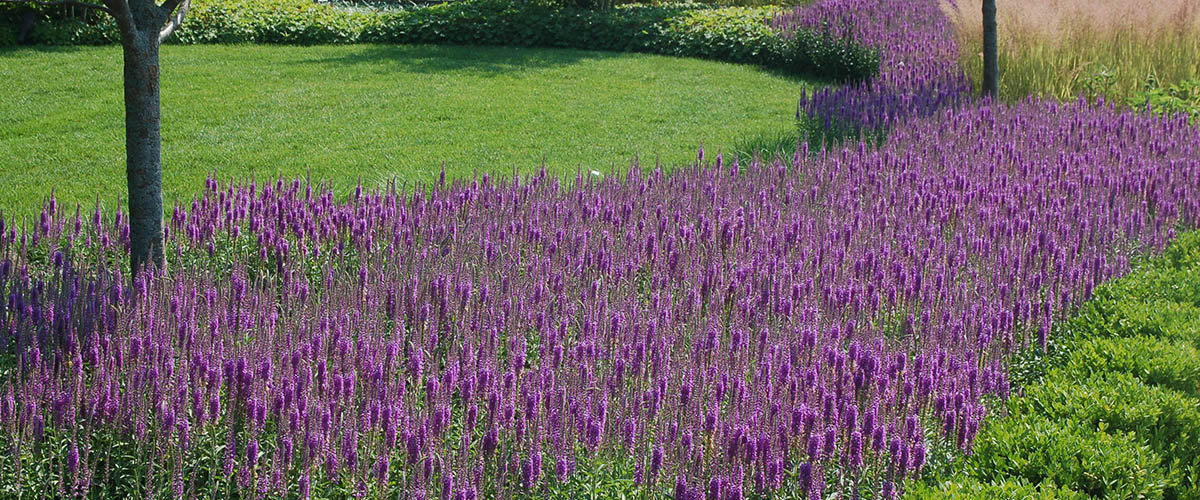
Evaluating Perennials for Chicagoland Gardens
Perennials in Focus is a plant evaluation program that examines new and underused plants for Chicagoland, the third largest metropolitan area in the country. A group of horticultural experts trials and evaluates plants at numerous locations across the region. Results help consumers, public gardens, growers, landscape designers, breeders, and other industry professionals make informed plant choices.
Comparing Rudbeckia Laciniata and Rudbeckia Hirta in Australian Gardens
Rudbeckia laciniata and Rudbeckia hirta both produce cheerful, daisy-like flowers, yet they create very different planting effects. One develops into a tall, spreading colony suited to the back of a large border; the other forms a shorter, more compact clump with a longer list of uses in smaller gardens and containers.
The Chicagoland evaluation approach is useful for Australian gardeners because it looks beyond a plant’s catalogue photograph. Growth habit, seasonal persistence, flowering duration, self-seeding, height and spread all influence whether a perennial earns a permanent place in a garden. Conditions in Melbourne, Sydney, Brisbane or Adelaide will alter the result, so local heat, rainfall, soil and irrigation should be considered alongside trial observations.
| Feature | Rudbeckia laciniata | Rudbeckia hirta |
|---|---|---|
| Common name | Cutleaf coneflower | Black-eyed Susan |
| Typical habit | Tall, rhizomatous, colony-forming perennial | Clumping, tap-rooted, short-lived perennial or biennial |
| Approximate height | 1.5–3 metres | 30–100 centimetres |
| Flowering effect | Elevated yellow flowers above divided foliage | Abundant yellow, orange or red-toned daisies |
| Best position | Back of borders, naturalistic plantings | Mixed borders, cottage gardens, pots and mass displays |
| Main management issue | Spreading stems and substantial height | Variable longevity and volunteer seedlings |
Form, Height and Overall Structure
Rudbeckia laciniata, commonly called cutleaf coneflower, has a strong vertical presence. Its divided, almost fern-like leaves support tall branching stems, and mature plants can tower above many herbaceous perennials. In a Chicagoland-style trial, its architectural outline would be recorded as carefully as its yellow flower colour because the plant can alter the entire scale of a border.
The species spreads through underground rhizomes as well as seed, gradually developing a broad patch. This can be valuable in a large naturalistic garden, where a loose stand softens fences or hides utility areas. In a suburban Australian garden, however, the same habit may overwhelm smaller beds, particularly where warm summers encourage vigorous vegetative growth.
Rudbeckia hirta has a more restrained form. Its leaves arise near the base and along relatively short flowering stems, producing a rounded or lightly upright clump. Cultivars vary considerably, but the species generally fits more easily between grasses, salvias and other mid-border plants. Its scale is also easier to manage beside paths and in raised beds.
Flowering and Seasonal Performance
Cutleaf coneflower usually flowers from summer into early autumn, with golden rays surrounding a greenish central cone. The flowers are held high, giving them visibility through a mixed planting. Once established, stems may create a generous late-season display, although staking can be useful in exposed positions or rich soil.
Black-eyed Susan offers a more immediately recognisable flower, with a dark brown central disc and rays ranging from lemon yellow to deep gold, orange and mahogany. Flowering can be prolific in its first strong season. Deadheading may encourage further blooms, while allowing some heads to mature provides food for birds and a source of volunteer seedlings.
Australian timing will depend on climate. A Melbourne planting may flower through summer after a cool winter, while a Brisbane garden may see different growth patterns because of mild winters and humid conditions. In Perth or Adelaide, irrigation and heat management can determine whether plants continue flowering or become stressed before autumn.
Soil, Sun and Water Requirements
Both species prefer a sunny position and free-draining soil, but their tolerances are not identical. Rudbeckia laciniata performs best where the soil remains reasonably moist, especially while it is building height. A deep, improved bed beside a pond, drainage swale or regularly watered border may suit it better than a dry gravel garden.
In Australia, moisture availability needs careful interpretation. A plant that grows happily in summer rainfall around Sydney may require supplementary watering in Canberra or inland Victoria. Mulch can reduce evaporation, but it should be kept clear of the crown to limit rot during wet periods. Afternoon shade may also help in very hot districts, though excessive shade can produce weak stems and fewer flowers.
Rudbeckia hirta generally handles drier conditions once established and is better adapted to leaner, well-drained soils. It still benefits from watering during prolonged heat, especially in pots and newly planted borders. In sandy Perth soils, compost and a controlled watering routine can support flowering without creating permanently wet conditions.
Spreading, Self-Seeding and Maintenance
The difference between rhizomatous spread and self-seeding is central to choosing between these rudbeckias. Laciniata can move outward from the original crown, with new shoots appearing beyond the initial planting position. Dividing the clump every few years can rejuvenate it, while cutting stems back after flowering helps keep the planting visually controlled.
Hirta tends to remain in a defined clump, although it may seed around the parent plant. Seedlings often appear in open soil and can be welcomed in informal gardens. Gardeners wanting a precise colour scheme should remove spent heads before seed ripens, particularly when growing named cultivars whose offspring may not resemble the parent.
The behaviour is comparable to other garden plants whose volunteer habit varies greatly with site conditions. The published self-seeding trial on Verbena bonariensis illustrates why repeated observations across seasons are more useful than a single catalogue description. Wind, bare soil, rainfall and maintenance all influence how much a plant travels.
Choosing for Different Australian Garden Styles
For a large country property, public garden or expansive native-inspired border, Rudbeckia laciniata can provide height and late-season movement. It works particularly well behind shorter flowering perennials, ornamental grasses and shrubs. Give it room from the beginning rather than placing it in a narrow bed and expecting regular pruning to solve the problem.
Rudbeckia hirta is more flexible for the typical Australian suburban block. It can be planted along a sunny path, grouped in a cottage-style border or grown in a large container on a Melbourne terrace. In Sydney, it can contribute bright colour to a mixed perennial bed, while in cooler Canberra gardens it may be treated as a short-lived perennial that is renewed from seed or replacement plants.
Retail availability also differs by season and region. Australian nurseries commonly sell black-eyed Susan as flowering annual-style colour, while less common forms of cutleaf coneflower may need to be sourced through specialist perennial growers or ordered when stock is available. Check the mature dimensions on the plant label rather than relying on the size of the nursery pot.
Trial Evidence and Practical Garden Decisions
Regional evaluation programmes are valuable because they document how plants behave over multiple seasons rather than judging them only when they are in peak flower. The program’s mission reflects this broader approach, recording practical traits that matter to growers, landscape designers, retailers and home gardeners.
For Australian use, trial notes should be translated rather than copied directly. A vigorous performer in the humid summers of Chicagoland may need more irrigation in South Australia, while a plant that spreads steadily under North American conditions could behave more slowly in a cool, dry Victorian garden. Conversely, mild winters may allow some plants to retain foliage or establish earlier in coastal areas.
Planting location should also be matched with maintenance capacity. Choose laciniata when height, movement and naturalised spread are desirable and there is room for division. Choose hirta when a controlled clump, strong flower colour and easier placement are the priorities. Where insects or plant health become a concern, use targeted pest control advice that protects beneficial pollinators and follows Australian product directions.
For a reliable decision, record the planting date, flowering start, peak display, final height, spread and watering pattern. Compare those notes with the mature space available in your garden, then select the rudbeckia whose habit supports the design rather than fighting it. Add the chosen species to a trial bed first, monitor it through one full growing cycle, and expand the planting once its performance matches your local conditions.
In the Garden
Evaluator gardens are located across the Chicagoland area, representing a range of growing conditions. Visit our retail and wholesale partners to find trialled perennials for your own garden.
Retail & Wholesale: Hinsdale Nurseries (Willowbrook, IL), Mariani Nurseries (Kenosha, WI & Garden Prairie, IL), Northwind Perennials (Burlington, WI), The Growing Place (Aurora, IL).
Wholesale Only: Hinsdale Nurseries (Plano, IL), Intrinsic Perennial Gardens (Hebron, IL).
Our Evaluation Program
The 2017–2020 evaluation cycle included Agastache 'Blue Boa', Allium senescens 'Blue Eddy', Amsonia ciliata var. filifolia 'Georgia Pancake', Astilbe 'Chocolate Shogun', Boltonia astroides 'James Crocket', Brunnera 'Alexander's Great', and Geranium cinereum 'Jolly Jewel Purple'. Completed evaluations include Amsonia 'Blue Ice' (2004–07).
On April 10, 2020, the program published snapshot profiles for Vernonia lettermanii 'Iron Butterfly', Stokesia laevis 'Elf', Stachys officinalis 'Pink Cotton Candy', Lobelia 'Monet Moment', Helleborus 'Winter Thrillers', Geum 'Mai Tai', Geranium soboliferum 'Butterfly Kisses', Gentiana x intermedia 'True Blue', Eurybia divaricata, Asparagus 'Purple Passion', and Agastache 'Bolero'.
Browse the full collection of snapshots organized alphabetically — from A–D, E–H, I–Q, and R–Z — to find detailed performance data on perennials trialled across Chicagoland.