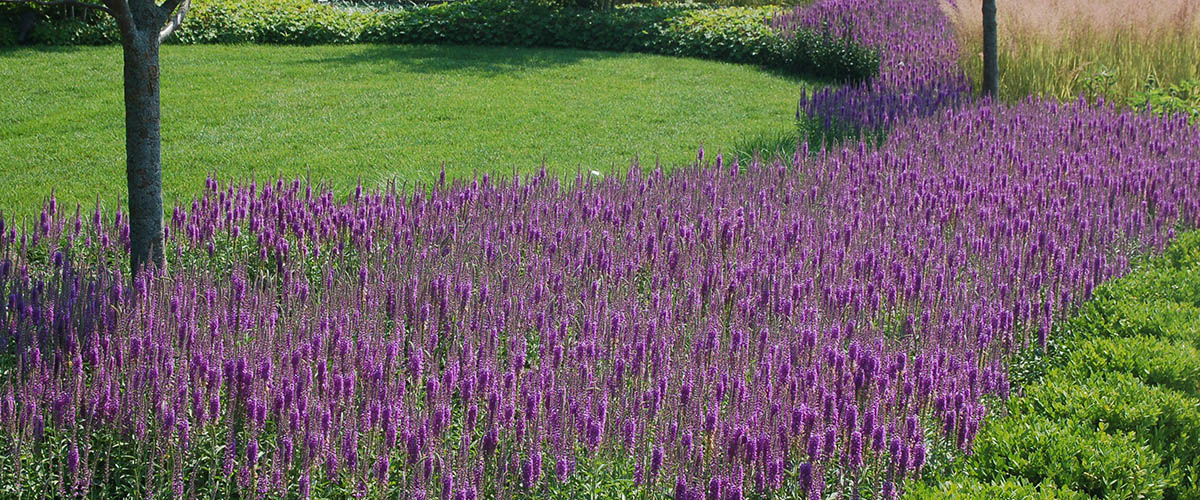
Evaluating Perennials for Chicagoland Gardens
Perennials in Focus is a plant evaluation program that examines new and underused plants for Chicagoland, the third largest metropolitan area in the country. A group of horticultural experts trials and evaluates plants at numerous locations across the region. Results help consumers, public gardens, growers, landscape designers, breeders, and other industry professionals make informed plant choices.
Best Perennials For Supporting Leafcutter Bees In Suburban Landscapes
Leafcutter bees are quiet, efficient pollinators that can thrive in suburban gardens when food and nesting resources are close together. Unlike honey bees, they are solitary insects. A female usually raises her own young, collecting pollen and nectar for individual brood cells rather than maintaining a large communal hive.
The strongest planting schemes offer flowers across several months, with different shapes and colours to suit a range of native and introduced bee species. Perennials are especially useful because they return each season, allowing a small backyard bed, courtyard border or nature strip garden to become more valuable over time.
Findings from the Perennials in Focus programme are based on trials in the Chicagoland region, where horticultural teams assess bloom time, habit, height, spread and garden performance. Australian gardeners can use those observations as a guide, while checking that each plant suits their local rainfall, soil, frost pattern and water restrictions.
A productive bee border does not need to look untidy. Repeated clumps, open flowers, a few stems left standing over winter and a pesticide-free approach can create a polished landscape that supports insects. The best results come from treating flowers, shelter and nesting sites as parts of one small habitat.
| Perennial group | Flowering value | Typical garden role | Australian selection note |
|---|---|---|---|
| Coneflower and rudbeckia | Long summer colour and accessible pollen | Sunny perennial border | Choose forms suited to local heat and drainage |
| Bee balm and mountain mint | Strong attraction for bees and other pollinators | Mid-border mass planting | Provide airflow in humid districts |
| Asters and goldenrods | Late-season nectar and pollen | Autumn succession | Check regional climate and plant availability |
| Catmint and hyssop | Extended flowering with aromatic foliage | Edging or dry garden | Useful where summers are warm and soil is lean |
| Penstemon and scabious | Open, tubular or pincushion flowers | Mixed cottage-style planting | Trial cultivars for heat tolerance and longevity |
Why Leafcutter Bees Belong In A Garden Plan
Leafcutter bees are recognisable by the neat semicircular pieces they remove from rose, lilac and other soft leaves. They use these pieces to line nests in hollow stems, small cavities, gaps in masonry or purpose-built bee hotels. The leaf damage is generally minor and should not be treated as a pest outbreak.
Their short foraging range makes planting density important. Several flowering plants within a few metres of a nesting place are more useful than isolated specimens scattered across a large block. A sunny position protected from strong wind helps bees warm up and return efficiently to their nest.
Avoid insecticides, particularly broad-spectrum sprays applied while plants are flowering. Even products marketed for general garden use can harm visiting insects. Hand removal, pruning after flowering and improving plant health are safer first responses to most minor problems.
Flowering Sequences That Feed Bees Longer
A garden with a single spring flush can be attractive yet provide little food through summer and autumn. Combine early perennials such as penstemon and catmint with summer bloomers including echinacea, rudbeckia, monarda and nepeta. Later plants such as asters and goldenrods help maintain forage when many other flowers have finished.
Aim for overlapping bloom periods rather than a rigid calendar. A clump of three or five plants usually makes a stronger visual and ecological statement than one plant of many different kinds. Repeated groups also make it easier for retailers and growers to evaluate garden performance, including spread, flowering strength and resilience.
The regional plant snapshots published by Perennials in Focus can help readers compare plant traits and identify candidates for a longer flowering sequence. Australian gardeners should then cross-check those candidates against local nursery stock and climate information.
Plant Shapes That Make Foraging Easier
Flat-topped flowers and shallow, open blooms give leafcutter bees easy access to pollen and nectar. Aster-family plants, yarrow, rudbeckia and scabious are useful examples. Tubular flowers can also be valuable, especially when their entrance is accessible to the bee species in the district.
Use several flower forms rather than relying on a single fashionable cultivar. Double flowers may offer less accessible pollen than simple or semi-double forms, while heavily altered plants can produce little nectar. Where possible, select varieties with visible anthers and open centres.
Colour variation can make a border attractive to people while increasing its usefulness to insects. White, purple, blue, pink and yellow blooms create a changing display. In an Australian front garden, this approach can work beside gravel, rendered walls or a native planting palette without requiring a full cottage garden effect.
Choosing Plants For Australian Conditions
Chicagoland trial data reflects cold winters, humid summers and a defined seasonal cycle. Conditions in Australia vary widely, from cool Melbourne gardens to subtropical Brisbane yards and dry Adelaide sites. Treat performance records as evidence about plant habit and flowering potential, not as a guarantee that every cultivar will prosper in every Australian postcode.
In areas affected by water restrictions, place bee-friendly perennials where runoff from paths or downpipes can be captured. Improve soil before planting, use compost where appropriate and apply a moderate organic mulch while keeping crowns clear. In Perth, Adelaide and inland districts, excellent drainage and summer irrigation may matter more than maximum flower size.
Local nurseries, community plant sales and specialist perennial growers often provide better regional advice than a generic catalogue. Ask for plants that have survived local summers, not simply those with attractive labels. On a suburban block, a tough, long-lived clump is generally more useful than a short-lived plant that requires constant replacement.
Nesting Habitat Beyond The Flower Bed
Flowers alone cannot sustain leafcutter bees if suitable nesting places are absent. Retain a few hollow stems over winter, leave a small area of bare or lightly covered soil, and avoid sealing every crack in an old garden wall. Bundles of hollow reeds or purpose-made bee hotels can supplement natural sites when placed in a dry, sheltered position.
Bee hotels need maintenance. Remove and replace nesting tubes according to local guidance, keep them out of persistent rain and position them where morning sun can warm the structure. A neglected hotel can accumulate parasites and disease, so natural nesting options are often preferable to installing a large feature without a care plan.
Skip frequent deep cultivation beneath perennial borders. It can disturb ground-nesting insects and break up established root systems. A layered garden with stems, leaf litter, small gaps and flowering plants creates more useful shelter than an excessively tidy bed.
Maintenance That Protects Pollinator Value
Prune for plant health, structure and access, but avoid cutting every flowering stem immediately after the last bloom. Some insects use hollow stems later in the season, and seed heads provide structure for birds and winter interest. Cut back selectively in late winter where stems are damaged or unsafe.
Timing can also influence repeat flowering. The pruning trial findings for Leucanthemum superbum demonstrate why cultivar, timing and local growing conditions should be considered together. A modest trial on a few plants can reveal the best schedule for a particular garden.
Deadhead plants that respond well to it, but leave some late flowers and seed heads for continuity. Divide overcrowded clumps when flowering declines, preferably during a suitable cool or moist period. Keep records of bloom dates, bee visits, plant spread and water needs so future purchases become more informed.
Building A Practical Suburban Bee Border
A useful starting design might include three layers: low catmint or hyssop at the edge, medium echinacea and rudbeckia through the centre, and taller monarda, asters or goldenrod toward the back. Add a small nesting feature nearby and retain a sunny patch of soil. This can fit a narrow side garden as easily as a large backyard.
For Australian gardeners, plant labels and retail descriptions deserve careful reading. A “pollinator friendly” claim may refer only to flower colour, while reliable information should include mature height, spread, flowering season and water requirements. Responsible retailers can help match plants to local conditions instead of promoting every perennial as universally suitable.
Keep unrelated garden products and insect advice separate from health or lifestyle advertising; for example, supplement marketing should not be confused with evidence-based pollinator guidance. Choose horticultural information that identifies the plant, explains its performance and acknowledges regional limitations.
Start with a manageable patch and observe it through a full growing season. Record which plants flower longest, which attract repeated bee visits and which cope with local heat, frost or rainfall. Then expand the strongest performers, share those observations with local growers and retailers, and create a suburban landscape where leafcutter bees can forage, nest and return year after year.
In the Garden
Evaluator gardens are located across the Chicagoland area, representing a range of growing conditions. Visit our retail and wholesale partners to find trialled perennials for your own garden.
Retail & Wholesale: Hinsdale Nurseries (Willowbrook, IL), Mariani Nurseries (Kenosha, WI & Garden Prairie, IL), Northwind Perennials (Burlington, WI), The Growing Place (Aurora, IL).
Wholesale Only: Hinsdale Nurseries (Plano, IL), Intrinsic Perennial Gardens (Hebron, IL).
Our Evaluation Program
The 2017–2020 evaluation cycle included Agastache 'Blue Boa', Allium senescens 'Blue Eddy', Amsonia ciliata var. filifolia 'Georgia Pancake', Astilbe 'Chocolate Shogun', Boltonia astroides 'James Crocket', Brunnera 'Alexander's Great', and Geranium cinereum 'Jolly Jewel Purple'. Completed evaluations include Amsonia 'Blue Ice' (2004–07).
On April 10, 2020, the program published snapshot profiles for Vernonia lettermanii 'Iron Butterfly', Stokesia laevis 'Elf', Stachys officinalis 'Pink Cotton Candy', Lobelia 'Monet Moment', Helleborus 'Winter Thrillers', Geum 'Mai Tai', Geranium soboliferum 'Butterfly Kisses', Gentiana x intermedia 'True Blue', Eurybia divaricata, Asparagus 'Purple Passion', and Agastache 'Bolero'.
Browse the full collection of snapshots organized alphabetically — from A–D, E–H, I–Q, and R–Z — to find detailed performance data on perennials trialled across Chicagoland.