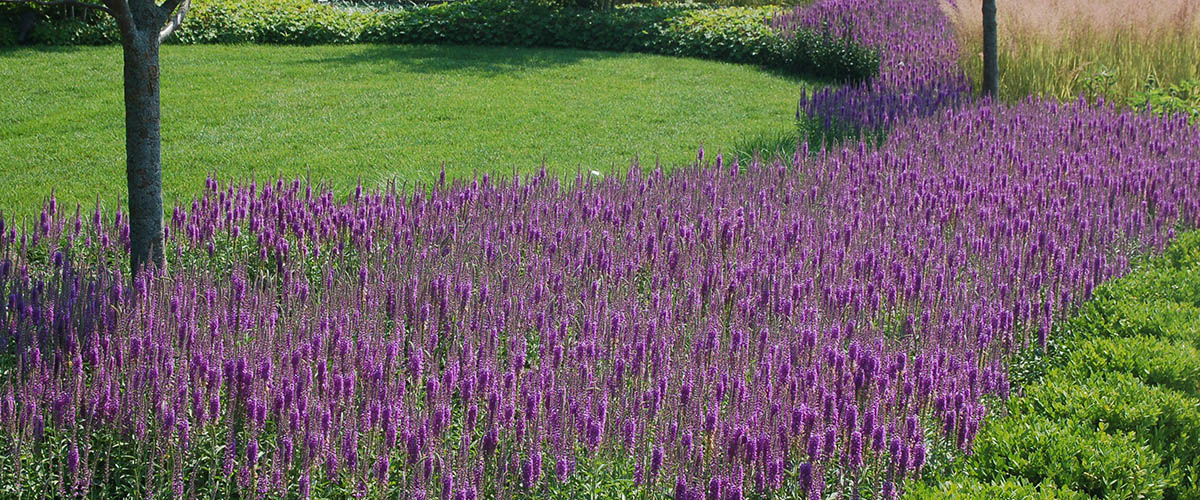
Evaluating Perennials for Chicagoland Gardens
Perennials in Focus is a plant evaluation program that examines new and underused plants for Chicagoland, the third largest metropolitan area in the country. A group of horticultural experts trials and evaluates plants at numerous locations across the region. Results help consumers, public gardens, growers, landscape designers, breeders, and other industry professionals make informed plant choices.
How Pruning Time Shapes Shasta Daisy Reblooming
Leucanthemum × superbum, commonly called Shasta daisy, is valued for its clean white flowers, sturdy stems, and dependable summer performance. Some cultivars also have the capacity to produce a second flush of blooms after the main display, but that repeat performance depends on more than genetics. Weather, soil moisture, fertility, plant maturity, and pruning time all influence what happens after the first flowers fade.
For gardeners in the Chicagoland region, the timing of maintenance is especially important. The first bloom often arrives in June or early July, followed by hot weather, intermittent rainfall, and a shorter window for new stems to develop before autumn. A well-timed cutback can redirect the plant’s energy toward fresh shoots, while a late or overly severe pruning may leave little time for flowers to return.
This regional perspective is useful because catalog descriptions frequently use terms such as “reblooming” or “continuous bloom” without explaining the conditions required. Evaluations across gardens and seasons can show whether a cultivar genuinely repeats in the local climate, how quickly it responds to trimming, and whether the second flush is substantial enough to matter in a border.
What Reblooming Means In Shasta Daisies
Reblooming does not always mean that a plant flowers continuously from June through September. In many Shasta daisies, it means a primary flowering period followed by a smaller second display several weeks later. The repeat flush may contain fewer flower heads, shorter stems, or blooms that appear unevenly across the clump.
Cultivar genetics set the potential, but pruning determines whether that potential is used. Once pollinated flower heads remain on the plant, the stems continue to mature and the plant invests in seed production. Removing spent flowers and a portion of the flowering stems can encourage renewed vegetative growth and, in responsive selections, the formation of additional buds.
Plant age also matters. A newly planted division may spend its first season establishing roots rather than producing a strong second flush. Mature clumps with adequate moisture and sunlight generally recover more quickly after cutting. This is one reason multi-season trials provide a more reliable picture than a single garden observation.
The Best Window For The First Cut
The most useful pruning window begins when the first flowering cycle has clearly declined. Rather than removing one faded flower at a time indefinitely, gardeners can cut the spent stems back once most of the heads have finished. In the Chicago area, that often falls from late June through mid-July, although the exact date varies by cultivar and spring temperatures.
A moderate cutback usually works better than a severe shearing. Remove the old flowering stems to just above healthy foliage, leaving the basal leaves intact whenever possible. A reduction of roughly one-third to one-half of the plant’s height is often sufficient. This preserves photosynthetic tissue while improving the appearance of the clump and allowing new shoots to emerge.
If only a few flowers have faded, selective deadheading can extend the first display. Once the majority of stems are finished, however, individual cuts become time-consuming and may produce an irregular plant. A coordinated cutback encourages a more synchronized period of regrowth, which can lead to a clearer second bloom.
How Timing Changes The Outcome
Pruning immediately after the first flush gives Shasta daisies the longest recovery period. New basal shoots need time to develop, and flowering stems must mature before cool nights slow growth. Cutting several weeks earlier can therefore make the difference between a visible late-summer display and a plant that produces foliage but no meaningful rebloom.
Waiting too long creates a different problem. A late-August or early-September cut may stimulate tender growth just as day length shortens and temperatures fall. That growth may remain vegetative, suffer frost damage, or fail to form open flowers. Late pruning is still appropriate for removing diseased or collapsed stems, but it should not be expected to create a new flowering cycle.
The plant’s response also depends on the amount removed. A light deadheading encourages continued flowering on existing stems, while a full post-bloom cutback asks the plant to rebuild a larger portion of its canopy. In a dry summer, severe pruning can increase stress because the plant has fewer leaves to support root function and recovery.
| Pruning approach | Typical timing | Likely response | Main risk |
|---|---|---|---|
| Individual deadheading | Throughout first bloom | Extends scattered flowering | Labor-intensive, uneven appearance |
| Moderate cutback | As the main flush fades | Best chance of coordinated regrowth | Requires adequate moisture |
| Severe shearing | Immediately after bloom | May produce fresh foliage and some buds | Slower recovery, reduced vigor |
| Late-season trimming | August or later | Mostly improves appearance | Too little time for rebloom |
| Fall cleanup | After frost or dormancy | Removes declining stems | Does not initiate a second flush |
Chicagoland Conditions That Support A Second Flush
Sunlight is the foundation of repeat flowering. Shasta daisies perform best with at least six hours of direct sun, and plants shaded by late-summer growth may produce foliage without enough energy for new flowers. Good air circulation also helps leaves dry quickly after rain and reduces the likelihood of foliar disease in dense clumps.
Moisture should be consistent during the recovery period. Newly pruned plants are rebuilding shoots and can suffer if the soil becomes repeatedly dry. Water deeply when needed rather than applying frequent shallow irrigation, and use a thin layer of mulch to moderate soil temperature without covering the crown.
Fertilizer should be used with restraint. Excess nitrogen can produce lush leaves and floppy stems while delaying flowering. A soil test is more useful than routine feeding, particularly in established beds. Compost incorporated into poor soil can improve root conditions, but heavy fertilization after pruning is unlikely to compensate for insufficient light or late timing.
In northern Illinois, winter hardiness is generally less of a concern for established Shasta daisies than summer stress and crown drainage. Plants that enter winter weak, waterlogged, or overgrown may perform poorly the following year. For comparison, gardeners managing less hardy species can consult this guide to overwintering tender perennials, while treating Shasta daisy maintenance as a hardy perennial management question.
Cultivar Differences Matter
Not every Leucanthemum × superbum cultivar has the same reblooming capacity. Some selections are bred for a concentrated early display, while others are promoted for extended or repeat flowering. Plant height, stem strength, flower size, and disease resistance can also affect how attractive the plant remains after pruning.
Compact cultivars may rebound quickly because their shorter stems require less regrowth. Tall selections can offer a stronger initial presence but may need staking, especially if summer storms follow pruning. Double-flowered forms may respond differently from single forms because they can devote more resources to larger flower heads.
Trial records should therefore distinguish between “rebloomed” and “remained in flower.” Useful observations include the date of the first cut, the date of the next flower, the number of new stems, flower quality, and the plant’s overall shape. Recording those details across several gardens can reveal whether a response is consistent or simply the result of an unusually favorable season.
A Practical Pruning Routine
Begin by inspecting the clump rather than pruning by calendar alone. When most flowers are brown, faded, or visibly declining, remove the finished stems with clean pruners. Cut just above a healthy leaf cluster or low enough to leave a compact framework of foliage.
After pruning, check the soil over the next two weeks. Supply deep water during dry weather, remove damaged leaves, and avoid crowding the plant with fast-growing neighbors. New shoots should appear from the crown or lower stems; their development is a useful sign that the cutback occurred early enough.
Gardeners can use these simple practices to improve the odds of a second display:
- Prune soon after the main flowering flush rather than waiting for autumn.
- Leave healthy basal foliage in place after a moderate cutback.
- Provide full sun and even moisture during regrowth.
- Avoid high-nitrogen fertilizer unless a soil test indicates a deficiency.
- Record cultivar, pruning date, regrowth, and second-bloom timing each season.
Turning Observations Into Better Plant Choices
A pruning schedule can reveal a cultivar’s potential, but it cannot create reblooming where the genetics and climate do not support it. If a plant produces vigorous foliage but no second flowers after timely care, that result is valuable information. It may be better suited to a strong early-season display than to a late-summer role.
For home gardeners, these observations help match plants to expectations. Landscape professionals can use them when designing borders that need reliable succession, while growers and retailers can describe performance with greater precision. Public gardens and trial sites can also compare the visual value of a smaller repeat flush against traits such as disease resistance or stem strength.
Track your Shasta daisies through the next growing season, noting first bloom, pruning date, regrowth speed, and the strength of any second flush. Share clear observations from Chicagoland gardens through regional evaluation work so that future plant selections reflect real performance rather than broad claims alone.
In the Garden
Evaluator gardens are located across the Chicagoland area, representing a range of growing conditions. Visit our retail and wholesale partners to find trialled perennials for your own garden.
Retail & Wholesale: Hinsdale Nurseries (Willowbrook, IL), Mariani Nurseries (Kenosha, WI & Garden Prairie, IL), Northwind Perennials (Burlington, WI), The Growing Place (Aurora, IL).
Wholesale Only: Hinsdale Nurseries (Plano, IL), Intrinsic Perennial Gardens (Hebron, IL).
Our Evaluation Program
The 2017–2020 evaluation cycle included Agastache 'Blue Boa', Allium senescens 'Blue Eddy', Amsonia ciliata var. filifolia 'Georgia Pancake', Astilbe 'Chocolate Shogun', Boltonia astroides 'James Crocket', Brunnera 'Alexander's Great', and Geranium cinereum 'Jolly Jewel Purple'. Completed evaluations include Amsonia 'Blue Ice' (2004–07).
On April 10, 2020, the program published snapshot profiles for Vernonia lettermanii 'Iron Butterfly', Stokesia laevis 'Elf', Stachys officinalis 'Pink Cotton Candy', Lobelia 'Monet Moment', Helleborus 'Winter Thrillers', Geum 'Mai Tai', Geranium soboliferum 'Butterfly Kisses', Gentiana x intermedia 'True Blue', Eurybia divaricata, Asparagus 'Purple Passion', and Agastache 'Bolero'.
Browse the full collection of snapshots organized alphabetically — from A–D, E–H, I–Q, and R–Z — to find detailed performance data on perennials trialled across Chicagoland.