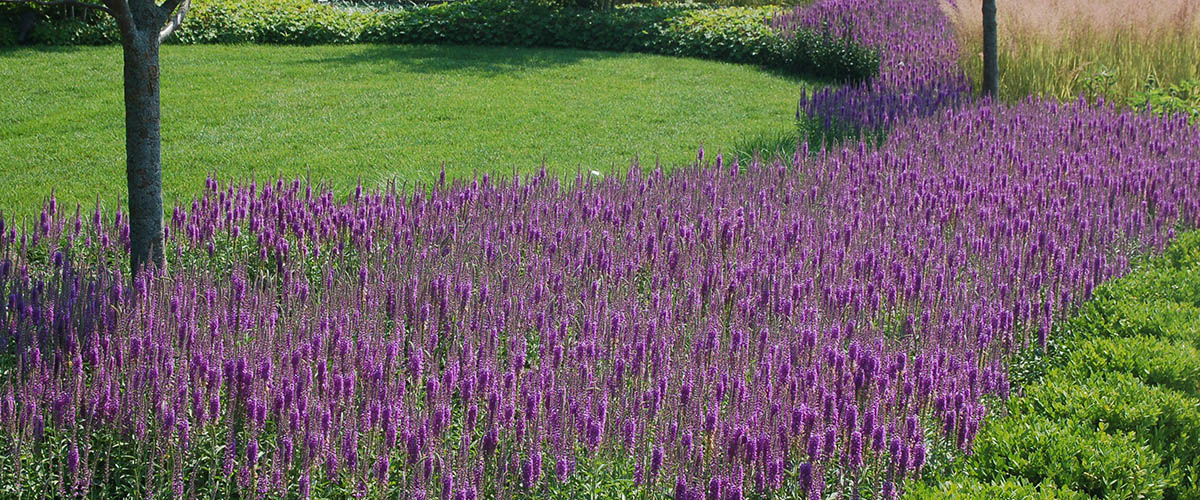
Evaluating Perennials for Chicagoland Gardens
Perennials in Focus is a plant evaluation program that examines new and underused plants for Chicagoland, the third largest metropolitan area in the country. A group of horticultural experts trials and evaluates plants at numerous locations across the region. Results help consumers, public gardens, growers, landscape designers, breeders, and other industry professionals make informed plant choices.
Aquilegia Canadensis Selections For Woodland Edges
The best Aquilegia canadensis selections for naturalizing in woodland edges combine reliable flowering, useful self-sowing and a habit that looks at home among grasses, ferns and fallen leaves. This North American columbine brings nodding red-and-yellow flowers in spring, followed by airy blue-green foliage that remains attractive after bloom.
For gardeners in Australia, the plant is especially useful where a garden has filtered light rather than deep darkness. It can soften the transition between lawn and trees, brighten a shady path or fill the loose, informal spaces beneath deciduous canopies. Its performance will vary widely, however, from the cool, damp conditions of the Dandenongs or Hobart to the hotter, drier edges of Adelaide and inland New South Wales.
Perennials in Focus evaluates plants across Chicagoland gardens, recording flowering time, colour, height, spread and seasonal behaviour. Those trials provide valuable evidence about plant habit and durability, but Australian gardeners should interpret the findings through local conditions. A Chicago winter is far colder than a Sydney winter, while an Australian summer can impose more heat and drought stress.
The most promising choices are not necessarily the largest-flowered cultivars. For a naturalistic planting, a plant that sets some viable seed, holds a tidy outline and tolerates competition is often more valuable than one bred solely for exhibition. The following selections offer different combinations of colour, height and informality.
| Selection | Typical character | Woodland-edge value | Australian consideration |
|---|---|---|---|
| Species form | Red and yellow flowers, open habit | Best for a natural, variable colony | Most useful where some self-sowing is welcome |
| ‘Little Lanterns’ | Compact, red-and-yellow flowers | Suits paths, small gardens and front edges | May need protection from harsh afternoon heat |
| ‘Corbett’ | Pale yellow to creamy flowers, softer effect | Blends well with ferns and pale woodland plants | A good choice for bright shade |
| ‘Pink Lanterns’ | Pink-toned flowers with the species form | Adds colour variation without a formal look | Confirm local nursery stock and colour stability |
| Mixed seed-grown plants | Variable height and flower colour | Creates the most relaxed, natural colony | Select seedlings that suit the local microclimate |
Why The Species Form Matters
The straight species is often the strongest starting point for naturalising. Its red sepals and yellow inner petals create the familiar woodland-columbine appearance, while its upright stems allow flowers to rise above low groundcovers. Seed-grown plants introduce modest variation in height, colour intensity and flowering time, which helps a planting avoid a manufactured appearance.
That variation is also useful ecologically and horticulturally. A colony of genetically diverse seedlings may adapt more readily to changing conditions than a bed made entirely from one cloned cultivar. Allowing a few seed capsules to mature can gradually produce plants that are better suited to the specific light, drainage and moisture pattern of the garden.
‘Little Lanterns’ For Smaller Spaces
‘Little Lanterns’ is a compact selection valued for its relatively short stature and bright flowers. It works well along a woodland path, at the front of a border or beneath small deciduous trees where taller plants would become untidy. Its scale makes it easier to combine with violets, native violets, low grasses, heucheras and small ferns.
For Australian gardeners, compact growth can be an advantage in courtyards and suburban gardens where shade is limited and planting areas are narrow. In warmer districts, site it where morning sun or bright filtered light is available, with protection from reflected heat off paving and masonry. A mulch of leaf litter or fine compost can help keep the root zone cooler without making the soil permanently wet.
‘Corbett’ In Light-Coloured Plantings
‘Corbett’ offers a paler interpretation, with flowers in soft yellow and cream tones rather than the stronger red-and-yellow contrast of the species. It is particularly effective beside silver foliage, white-flowered perennials and the fresh green leaves of ferns. In a shaded garden, the flowers can appear luminous without creating a visually busy patch.
This selection suits woodland edges designed to feel calm and layered. Combine it with Japanese anemones, brunnera, epimediums or locally appropriate shade plants, leaving enough open soil for seedlings to appear. The pale flowers may be less dramatic from a distance, so planting several together or repeating them along a path gives the colour greater presence.
‘Pink Lanterns’ And Colour Variation
‘Pink Lanterns’ is useful when a gardener wants the form and informality of Aquilegia canadensis with a gentler flower palette. Pink tones can bridge the strong colours of spring bulbs and the softer greens that dominate a woodland margin. It also pairs naturally with mauve, lavender and burgundy foliage.
Named selections may be less consistently available in Australian nurseries than common Aquilegia hybrids, and labels can vary between suppliers. Check that the plant is identified as A. canadensis rather than a different columbine species or hybrid. Where exact cultivar identity is uncertain, a reputable grower selling flowering plants is preferable to an anonymous mixed tray.
Choosing A Site For Naturalising
A bright woodland edge is usually better than deep shade. Aim for two to four hours of gentle sun, dappled light throughout the day or strong reflected brightness beneath open trees. In Melbourne’s outer eastern suburbs, the plant may enjoy the cool conditions beneath deciduous trees; in Brisbane or Sydney, it may need a cooler southern or eastern aspect and reliable summer moisture.
Soil should drain freely while retaining enough organic matter to prevent rapid drying. Avoid placing columbines in a permanently soggy hollow, particularly where summer humidity encourages fungal problems. In dry gardens around Perth or Adelaide, naturalising may be limited unless plants receive supplementary water during their first seasons and are protected from hot western exposure.
Encouraging A Loose Colony
Naturalising does not mean abandoning maintenance. Remove diseased foliage, keep aggressive groundcovers from smothering seedlings and water during prolonged dry spells while the plants establish. After flowering, leave selected seed heads in place and let ripe seed fall around the parent plants. Seedlings often appear in cracks, beside rocks or at the edge of mulch rather than exactly where the original plant was installed.
To maintain a natural look, thin only where plants become crowded or spill into paths. Transplant young seedlings in autumn or during a cool spell, taking a generous plug of soil around the roots. In regions with slug and snail pressure, inspect new growth regularly, especially after rain. This practical observation is as important as recorded flowering dates in determining whether a selection deserves a permanent place.
Reading Trial Results For Australian Gardens
Chicagoland trial results can reveal useful patterns: whether a plant flowers early or late, remains upright after rain, produces a dense clump or spreads by seed, and keeps attractive foliage after bloom. These observations help Australian gardeners compare selections before buying, even though local heat, rainfall and pest pressure will alter the final result.
The same habit of careful observation applies to other perennial evaluations. For example, the Agastache trial findings show how repeated assessment across seasons can uncover differences that a single nursery photograph will not reveal. Record flowering dates, seedling numbers, summer survival and the amount of water required in your own garden.
Building A Layered Woodland Edge
Aquilegia canadensis looks most convincing when it is part of several plant layers rather than isolated in a bare bed. Place taller perennials and shrubs behind it, medium-height columbines through the middle, and low groundcovers around the margins. Fallen leaves, stones and naturally shifting seedlings can reinforce the woodland character.
Use repetition rather than rigid symmetry. Three groups of ‘Little Lanterns’ may lead the eye along a path, while species seedlings and ‘Corbett’ fill the spaces between. In a larger garden, allow the colony to mingle with grasses and fern fronds, cutting back only plants that crowd the columbines or obscure their flowers.
Choose a selection, prepare a well-drained site and observe it across at least two growing seasons. Record which plants flower longest, cope best with local summer conditions and produce seedlings in useful positions. Those notes will help Perennials in Focus and fellow gardeners build a clearer picture of which aquilegias truly earn a place in Australian woodland-edge plantings.
In the Garden
Evaluator gardens are located across the Chicagoland area, representing a range of growing conditions. Visit our retail and wholesale partners to find trialled perennials for your own garden.
Retail & Wholesale: Hinsdale Nurseries (Willowbrook, IL), Mariani Nurseries (Kenosha, WI & Garden Prairie, IL), Northwind Perennials (Burlington, WI), The Growing Place (Aurora, IL).
Wholesale Only: Hinsdale Nurseries (Plano, IL), Intrinsic Perennial Gardens (Hebron, IL).
Our Evaluation Program
The 2017–2020 evaluation cycle included Agastache 'Blue Boa', Allium senescens 'Blue Eddy', Amsonia ciliata var. filifolia 'Georgia Pancake', Astilbe 'Chocolate Shogun', Boltonia astroides 'James Crocket', Brunnera 'Alexander's Great', and Geranium cinereum 'Jolly Jewel Purple'. Completed evaluations include Amsonia 'Blue Ice' (2004–07).
On April 10, 2020, the program published snapshot profiles for Vernonia lettermanii 'Iron Butterfly', Stokesia laevis 'Elf', Stachys officinalis 'Pink Cotton Candy', Lobelia 'Monet Moment', Helleborus 'Winter Thrillers', Geum 'Mai Tai', Geranium soboliferum 'Butterfly Kisses', Gentiana x intermedia 'True Blue', Eurybia divaricata, Asparagus 'Purple Passion', and Agastache 'Bolero'.
Browse the full collection of snapshots organized alphabetically — from A–D, E–H, I–Q, and R–Z — to find detailed performance data on perennials trialled across Chicagoland.