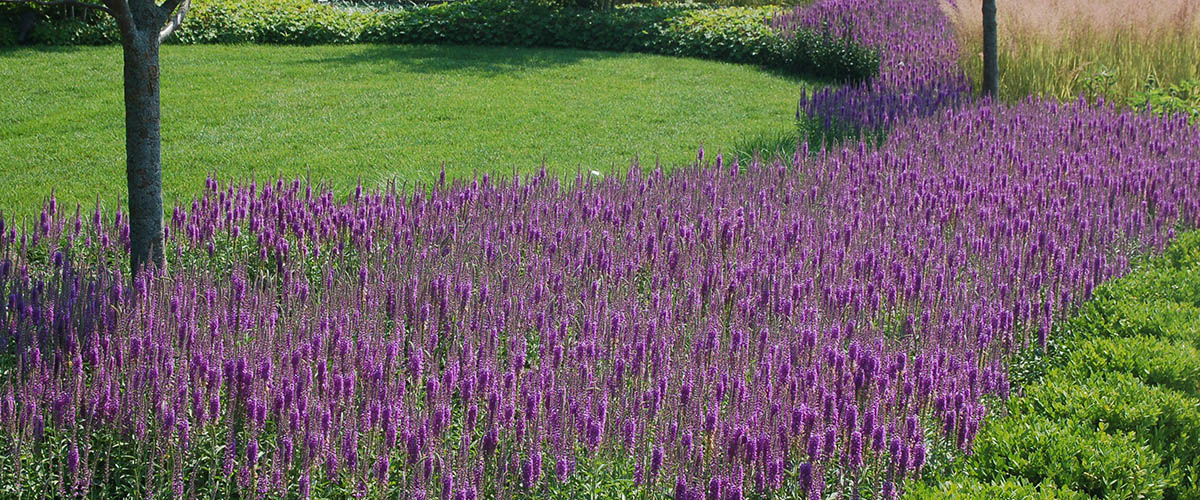
Evaluating Perennials for Chicagoland Gardens
Perennials in Focus is a plant evaluation program that examines new and underused plants for Chicagoland, the third largest metropolitan area in the country. A group of horticultural experts trials and evaluates plants at numerous locations across the region. Results help consumers, public gardens, growers, landscape designers, breeders, and other industry professionals make informed plant choices.
Why You Should Plant Agastache Foeniculum for Its Remaining Seed Heads
Agastache foeniculum, commonly called anise hyssop, earns attention for its summer flower spikes and minty fragrance. Yet its value continues after the purple-blue blossoms fade. The dried flower clusters remain upright on strong stems, giving the late-season garden structure, texture, and a useful source of food for seed-eating birds.
Many perennials become visually unremarkable once flowering ends. Anise hyssop takes a different path. Its spent blooms mature into compact seed heads that catch frost, hold snow, and add subtle movement when much of the border has turned brown. In a Chicagoland garden, that extended presence can make the plant valuable across several seasons.
The remaining seed heads also support a more complete garden ecosystem. They offer feeding opportunities for birds, shelter for small insects, and a natural way for the plant to reproduce. When paired with grasses, coneflowers, asters, or goldenrods, Agastache foeniculum can help a planting look intentional well beyond peak bloom.
The Seed Heads Extend The Plant’s Best Season
Anise hyssop usually flowers from summer into early autumn, producing dense terminal spikes above aromatic foliage. Once the individual flowers drop, the calyxes and upper stems remain visible. Their muted tan, gray-green, and brown tones create a quieter display that complements the stronger colors of autumn perennials.
The seed heads are especially effective when planted in groups. A single plant can look sparse after bloom, while a drift creates repetition and rhythm. The upright stems also contrast with rounded seed heads on coneflowers and airy clouds of ornamental grasses, giving a mixed border several layers of texture.
Because the stems hold their shape reasonably well, gardeners can delay cutting them until late winter or early spring. This keeps the bed attractive during the dormant season and leaves the plant’s stored seed available to wildlife. It also reduces the amount of bare soil exposed to winter weather.
A Useful Food Source For Birds
Mature anise hyssop seeds can be eaten by small seed-feeding birds, particularly when other natural food sources become less abundant. The plant should not be described as a guaranteed bird feeder, since use varies with local bird populations and competing food sources. Still, retaining the dried flower heads gives birds another option in a diverse, pesticide-conscious landscape.
The vertical stems provide more than food. Their structure can create low winter cover for insects and help break the visual openness of a cleaned-up perennial bed. Leaving plant debris in place supports the broader life cycle of beneficial insects that may overwinter in stems, leaf litter, or nearby soil.
This approach works best when several perennial species are allowed to mature naturally. A garden containing anise hyssop, rudbeckia, echinacea, asters, and native grasses offers varied seed sizes, stem shapes, and shelter conditions. The result feels less manicured in winter but more alive.
Strong Seasonal Performance In Chicagoland
Chicagoland gardeners need perennials that can handle humid summers, cold winters, variable rainfall, and compacted urban soils. Agastache foeniculum generally prefers full sun and well-drained soil, and it performs best where winter moisture does not remain around the crown. Good drainage is especially important in heavy clay.
The plant’s upright habit suits prairie-style borders, pollinator gardens, cottage plantings, and larger foundation beds. Its aromatic foliage can discourage browsing compared with some softer-leaved perennials, although no plant should be considered completely deer-proof. Established clumps are usually more resilient than newly planted divisions.
For gardeners comparing cultivars or unfamiliar selections, the program’s regional plant trials offer useful context about how perennial plants behave across multiple gardens and seasons. Region-specific observations can reveal whether a plant keeps its stems upright, maintains a compact habit, or develops an appealing winter silhouette.
| Feature | Agastache foeniculum | Coneflower | Black-eyed Susan | Ornamental grass |
|---|---|---|---|---|
| Summer display | Fragrant purple-blue flower spikes | Large daisy-like flowers | Bright yellow flowers | Plumes or panicles |
| Remaining structure | Upright, narrow seed clusters | Rounded, prominent cones | Small central seed heads | Persistent stems and plumes |
| Wildlife value | Nectar, seeds, insect shelter | Nectar and bird-accessible seeds | Nectar and seeds | Cover and nesting material |
| Typical garden role | Vertical accent or mass planting | Focal point or middle border | Repeating color block | Background or seasonal framework |
| Key site preference | Full sun and good drainage | Sun with average drainage | Sun and moderate moisture | Depends on species |
Plant It Where The Winter Form Can Be Seen
A perennial’s seed heads matter most when they are visible from a path, patio, kitchen window, or frequently used room. Place anise hyssop near plants with lower winter profiles so its stems can rise above them. A row along a walkway can create a strong seasonal edge, while a cluster in a meadow-style bed can blend naturally with grasses.
Consider background color when choosing a location. Pale seed heads show clearly against dark evergreen foliage, fencing, or weathered wood. In a large border, several plants can be repeated at intervals rather than confined to one isolated group. Repetition makes the dormant display appear designed rather than accidental.
Allow enough room for airflow around the crown and avoid sites that stay wet after snowmelt. Although anise hyssop tolerates ordinary garden conditions once established, crowded, shaded, or poorly drained locations may weaken stems and reduce the quality of the remaining seed heads.
Simple Care Preserves The Late-Season Display
The most important maintenance decision is when to remove the stems. Cutting immediately after flowering eliminates the seed heads and shortens the plant’s ornamental season. Unless the plant has become diseased or is blocking access, leave the stems standing through winter and trim them near the base before fresh growth begins in spring.
Deadheading during summer is optional. It can encourage a tidier appearance and sometimes support continued flowering, but it also removes developing seeds. Gardeners who want both repeat bloom and winter structure can remove only a portion of the oldest flower spikes, leaving the rest to mature.
Practices That Keep The Plant Useful
- Grow Agastache foeniculum in full sun for sturdy stems and abundant flowering.
- Choose well-drained soil, especially in areas with heavy clay or winter runoff.
- Water new plants consistently during establishment, then reduce irrigation once roots are settled.
- Leave healthy seed heads standing through winter unless disease or safety concerns require removal.
- Cut old stems in early spring before new shoots become tall and difficult to work around.
Avoid excessive fertilizer, which can produce lush, floppy growth that is less attractive after flowering. A moderate soil amendment at planting is usually sufficient. Dividing an established clump every few years can help maintain vigor, though the plant may also spread gently by self-sowing in favorable conditions.
A Better Match For Naturalistic Plantings
The dried form of anise hyssop supports a naturalistic design because it changes gradually rather than disappearing at the end of bloom. Its flower spikes transition into seed-bearing stems, while neighboring perennials provide their own sequence of color and texture. This layered decline gives the garden continuity from late summer into winter.
Pair it with plants that peak at different times. Spring bulbs can occupy the space before the anise hyssop reaches full size. Summer grasses and coreopsis can share the flowering period, while asters, goldenrods, and sedums carry the composition into autumn. The remaining seed heads then connect the border to the winter landscape.
The plant also fits smaller urban gardens when used selectively. Two or three specimens near a porch may provide enough height and wildlife value without overwhelming the space. In larger landscapes, repeated groups can form a low-maintenance matrix that remains attractive after frost.
Let The Plant Finish Its Story
Garden design often focuses on the moment when flowers are at their brightest, but a perennial’s later stages reveal how well it truly earns its space. Agastache foeniculum continues contributing after bloom through persistent seed heads, winter structure, wildlife support, and opportunities for natural regeneration.
Choose a sunny, well-drained location, combine the plant with other long-lasting perennials, and resist the urge to cut it down too soon. Then use the regional trial findings from Perennials in Focus to compare its habit and seasonal performance with other plants suited to the Chicagoland area, and make anise hyssop part of a border designed to remain engaging after summer ends.
In the Garden
Evaluator gardens are located across the Chicagoland area, representing a range of growing conditions. Visit our retail and wholesale partners to find trialled perennials for your own garden.
Retail & Wholesale: Hinsdale Nurseries (Willowbrook, IL), Mariani Nurseries (Kenosha, WI & Garden Prairie, IL), Northwind Perennials (Burlington, WI), The Growing Place (Aurora, IL).
Wholesale Only: Hinsdale Nurseries (Plano, IL), Intrinsic Perennial Gardens (Hebron, IL).
Our Evaluation Program
The 2017–2020 evaluation cycle included Agastache 'Blue Boa', Allium senescens 'Blue Eddy', Amsonia ciliata var. filifolia 'Georgia Pancake', Astilbe 'Chocolate Shogun', Boltonia astroides 'James Crocket', Brunnera 'Alexander's Great', and Geranium cinereum 'Jolly Jewel Purple'. Completed evaluations include Amsonia 'Blue Ice' (2004–07).
On April 10, 2020, the program published snapshot profiles for Vernonia lettermanii 'Iron Butterfly', Stokesia laevis 'Elf', Stachys officinalis 'Pink Cotton Candy', Lobelia 'Monet Moment', Helleborus 'Winter Thrillers', Geum 'Mai Tai', Geranium soboliferum 'Butterfly Kisses', Gentiana x intermedia 'True Blue', Eurybia divaricata, Asparagus 'Purple Passion', and Agastache 'Bolero'.
Browse the full collection of snapshots organized alphabetically — from A–D, E–H, I–Q, and R–Z — to find detailed performance data on perennials trialled across Chicagoland.