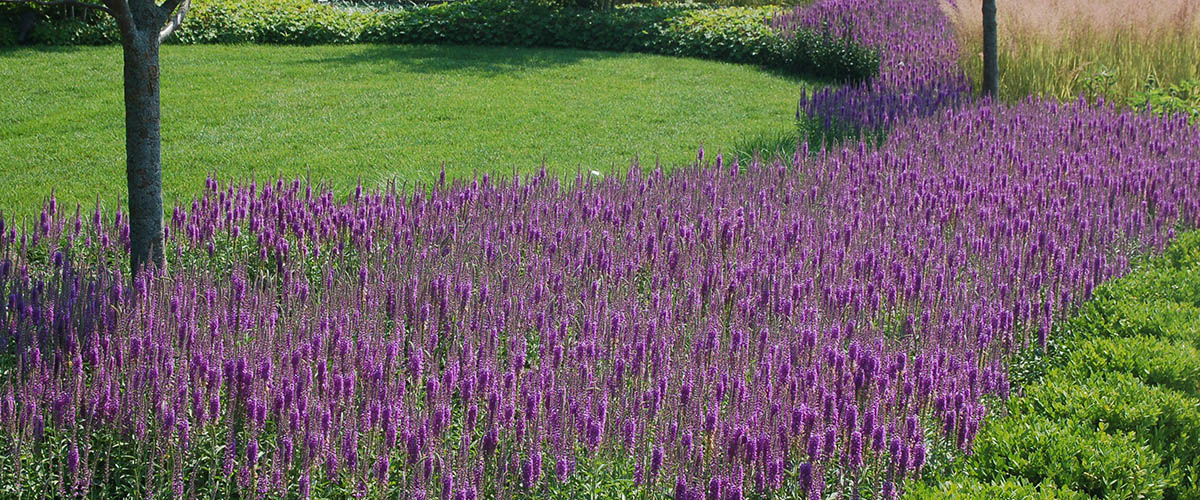
Evaluating Perennials for Chicagoland Gardens
Perennials in Focus is a plant evaluation program that examines new and underused plants for Chicagoland, the third largest metropolitan area in the country. A group of horticultural experts trials and evaluates plants at numerous locations across the region. Results help consumers, public gardens, growers, landscape designers, breeders, and other industry professionals make informed plant choices.
Why Urban Chicago Perennials Struggle in Compacted Soil
A perennial can be well suited to the Chicago climate and still fail in a city garden. The problem is often below the surface. Urban planting beds regularly inherit soil that has been compressed by construction equipment, foot traffic, vehicles, utility work, and years of maintenance. Roots then encounter a dense layer that restricts air, water, and growth.
This issue is especially common in small residential lots, boulevard strips, courtyard gardens, rooftop-adjacent beds, and landscapes built after major renovation. A plant may receive adequate sunlight and appear properly watered, yet remain undersized, flower poorly, or disappear after one difficult winter.
The regional trials documented by Perennials in Focus are valuable because they place plant performance in real Midwestern conditions. The program’s history and mission reflect a practical focus on observing how perennials perform across seasons, sites, and garden settings rather than relying only on catalog descriptions.
Why Urban Soil Behaves Differently
Healthy soil contains a balance of mineral particles, organic matter, water, and air-filled pore spaces. Compaction squeezes those spaces together. Large pores, which normally allow drainage and oxygen movement, are lost first, leaving a dense mass that may drain slowly after rain and become hard as it dries.
Urban soils can also contain construction debris, excess clay, disturbed subsoil, and abrupt layers with different textures. A thin layer of compost added to the surface may improve the planting zone temporarily while roots still encounter a compacted barrier below. This creates a shallow root system that is vulnerable to drought, heat, and frost heaving.
Chicago’s freeze-thaw cycles add another complication. Wet, dense soil can hold roots in an oxygen-poor environment during cool periods. When the surface freezes and thaws, shallow crowns may lift, settle unevenly, or suffer repeated moisture stress. The result can look like winter injury even when poor soil structure is the underlying cause.
How Compaction Damages Perennial Roots
Roots need oxygen for respiration and energy production. In compacted ground, limited pore space reduces gas exchange and slows root expansion. Fine roots may remain close to the crown instead of exploring surrounding soil, reducing access to moisture and nutrients during hot weather.
Water behavior becomes unpredictable. A dense clay layer can repel water when dry, causing irrigation to run off or collect in low spots. When saturated, the same soil may remain wet long after rainfall. Perennials that prefer evenly moist, well-drained conditions can decline just as quickly from prolonged saturation as from drought.
Compaction also interferes with beneficial soil organisms. Earthworms and microorganisms help create channels, decompose organic matter, and release nutrients. Their activity decreases when soil is repeatedly compressed or left waterlogged. Plants then face a combination of weak rooting, poor nutrient availability, and greater susceptibility to crown rot.
Recognizing Stress Above Ground
Compacted soil often produces symptoms that are mistaken for a poor plant choice. New growth may be short, leaves may be smaller than expected, and stems can flop because the root system cannot support vigorous top growth. Flowering may be delayed, sparse, or limited to the first year after planting.
Other signs include water standing in a bed after moderate rain, cracks across the soil surface, a hard layer that resists a hand trowel, and roots that grow sideways along the top of the ground. Turf or moss may colonize bare areas because the surface stays wet, while nearby plants wilt during warm afternoons.
A plant that repeatedly declines in the same bed but performs well elsewhere deserves closer inspection. Compare soil conditions around the crown and several inches below it. If roots are brown, sparse, circling, or concentrated in a narrow shallow band, the planting site may be restricting them more than the perennial’s genetics are.
Testing The Planting Site
Test compaction when the soil is moist but not saturated. Push a sturdy metal rod, soil probe, or long screwdriver into several locations. Note where resistance increases sharply. A hard layer at the surface suggests severe traffic damage; a dense layer below loose topsoil may indicate buried construction compaction.
Digging a small profile is even more informative. Examine the transition between topsoil and subsoil, look for rubble or buried fabric, and check whether roots can cross the boundary. A simple infiltration test can reveal drainage problems: pour water into a shallow hole and observe how quickly it disappears. Repeat the test in more than one spot because urban beds are rarely uniform.
The following pattern helps connect symptoms with likely causes:
| Field observation | Likely soil issue | Perennial response | Useful first step |
|---|---|---|---|
| Water remains after rain | Dense clay or blocked pore space | Yellowing, crown decline | Improve drainage and reduce traffic |
| Soil is hard near the surface | Foot traffic or machinery | Shallow roots, poor vigor | Loosen soil without working it wet |
| Roots stop at a distinct layer | Compacted subsoil | Stunting and drought stress | Break the barrier or raise the bed |
| Plants wilt despite irrigation | Restricted root volume | Small leaves, weak flowering | Check infiltration and root depth |
| Winter losses recur in wet spots | Poor drainage and crown saturation | Rot or heaving | Regrade and select tolerant plants |
Selecting Plants For Difficult Beds
Plant selection still matters, but it should follow a site assessment. Perennials with adaptable root systems and tolerance for variable moisture may handle an imperfect bed better than plants that require sharply drained, open soil. Even tough species need oxygen and sufficient rooting volume, so tolerance should not be treated as permission to plant into a sealed layer.
Regional trial data can help identify reliable performers for Chicago’s heat, humidity, winters, and changing moisture conditions. A perennial that maintains foliage, flowering, and winter survival across multiple evaluation gardens offers more useful evidence than a generic hardiness-zone label. Performance observations are especially relevant when a landscape includes stressful microclimates beside pavement or masonry.
Bloom duration can also influence the value of a resilient plant. The discussion of long-blooming perennials offers useful context for combining dependable site performance with a longer season of color. However, a long-blooming cultivar will still underperform if its roots remain trapped in compacted soil.
Repairing Compacted Garden Soil
For a small bed, remove existing plants during dormancy and loosen the soil deeply with a garden fork or broadfork. Lift and fracture the soil rather than turning it into smooth, compressed layers. Work only when the ground crumbles in your hand; digging wet clay can create long-lasting clods and smear the pore spaces shut.
Incorporate mature compost through the full root zone instead of leaving a thin enriched layer at the surface. Organic matter supports aggregation, but it is not an instant cure for severe compaction. If a dense subsoil layer lies below the bed, consider creating a raised planting area, improving the grade, or addressing the source of traffic and runoff.
Keep machinery and repeated foot traffic out of planting zones. A defined path, temporary boards during construction, and mulch that clearly marks the bed edge can prevent repair work from being undone. After planting, water deeply and less frequently when conditions allow, encouraging roots to explore downward rather than remaining at the surface.
A Practical Management Plan
Urban soil improvement works best as a sequence of modest actions rather than a single amendment. Start with diagnosis, correct drainage or traffic problems, and then match plants to the improved conditions. Monitor the bed through one full growing season before making broad changes, since roots and soil structure need time to respond.
Use these priorities when restoring a compacted perennial bed:
- Identify hard layers, standing water, buried debris, and traffic routes before replanting.
- Loosen soil only when moisture conditions are suitable, and improve the entire rooting depth.
- Blend mature compost into compacted topsoil rather than creating a shallow pocket of rich soil.
- Choose proven, regionally adapted perennials while avoiding plants that demand exceptionally sharp drainage.
- Apply mulch lightly and keep it away from crowns so moisture does not remain against stems.
Seasonal observation remains important. Record flowering, plant height, spread, foliage quality, winter survival, and the timing of decline. Comparing those notes with soil moisture and weather patterns can reveal whether a perennial is failing because of compaction, excessive shade, drought, disease, or an unsuitable plant choice.
When a Chicago planting bed repeatedly defeats otherwise dependable perennials, inspect the ground before replacing the plants again. A probe, a small soil profile, and an honest look at water movement can expose the restriction. Correct the root-zone conditions, select plants supported by regional evidence, and give the new planting enough uncompacted soil to establish. That approach turns an uncertain urban bed into a site where perennial performance can be observed, improved, and sustained.
In the Garden
Evaluator gardens are located across the Chicagoland area, representing a range of growing conditions. Visit our retail and wholesale partners to find trialled perennials for your own garden.
Retail & Wholesale: Hinsdale Nurseries (Willowbrook, IL), Mariani Nurseries (Kenosha, WI & Garden Prairie, IL), Northwind Perennials (Burlington, WI), The Growing Place (Aurora, IL).
Wholesale Only: Hinsdale Nurseries (Plano, IL), Intrinsic Perennial Gardens (Hebron, IL).
Our Evaluation Program
The 2017–2020 evaluation cycle included Agastache 'Blue Boa', Allium senescens 'Blue Eddy', Amsonia ciliata var. filifolia 'Georgia Pancake', Astilbe 'Chocolate Shogun', Boltonia astroides 'James Crocket', Brunnera 'Alexander's Great', and Geranium cinereum 'Jolly Jewel Purple'. Completed evaluations include Amsonia 'Blue Ice' (2004–07).
On April 10, 2020, the program published snapshot profiles for Vernonia lettermanii 'Iron Butterfly', Stokesia laevis 'Elf', Stachys officinalis 'Pink Cotton Candy', Lobelia 'Monet Moment', Helleborus 'Winter Thrillers', Geum 'Mai Tai', Geranium soboliferum 'Butterfly Kisses', Gentiana x intermedia 'True Blue', Eurybia divaricata, Asparagus 'Purple Passion', and Agastache 'Bolero'.
Browse the full collection of snapshots organized alphabetically — from A–D, E–H, I–Q, and R–Z — to find detailed performance data on perennials trialled across Chicagoland.