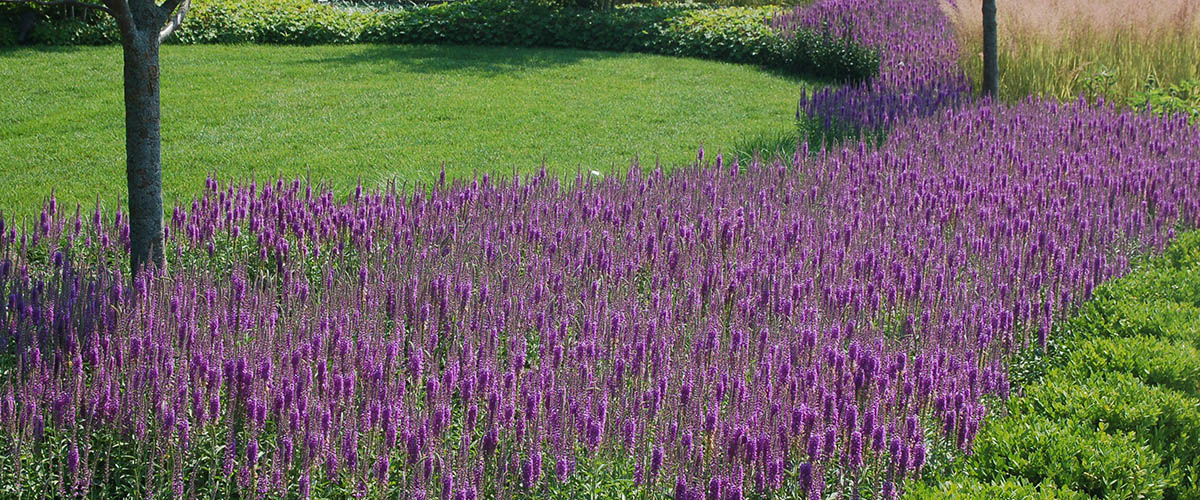
Evaluating Perennials for Chicagoland Gardens
Perennials in Focus is a plant evaluation program that examines new and underused plants for Chicagoland, the third largest metropolitan area in the country. A group of horticultural experts trials and evaluates plants at numerous locations across the region. Results help consumers, public gardens, growers, landscape designers, breeders, and other industry professionals make informed plant choices.
What Chicago trials revealed about new aster cultivars
Testing new aster cultivars in Chicago means looking beyond a single impressive flower display. A plant may bloom beautifully in September yet disappoint if it flops, develops mildew, spreads unpredictably, or struggles through a wet spring and a severe winter. The Perennials in Focus evaluation program examines those details across multiple gardens and growing seasons.
Our trials focused on how contemporary asters perform under Chicagoland conditions: variable temperatures, heavy clay in many sites, humid summers, sudden autumn frosts, and inconsistent winter snow cover. The results showed that cultivar selection strongly influences garden performance, especially when comparing compact landscape asters with taller, traditional forms.
The most useful lesson is that “aster” does not describe one uniform garden experience. Flowering time, plant architecture, foliage health, pollinator value, and winter survival can differ substantially. Regional observations help gardeners choose a plant that fits a specific bed rather than relying on a catalog photograph or a hardiness rating alone.
Flowering lasted well into autumn
The strongest feature across the trials was the dependable late-season color. Asters filled a period when many summer perennials were fading, providing flowers from late summer into fall depending on the cultivar and the weather. This made them valuable companions for ornamental grasses, goldenrods, sedums, and late-blooming native perennials.
Bloom timing varied enough to matter in a designed border. Early selections began contributing color before the main autumn display, while later cultivars carried flowers toward the first hard frost. In a mixed planting, combining different bloom windows created a longer sequence than relying on one cultivar.
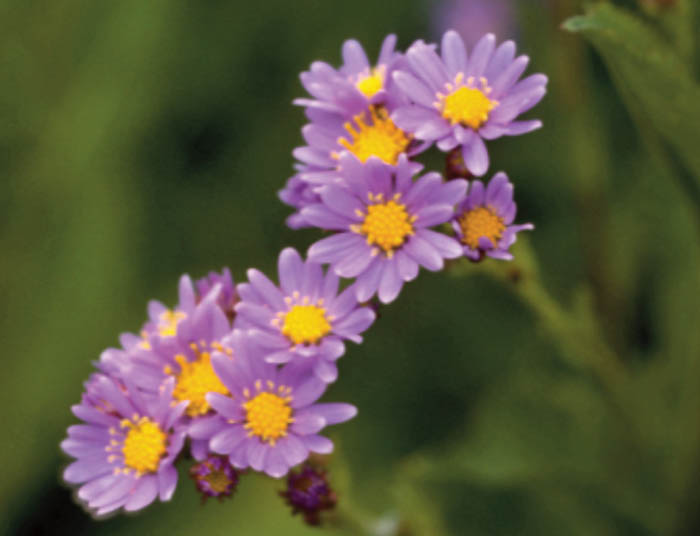
Flower form and color also affected the visual impact. Lavender, violet-blue, pink, and white flowers attracted attention from a distance, while smaller flowers produced a softer haze when plants were viewed as a group. Cultivars with abundant branching generally created a fuller display than those that concentrated flowers near the upper stems.
Plant shape mattered as much as flower color
Several newer selections showed improved garden habit compared with older asters that can become tall, loose, or difficult to support. Compact plants were easier to position near paths and in smaller perennial borders. They also required less pinching or staking, which reduces maintenance during the busiest part of the growing season.
Height remained an important consideration. Taller cultivars created useful vertical structure toward the back of a border, but their success depended on neighboring plants and exposure. Plants grown in rich soil or partial shade sometimes became more vigorous and needed support, particularly after heavy rain or strong wind.
The best-performing forms developed enough branching to look substantial without becoming congested. Good branching also distributed flowers more evenly, preventing a sparse lower half and a crowded crown. Cutting plants back earlier in the season can sometimes improve compactness, but a naturally well-shaped cultivar is a more reliable starting point.
Foliage health separated the dependable performers
Chicago’s humid summer weather placed pressure on aster foliage. Powdery mildew was the most visible concern in crowded or poorly ventilated locations, especially where plants received limited morning sun. Some cultivars maintained clean leaves for much of the season, while others showed discoloration or mildew before flowering reached its peak.
Site preparation influenced results, but genetics clearly played a role. Adequate spacing, good air movement, and watering at the soil line helped every entry. Still, a cultivar with naturally healthier foliage remained attractive longer and required less attention than one that depended on perfect conditions.
Leaf quality is easy to overlook when shopping in spring, when plants may appear identical in containers. Trial observations revealed why mature-season performance matters. Aster cultivars should be judged during the period when gardeners actually need them to carry the border, not simply by their early-season growth.
Trial performance at a glance
The following summary describes general patterns observed among the evaluated types. It is intended as a guide to selecting traits, not as a universal ranking, because performance can shift with soil, light, moisture, and maintenance.
| Trait observed | Strong performers tended to show | Garden value |
|---|---|---|
| Bloom period | Consistent flowering from late summer into fall | Extends seasonal interest |
| Plant habit | Compact or well-branched growth | Reduces staking and crowding |
| Foliage | Good resistance to mildew and summer decline | Keeps plants attractive before bloom |
| Flower display | Abundant, evenly distributed blooms | Creates stronger border impact |
| Winter response | Reliable emergence after cold weather | Supports long-term planting plans |
| Site adaptability | Tolerance of ordinary garden conditions | Makes placement easier |
Winter survival was encouraging overall, although exposed sites and poorly drained soils created more risk. Plants weakened by excess winter moisture or late-season stress were less likely to return strongly. Gardeners seeking dependable choices can also review these winter-hardy perennials for broader context on plants suited to the region.
Soil and exposure changed the outcome
Asters performed best where they received full sun, consistent moisture, and reasonable drainage. Full sun supported sturdier stems and better flowering, while excessive shade encouraged lanky growth and reduced the number of blooms. Morning sun was particularly helpful in sites where foliage disease was a recurring concern.
Heavy clay soil did not automatically rule out asters, but compacted ground limited root development and increased the risk of standing water. Amending an entire planting area with organic matter, improving drainage where practical, and avoiding frequent shallow watering created better conditions than placing plants in an undisturbed, dense subsoil. More guidance on clay soil practices can help gardeners adapt beds before planting.
Moisture balance mattered through every season. Newly planted asters needed regular watering while roots established, but mature plants benefited from soil that drained between heavy rains. A thick layer of mulch helped moderate temperature and moisture, provided it was kept slightly away from the crowns.
What the findings mean for plant selection
For a small urban garden, compact cultivars with a tidy habit and strong foliage may be more useful than the tallest or most heavily flowering types. They can fit among shrubs and other perennials without overwhelming neighboring plants. In larger borders, taller selections offer late-season height and can be paired with sturdy companions that disguise lower stems.
Gardeners should also consider the role asters will play in the planting. A mass of one cultivar produces a clear color statement, while several cultivars can create a succession of bloom times. Pairing asters with grasses, seedheads, and plants with contrasting foliage adds structure after the petals fade.
Pollinator value was another practical benefit. Flowering asters provided a late-season food source for bees and other insects when fewer garden plants were in bloom. Leaving dried stems and seedheads standing into winter also added habitat and visual texture, although cleanup timing can be adjusted for the appearance and needs of each garden.
Practical choices for a stronger autumn border
Use the trial lessons as a checklist when comparing plants at a nursery or planning a new bed:
- Match mature height and spread to the planting location instead of choosing by flower color alone.
- Give asters full sun and enough space for air circulation around the foliage.
- Select cultivars with documented disease resistance or consistently clean leaves in regional trials.
- Improve compacted clay and avoid locations where water remains around the crown after rain.
- Combine early-, mid-, and late-blooming selections to extend fall color.
Asters should be planted with enough room to reach their mature width without being crowded by aggressive neighbors. Dividing overcrowded clumps in spring can restore vigor and improve airflow, while removing spent stems in late winter supports insects and birds during the colder months.
The clearest lesson from the Chicago evaluations is that reliable performance comes from the interaction of cultivar and site. A genetically strong plant still needs appropriate light and drainage, but the right cultivar gives gardeners a wider margin for ordinary weather, imperfect soil, and busy maintenance schedules.
Use these findings to compare available aster cultivars with greater confidence, record how they perform in your own garden, and share observations with local growers, designers, and plant evaluators. Regional experience turns a promising new perennial into a dependable recommendation for the next Chicagoland planting season.
In the Garden
Evaluator gardens are located across the Chicagoland area, representing a range of growing conditions. Visit our retail and wholesale partners to find trialled perennials for your own garden.
Retail & Wholesale: Hinsdale Nurseries (Willowbrook, IL), Mariani Nurseries (Kenosha, WI & Garden Prairie, IL), Northwind Perennials (Burlington, WI), The Growing Place (Aurora, IL).
Wholesale Only: Hinsdale Nurseries (Plano, IL), Intrinsic Perennial Gardens (Hebron, IL).
Our Evaluation Program
The 2017–2020 evaluation cycle included Agastache 'Blue Boa', Allium senescens 'Blue Eddy', Amsonia ciliata var. filifolia 'Georgia Pancake', Astilbe 'Chocolate Shogun', Boltonia astroides 'James Crocket', Brunnera 'Alexander's Great', and Geranium cinereum 'Jolly Jewel Purple'. Completed evaluations include Amsonia 'Blue Ice' (2004–07).
On April 10, 2020, the program published snapshot profiles for Vernonia lettermanii 'Iron Butterfly', Stokesia laevis 'Elf', Stachys officinalis 'Pink Cotton Candy', Lobelia 'Monet Moment', Helleborus 'Winter Thrillers', Geum 'Mai Tai', Geranium soboliferum 'Butterfly Kisses', Gentiana x intermedia 'True Blue', Eurybia divaricata, Asparagus 'Purple Passion', and Agastache 'Bolero'.
Browse the full collection of snapshots organized alphabetically — from A–D, E–H, I–Q, and R–Z — to find detailed performance data on perennials trialled across Chicagoland.