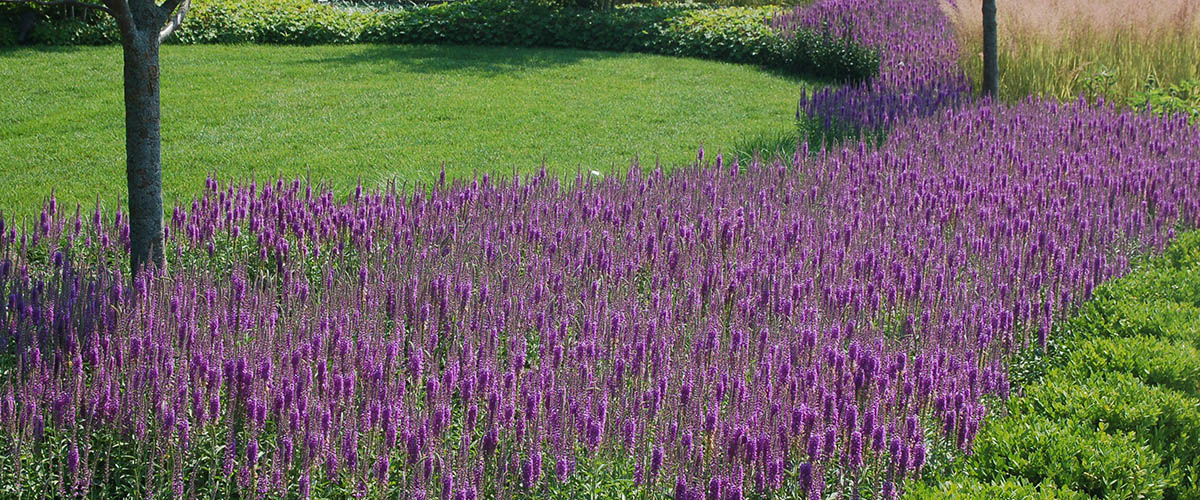
Evaluating Perennials for Chicagoland Gardens
Perennials in Focus is a plant evaluation program that examines new and underused plants for Chicagoland, the third largest metropolitan area in the country. A group of horticultural experts trials and evaluates plants at numerous locations across the region. Results help consumers, public gardens, growers, landscape designers, breeders, and other industry professionals make informed plant choices.
Using Perennials to Create a Butterfly Corridor in Your Backyard
A butterfly-friendly garden can be much more than a colorful planting bed. When several nearby spaces offer nectar, shelter, water, and host plants, they form a connected route where butterflies can feed, rest, mate, and complete their life cycle. Even a small suburban yard can contribute one useful link in that chain.
In Chicagoland, successful habitat planning must account for cold winters, humid summers, clay or compacted soils, variable sunlight, and periods of drought. Perennial plants are especially valuable because they return each year, develop substantial root systems, and provide dependable structure as the garden matures.
The strongest results come from planting for several butterfly life stages rather than choosing flowers based only on bloom color. A corridor should include succession across spring, summer, and fall, with species suited to local conditions and enough variety to support both adult butterflies and caterpillars.
Map movement through the yard
Begin by studying how butterflies might move through your property. Sunny edges, fence lines, south-facing walls, open lawns, and sheltered corners can all become habitat. Identify existing trees, shrubs, native grasses, garden beds, and areas where pesticides are rarely used. These features may already offer wind protection or resting places.
A corridor does not need to be a continuous strip of flowers. A series of connected or “stepping-stone” plantings can work well, especially in a typical urban or suburban landscape. Place nectar-rich perennials where butterflies can travel between them without crossing long stretches of exposed lawn. A front garden, side border, vegetable plot, and container grouping can collectively create a more useful route than one isolated bed.
Keep the layout open enough for sunlight to reach the flowers. Most butterflies are ectothermic and often warm themselves on leaves, stones, or bare soil before feeding. A few flat rocks, low grasses, and protected stems can add resting surfaces without making the design look untidy.
Provide food for every life stage
Adult butterflies need nectar, but caterpillars need foliage from specific host plants. Planting only nectar sources may attract passing adults without giving females a suitable place to lay eggs. Include host plants such as milkweeds for monarchs, asters for several native butterfly species, violets for fritillaries, and native grasses for some skipper caterpillars.
Expect a little leaf damage. Chewed foliage is evidence that the garden is supporting larvae, and removing every damaged leaf can reduce its ecological value. Group host plants toward the back or middle of a border if their appearance becomes less ornamental during feeding periods. A mixed planting can make natural damage less noticeable while keeping food accessible.
Choose flowers with different shapes and heights. Flat-topped clusters are easy landing platforms, while tubular blooms may serve butterflies with longer tongues. Dense flower heads, such as those produced by coneflowers, mountain mint, and some asters, can support repeated visits when planted in generous drifts.
Choose perennials for a long bloom sequence
A corridor should offer forage from early spring through late autumn. Spring bulbs and early-flowering perennials can help newly emerged butterflies, while summer species carry the main period of activity. Late-blooming asters, goldenrods, and sedums provide critical nectar before frost.
Regional performance matters when selecting plants. A perennial that thrives in a warm, well-drained trial garden may struggle in a wet corner or exposed urban site. The regional evaluation team at Perennials in Focus brings horticultural professionals together to observe characteristics such as bloom timing, height, spread, and garden performance across the Chicagoland region. Those findings can help gardeners match plant choices to local growing conditions.
Use bloom calendars as a planning tool rather than a rigid schedule. Weather can shift flowering by days or weeks, and individual cultivars may behave differently from the species. Combining several plants with overlapping bloom periods reduces the chance of a temporary food gap.
Match plants to corridor functions
Different perennials serve different jobs. Some produce abundant nectar, some supply caterpillar food, and others create shelter or visual structure. The following framework can guide a balanced planting, though final choices should reflect soil, moisture, sunlight, and available space.
| Corridor function | Perennial examples | Seasonal value | Placement notes |
|---|---|---|---|
| Early nectar | Golden alexanders, woodland phlox, columbine | Spring to early summer | Use in sunny or lightly shaded edges |
| Larval host plants | Milkweed, violets, asters, native grasses | Spring through fall | Group where foliage can remain undisturbed |
| Summer nectar | Coneflower, bee balm, mountain mint, blazing star | Midseason | Plant in drifts for easy discovery |
| Late nectar | New England aster, aromatic aster, goldenrod, sedum | Late summer to autumn | Place in full sun with good air movement |
| Shelter and structure | Little bluestem, prairie dropseed, yarrow | Year-round framework | Leave some stems standing through winter |
Planting in groups of three, five, or more generally creates a stronger visual signal than scattering single specimens throughout the yard. Repetition also makes maintenance easier and gives butterflies several flowers within a short flight. In small spaces, repeat a few reliable plants instead of trying to include every possible species.
Design for shelter, water, and safety
Wind can make a garden less useful even when flowers are plentiful. Position taller perennials, shrubs, or a fence along the prevailing wind side while leaving sunny openings toward the south or southeast. Avoid sealing the entire space with dense vegetation; butterflies still need warm, open areas for basking.
A shallow dish with pebbles and clean water can provide a simple drinking and mineral source. Keep it fresh to prevent mosquitoes and algae, and place it near flowers but away from heavy foot traffic. Damp soil or a small muddy patch can also attract butterflies seeking minerals, especially during hot weather.
Avoid broad-spectrum insecticides and herbicide drift around the corridor. Treating one plant for cosmetic damage can affect beneficial insects elsewhere in the garden. Hand-picking pests, pruning selectively, and accepting a modest amount of leaf loss are safer approaches. If a treatment is unavoidable, follow the label carefully and avoid applying it to open flowers or during peak butterfly activity.
Maintain habitat through the seasons
Maintenance should preserve habitat while keeping plants vigorous. Water new perennials deeply during their first growing season, then adjust irrigation according to rainfall and soil conditions. Mulch can conserve moisture, but keep it away from crowns and avoid creating an excessively thick layer that blocks ground-nesting insects.
Delay cutting many perennial stems until late winter or early spring. Hollow stems may shelter insects, and seed heads can feed birds. A gradual cleanup leaves some protected areas available while making room for fresh growth. Cut only what is necessary, and leave a portion of leaf litter beneath shrubs or in quiet corners.
Divide overcrowded plants when flowering declines or airflow becomes poor. Share surplus divisions with neighbors to extend the corridor beyond your property. Coordinated planting across several yards can provide larger habitat patches and reduce the isolation that makes small gardens less effective.
Build a practical planting plan
Start with a manageable section rather than converting the entire yard at once. Select a sunny location, test the soil’s drainage, and list the bloom periods already present. Then add missing functions: an early nectar source, at least one host plant, a midsummer flower group, and late-season forage.
Use this checklist when developing the planting:
- Choose several perennials proven for the site’s light, soil, and moisture conditions.
- Include host plants as well as nectar-producing flowers.
- Repeat plants in clusters so butterflies can find resources quickly.
- Leave shelter, bare soil, and some standing stems for resting and overwintering.
- Eliminate routine pesticide use within and around the planting.
Record flowering dates, butterfly visits, and signs of caterpillar feeding throughout the season. These observations reveal which plants perform reliably in your yard and where a gap may occur. They also create useful local knowledge for neighbors, gardeners, and regional plant evaluators.
A backyard butterfly corridor begins with a few well-chosen perennials, then grows through thoughtful placement and consistent care. Plant a first group this season, protect it from unnecessary disturbance, and add another connection next year. Each flowering patch can help make the Chicagoland landscape more productive, resilient, and welcoming to butterflies.
In the Garden
Evaluator gardens are located across the Chicagoland area, representing a range of growing conditions. Visit our retail and wholesale partners to find trialled perennials for your own garden.
Retail & Wholesale: Hinsdale Nurseries (Willowbrook, IL), Mariani Nurseries (Kenosha, WI & Garden Prairie, IL), Northwind Perennials (Burlington, WI), The Growing Place (Aurora, IL).
Wholesale Only: Hinsdale Nurseries (Plano, IL), Intrinsic Perennial Gardens (Hebron, IL).
Our Evaluation Program
The 2017–2020 evaluation cycle included Agastache 'Blue Boa', Allium senescens 'Blue Eddy', Amsonia ciliata var. filifolia 'Georgia Pancake', Astilbe 'Chocolate Shogun', Boltonia astroides 'James Crocket', Brunnera 'Alexander's Great', and Geranium cinereum 'Jolly Jewel Purple'. Completed evaluations include Amsonia 'Blue Ice' (2004–07).
On April 10, 2020, the program published snapshot profiles for Vernonia lettermanii 'Iron Butterfly', Stokesia laevis 'Elf', Stachys officinalis 'Pink Cotton Candy', Lobelia 'Monet Moment', Helleborus 'Winter Thrillers', Geum 'Mai Tai', Geranium soboliferum 'Butterfly Kisses', Gentiana x intermedia 'True Blue', Eurybia divaricata, Asparagus 'Purple Passion', and Agastache 'Bolero'.
Browse the full collection of snapshots organized alphabetically — from A–D, E–H, I–Q, and R–Z — to find detailed performance data on perennials trialled across Chicagoland.