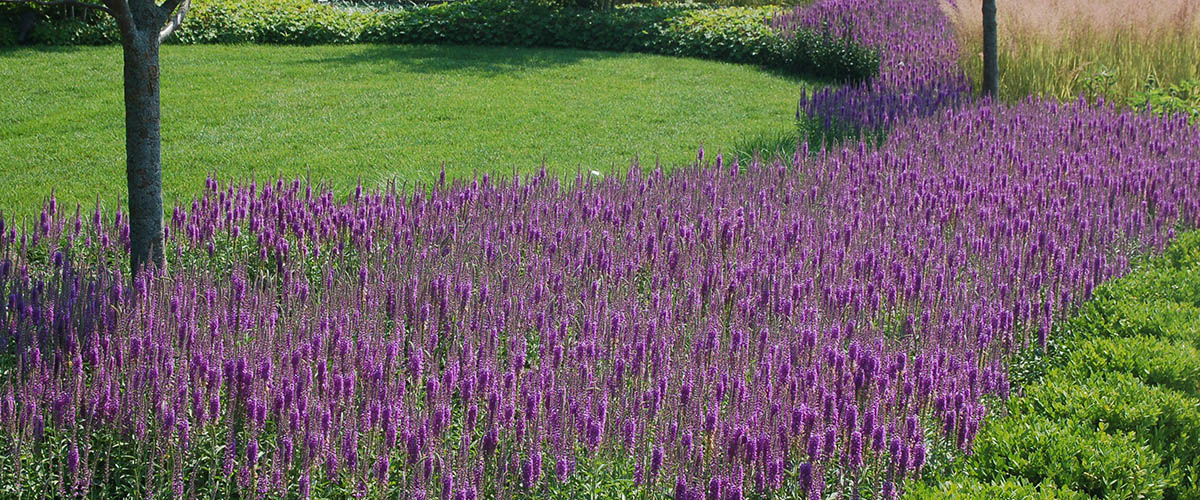
Evaluating Perennials for Chicagoland Gardens
Perennials in Focus is a plant evaluation program that examines new and underused plants for Chicagoland, the third largest metropolitan area in the country. A group of horticultural experts trials and evaluates plants at numerous locations across the region. Results help consumers, public gardens, growers, landscape designers, breeders, and other industry professionals make informed plant choices.
Underused perennials for hot, humid Zone 5b gardens
Gardens in the Chicagoland region must handle a demanding combination of conditions. Winters can bring deep freezes, while summer beds face intense sun, heavy rain, high humidity, and stretches of dry weather. A perennial that looks excellent in a mild trial garden may become floppy, disease-prone, or short-lived in a residential landscape.
That is why regional evaluation matters. Plants selected for their flower photographs or catalog descriptions do not always deliver the same performance in Zone 5b. The program’s history reflects a longer-term effort to observe plants across seasons, sites, and growing conditions rather than judge them from a single display.
The following perennials deserve a closer look because they combine ornamental value with useful durability. Some are native species, while others are refined selections or less familiar garden plants. Their success still depends on correct light, soil preparation, and spacing, but each can expand the palette beyond the usual coneflowers, daylilies, and hostas.
Why overlooked plants deserve a place
Underused perennials often fall out of favor because they are difficult to produce in quantity, unfamiliar to shoppers, or less showy in a small container. In the ground, however, many develop stronger form and a longer season of interest. Their foliage, seedheads, stems, and late blooms can carry a planting after early-summer color fades.
Regional trials also reveal useful distinctions between toughness and garden performance. A plant may survive a Zone 5 winter yet fail in humid weather because its foliage stays wet or its stems collapse under summer storms. Strong performers tend to offer several advantages at once: reliable winter survival, a manageable habit, good disease tolerance, and flowers that attract pollinators.
For growers and retailers, these plants can provide a point of difference. For homeowners and landscape designers, they offer ways to create layered beds with less dependence on heavily marketed cultivars. The findings supported by Perennials in Focus align with a shared mission of making practical, regional plant information easier to use.
Sun-loving plants with reliable structure
Threadleaf bluestar, Amsonia hubrichtii, is an excellent candidate for hot, open sites. Its narrow blue-green foliage forms a rounded mound, followed by clusters of pale blue, star-shaped flowers in late spring. The plant remains attractive after bloom and turns a striking golden color in autumn. Full sun produces the best form, although established plants can tolerate light afternoon shade.
False indigo, Baptisia australis, has a substantial presence without needing frequent maintenance. Its blue, pea-like flowers rise above blue-green foliage in late spring, and inflated seed pods provide texture afterward. Baptisia develops a deep root system, so it dislikes repeated relocation, but that same root structure helps it handle summer heat once established. Give it room to reach its mature width.
Mountain mint, especially Pycnanthemum muticum, is valuable when a planting needs long-lasting pollinator activity. The silvery bracts remain attractive around small pink or white flowers, and the aromatic foliage is generally ignored by deer. It spreads gradually rather than forming a tight clump, making it useful for naturalistic borders, rain gardens with good drainage, and sunny meadow-style plantings.
Choices for moist soil and partial shade
Turtlehead, including Chelone glabra and Chelone lyonii, is a strong option for damp areas where many sun-loving perennials struggle. Its snapdragon-like flowers appear in late summer, when garden color often begins to decline. Turtlehead prefers evenly moist soil and morning sun or bright filtered light. Good air movement helps reduce foliar problems in humid weather.
Culver’s root, Veronicastrum virginicum, brings vertical form to a mixed border. Tall flower spikes rise from whorled foliage, creating a strong contrast with rounded shrubs and low mounding perennials. It performs best in fertile soil that does not dry excessively, though established plants can manage ordinary garden conditions when mulched.
For a more architectural effect, try prairie dropseed, Sporobolus heterolepis. This native ornamental grass forms a fine-textured mound that withstands heat, drought, and urban conditions once rooted. Its delicate flower panicles are subtle rather than flashy, but the seedheads catch light and the autumn color adds value well beyond the flowering period.
Comparing dependable candidates
The plants below cover a range of light levels, soil preferences, and seasonal roles. Mature dimensions can vary by cultivar and site, so use these figures as planning estimates rather than fixed limits. Spacing is especially important in humid climates: crowded foliage dries slowly after rain and can invite fungal problems.
| Perennial | Light | Typical height | Main season of interest | Best use |
|---|---|---|---|---|
| Amsonia hubrichtii | Full sun | 2–3 feet | Late spring to fall | Mounded border, mass planting |
| Baptisia australis | Full sun to light shade | 3–4 feet | Late spring to summer | Back of border, native-style planting |
| Pycnanthemum muticum | Full sun | 2–3 feet | Summer | Pollinator border, informal drift |
| Veronicastrum virginicum | Sun to part shade | 3–5 feet | Mid to late summer | Vertical accent, moist border |
| Chelone glabra | Part shade to sun | 2–3 feet | Late summer | Rain garden, damp woodland edge |
| Sporobolus heterolepis | Full sun | 2–3 feet | Summer to winter | Dry border, meadow planting |
Helenium autumnale is another worthwhile selection for late-season color. Its daisy-like flowers in yellow, copper, or red appear from midsummer into fall, and the upright stems are less prone to flopping when the plant receives enough light. Remove spent flowers to encourage a longer display, or leave some seedheads for texture and wildlife value.
Designing for heat, humidity, and storms
Site preparation determines whether a hardy perennial becomes a durable one. Improve compacted soil with organic matter before planting, but avoid creating a rich pocket that drains differently from the surrounding bed. Most plants listed here prefer consistent moisture during establishment and excellent drainage through winter.
Spacing should reflect mature width rather than the size of the nursery pot. A dense mass may look sparse during the first year, but it will develop better air circulation and stronger individual forms. Water at the soil line when possible, and apply mulch in a thin layer that does not touch the crowns or stems.
Heavy summer rain can expose weak stems and poor placement. Put tall plants where neighboring shrubs, fences, or sturdy perennials can provide visual support without blocking needed sunlight. In exposed locations, choose plants with naturally firm stems instead of relying on repeated staking.
Practical choices for resilient planting plans
A successful Zone 5b border usually combines several plant habits rather than filling an entire bed with one species. Use a rounded plant such as Amsonia beside a vertical form such as Culver’s root, then weave in a grass or late-blooming perennial for continuity. Repetition of three or more plants creates coherence while preserving seasonal variety.
When evaluating a candidate for your own garden, consider these factors:
- Match the plant to its mature light and moisture requirements, not its preferred appearance in a catalog.
- Allow enough room for full width so foliage can dry after rain and storms.
- Combine early, midsummer, and late-season bloomers to avoid a short display.
- Include foliage, seedheads, or autumn color as part of the design criteria.
- Observe performance for at least two growing seasons before expanding a planting.
Avoid judging a new perennial after its first few weeks in the ground. Transplant shock, unusual weather, and inconsistent watering can disguise its real potential. Record bloom dates, height, spread, pest damage, and winter survival so future plant choices become more precise.
Bring these underused performers into your next garden evaluation by visiting regional trial gardens, comparing mature specimens, and recording how each plant responds to your site. Choose a few candidates for a small test grouping, then build on the strongest results for a durable, season-long Zone 5b landscape.
In the Garden
Evaluator gardens are located across the Chicagoland area, representing a range of growing conditions. Visit our retail and wholesale partners to find trialled perennials for your own garden.
Retail & Wholesale: Hinsdale Nurseries (Willowbrook, IL), Mariani Nurseries (Kenosha, WI & Garden Prairie, IL), Northwind Perennials (Burlington, WI), The Growing Place (Aurora, IL).
Wholesale Only: Hinsdale Nurseries (Plano, IL), Intrinsic Perennial Gardens (Hebron, IL).
Our Evaluation Program
The 2017–2020 evaluation cycle included Agastache 'Blue Boa', Allium senescens 'Blue Eddy', Amsonia ciliata var. filifolia 'Georgia Pancake', Astilbe 'Chocolate Shogun', Boltonia astroides 'James Crocket', Brunnera 'Alexander's Great', and Geranium cinereum 'Jolly Jewel Purple'. Completed evaluations include Amsonia 'Blue Ice' (2004–07).
On April 10, 2020, the program published snapshot profiles for Vernonia lettermanii 'Iron Butterfly', Stokesia laevis 'Elf', Stachys officinalis 'Pink Cotton Candy', Lobelia 'Monet Moment', Helleborus 'Winter Thrillers', Geum 'Mai Tai', Geranium soboliferum 'Butterfly Kisses', Gentiana x intermedia 'True Blue', Eurybia divaricata, Asparagus 'Purple Passion', and Agastache 'Bolero'.
Browse the full collection of snapshots organized alphabetically — from A–D, E–H, I–Q, and R–Z — to find detailed performance data on perennials trialled across Chicagoland.