Evaluating Perennials for Chicagoland Gardens
Perennials in Focus is a plant evaluation program that examines new and underused plants for Chicagoland, the third largest metropolitan area in the country. A group of horticultural experts trials and evaluates plants at numerous locations across the region. Results help consumers, public gardens, growers, landscape designers, breeders, and other industry professionals make informed plant choices.
Lobelia cardinalis as a moist-sun border accent
Trialing the use of Lobelia cardinalis as a moist-sun border accent can reveal far more than whether its scarlet flowers look attractive in a catalogue photograph. A proper perennial evaluation records how the plant establishes, holds its stems, copes with seasonal moisture, and contributes to a mixed border over several years.
The findings from Chicagoland are especially useful when read as performance evidence rather than as a ready-made planting recipe. Australian gardeners, growers and landscape designers can use the same observations while allowing for local differences in rainfall, heat, soil and nursery supply.
Why this plant merits a trial
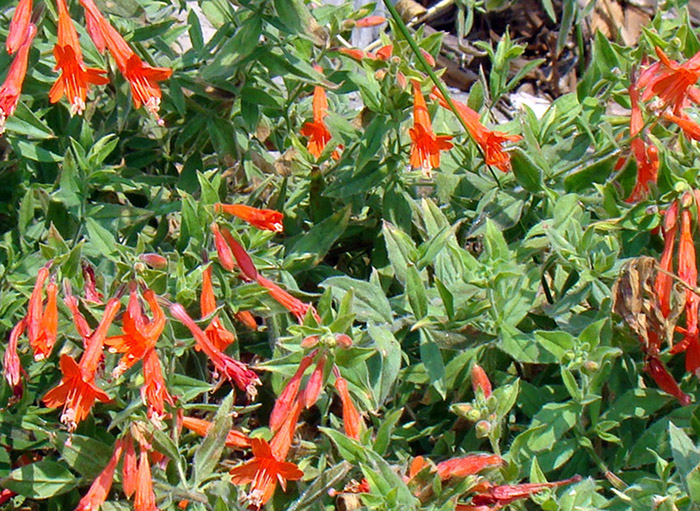
Lobelia cardinalis, commonly called cardinal flower, is a clump-forming perennial valued for upright stems covered with vivid red, two-lipped flowers. It naturally occupies damp ground, stream margins and wet meadow edges, making it a strong candidate for a sunny border where ordinary perennials may wilt or lose vigour.
Its vertical habit also gives a planting structure without the bulk of a shrub. In a Chicagoland trial, the most useful measurements include flowering date, stem height, clump width, flower intensity, foliage quality and winter survival. These details help distinguish a dependable garden plant from one that merely produces an impressive first flush.
| Trait | What to record in a Chicagoland trial | Relevance for Australian gardens |
|---|---|---|
| Flowering period | First bloom, peak display and final flowers | Indicates performance through local summer or autumn heat |
| Height and spread | Mature stems, basal clump and lodging | Helps position it among grasses and lower edging plants |
| Moisture response | Growth in consistently damp versus intermittently dry soil | Guides use in rain gardens, drainage swales and irrigated borders |
| Longevity | Return after winter and clump persistence | Shows whether annual division or replacement is likely |
| Flower and foliage quality | Colour, leaf health and damage from pests | Supports cultivar selection and retail descriptions |
Reading Chicagoland evidence for Australian sites
Chicagoland’s cold winters, freeze-thaw cycles and heavy summer storms create a useful stress test. A plant that survives those conditions may have strong crown resilience, yet that does not automatically mean it will thrive in Brisbane, Perth or a dry inland garden. Australian heat, intense sun and irregular rainfall can place more pressure on water management during the growing season.
The program’s trial history provides valuable context for understanding how plants are assessed over time and across locations. For Australian readers, the key is to separate broadly transferable traits—such as stem strength and flowering habit—from climate-dependent results such as winter dormancy or exact bloom timing.
A Melbourne or Canberra garden may offer a closer seasonal comparison than a tropical site, while a Sydney garden could replicate the plant’s preference for moisture if drainage remains reliable. In Adelaide, the plant may need a carefully irrigated position, and a Perth gardener may need to treat it as a specialist water-edge perennial rather than a general border plant.
Selecting a suitable moist-sun position
The best location receives several hours of direct light while retaining moisture around the roots. Morning sun with some protection from harsh late-afternoon heat can be beneficial in warmer Australian districts. In cooler regions, full sun is more likely to produce compact stems and heavier flowering.
Moist does not mean permanently stagnant. Improve clay soil with organic matter and use compost to support moisture retention, but avoid creating a sealed, waterlogged pocket around the crown. In sandy soil, incorporate well-decomposed organic material and apply mulch, leaving a small gap around the plant base to reduce crown rot.
This makes cardinal flower suitable for the edge of a pond, a rain-garden basin that drains gradually, or a border beside a downpipe where overflow is controlled. It is less suitable for a raised, gritty bed designed for lavender, rosemary or other plants that prefer rapid drainage.
Establishing plants and managing water
Planting in spring is generally the safest approach where late frosts remain possible, while autumn planting can work in mild Australian districts if the soil stays warm and irrigation is available. Water new plants deeply and regularly until roots move into the surrounding soil. Avoid frequent shallow sprinkling, which encourages a weak surface root system.
Once established, the plant should receive steady moisture during active growth and flowering. A drip system or low-flow line is often more efficient than overhead irrigation, particularly in Australian gardens where water restrictions and evaporation influence planting choices. Mulch helps, though a thick, wet layer pressed against the crown can create disease problems.
The plant may slow or collapse during a hot spell if moisture runs short. That response should be recorded rather than dismissed as poor quality. Note whether stems recover after irrigation, whether lower leaves scorch, and how quickly new growth resumes. These observations are useful when recommending it for a suburban front verge, a council rain garden or a high-maintenance cottage border.
Evaluating flowers, foliage and form
Cardinal flower is at its best when the flowering stems rise above neighbouring foliage without flopping. Record the height at peak bloom, the number of flowering stems per plant and whether the clump remains upright after rain or wind. Staking may be acceptable in a formal garden, but repeated support reduces its value as a low-maintenance border perennial.
The saturated red flowers create a strong focal note among soft green foliage, white flowers and ornamental grasses. They are particularly effective against dark backgrounds or beside plants with rounded leaves. In Australian gardens, pair them with moisture-tolerant species that flower at a different time, rather than placing several plants with identical late-season habits together.
Observe the basal foliage before and after flowering. Good leaves should remain reasonably clean and substantial through the season, although heat, slugs, snails and wet-weather damage may affect appearance. Australian growers should also watch for chewing insects and fungal marking after humid periods, especially in densely planted beds.
Managing seasonal risks and plant longevity
In Chicagoland, winter survival is a major part of the evaluation. Record whether crowns return evenly, whether plants emerge late, and whether clumps divide into healthy offsets. In Australia, the equivalent concern may be summer persistence: does the plant return strongly after heat, or does it decline once irrigation is reduced?
Cardinal flower can be short-lived compared with durable clump-forming perennials, particularly when stressed by drought, poor drainage or repeated disturbance. Allowing some seed to mature may help maintain a population, though seedlings may vary in habit and placement. Remove unwanted seedlings early if the border requires a precise layout.
Division is best considered when clumps are vigorous and crowded, rather than as an automatic annual task. Clean soil preparation, consistent moisture and adequate spacing will usually do more for longevity than frequent disturbance. Keep trial notes over at least two growing seasons before describing the plant as reliable for a particular Australian region.
Using the plant in practical border design
The upright silhouette works well near the middle or rear of a border, where it can rise through lower foliage without disappearing. Allow roughly 30 to 45 centimetres of lateral space to begin with, then adjust after observing the cultivar or seed strain. Taller forms may reach 90 centimetres or more in favourable conditions.
Use it beside sedges, rushes, moisture-tolerant grasses and foliage plants that can handle similar watering. A small group of three or five plants usually creates a stronger visual rhythm than a single specimen. Repeating the colour near a path, pond edge or seat can connect separate parts of a garden without making the planting feel overly formal.
For Australian nurseries, clear positioning advice matters commercially. Customers often ask whether a plant suits a “boggy bit,” a low spot or a backyard that stays damp after rain. Labels should explain that cardinal flower needs moisture and sun, while also warning that it is not a plant for permanently stagnant soil or an unattended dry garden bed.
Turning trial observations into planting decisions
A useful evaluation ends with a practical recommendation: where the plant succeeds, where it struggles and what maintenance it requires. Record weather, irrigation, soil type and companion plants alongside flowering data so the result can be repeated. A photograph at planting, peak bloom and dormancy will make the findings easier for gardeners and growers to interpret.
Use the Chicagoland observations as a framework, then run small Australian trials in contrasting settings such as a cool southern garden, a humid coastal site and a controlled rain-garden planting. Select stock with healthy crowns, label each planting clearly and monitor it through heat, wet weather and the following season.
Bring these findings into nursery production, landscape specifications and home-garden advice. Trial Lobelia cardinalis where a reliable water supply and sunny position already exist, record its performance honestly, and share the results so this striking perennial can earn a well-informed place in Australian moist-sun borders.
In the Garden
Evaluator gardens are located across the Chicagoland area, representing a range of growing conditions. Visit our retail and wholesale partners to find trialled perennials for your own garden.
Retail & Wholesale: Hinsdale Nurseries (Willowbrook, IL), Mariani Nurseries (Kenosha, WI & Garden Prairie, IL), Northwind Perennials (Burlington, WI), The Growing Place (Aurora, IL).
Wholesale Only: Hinsdale Nurseries (Plano, IL), Intrinsic Perennial Gardens (Hebron, IL).
Our Evaluation Program
The 2017–2020 evaluation cycle included Agastache 'Blue Boa', Allium senescens 'Blue Eddy', Amsonia ciliata var. filifolia 'Georgia Pancake', Astilbe 'Chocolate Shogun', Boltonia astroides 'James Crocket', Brunnera 'Alexander's Great', and Geranium cinereum 'Jolly Jewel Purple'. Completed evaluations include Amsonia 'Blue Ice' (2004–07).
On April 10, 2020, the program published snapshot profiles for Vernonia lettermanii 'Iron Butterfly', Stokesia laevis 'Elf', Stachys officinalis 'Pink Cotton Candy', Lobelia 'Monet Moment', Helleborus 'Winter Thrillers', Geum 'Mai Tai', Geranium soboliferum 'Butterfly Kisses', Gentiana x intermedia 'True Blue', Eurybia divaricata, Asparagus 'Purple Passion', and Agastache 'Bolero'.
Browse the full collection of snapshots organized alphabetically — from A–D, E–H, I–Q, and R–Z — to find detailed performance data on perennials trialled across Chicagoland.