Evaluating Perennials for Chicagoland Gardens
Perennials in Focus is a plant evaluation program that examines new and underused plants for Chicagoland, the third largest metropolitan area in the country. A group of horticultural experts trials and evaluates plants at numerous locations across the region. Results help consumers, public gardens, growers, landscape designers, breeders, and other industry professionals make informed plant choices.
Trialing Liatris spicata as a cut flower in home gardens
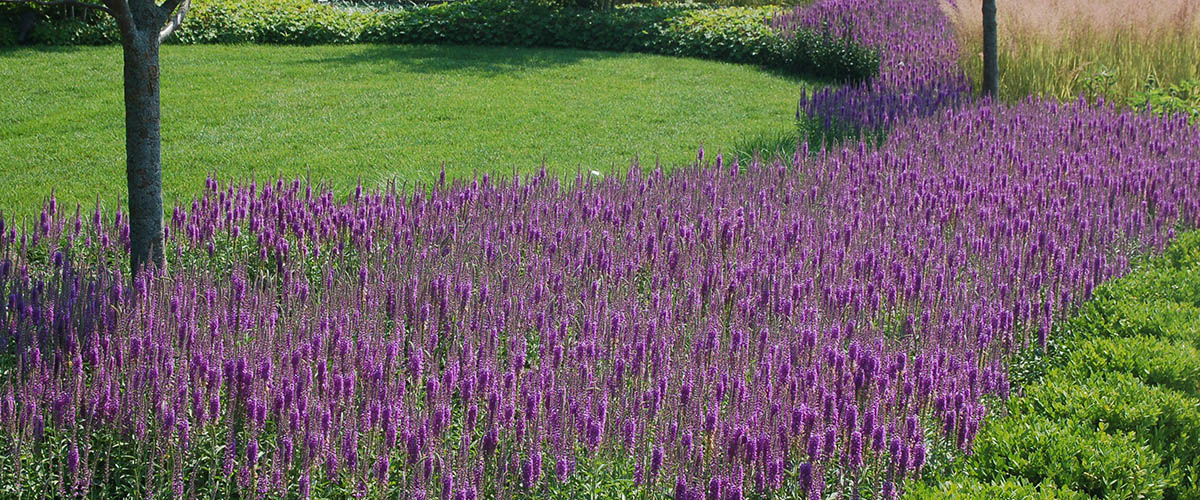
Liatris spicata, commonly called blazing star or gayfeather, deserves closer attention from gardeners who want dependable flowers for indoor arrangements. Its upright spikes bring strong vertical form, vivid purple color, and a long flowering window in midsummer, when many gardens are already producing abundant material for cutting.
The plant is especially suitable for a regional trial because performance can vary with soil, winter conditions, spacing, and cultivar. In Chicagoland, a home gardener can evaluate more than whether the plant blooms. Stem length, flowering uniformity, harvest timing, vase life, and the plant’s ability to produce usable stems year after year all matter.
A small planting can provide useful information. Rather than treating blazing star as a purely ornamental perennial, growers can observe it as a seasonal flower crop and compare its results with annuals, shrubs, and other perennials grown for bouquets.
Why blazing star merits a garden trial
Liatris spicata grows from underground corms and forms narrow, grasslike foliage before sending up tall, unbranched flower stems. The flower spikes open from the top downward, giving freshly cut stems a distinctive appearance. Purple is the most familiar color, although selected forms may offer softer shades or white flowers.
Its upright habit makes it valuable in mixed arrangements, where it can rise above rounded flowers such as coneflower, zinnia, or yarrow. The stems also work well in simple bunches. A dense clump may provide several harvests over the bloom period without occupying much horizontal space.
The plant’s limitations are equally important to record. Stems may be shorter in lean soil or partial shade, and a crowded planting can produce thin, weak growth. Flowering is concentrated rather than continuous, so blazing star is best viewed as one reliable component of a succession-cutting garden.
Choosing plants and preparing the bed
A full-sun site is the best starting point for a cut-flower trial. Aim for at least six hours of direct light, with good air movement and soil that drains freely after heavy rain. Liatris tolerates ordinary garden soil, but consistently wet conditions can damage corms and reduce winter survival.
Before planting, remove perennial weeds and incorporate compost only if the soil is poor. Excessive fertility can encourage lush foliage at the expense of sturdy stems. A soil test can help identify serious nutrient or pH issues, but a well-drained bed with moderate fertility is usually sufficient.
Compare at least two plant sources or cultivars when space allows. Record the cultivar name, purchase size, planting date, and number of plants. Compact selections may be convenient for borders, while taller forms can offer longer stems for arranging. The most attractive landscape plant is not automatically the strongest cut-flower performer.
Establishing a productive patch
Corms and container-grown divisions can be planted in spring after the soil is workable. Set them at the depth recommended by the supplier, since planting too shallowly may expose them to temperature fluctuations and drying. Space plants closely enough to support upright growth, but leave room for air circulation and harvest access.
Water new plantings consistently during their first season. Once established, blazing star is moderately drought tolerant, although drought during stem development may reduce height and flower quality. Mulch can conserve moisture, but keep it away from the crowns to reduce the risk of rot.
Plants may need a season to settle before producing their best harvest. If an older clump becomes congested, division can renew it and create additional trial blocks; the guidance on dividing Chicagoland perennials offers useful background for planning that work. Mark each block so results can be tracked separately.
| Trait to record | What to observe | Why it matters for cutting |
|---|---|---|
| Stem height | Average and tallest usable stems | Determines arrangement options |
| Stem strength | Upright, leaning, or lodging growth | Affects handling and vase display |
| Flowering window | First open florets through decline | Helps schedule harvests |
| Color consistency | Uniformity among plants and stems | Supports coordinated bouquets |
| Yield | Number of usable stems per plant | Shows productivity in limited space |
| Vase performance | Fresh appearance over several days | Measures practical value indoors |
Measuring performance from garden to vase
Begin observations before cutting. Note when the first spikes emerge, how evenly the plants develop, and whether stems remain upright after rain or wind. Record the start of flowering, peak bloom, and the point at which most spikes are past their best. These dates can shift with spring temperatures and exposure.
For a simple yield comparison, count the stems that meet a chosen standard, such as a minimum height, straightness, and unblemished foliage. It is useful to distinguish between stems suitable for a large arrangement and shorter stems that can still be used in small jars. Photographing the plants at peak bloom creates a visual record that complements written notes.
End-of-season observations also have value. Liatris can provide structural seed heads and habitat interest after flowering, so gardeners may choose to leave some stems standing. Comparing its winter form with other perennials, including the seed heads of coneflower and rudbeckia, helps clarify whether the planting serves both floral design and late-season garden purposes.
Harvesting stems for longer vase life
Cut blazing star when the upper portion of the spike has opened and the lower florets are still developing. Harvesting too early may result in poor opening, while fully mature spikes can shed florets quickly indoors. Early morning is usually the best time to cut, when stems are hydrated and temperatures are low.
Use a clean, sharp blade and place stems into water immediately. Remove foliage that would sit below the waterline, then condition the stems in a cool location away from direct sun. A clean vase and fresh water are more important than complicated treatments, although a commercial flower preservative may help maintain quality.
Expect vase life to vary with harvest stage, temperature, water quality, and stem maturity. Track the number of days until the first obvious decline, such as browning florets, drooping stems, or significant flower drop. Liatris can often remain attractive for roughly a week or longer under good conditions, but a home trial should rely on recorded results rather than a fixed promise.
Combining blazing star with other flowers
The strong vertical line of Liatris spicata pairs well with flowers that have contrasting shapes. Rounded zinnias, cosmos, dahlias, and coneflowers can soften its form, while grasses and airy fillers can emphasize its height. Purple spikes also combine effectively with white, pale yellow, rose, and orange flowers.
For a balanced arrangement, place the tallest stems toward the center or back and shorten a few pieces for the surrounding edges. Because the flower spikes are visually narrow, several stems usually create more impact than a single specimen. Harvesting selectively can leave enough flowers in the garden for pollinators and continued display.
A cut-flower trial should also consider how much labor the crop requires. Record whether staking is needed, how easy stems are to reach, and how much cleanup follows harvest. A plant that produces slightly fewer stems but requires little maintenance may be more useful in a home garden than a higher-yielding crop that flops or needs frequent attention.
A practical trial checklist
A manageable trial can begin with a modest group of plants and expand after two seasons of observation. Keep growing conditions as consistent as possible, and avoid changing several variables at once. Notes from a single unusually wet or dry year should be treated as part of the record, not as the entire verdict.
Track these details throughout the season:
- Plant source, cultivar, planting date, and number of plants
- Sun exposure, soil drainage, irrigation, and any fertilizer used
- Stem height, straightness, flower color, and flowering dates
- Number of usable stems harvested from each plant or block
- Vase life, flower drop, and performance in mixed arrangements
Review the notes in autumn and identify which plants delivered the best combination of dependable growth, attractive stems, and manageable care. Repeating the trial for another season will reveal whether the results were consistent across different weather patterns.
A well-documented home planting can contribute to the wider understanding of perennial cut flowers in the region. Share observations through local gardening networks, grow additional cultivars when space permits, and use the results to refine future plant selections. With thoughtful harvest timing and simple recordkeeping, blazing star can become both a striking landscape perennial and a practical source of summer bouquet material.
In the Garden
Evaluator gardens are located across the Chicagoland area, representing a range of growing conditions. Visit our retail and wholesale partners to find trialled perennials for your own garden.
Retail & Wholesale: Hinsdale Nurseries (Willowbrook, IL), Mariani Nurseries (Kenosha, WI & Garden Prairie, IL), Northwind Perennials (Burlington, WI), The Growing Place (Aurora, IL).
Wholesale Only: Hinsdale Nurseries (Plano, IL), Intrinsic Perennial Gardens (Hebron, IL).
Our Evaluation Program
The 2017–2020 evaluation cycle included Agastache 'Blue Boa', Allium senescens 'Blue Eddy', Amsonia ciliata var. filifolia 'Georgia Pancake', Astilbe 'Chocolate Shogun', Boltonia astroides 'James Crocket', Brunnera 'Alexander's Great', and Geranium cinereum 'Jolly Jewel Purple'. Completed evaluations include Amsonia 'Blue Ice' (2004–07).
On April 10, 2020, the program published snapshot profiles for Vernonia lettermanii 'Iron Butterfly', Stokesia laevis 'Elf', Stachys officinalis 'Pink Cotton Candy', Lobelia 'Monet Moment', Helleborus 'Winter Thrillers', Geum 'Mai Tai', Geranium soboliferum 'Butterfly Kisses', Gentiana x intermedia 'True Blue', Eurybia divaricata, Asparagus 'Purple Passion', and Agastache 'Bolero'.
Browse the full collection of snapshots organized alphabetically — from A–D, E–H, I–Q, and R–Z — to find detailed performance data on perennials trialled across Chicagoland.