Evaluating Perennials for Chicagoland Gardens
Perennials in Focus is a plant evaluation program that examines new and underused plants for Chicagoland, the third largest metropolitan area in the country. A group of horticultural experts trials and evaluates plants at numerous locations across the region. Results help consumers, public gardens, growers, landscape designers, breeders, and other industry professionals make informed plant choices.
Trialing Agastache Foeniculum as a Drought-Tolerant Border Plant
In Chicagoland gardens, a successful perennial border plant must handle more than summer heat. It needs to survive cold winters, fluctuating spring moisture, humid weather, clay-heavy soils, and occasional dry spells after establishment. Agastache foeniculum, commonly called anise hyssop, is a strong candidate for evaluation because it combines upright form, aromatic foliage, long-lasting flower spikes, and dependable appeal to pollinators.
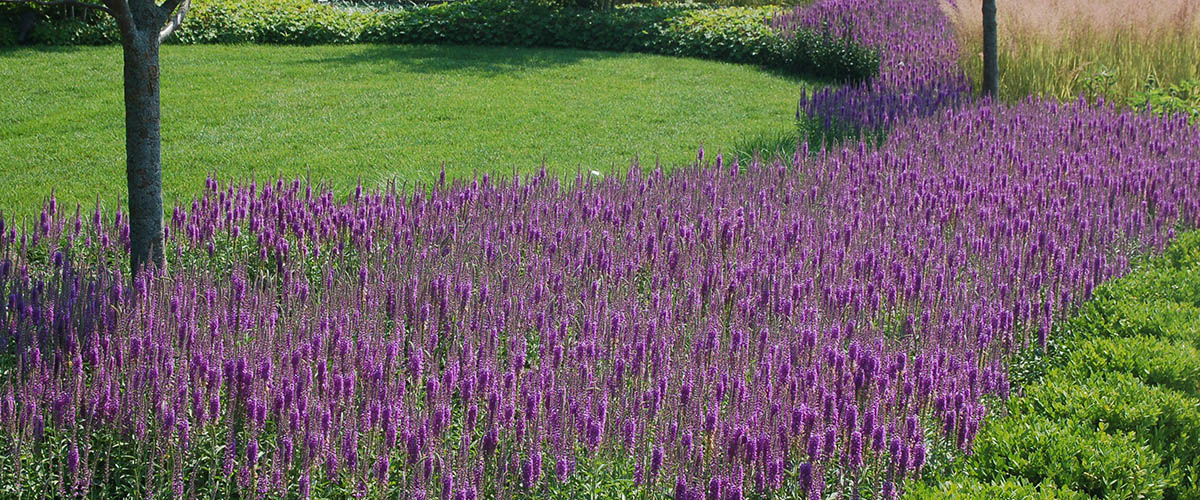
Its blue-violet blooms create vertical rhythm in sunny beds, while the foliage releases a pleasant anise-like scent when brushed. The plant is especially useful in borders that need a long season of interest without frequent irrigation. A regional trial can clarify where its strengths are most visible and which cultural conditions help it remain sturdy and attractive.
Why anise hyssop suits regional trials
Agastache foeniculum is a herbaceous perennial native to parts of North America, where it commonly grows in open prairies, meadows, and sunny woodland edges. Those origins suggest an affinity for well-drained soil, bright light, and periodic dryness. In a cultivated border, it can provide a useful bridge between early-summer perennials and later-season grasses, coneflowers, and asters.
The plant typically forms a clump of upright stems rather than spreading aggressively through runners. Depending on the selection and growing conditions, it may reach approximately 2 to 5 feet tall, with a moderate spread. Flower spikes emerge above the foliage and attract bees, butterflies, and other beneficial insects. Its height makes it valuable toward the middle or back of a border, although compact selections may work closer to paths.
A trial should compare several cultivars or seed-grown lines where possible. Differences in stem strength, bloom timing, branching, flower density, and winter survival can be significant. These observations are more useful to Chicagoland gardeners than a generic hardiness rating because local performance depends on soil, exposure, and seasonal weather.
What to measure in the garden
A well-designed evaluation records performance across multiple sites rather than relying on one ideal planting bed. Trial locations might include a residential garden, a public landscape, a nursery display, and a site with heavier soil. Replicating plants in each location helps distinguish genetic performance from a single garden’s favorable conditions.
Important observations include the date of first bloom, peak flowering, and the point when flower spikes begin to fade. Evaluators should also record plant height and spread at maturity, stem lodging after storms, foliage quality during humid weather, and the degree of reseeding. Flower color should be described consistently, since violet-blue shades can appear different under morning, afternoon, and overcast light.
Drought tolerance needs careful definition. A plant should be observed after normal establishment, when irrigation is reduced or withheld for a controlled period. Notes can include leaf wilt, premature flower decline, recovery after rainfall, and overall visual quality. A plant that survives drought but becomes unattractive may have limited value in a highly visible border.
Design value in a sunny border
Anise hyssop contributes a strong vertical accent without the rigid appearance of some narrow ornamental grasses. Its flower spikes rise above textured foliage and can soften the transition between low edging plants and taller perennials. The cool flower color pairs well with yellow coreopsis, orange butterfly weed, white yarrow, and pink garden phlox.
Its extended bloom period is another advantage. With adequate sunlight and reasonable drainage, plants may flower from early summer into late summer, with some continuing into early fall. Deadheading can improve appearance and encourage additional branching, although leaving a portion of the seedheads may benefit birds and add structure after frost.
Color coordination is especially useful when designing a pollinator border. For comparison, the visual effect of warm-toned blanket flower can be seen in these Gaillardia color trials. Anise hyssop offers a cooler counterpoint, allowing designers to create deliberate contrasts rather than relying on a single dominant bloom color.
Interpreting drought performance
The best results are likely in full sun with soil that drains freely after heavy rain. Raised beds, sandy loam, and amended planting areas may support stronger roots than compacted clay. However, excessive amendment in a broad landscape bed can create uneven moisture conditions, so the goal should be improved structure rather than an isolated pocket of rich soil around each plant.
Watering during the first growing season remains important. Regular moisture helps new plants establish deep, well-branched roots. After establishment, irrigation can be reduced gradually while watching for prolonged wilting. A short dry interval may strengthen the plant’s low-water reputation, but severe drought combined with extreme heat can still shorten bloom duration or cause lower foliage to decline.
| Evaluation trait | Useful observation | Border-planning value |
|---|---|---|
| Winter survival | Spring emergence and crown health | Indicates reliability across Chicagoland winters |
| Flowering period | First bloom, peak display, and fade | Helps coordinate companion plants |
| Stem strength | Upright habit after wind and rain | Shows whether staking is unnecessary |
| Drought response | Wilting, recovery, and foliage quality | Guides irrigation expectations |
| Mature size | Height and spread across sites | Supports correct placement and spacing |
| Pollinator activity | Frequency and diversity of visits | Measures ecological and ornamental value |
| Reseeding behavior | Seedling presence in later seasons | Helps assess maintenance requirements |
Soil, spacing, and maintenance considerations
Planting crowns at the same depth as they grew in their containers reduces the risk of crown rot. Spacing should allow air movement around mature clumps while still creating enough density for a cohesive border. Crowded plants may develop thinner stems and less attractive lower foliage, especially in humid locations.
Avoid placing anise hyssop in consistently wet soil or at the bottom of a poorly drained slope. Winter wetness can be more damaging than cold temperatures because saturated crowns are vulnerable to decay. A modest layer of organic mulch can help moderate soil moisture, but mulch should remain away from the crown and should not be piled against the stems.
Maintenance is generally straightforward. Cut back old stems in late winter or early spring, when the dried structure has finished contributing winter interest. Divide crowded clumps only when vigor declines or the planting becomes too dense. Excessive fertilizer may produce soft, leafy growth and taller stems, so a soil test and restrained fertility program are preferable to routine heavy feeding.
Recommendations for a useful trial
A regional evaluation should include repeated observations rather than a single end-of-season impression. Gardeners and professionals can improve the value of their records by using consistent measurements and photographing plants from the same angle throughout the season.
- Plant several individuals in more than one sunny site, including a location with average garden soil.
- Record bloom dates, mature height, spread, lodging, foliage quality, and pollinator visits.
- Reduce supplemental irrigation only after plants have completed their establishment period.
- Compare compact and tall selections for different border positions.
- Note winter survival and volunteer seedlings during the following spring.
These records can reveal whether a cultivar is genuinely drought tolerant or simply performing well because it receives unnoticed moisture from nearby lawns, downspouts, or irrigation zones. They can also identify selections that remain compact and floriferous without regular trimming.
Applying the results to Chicagoland landscapes
If Agastache foeniculum performs consistently across trial gardens, it could serve a wide range of planting styles. Residential gardeners may use it in a sunny mixed border, pollinator bed, or low-irrigation landscape. Landscape professionals could place it in commercial beds where reliable summer color and reduced watering are priorities. Public gardens may use it to demonstrate prairie-inspired planting combinations suited to urban conditions.
Its strongest role is likely as part of a diverse plant community rather than as a single-species mass. Pairing it with plants that have different textures and bloom periods can reduce visual repetition and provide habitat over a longer season. Because anise hyssop has upright stems and aromatic leaves, it also adds sensory interest near paths and seating areas.
The trial results should still communicate limitations. Performance may decline in shade, compacted wet soil, or sites exposed to severe competition from vigorous neighboring plants. Some selections may reseed more freely than others, and tall forms may need a little extra space to maintain a clean silhouette. Clear regional data helps gardeners choose the right form instead of assuming every anise hyssop will behave identically.
Bring the findings into a real planting by selecting a sunny, well-drained test area and documenting the plant from establishment through winter. Share observations about flowering, water needs, structure, and pollinator activity with the Perennials in Focus community so future recommendations reflect the varied conditions of Chicagoland gardens.
In the Garden
Evaluator gardens are located across the Chicagoland area, representing a range of growing conditions. Visit our retail and wholesale partners to find trialled perennials for your own garden.
Retail & Wholesale: Hinsdale Nurseries (Willowbrook, IL), Mariani Nurseries (Kenosha, WI & Garden Prairie, IL), Northwind Perennials (Burlington, WI), The Growing Place (Aurora, IL).
Wholesale Only: Hinsdale Nurseries (Plano, IL), Intrinsic Perennial Gardens (Hebron, IL).
Our Evaluation Program
The 2017–2020 evaluation cycle included Agastache 'Blue Boa', Allium senescens 'Blue Eddy', Amsonia ciliata var. filifolia 'Georgia Pancake', Astilbe 'Chocolate Shogun', Boltonia astroides 'James Crocket', Brunnera 'Alexander's Great', and Geranium cinereum 'Jolly Jewel Purple'. Completed evaluations include Amsonia 'Blue Ice' (2004–07).
On April 10, 2020, the program published snapshot profiles for Vernonia lettermanii 'Iron Butterfly', Stokesia laevis 'Elf', Stachys officinalis 'Pink Cotton Candy', Lobelia 'Monet Moment', Helleborus 'Winter Thrillers', Geum 'Mai Tai', Geranium soboliferum 'Butterfly Kisses', Gentiana x intermedia 'True Blue', Eurybia divaricata, Asparagus 'Purple Passion', and Agastache 'Bolero'.
Browse the full collection of snapshots organized alphabetically — from A–D, E–H, I–Q, and R–Z — to find detailed performance data on perennials trialled across Chicagoland.